Skenet, 14.03.2011
Review
Sara Nyberg
YOUMAKEME In Kenneth Kvarnström’s latest dance performance, the audience makes the choreographer and the choreographer makes the dancer.
Read more
Elle.fi, 09.03.2011
Review
Mirjami Pullinen
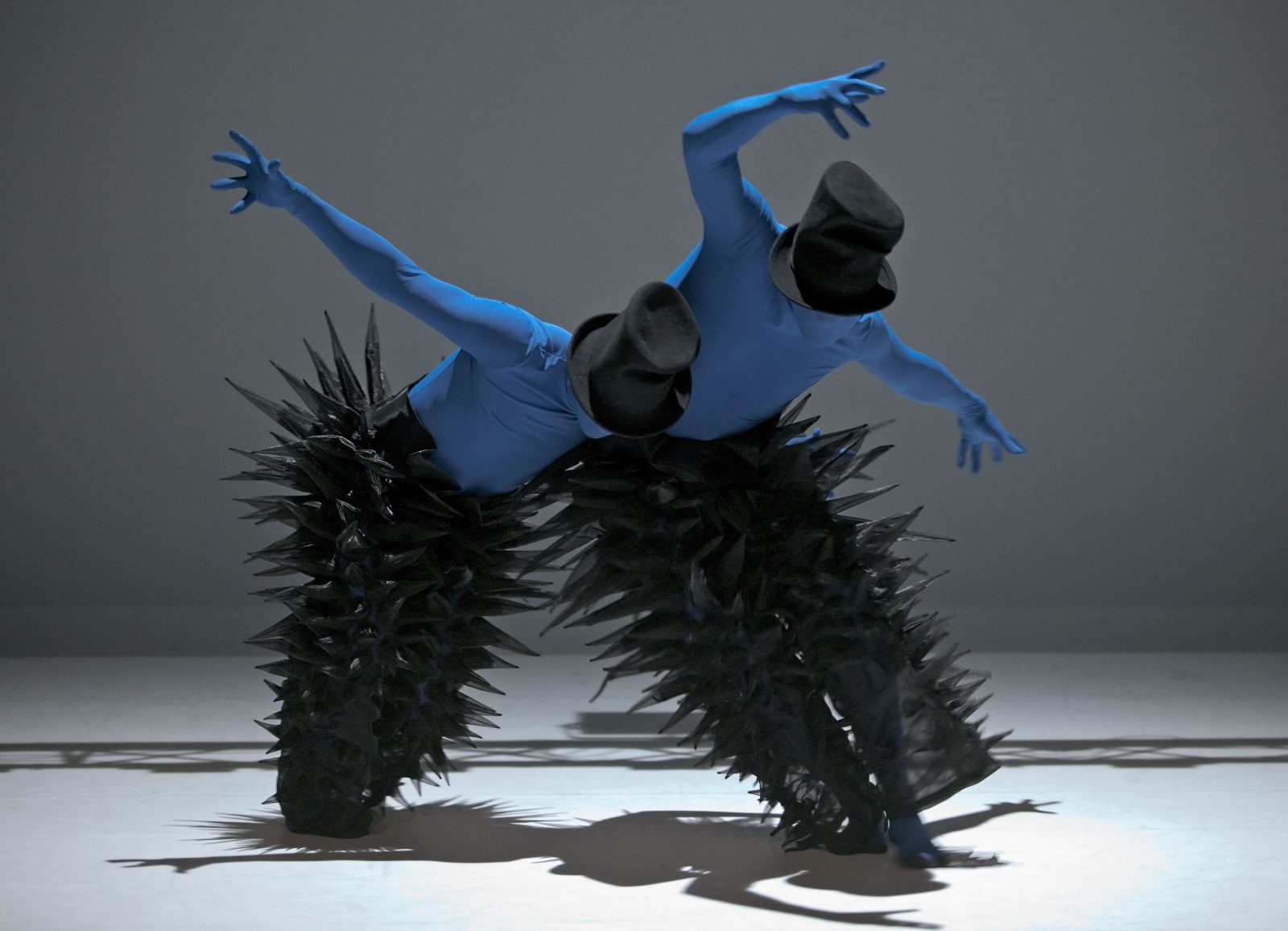
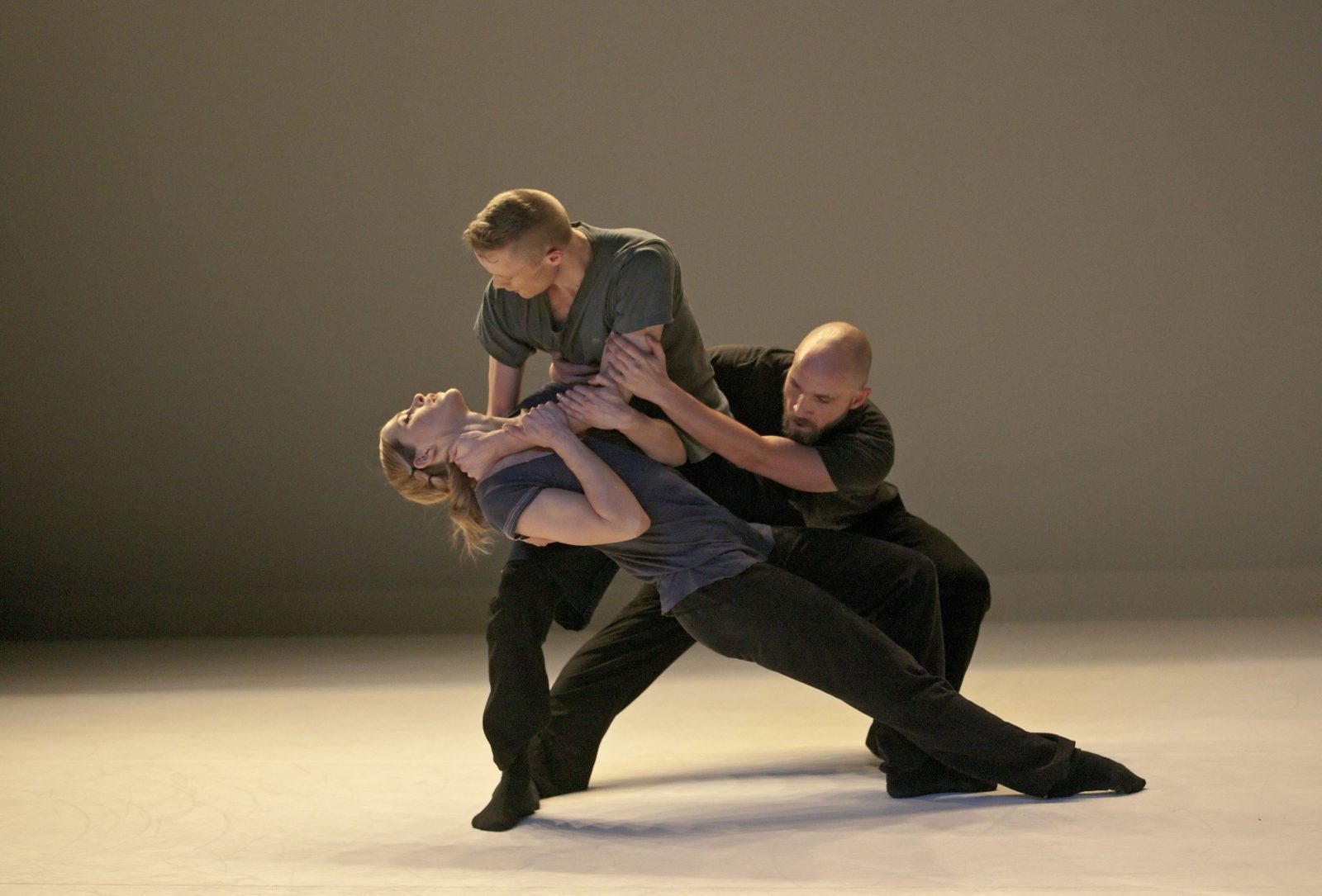
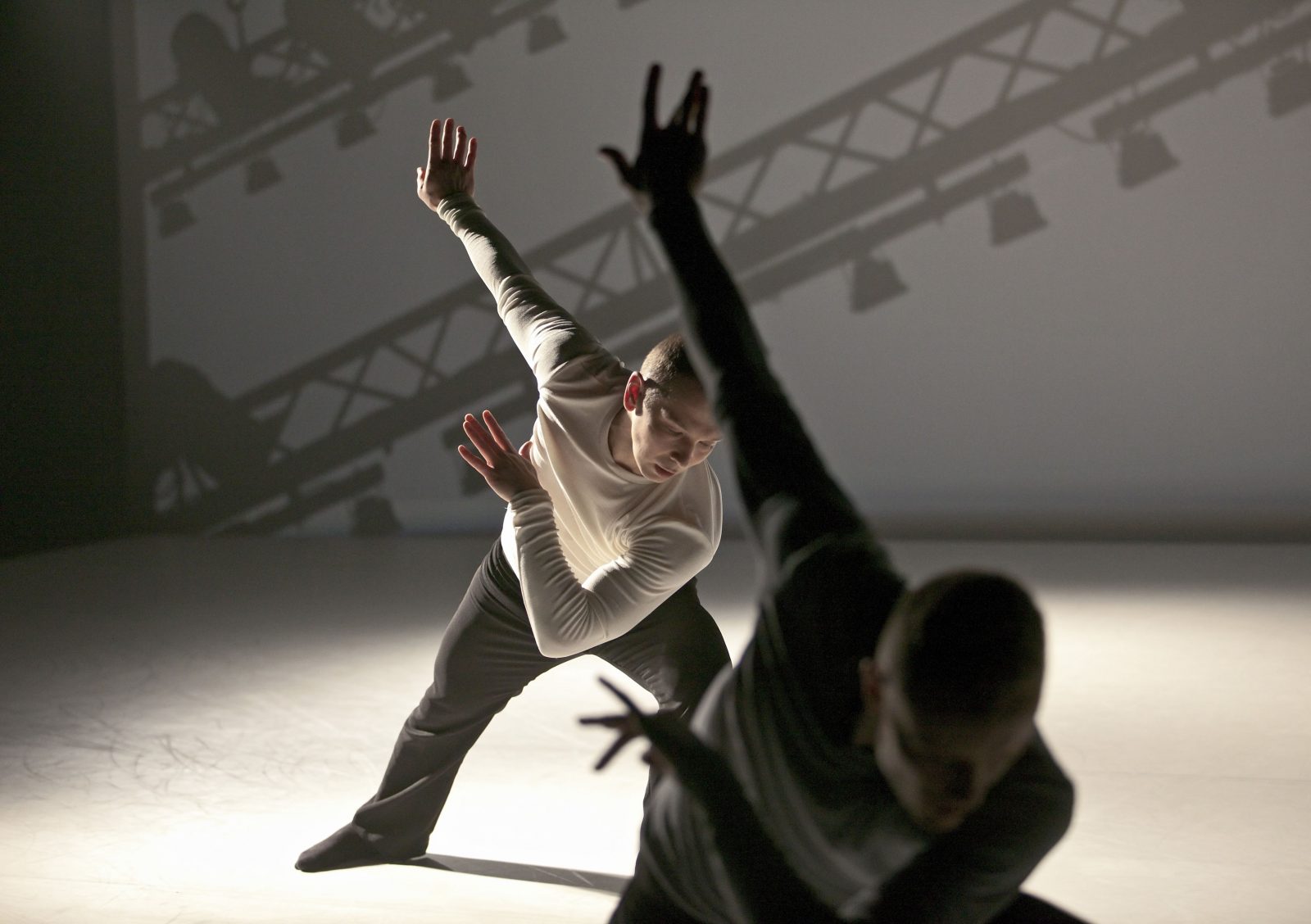
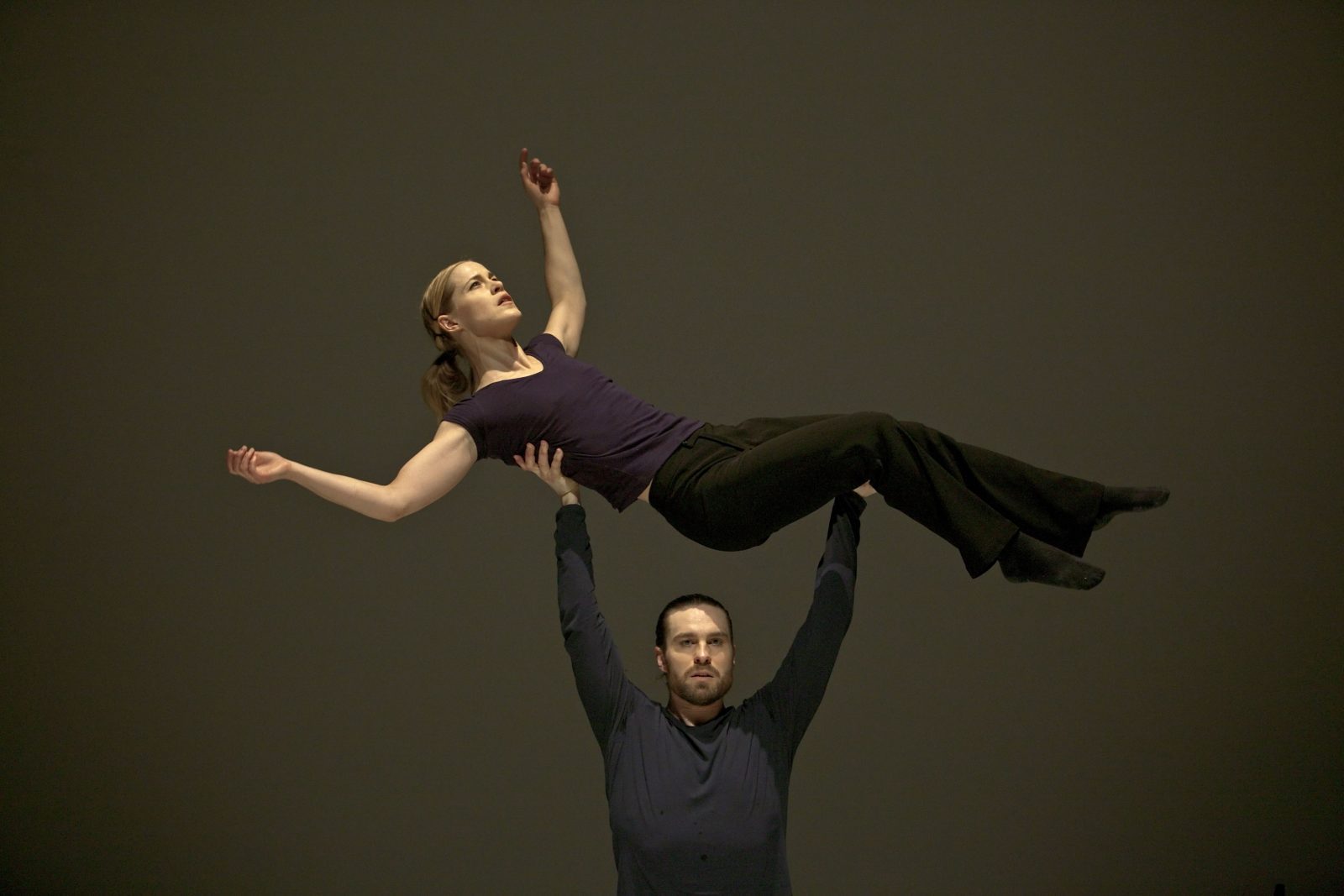
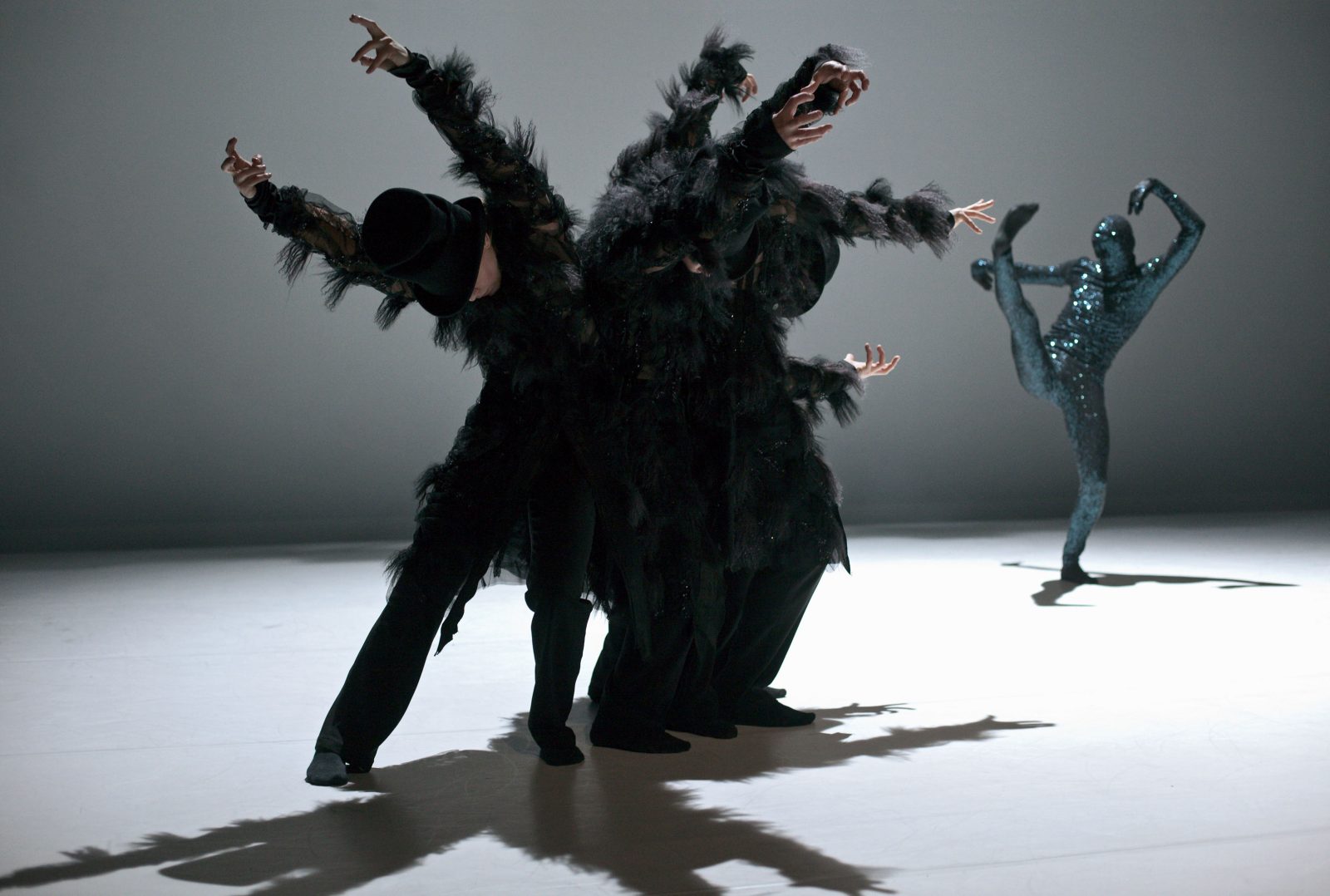
Nightmares and comic relief The YOUMAKEME dance performance causes a rush of emotions from nightmares to comedy. Helsinki City Theatre’s Studio Elsa has been taken over by the Youmakeme performance by K. Kvarnström & Co and the Helsinki Dance Company.The full attention of the audience was grabbed from the very beginning as two dancers dressed in spiked pants entered the stage. A blue sock was tied around the dancers’ upper torso and an ominous music backed their powerful dance. The dancers’ unemotional appearance bore resemblance to Hugo Simberg’s painting Halla, oozing out foulness and evil. Fortunately, the atmosphere soon became lighter, especially with the dancers’ own spoken intros. One of the key ideas behind the performance was to use repetition to test the audience’s ability to interpret the performance; by presenting different choreographies to the same songs. The three different choreographies for the song Feeling Good were quite impressive. The original recording by Nina Simone was interpreted by two male dancers who delivered an amazingly delicate, touching performance. In the second version of the song, the stage was overrun by an overly gloomy, even tragic-comic band of growling teenage metal heads full of angst. As the final version, the group performed a choreography for Muse’s take on Feeling Good, a version that overwhelmingly embraces the entire universe. The audience was also put to a test in one particular section where the dancers moved in complete silence, with only the dancers’ heavy breathing causing any kind of sound. At first, the scene felt very uncomfortable, as it was very hard to interpret the dancers’ movement. But once you figured out how to let go of all unnecessary attempts to understand or analyse, following the elegant silent movement became a pleasure in itself. Watching the brilliant dancers perform was a treat per se, as they all had their own nuances in their movement. One dancer first and foremost expressed strength, one was rich in nuances and the third blended all details seamlessly together. Special applause is due to the skilled lighting design by William Iles and the ingenious costumes by Erika Turunen. All in all, Kvarnström and his company succeeded in creating magical and powerful images that were both taxing and yet immensely wonderful to take in.
Read more
Turun Sanomat, 08.03.2011
Review
Kaisa Kurikka
Magic echoed through dance
“The fluidity of the movement and the breathtaking skill expressed by the dancers draw the audience into a magical bliss.”
Kenneth Kvarnström’s YOUMAKEME is an intricately intertwined performance that twists and turns around the topic of repetition. First of all, the music in the performance stands on cover versions; new interpretations of original pieces of music. These covers are delivered by various performers, including interpretations by five dancers from the Helsinki Dance Company. In fact, the performance programme poses a candid question: how many times can you listen to the same song without getting bored or falling asleep? Well, frankly, neither was close during the performance, as it goes to show that nothing is ever repeated exactly identically. One of the most enchanting qualities of Youmakeme is the surprising nature of the performance. This draws from the rich emotional imprints of individual scenes, changes in the structure and the versatile use of visual elements. Enigmatic motion sequences lead into open vulgarity and even extend to macabre humour or soft motion flows.
Shamelessness taken to its limitsThe fluidity of Kvarnström’s movement and the breathtaking skill expressed by the dancers draw the audience into a magical bliss. One of the most alluring scenes is built around the song Feeling Good. During the version performed by Nina Simone, the tenderness of the dance is contrasted by the growling singing by the dancers, making the entire notion of feeling good glaringly ironic.
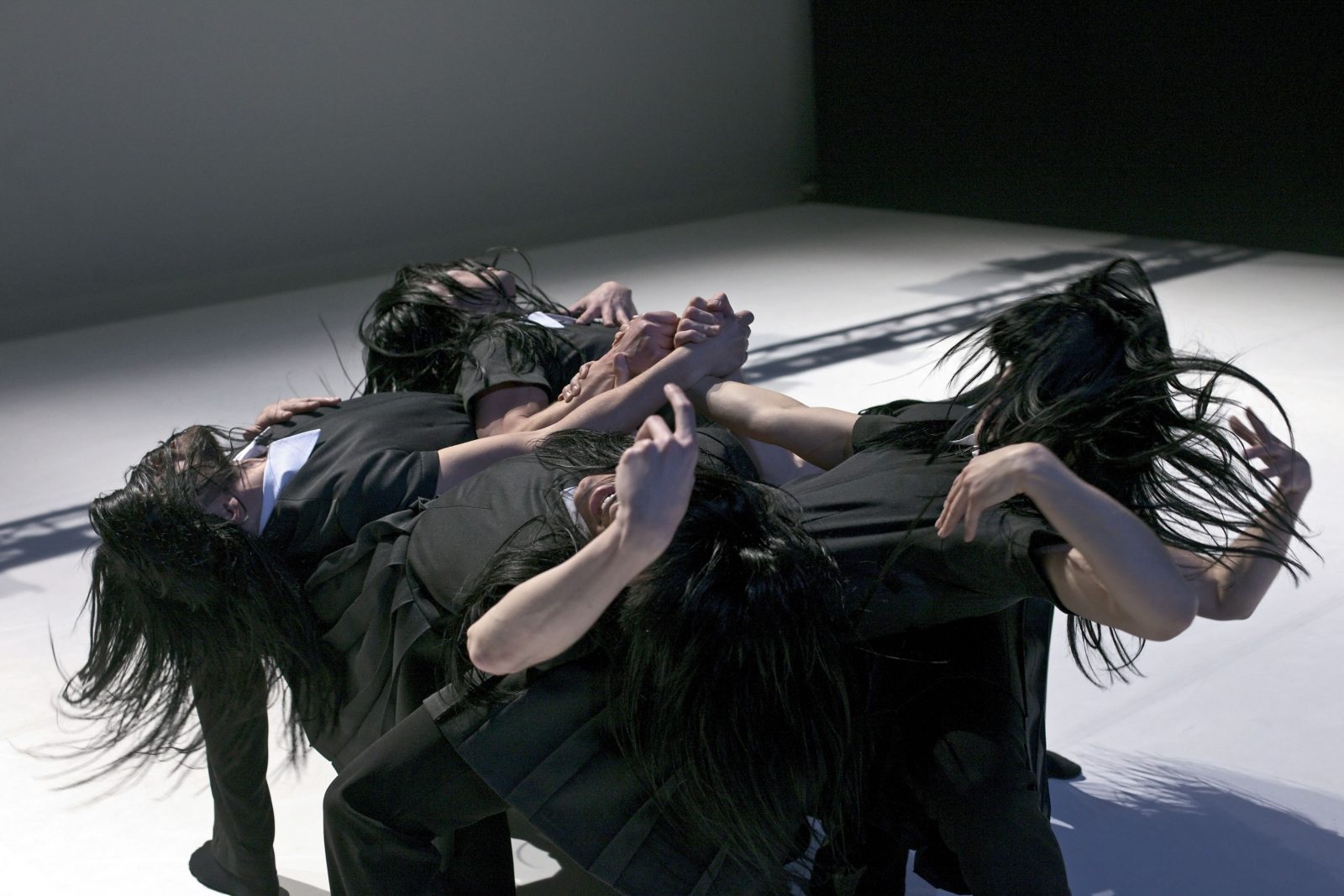
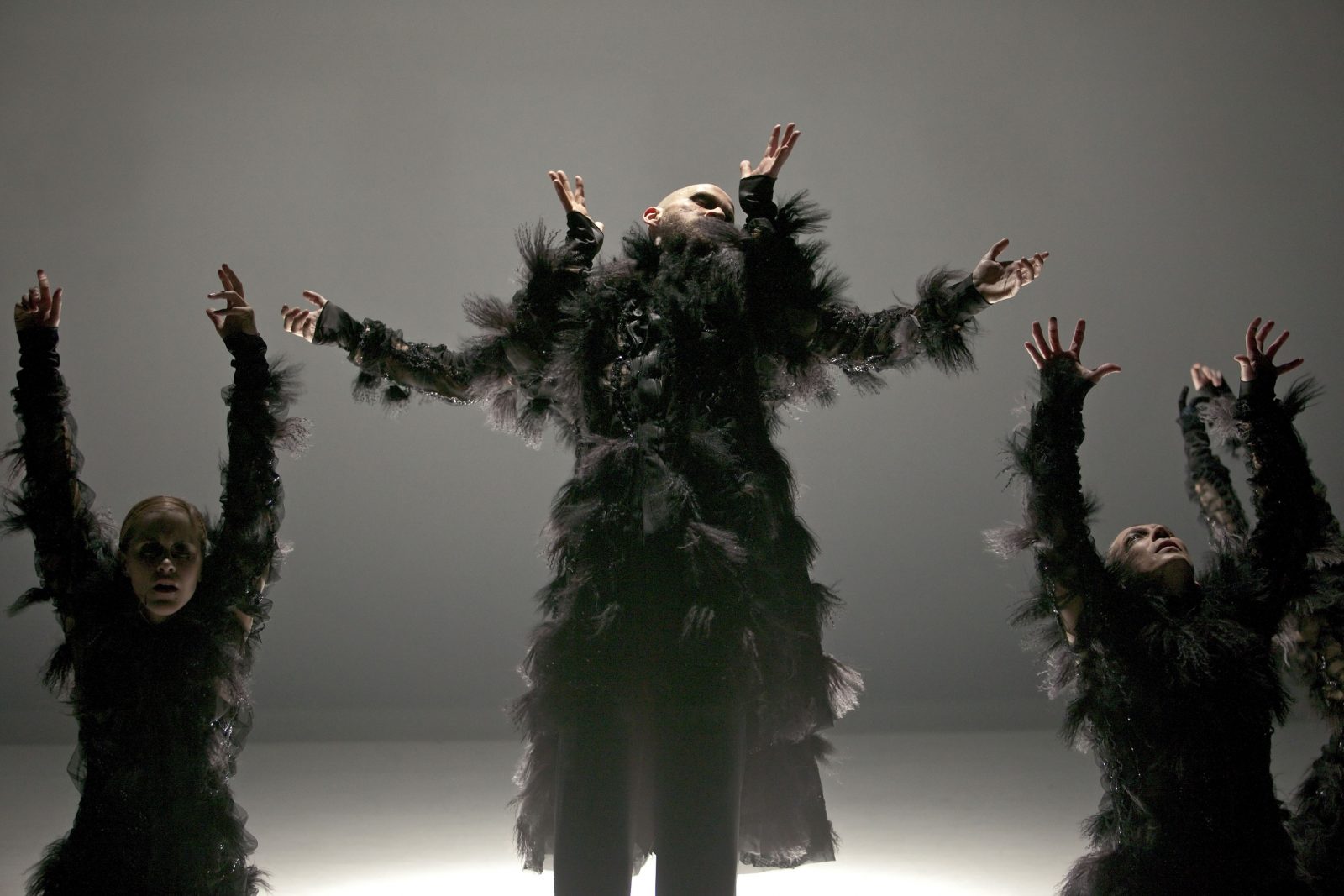
Erika Turunen has dressed the dancers in school uniform skirts for this scene. The dancers’ faces are covered by black wigs, except for the male dancers’ beards. The eerie characters on stage swing their hair ominously and shamelessly, as if they had escaped from the Japanese horror film Ringu. In addition to repeating songs, the performance repeats the same motions and step sequences, skilfully organising the movement into multiple layers as new dancers enter the stage. The numbness mentioned by the programme is only present when watching the quiet trio comprising Kenneth Bruun Carlson, Sofia Karlsson and Janne Marja-aho. The movement of the trio seems to drag on and on. The lighting design by William Iles creatively adapts to the performance. A fan of lights directed straight at the audience manages to create an especially beautiful moment during the performance. The dancers change their costumes frequently. With every change, the materials and colour shades selected by Turunen reach and touch the audience. (Translation: Multiprint Oy / Multidoc)
Read more
Turun Sanomat, 20110308
Review
Kaisa Kurikka
Magic echoed through dance
“The fluidity of the movement and the breathtaking skill expressed by the dancers draw the audience into a magical bliss.”
Kenneth Kvarnström’s YOUMAKEME is an intricately intertwined performance that twists and turns around the topic of repetition. First of all, the music in the performance stands on cover versions; new interpretations of original pieces of music. These covers are delivered by various performers, including interpretations by five dancers from the Helsinki Dance Company. In fact, the performance programme poses a candid question: how many times can you listen to the same song without getting bored or falling asleep? Well, frankly, neither was close during the performance, as it goes to show that nothing is ever repeated exactly identically. One of the most enchanting qualities of Youmakeme is the surprising nature of the performance. This draws from the rich emotional imprints of individual scenes, changes in the structure and the versatile use of visual elements. Enigmatic motion sequences lead into open vulgarity and even extend to macabre humour or soft motion flows.
Shamelessness taken to its limitsThe fluidity of Kvarnström’s movement and the breathtaking skill expressed by the dancers draw the audience into a magical bliss. One of the most alluring scenes is built around the song Feeling Good. During the version performed by Nina Simone, the tenderness of the dance is contrasted by the growling singing by the dancers, making the entire notion of feeling good glaringly ironic.
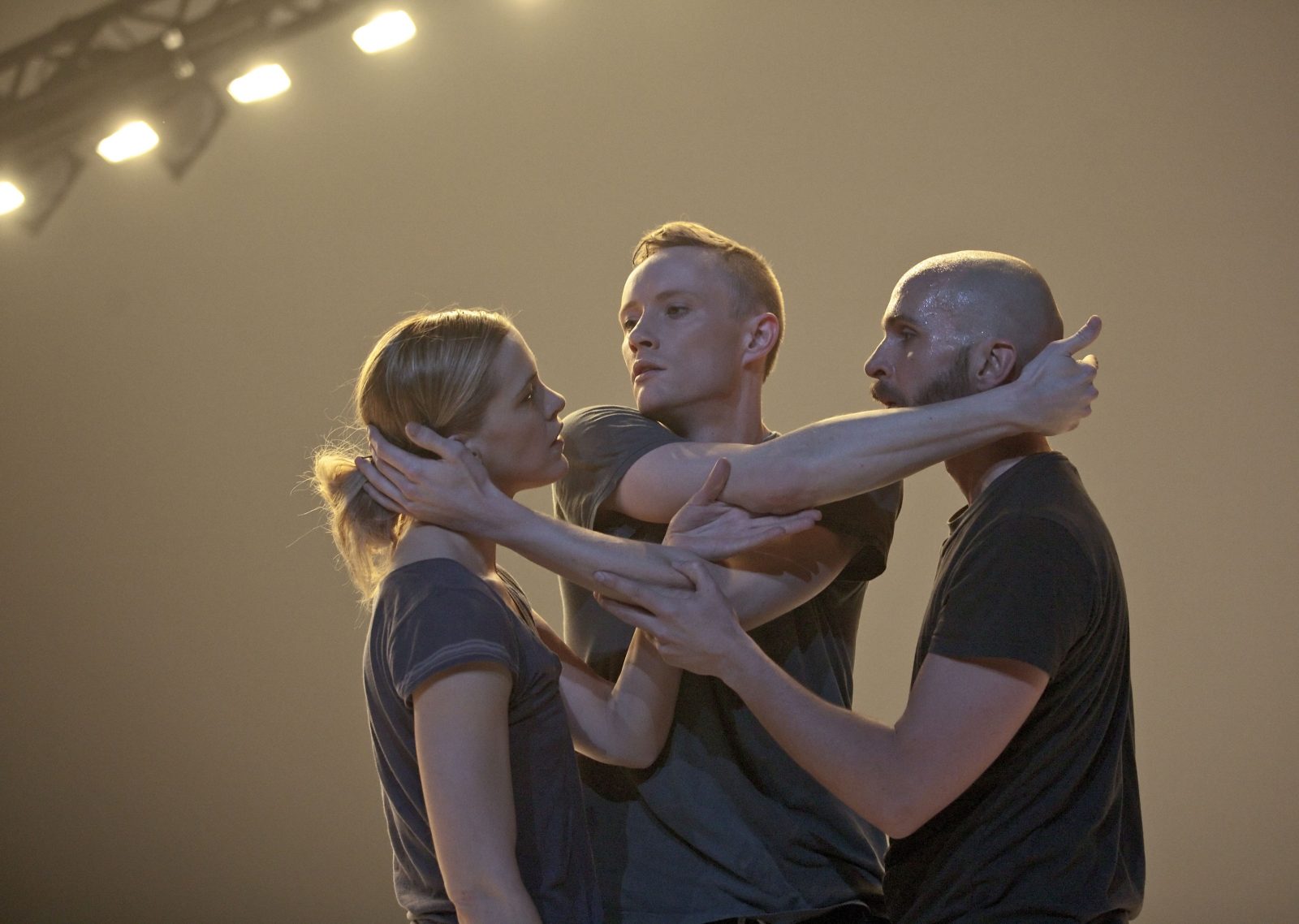
Erika Turunen has dressed the dancers in school uniform skirts for this scene. The dancers’ faces are covered by black wigs, except for the male dancers’ beards. The eerie characters on stage swing their hair ominously and shamelessly, as if they had escaped from the Japanese horror film Ringu. In addition to repeating songs, the performance repeats the same motions and step sequences, skilfully organising the movement into multiple layers as new dancers enter the stage. The numbness mentioned by the programme is only present when watching the quiet trio comprising Kenneth Bruun Carlson, Sofia Karlsson and Janne Marja-aho. The movement of the trio seems to drag on and on. The lighting design by William Iles creatively adapts to the performance. A fan of lights directed straight at the audience manages to create an especially beautiful moment during the performance. The dancers change their costumes frequently. With every change, the materials and colour shades selected by Turunen reach and touch the audience. (Translation: Multiprint Oy / Multidoc)
Read more
Hufvudstadsbladet, 20110308
Review
Jenny Jägerhorn
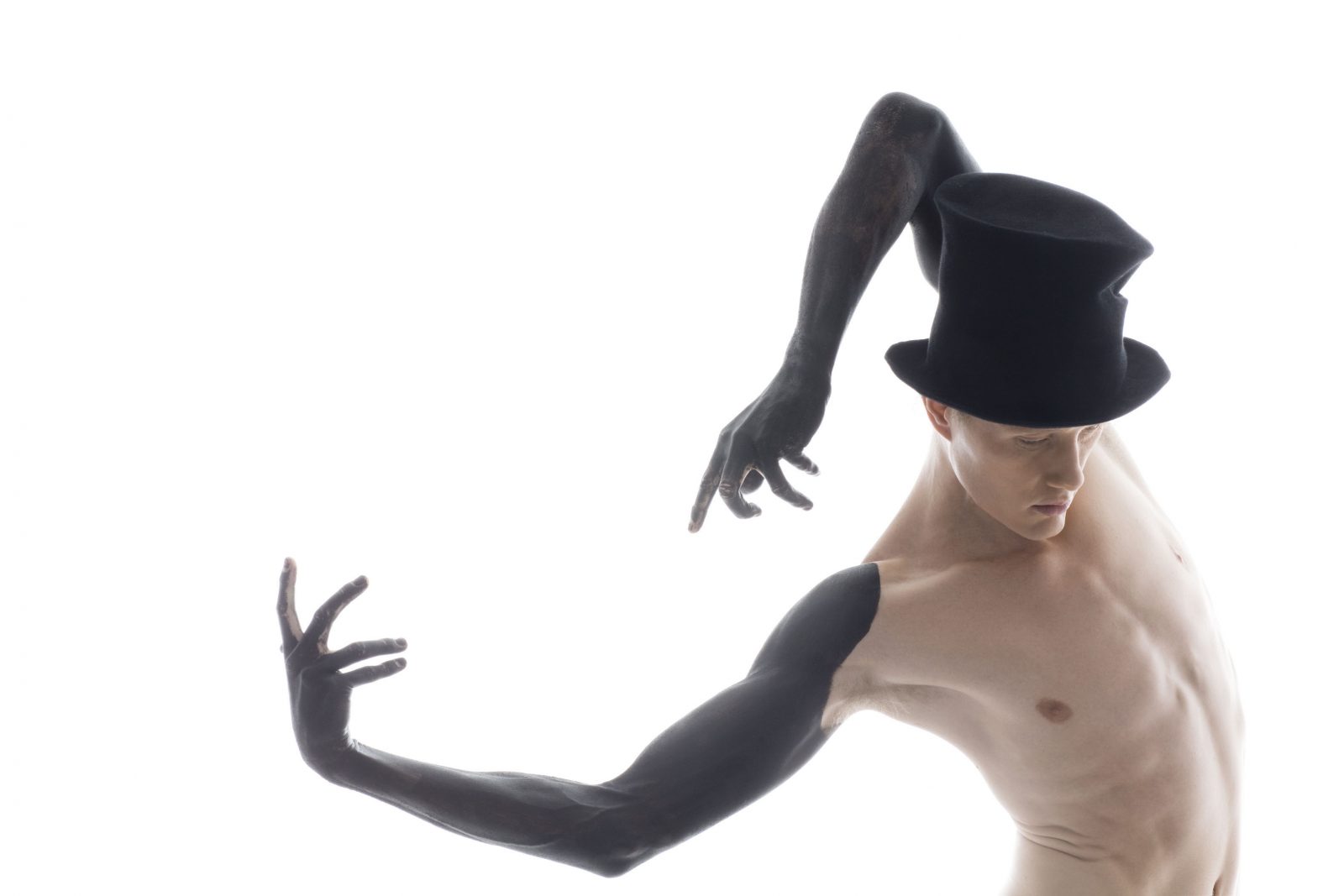
Kvarnström On New Ground In his new work YOUMAKEME, the choreographer Kenneth Kvarnström has started by interpreting through dance how we mirror ourselves through others. He plays with the dancers’ roles as dancers/actors and stretches the definition of what is dance. Can dance exist without music? Is dance without movement dance? Is dance by definition an interpretation of something else? Five dancers, Kenneth Bruun Carlson, Sofia Karlsson, Kai Lähdesmäki, Janne-Marja-aho and Valtteri Raekallio saunter around and warm up on the stage in training clothes. The lights dim and we’re taken to an absurd, dreamy inner-world with two faceless dancers completely dressed in leotards with spiky pants and cylinder hats. The steps are typical of Kvarnström and represent the fantastic, expressive ‘dance dance’ that has made him world-known: tensions and resolutions, an organisational and expressive language of movement and an ability to create magic on the stage. The magic disappears; the dancers change costumes on stage and explain to the audience what we are going to see next: different interpretations of covers, including Feeling Good by Nina Simone and Gloomy Sunday by Billie Holiday. They include sequences of crazy humour, sensual sensitivity, normality and inner dream worlds, and follow a repetitive circle pattern. The choreographer stretches the boundary between what is happening on stage and what is happening off stage. He lets the dancers pull masks on and off, shed skin to go, in the next moment, into the next role. At times they are themselves, at times they interpret roles.
Read more
Helsingin Sanomat, 07.03.2011
Review
Jukka O. Miettinen
Kvarnström flirts with horror and nightmares
Read more
Skenet, 20110314
Review
Sara Nyberg
YOUMAKEME In Kenneth Kvarnström’s latest dance performance, the audience makes the choreographer and the choreographer makes the dancer.
Read more
Elle.fi, 20110309
Review
Mirjami Pullinen
Nightmares and comic relief The YOUMAKEME dance performance causes a rush of emotions from nightmares to comedy. Helsinki City Theatre’s Studio Elsa has been taken over by the Youmakeme performance by K. Kvarnström & Co and the Helsinki Dance Company.The full attention of the audience was grabbed from the very beginning as two dancers dressed in spiked pants entered the stage. A blue sock was tied around the dancers’ upper torso and an ominous music backed their powerful dance. The dancers’ unemotional appearance bore resemblance to Hugo Simberg’s painting Halla, oozing out foulness and evil. Fortunately, the atmosphere soon became lighter, especially with the dancers’ own spoken intros. One of the key ideas behind the performance was to use repetition to test the audience’s ability to interpret the performance; by presenting different choreographies to the same songs. The three different choreographies for the song Feeling Good were quite impressive. The original recording by Nina Simone was interpreted by two male dancers who delivered an amazingly delicate, touching performance. In the second version of the song, the stage was overrun by an overly gloomy, even tragic-comic band of growling teenage metal heads full of angst. As the final version, the group performed a choreography for Muse’s take on Feeling Good, a version that overwhelmingly embraces the entire universe. The audience was also put to a test in one particular section where the dancers moved in complete silence, with only the dancers’ heavy breathing causing any kind of sound. At first, the scene felt very uncomfortable, as it was very hard to interpret the dancers’ movement. But once you figured out how to let go of all unnecessary attempts to understand or analyse, following the elegant silent movement became a pleasure in itself. Watching the brilliant dancers perform was a treat per se, as they all had their own nuances in their movement. One dancer first and foremost expressed strength, one was rich in nuances and the third blended all details seamlessly together. Special applause is due to the skilled lighting design by William Iles and the ingenious costumes by Erika Turunen. All in all, Kvarnström and his company succeeded in creating magical and powerful images that were both taxing and yet immensely wonderful to take in.
Read more
Hufvudstadsbladet, 08.03.2011
Review
Jenny Jägerhorn
Kvarnström On New Ground In his new work YOUMAKEME, the choreographer Kenneth Kvarnström has started by interpreting through dance how we mirror ourselves through others. He plays with the dancers’ roles as dancers/actors and stretches the definition of what is dance. Can dance exist without music? Is dance without movement dance? Is dance by definition an interpretation of something else? Five dancers, Kenneth Bruun Carlson, Sofia Karlsson, Kai Lähdesmäki, Janne-Marja-aho and Valtteri Raekallio saunter around and warm up on the stage in training clothes. The lights dim and we’re taken to an absurd, dreamy inner-world with two faceless dancers completely dressed in leotards with spiky pants and cylinder hats. The steps are typical of Kvarnström and represent the fantastic, expressive ‘dance dance’ that has made him world-known: tensions and resolutions, an organisational and expressive language of movement and an ability to create magic on the stage. The magic disappears; the dancers change costumes on stage and explain to the audience what we are going to see next: different interpretations of covers, including Feeling Good by Nina Simone and Gloomy Sunday by Billie Holiday. They include sequences of crazy humour, sensual sensitivity, normality and inner dream worlds, and follow a repetitive circle pattern. The choreographer stretches the boundary between what is happening on stage and what is happening off stage. He lets the dancers pull masks on and off, shed skin to go, in the next moment, into the next role. At times they are themselves, at times they interpret roles.
Read more
Uutispäivä Demari, 08.03.2011
Review
Annikki Alku
Youmakeme – elegant but unsurprising
Read more
Uutispäivä Demari, 20110308
Review
Annikki Alku
Youmakeme – elegant but unsurprising
Read more
Helsingin Sanomat, 20110307
Review
Jukka O. Miettinen
Kvarnström flirts with horror and nightmares
Read more
No comments yet