A song of praise to art and the special qualities of Loiri
Vesa-Matti Loiri was an exceptionally versatile artist with a unique voice, who moved sovereignly between art and entertainment, and worked with film, television, theatre and music. But how did he become a well-known, beloved folk artist?
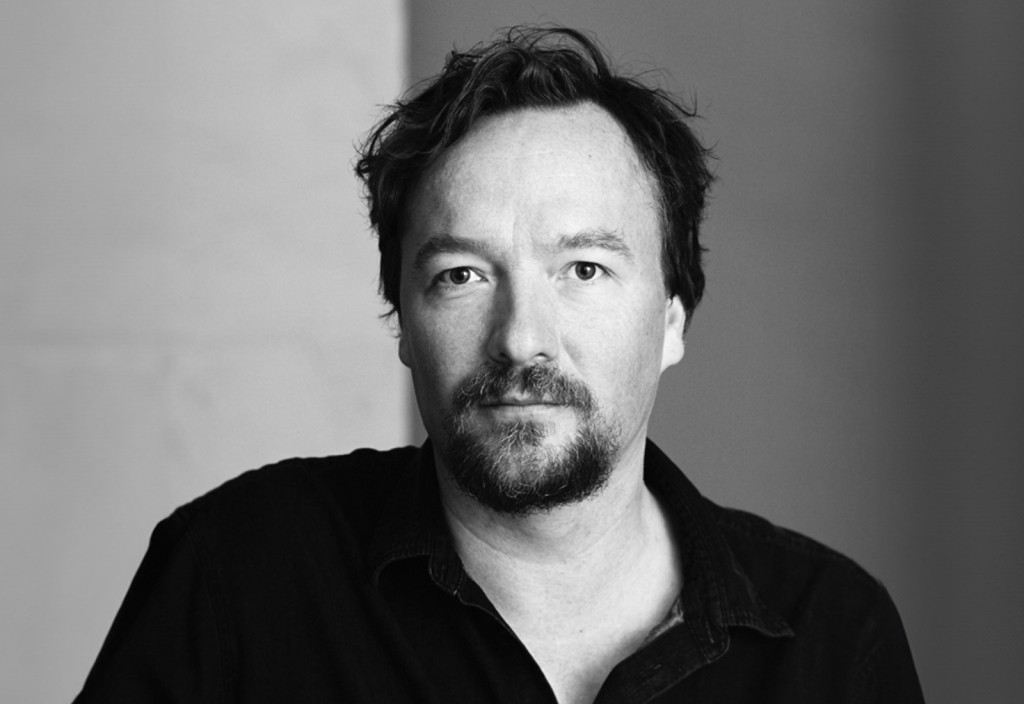
“I think he had curiosity, courage, the ability to be captivated, and of course his talent is clear. Perhaps also contradictory aspects and, above all, the belief that honesty has its own value,” says director Paavo Westerberg.
The Story of the Laughing Vagabond, written by Sami Keski-Vähälä and adapted by Westerberg, tells the story of Loiri’s artistry and asks how life stories are born. It ponders whether an artist can trust that their inner voice and intuition will take them where they are supposed to take them.
The work also deals with how Loiri’s artistic work affected the rest of his life. “Of course, it’s a dramatically interesting question, what has been the ransom for the songs,” Westerberg says.
However, he thinks that the idea that artists are selfish is a bit of a cliché. “Rather, I think that artists can be very demanding and unreasonable towards themselves and passionate when practicing their profession and fulfilling their calling.”
According to Westerberg, it does not matter whether the work is entirely fictional or whether it tells about events that are familiar to the audience in some respects.
“A more significant thing is that we are able to create a world on stage that is unique and has its own voice, only the world of the performance. In the best case, the viewer can bring their own meanings to it, but we are at least partially free from some shackles related to the outside world,” Westerberg says.
The era of a unified culture
The focus of the play is on the 70s and 80s, but there are also glimpses of Loiri’s earlier years and later life.
“When you tell a story that is based on a multi-talent who has done such a huge life’s work, you have to make boundaries,” Westerberg says.
The play focuses especially on the era of a unified culture, where Westerberg felt that solidarity, a strong belief in civilisation and the idea of the intrinsic value of art were emphasised.
“Whether it was comedy in film and television, or singing poems on a record or theatre art, everything was approached using the same rules. It was more about service, and it wasn’t so much about valuation,” Westerberg says.
The play touches on Loiri’s key theatre and television work and features some iconic film and entertainment characters. At the same time, the exhibition examines the time frame in which the works were created and how various incidents can sometimes affect their creation.
One such moment is related to Eino Leino’s compositions. Loiri forgot in the back room of Tavastia a C-cassette he had received from composer Perttu Hietanen, which had Leino demos. When Loiri later realised that he had lost the cassette and went to hunt for it, it may have been a small matter that the Leino recordings would not have been made.
“If he had never found the cassette, would Eino Leino have remained obscure for many generations? However, the songs have been a significant distributor of Leino’s poetry,” Westerberg reflects.
In addition to the Eino Leino songs, the play also features other music made famous by Loiri, also in new arrangements. There is a live band on stage all the time.
According to Westerberg, music carries emotion and story, but the decisions are made on the terms of the drama, and the characters do not burst into song, so to speak.
The power of art
At the time of the unified culture, entertainment and art were separate from each other in Finland, but Loiri operated in both fields at the same time. Westerberg thinks that Loiri did not seek approval from either camp, but did what he felt he wanted to do at any given time.
“A protagonist like this, who builds bridges between art and entertainment, right and left, is the best possible pastoral care at a time when we have polarization. The performance is an important statement about the power of art to bring people together,” Westerberg says.
Westerberg hopes that with the help of Loiri’s life story, the play will remind us of how valuable it is to listen to the most sensitive signals of humanity.
“At their best, art and entertainment can be one of the tools for noticing them. In that sense, the performance is a song of praise to art and Loiri’s special qualities: music, acting, performing.”
The goal is to make a warm, poetic and touching performance,” Westerberg says. It allows us to reminisce about a time that no longer exists and experience art that will stay with us forever.
Text by Ida Henritius.