Already Clifford’s arrangement finds the core of the Humming Ridge
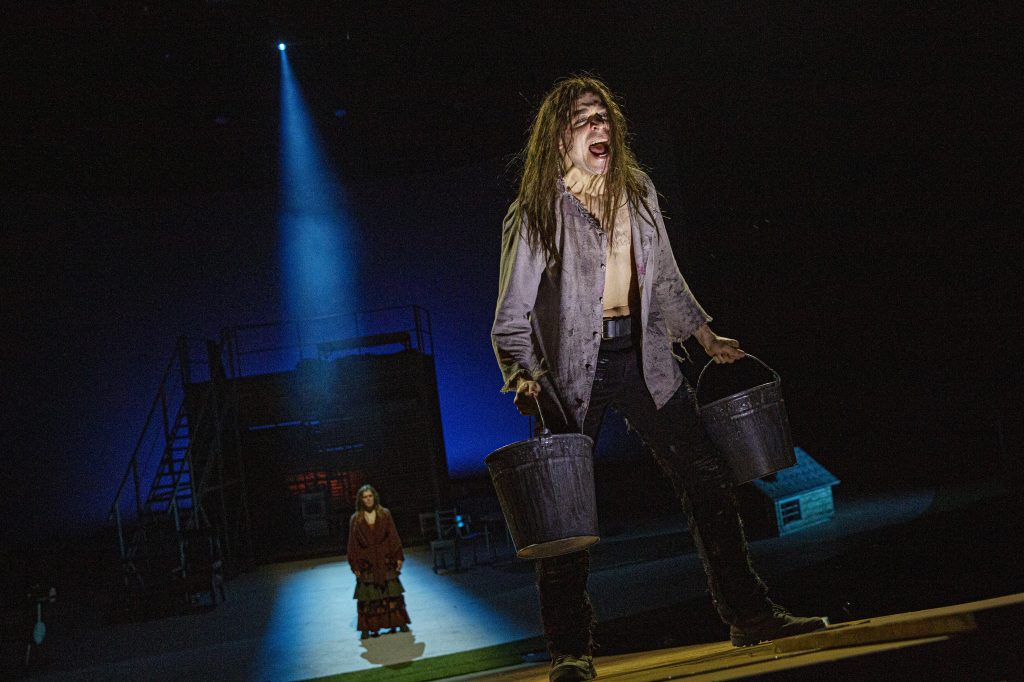
Emily Brontë’s novel The Humming Ridge is one of the most significant Western novels. The masterpiece, which meanders from one generation to the next and focuses on abuse and psychological violence, tells the story of love between two people perhaps more poignantly than any other classic.
The adaptation by the Scottish Jo Clifford focuses on the icy core of the novel. He summarises the work into central characters, removing numerous secondary characters from the story. What remains is the hard heart of a work of art.
The triangle drama between Heathcliff, Catherine and Edgar Linton is a turbocharged mental battle in which the strongest wins and the weak are bulldozed into the darkest corner of a decaying mansion. On the other hand, Catherine’s brother Hindley Earnshaw’s search for happiness and his quest to build an intact life is unparalleled in all its selfishness and brutality.
With his choice of scenes, Clifford makes a razor-sharp analysis of a divided world where neither the poor nor the rich find their happiness. In an almost apocalyptic landscape, people wandering past each other offer an opportunity to reflect on the present and the future. Where do we humans come from and where are we headed?
Clifford writes on his website: “The task of an artist is to help people dream, imagine, create the new values and structures needed by the world of the future.” In my opinion, this aspiration is nicely visible in his wonderful dramatization.
Ari-Pekka Lahti