Annikki Kariniemi, real-life Colonel
The protagonist of the play The Colonel remains anonymous, but he has a role model in reality. Although there are differences in the details of the life stories of the fictional Colonel and the writer Annikki Kariniemi, Kariniemi's eventful life is the basis for the Colonel's story.
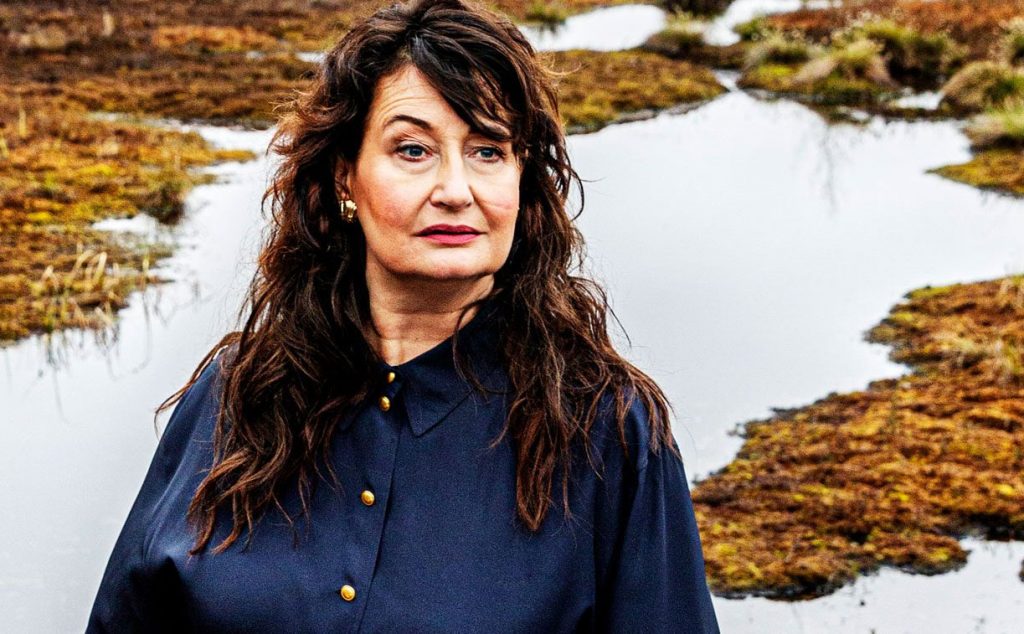
Rosa Liksom’s novel The Colonel and the play based on it have been inspired by the life of author Annikki Kariniemi . Although the Colonel is a fictional character, Liksom says in an interview with Lapin Kansa that she tried to tell a realistic story: “I have taken it as my guideline that even though not all the events in the book have actually happened, they could have happened.”
Unconventional marriages
Author Annikki Kariniemi was born in Rovaniemi in 1913, the eighth of nine children in her family. The family’s livelihood was sometimes meager, but the religious and strict mother Jenny and the bohemian father Eemeli invested in their children’s education and spiritual education. Kariniemi’s father died of a heart attack when the girl was only 11 years old.
As a child, Kariniemi became acquainted with his father’s friend, Jaeger Colonel Oiva Willamo, who had worked as the Chief of the Lapland Border Guard District. Kariniemi admired Willamo, but she married Viljo Oskari Alatalo , the son of a farm, for the first time in 1938. The marriage lasted only two years, and even before it ended, Kariniemi started dating Willamo. Kariniemi and Willamo married in 1944.
… and never revealed which of the events in the book are based on reality
Willamo, who was 26 years older than Kariniemi, turned out to be a cruel husband, and the marriage ended in divorce in 1962. After Willamo’s death, Kariniemi published a strongly autobiographical novel Anatomy of a Marriage, in which he tells the story of an abusive relationship between a general and a woman three decades his junior: a man who has fought several wars abuses his wife for years and even causes his wife to have a miscarriage with his violence. In the interviews, Kariniemi implied that he had mixed facts and imagination in the novel and never revealed which of the events in the book are based on reality.
Kariniemi’s last marriage was in 1963 to Taisto Heikanmaa , a general worker who was three decades younger than her. Kariniemi and Heikanmaa met at a literature club for children and young people led by Kariniemi. The marriage raised several eyebrows, and Kariniemi took the couple away from
By selling stories about their lives to the magazine Hymy. Kariniemi and Heikanmaa parted ways in 1979 when Heikanmaa found another woman. The relationship between the two did not break completely, and Kariniemi later became the godmother of Heikanmaa’s child.
From the far right to a conservationist
Kariniemi described his childhood home as patriotic, right-wing and German-friendly. Her eldest sister, Viola , had been a candidate for parliament for the right-wing radical Patriotic People’s Movement (IKL), and Kariniemi herself was a member of the youth section of the IKL. At the age of 20, she even took part in a parade at the Karelian Tribal Festival in Oulu in the ranks of the IKL – and as the only woman. Kariniemi was also a member of the Lotta Svärd organisation.
During the war, Kariniemi worked in Karelia as a telegraph operator and in Rovaniemi as the secretary of the Liaison Headquarters Roi. During the war years, Kariniemi and Oiva Willamo spent a lot of time with high-ranking Nazi officers in Lapland, such as Colonel General Eduard Dietl. Kariniemi’s personal diary entries from the wartime show strong confidence in Germany’s victory, and he called the end of the war a peace of shame.
After the wars, Kariniemi reportedly did not participate in the activities of any political parties anymore. Later in life, he described himself as an independent radical who retains the freedom to criticize the work of all parties.
From the 1970s onwards, Kariniemi’s interest was primarily focused on nature conservation. In several of his books, he strongly criticised the harnessing of Lapland’s nature for industrial use. Kariniemi’s environmental activism was not limited to her fiction production, but she also wrote opinion pieces and newspaper articles, appeared as a speaker and supported a wide range of projects defending Lapland’s nature.
Three decades as a writer
Annikki Kariniemi published her first book Poro-Kristiina in 1952. In the early 1960s, she left her job as a teacher and became a full-time writer. Kariniemi wrote 32 works representing several different genres. Among them are wilderness books, historical novels, romance novels and young adult literature.
Kariniemi placed his works in Lapland. He drew inspiration from his own experiences, northern nature, Sámi culture and history, among other things. Kariniemi broke boundaries as Finland’s first female wilderness writer. She dealt with a wide range of historical topics: from Lars Levi Laestadius to the relationships between Finnish women and German men in Rovaniemi during the Second World War.
Kariniemi’s books sold well. Like most successful works, they divided the opinions of critics and readers – some found the text compelling and the description of nature impressive, others were amazed by the straightforward narrative and the revelations referring to the author’s own life. During his career, Kariniemi was awarded the State Prize for Literature and the Recognition Award of the Union of Finnish Writers, among other things.
Annikki Kariniemi died in October 1984. The author’s memory is kept alive by the Annikki Kariniemi Literary Society, which organizes the Annikki Kariniemi Week in Ylitornio every year, highlighting different aspects of Kariniemi’s work.
Siiri Liitiä
Read more about Annikki Kariniemi
- Biographical article in the Women’s Voice series published by the Finnish Women’s Association
- Marja L. Tuominen’s doctoral dissertation: I live this Lapland about Kariniemi’s life and relationship with nature
- Kariniemi’s literary production in the Kirjasampo service
- In an interview with Lapin Kansa, author Rosa Liksom talks about the connections between the Colonel’s story and reality