Daring to become who you are
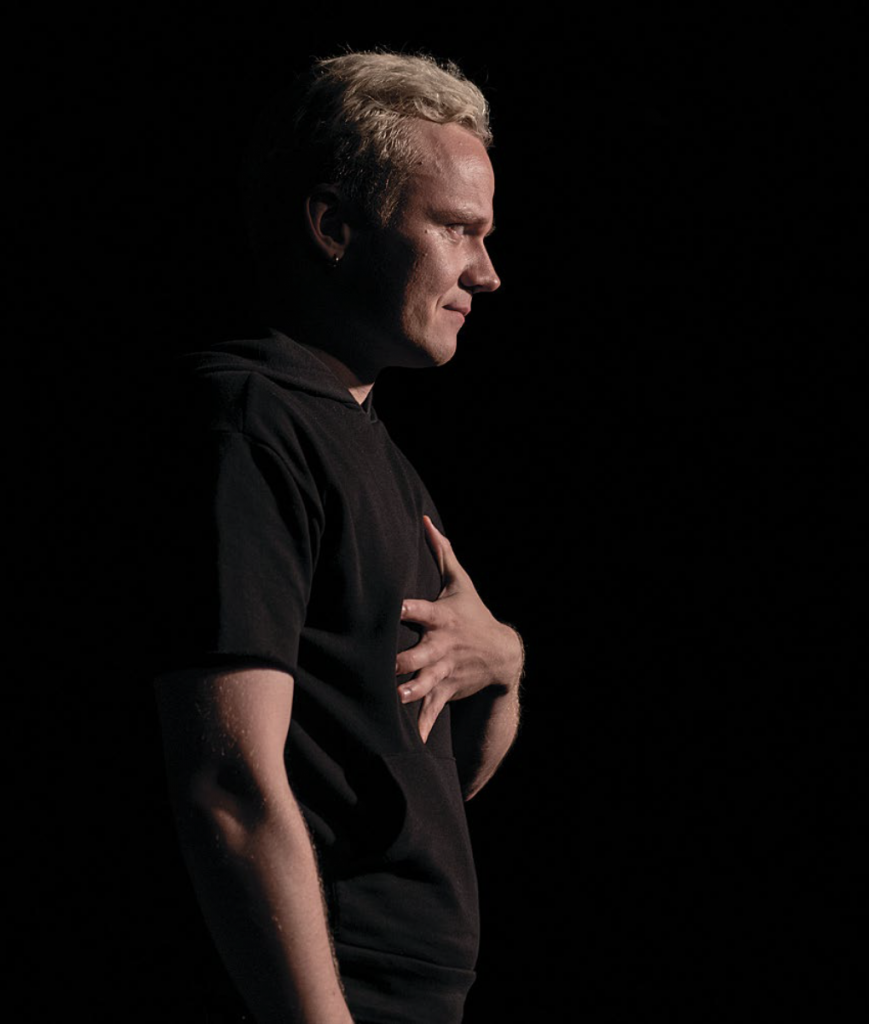
The story of Miiko, 30, from Jakobstad is a story about daring to turn your life around.
Throughout his childhood and upbringing, Miiko Toiviainen had been a girl in everyone’s eyes, but he himself felt early on that something was chafing. As a 20-year-old, he finally took the plunge and had his gender corrected.
The unique experience of having been “inside” both female and male circles, and how shocking the differences between them can actually be, forms the basis of Miiko’s award-winning monologue about identity, gender and the courage to turn one’s adversity into a personal strength.
“Suddenly, my jokes were laughed at, and I was less often interrupted when I was speaking,” Miiko says. “I felt that I was suddenly, as a man, seen as more credible and serious.”
Walking home in the evenings was not as eerie, as the threat of sexual violence was now gone. All harassment also stopped.
“For example, I noticed that no one was crowding close to you on the bus or train.”
A gender reassignment changes a lot, but that doesn’t mean that life has suddenly become perfect. Many outdated notions of binaries and expectations of gender roles persist.
“In the past, all trans people in films always did badly – they were raped, beaten and killed,” Toiviainen recalls, and hopes to be able to contribute to a positive change.
The Life That Has Been Given to Me (Kepeä elämä) is a bottomlessly clear-sighted, important, playful and captivating story that has toured from Kajaani and Oulu via Lahti and Hämeenlinna to Helsinki to have its Swedish-language premiere at Lilla Teatern in December. During the spring, Toiviainen and his text have been able to tick off the Theatre Actor of the Year and Monologue of the Year 2020 awards, among others. It is a unique and uplifting theatrical experience with a strong nerve in the present, which surely for many helps to broaden the view of what it means to be trans.
“It’s a part of one’s identity that many people let overshadow everything else they are.”
The translation from the original Finnish text has been supported by the Konstsamfundet association and the production of the play has also been supported by the Finnish Cultural Foundation, the Alfred Kordelin Foundation and the Swedish Cultural Foundation in Finland.