Ella Mettänen on her role as the Red Widow: “The mother’s story is a harrowing experience.”
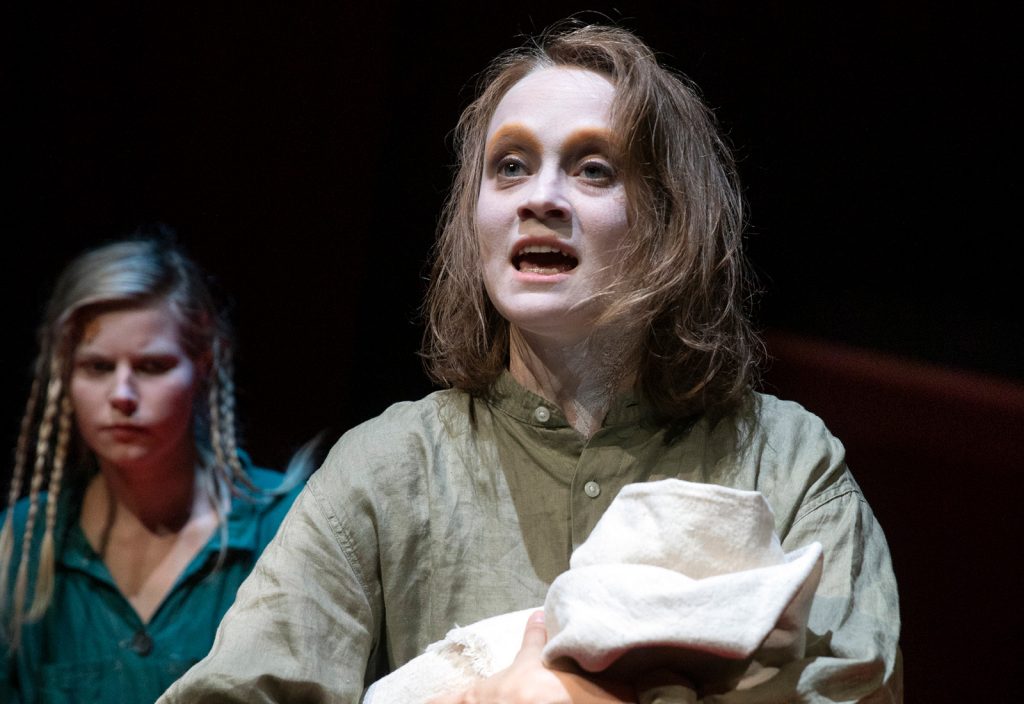
When the Finnish Civil War ended in 1918, many Red widows began a new kind of struggle for survival. Traumatized women had to struggle to keep their families together and children alive.
In Red Orphans, actress Ella Mettänen (b. 1989) plays a red widow and mother of four who is depressed, helpless and unable to take care of her own children. Mettänen was able to swim into the role through the guilt felt by her mother.
“The story of a mother is a harrowing experience, even though I am not a mother. Without knowing anything about motherhood, there is something so touching and heartbreaking about it that a mother can feel such terrible guilt for her children’s suffering,” Mettänen says.
After the war, the situation of many mothers was so difficult that they were unable to take care of their children. Red orphans were sent to foster homes in Ostrobothnia and South Savo, as the countryside was seen as a mentally healthier environment for growing up. There was also concern that children in poor homes would live in an atmosphere of socialism and bitterness.
The intention of Operation Ostrobothnia was good, but it caused enormous shame and guilt. Mettänen says that he feels empathy for the characters in the play every day.
“The story is extremely moving. Not all texts are equally touching to experience big, genuine emotions,” Mettänen explains. During a reading exercise on Zoom in May, she burst into tears while reading a scene at the end of the day, even though some of the working group were still strangers at that point.
Return to the familiar stage
Mettänen, on the other hand, has worked with director Lauri Maijala before. Mettänen played a 13-year-old teenage girl in Riistapolku, which is Maijala’s previous direction on the small stage of the Helsinki City Theatre. Some of the visitors to the play were also already familiar to Mettanen.
“When I didn’t have to get to know the house or a completely new team, I was able to dive straight into the work,” Mettänen says, admitting that he was more courageous to have a discussion about his own role.
“I’ve been careful about how I want to play my role. The agreement has been reached more through discussion than before,” Mettänen explains. He does not tend to think about his role before rehearsals, so that the play would be a joint creative process where everything affects everything. Thinking too much in advance feels locking in a bad way.
“Lauri is quite funny and liberated in such a way that it frees everyone else and it becomes everyone’s work. It’s really easy to be in practice,” Mettänen describes.
In theatre making, Metminen is particularly attracted to physicality and the fact that she is creating a work of art as a whole. Theatre feels physically different and more like life. At its best, the stage is comprehensively present.
“The best thing about the job is doing and experiencing things together with people and the huge sense of belonging in the middle of work. In the theatre, you are literally attached to each other’s skin, which means that togetherness is formed in a completely different way,” Mettänen sums up.
The fate of the Red Orphans is moving
Due to the intense and intensive training period and the touching topic, Mettänen has also thought about his role exceptionally much in his free time. “We have been practicing with a certain kind of intensity, which affects the fact that we have been able to recover our mind and body in a completely different way than usual,” Mettänen says.
The fate of the Red Orphans was not a familiar topic for Mettinen before, even though he has read a lot about the Civil War. According to Mettänen, it is good for both the creators and the viewers to know and understand the background against which the fictional work and the emotional story are made.
“Part of the trauma of the Civil War has been that children have been taken from their families partly without the consent of widowed mothers. Terrible things have happened in the aftermath of the war, when there has been an emergency and people have died of starvation and malnutrition,” Mettänen ponders.
In Red Orphans, the mother is taken away from her youngest children, after which she is left alone with her eldest child. Although the children ending up in foster care is sad, the play is not completely desolate. Extreme evil also brings out extreme good.
“There is a lot of love and care involved, and the ending may be cathartic. Especially now that this has been a strange time, I think and hope that this performance has the potential to create a cleansing feeling. I hope that people will go home with hope.”
Text Ida Henritius