Kirkko & Kaupunki, 2007/45
Review
Marja Kuparinen
YOUNG PEOPLE REBEL – AND A LITTLE OLDER ONES TOOWhen it was the end of the 60s, and especially the year 1970, described by Belyakov’s winter , we were sitting reading an exam and did not understand that we were living in the Great Historical Age. The ossified society was irritated in many directions. Finnish radical students who had previously opposed the occupation of Czechoslovakia turned to the Soviet Union, and Ambassador Alexei Belyakov engineered a revolution in the country.
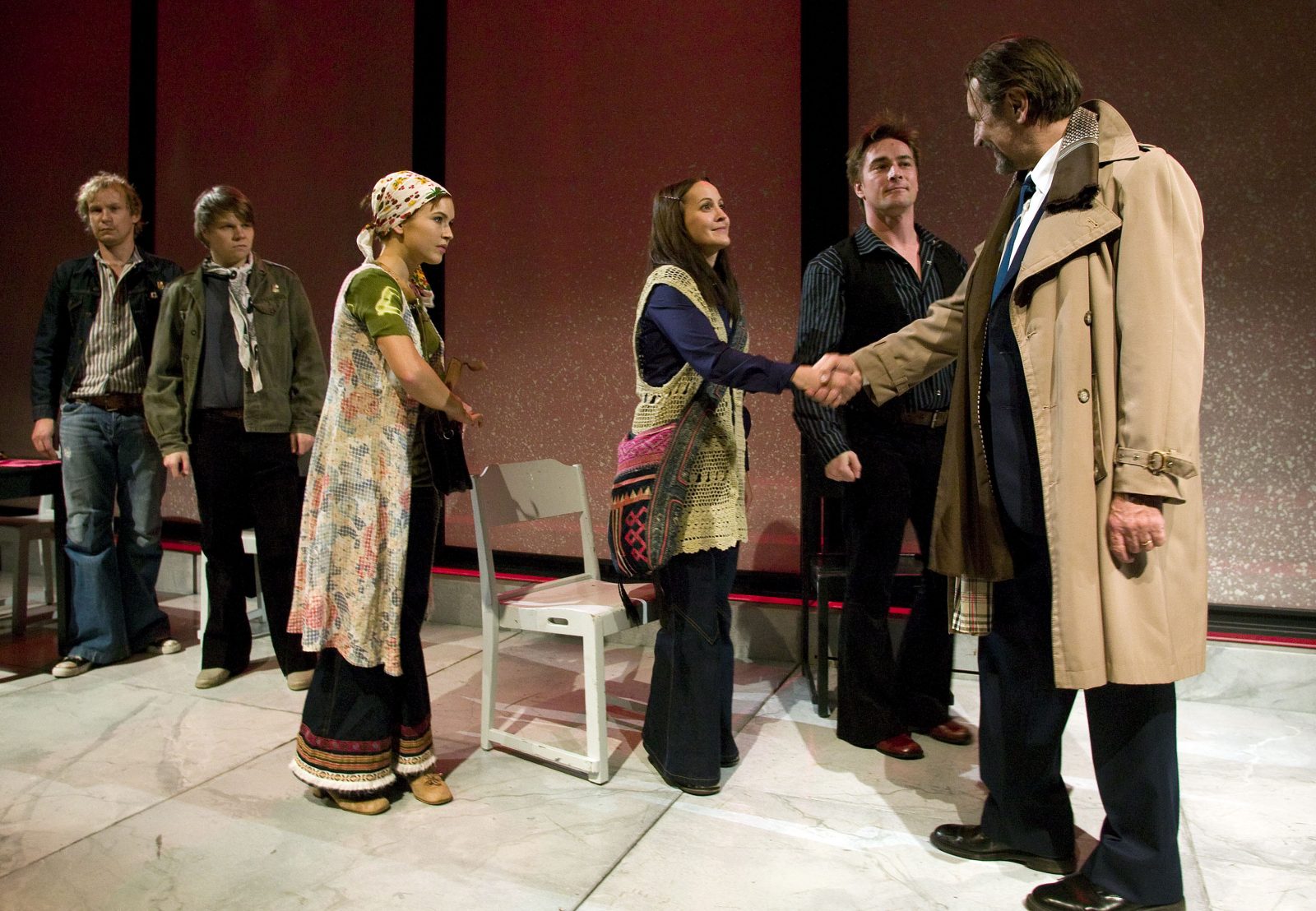
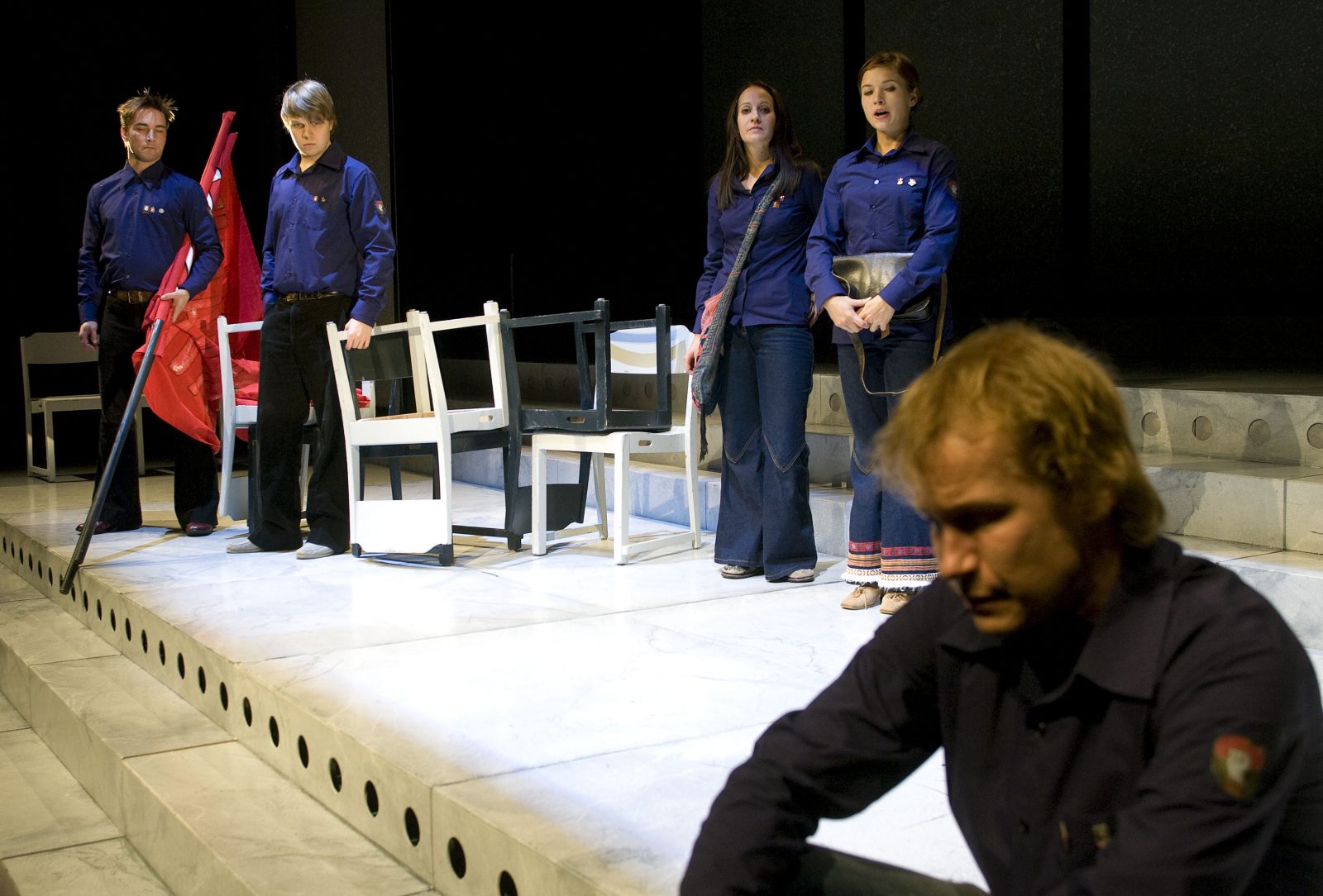
However, in Ilpo Tuomarila’s play, which is based on Kimmo Rentola’s research, young people are flimsy and harmless. The reasons for the rebellion are personal for many. The defiance of the young people’s memorized phrases makes me smile, but the old workers’ songs still bring back memories and make my foot tap to the beat.It will probably take a few more years before this more thorough worldview of the Stalinist youth can be brought to the stage. It would be necessary, because the French youth, for example, did not go along with the Soviet Union – and not all Finns either.There are no experienced communists in the play, but all the young people experience their political awakening, some to rebel against their father and relatives, some because of the relationships offered by the group.At the end, young people who have lost their illusions appeal on stage to how the world’s distress and the sincere hope of a better society were the noble driving force behind everything. The disappointment is understandable, but I guess the revolution was really serious?
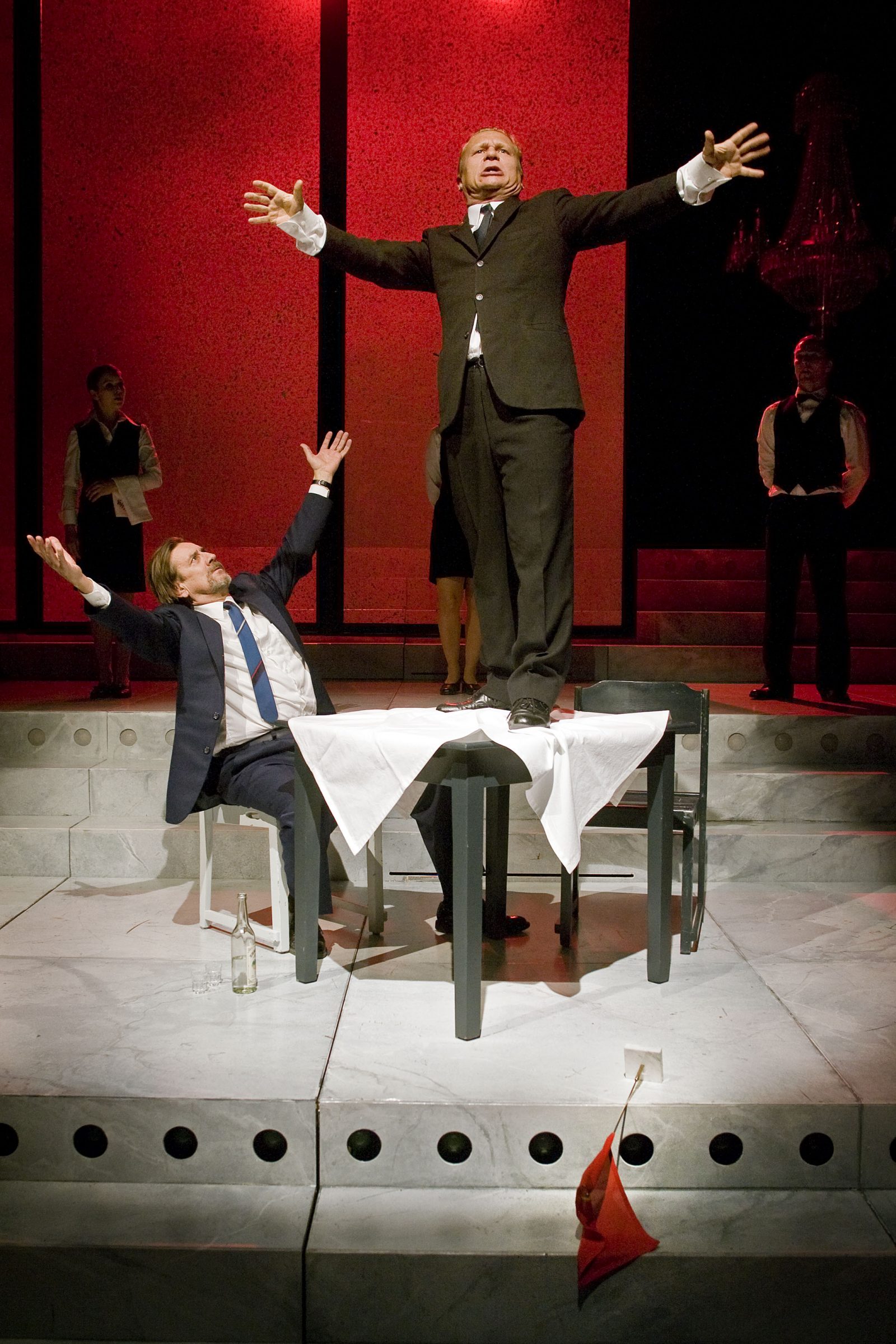
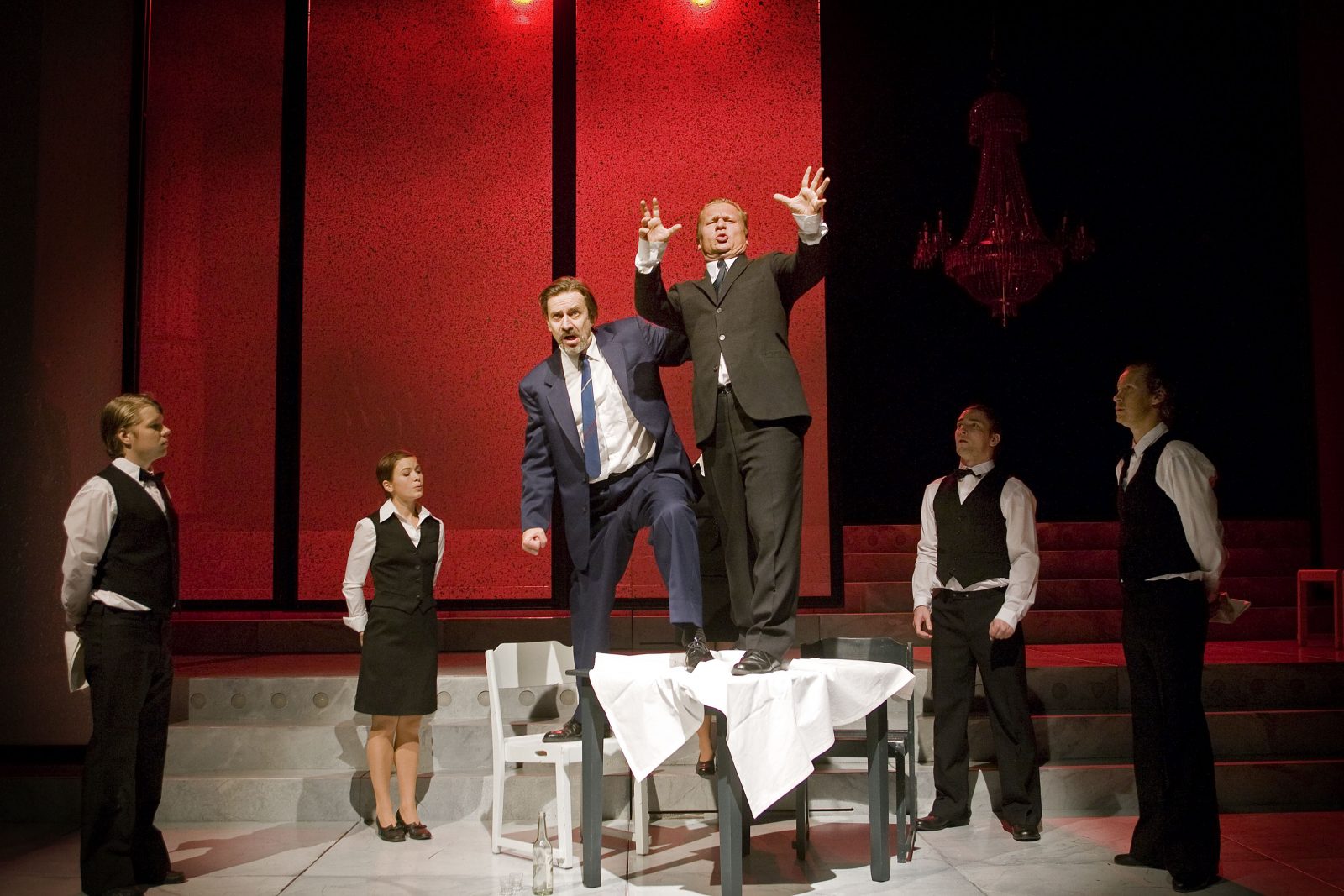
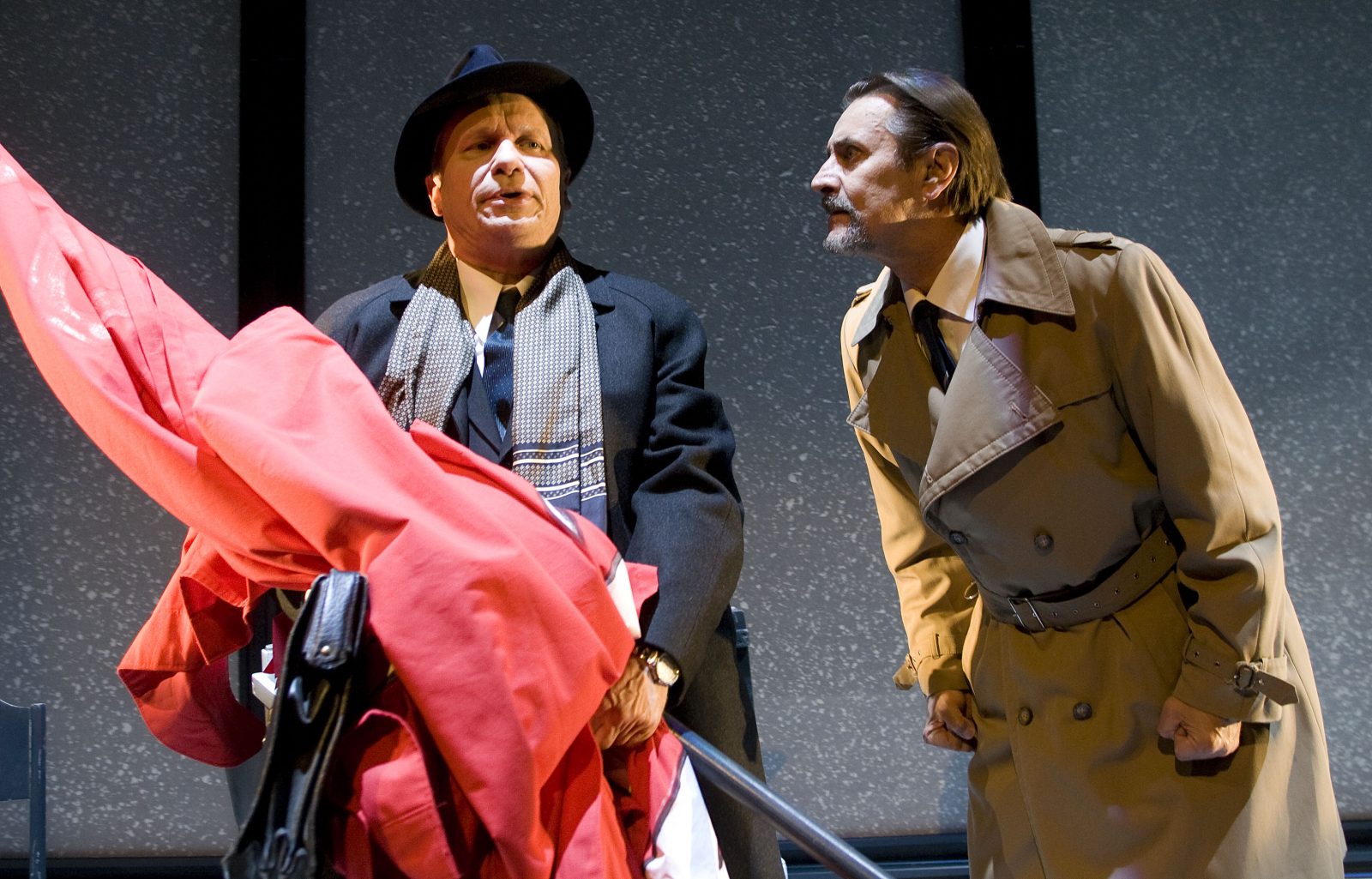
The most sympathetic characters in the play, directed by Milko Lehto, are Kekkonen (Antti Litja), who was squeezed by the political situation in 1970, and the almost demonically fascinating Beljakov (Pekka Laiho). Pertti Koivula’s Foreign Minister Leskinen with his liquor problems makes us laugh, but he leaves the president very alone and is easily managed by Beljakov.
Belyakov’s Winter fulfills its function perfectly if it makes the viewer examine their own memories of this period. However, today’s young people can ask unpleasant questions.
Read more
Karjala, 29.11.2007
Review
Terttu-Elina Kalaja
RED FLAGS AND BRIGHT BROTHS
Read more
Länsi-Uusimaa, 12.11.2007
Review
Kaarina Naski
ONE WINTER’S SNOW?
Read more
Kansan Uutiset, 09.11.2007
Review
Arja-Anneli Tuominen
Revolution
which did not come
Read more
Aamulehti, 03.11.2007
Review
Soila Lehtonen
THE IDEOLOGICAL DAWN OF THE EAST EXTOLLED THE YOUTH
Read more
Gloria, 12/2007
Review
Liisa Talvitie
BRILLIANT RECENT HISTORYChills run down my spine when Antti Litja plays Urho Kekkonen. He is Kekkonen down to his gestures! Ilpo Tuomarila’s play Belyakov’s Winter tells the story of the danger Finland was in in the early 1970s. Ambassador Beljakov, in whose shoes Pekka Laiho empathizes with full force, tried to cause division with the help of the Taisto youth. There will be interesting interpretations of recent history and thought-provoking theatre directed by Milko Lehto .
Read more
Hufvudstadsbladet, 20.11.2007
Review
Tuva Korsström
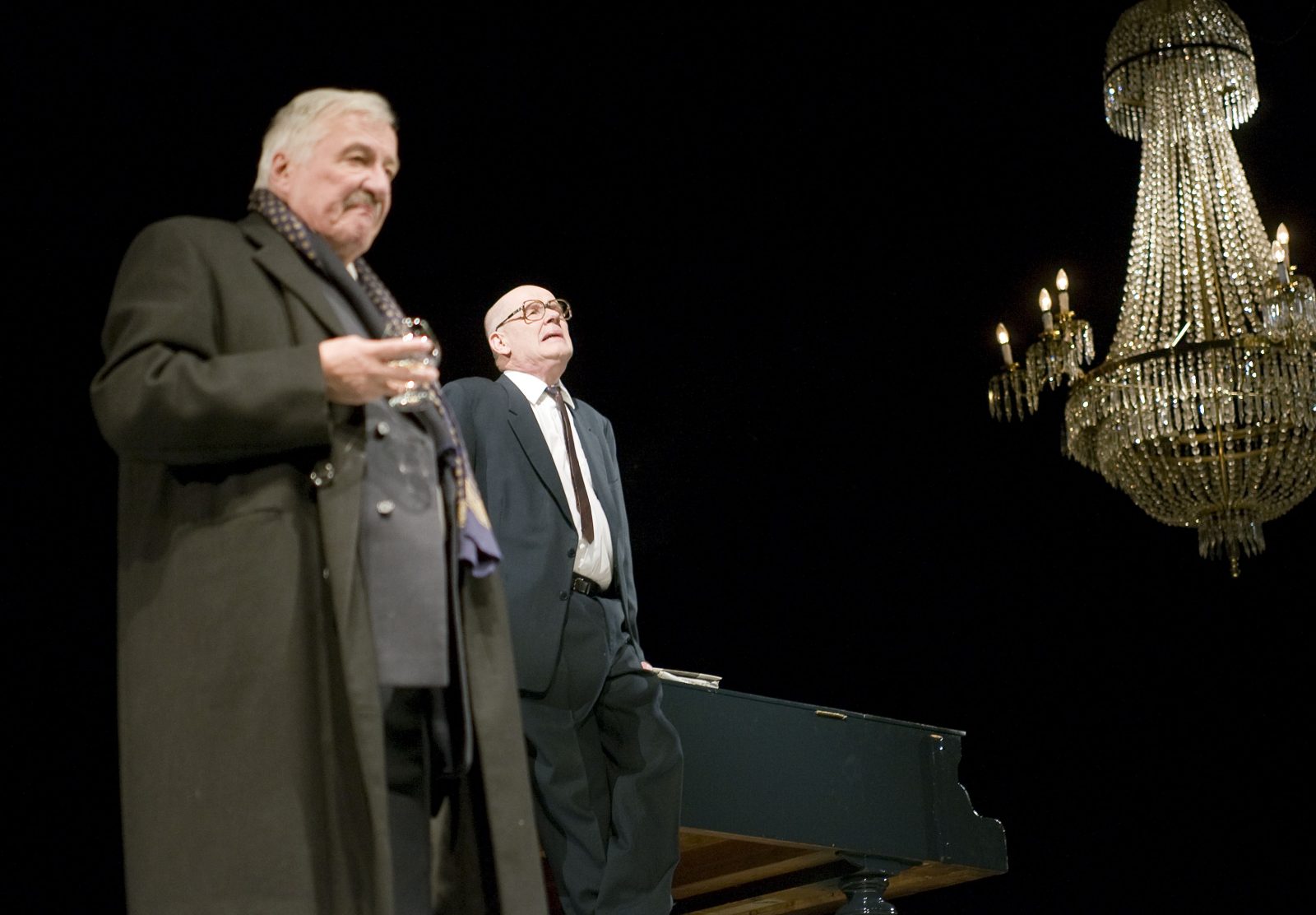
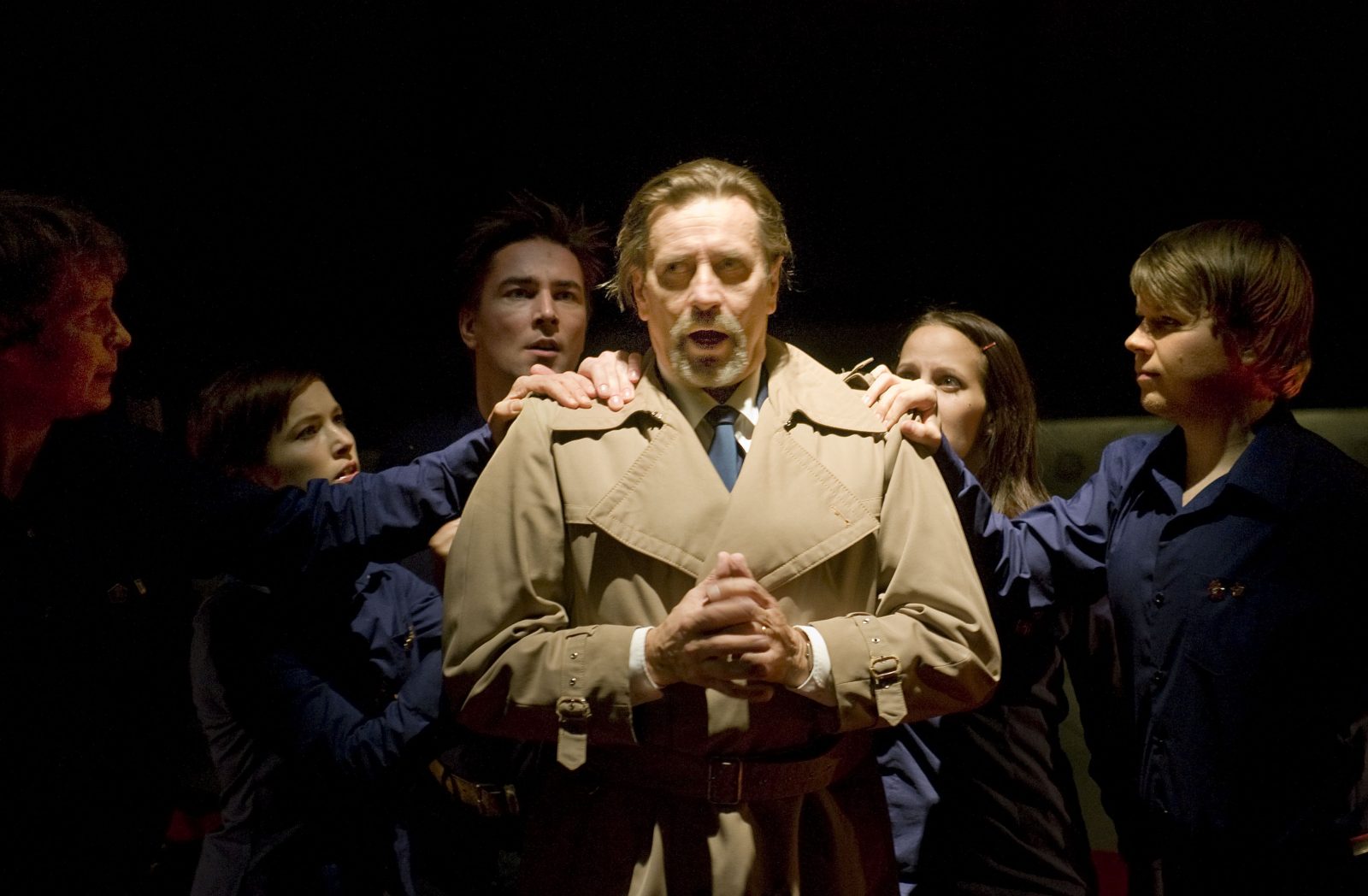
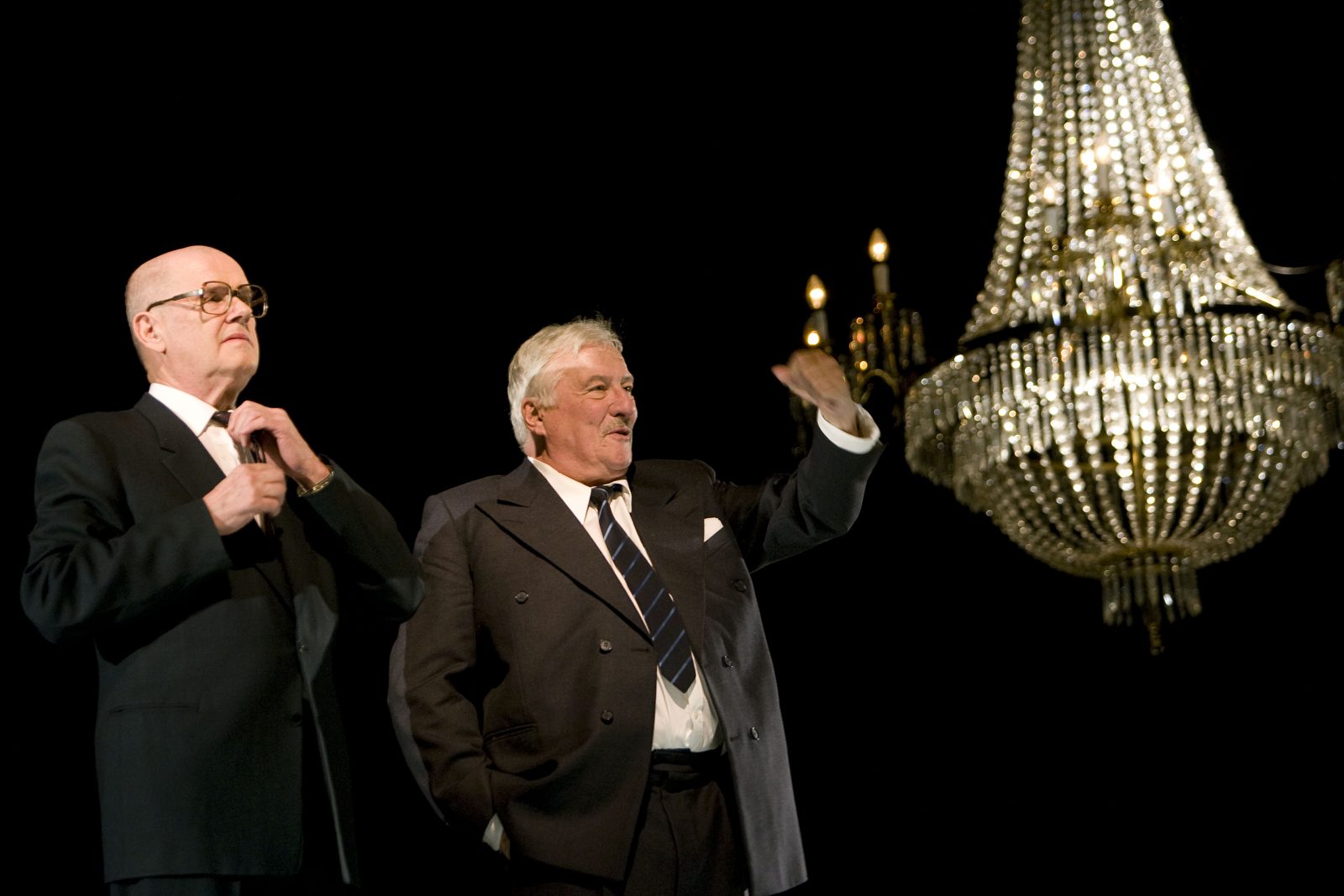
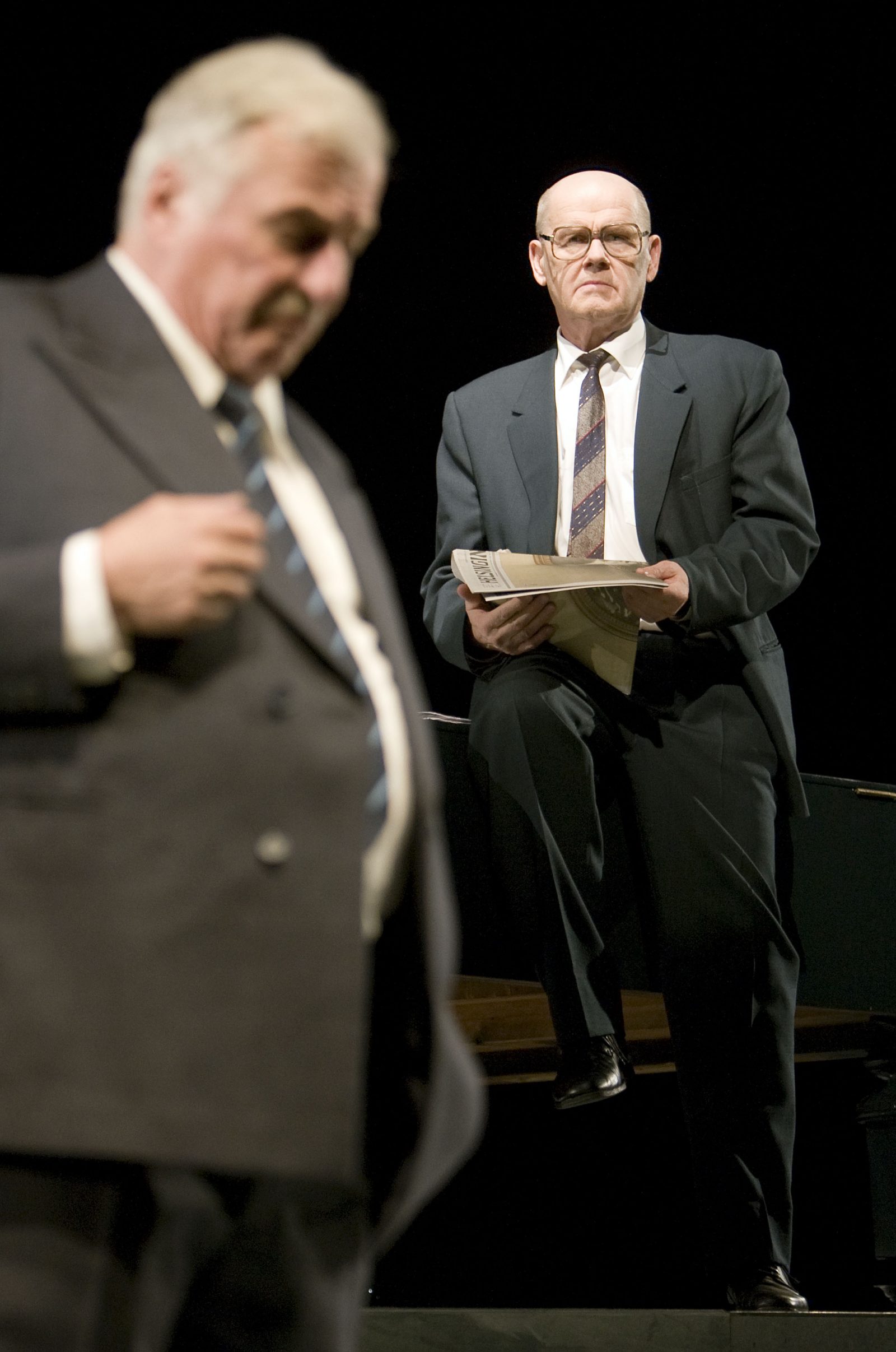
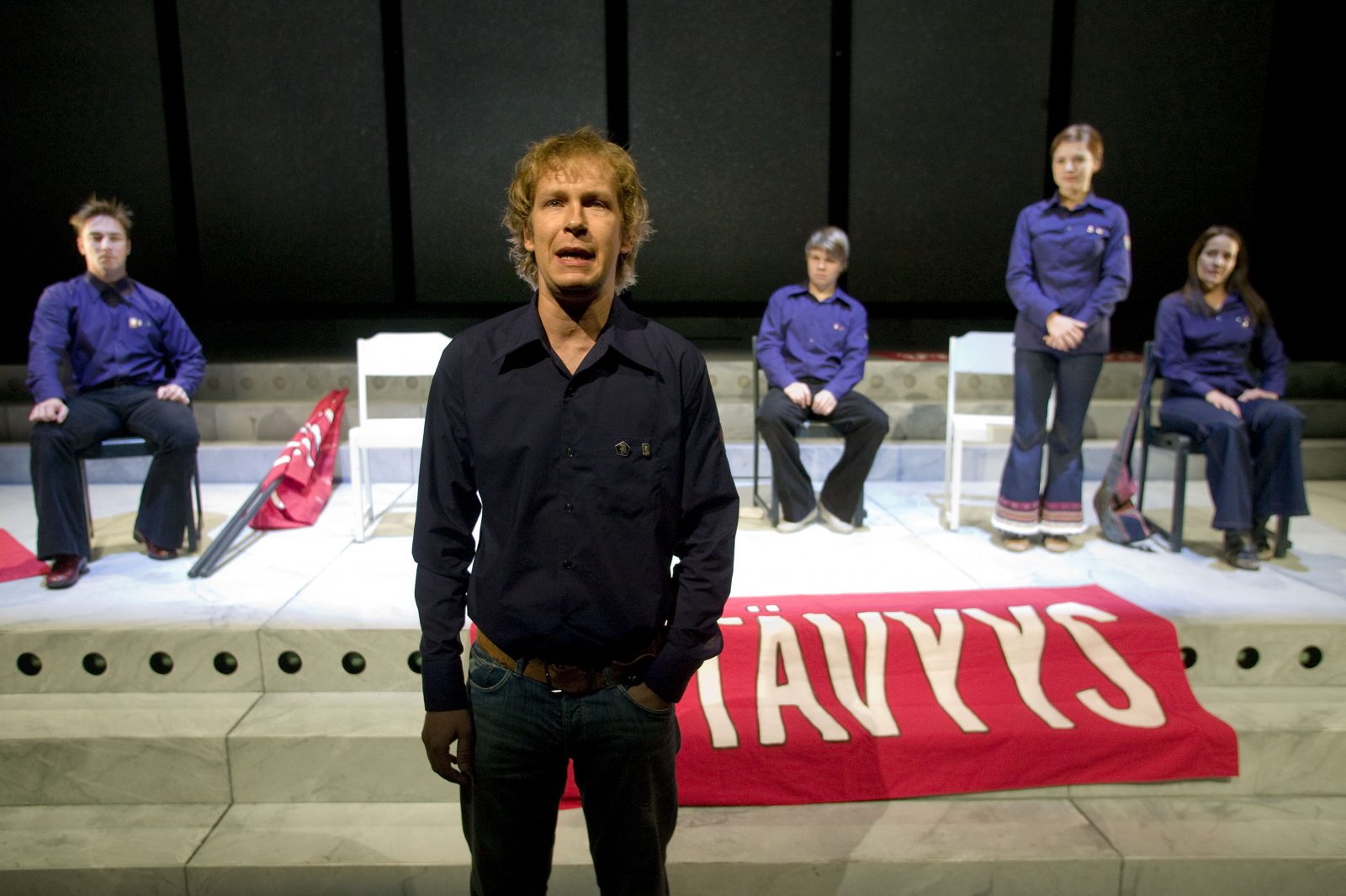
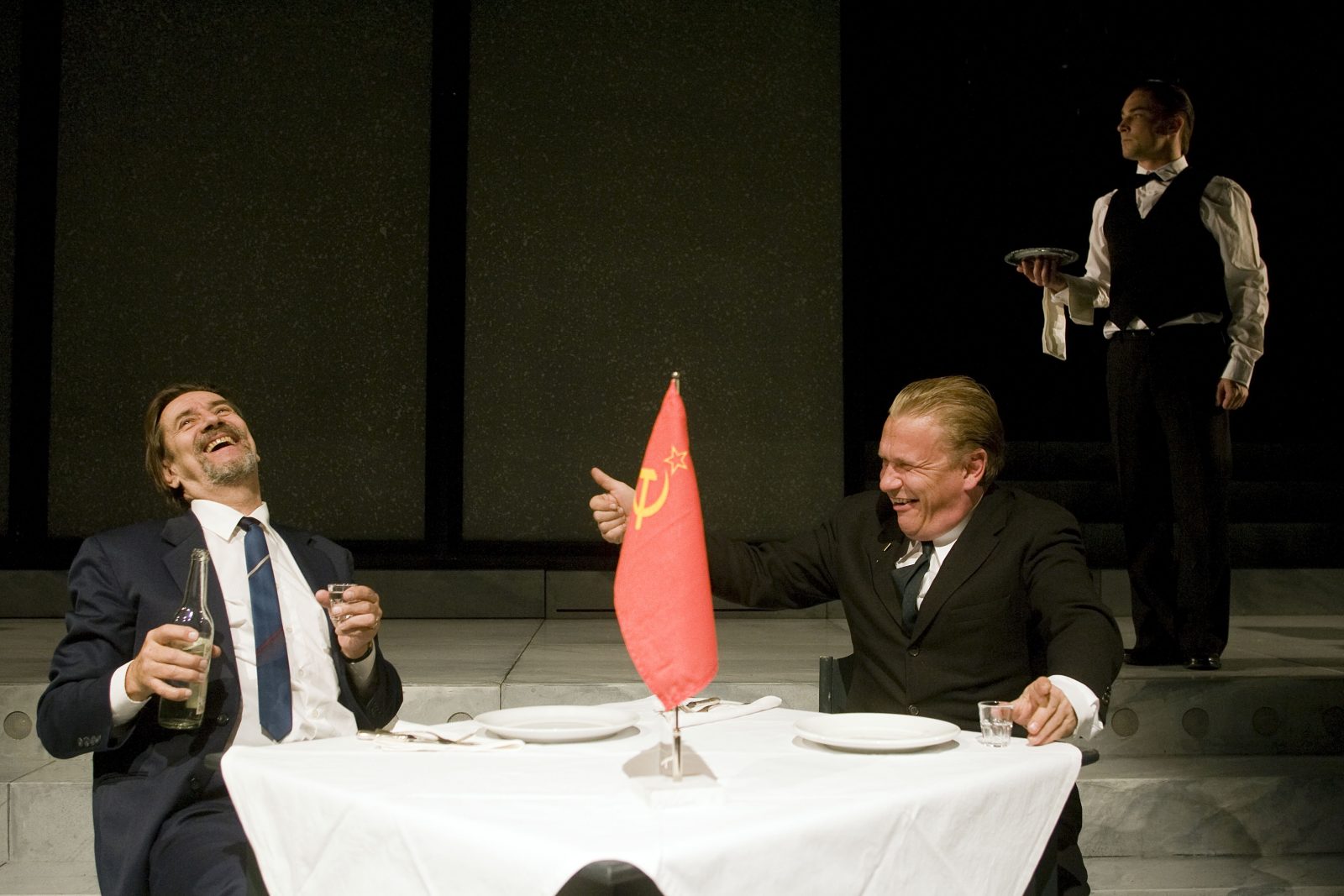
THE PUPPET GAME OF POWERIt begins in style with a group of young people singing the taistoiti version of the folk song Kalliolle kukkulalle. Their performance exudes discipline and straightforward certainty of faith. The year is indeed 1970, the time of the events that Professor Kimmo Rentola analyses in his book The Ghost of the Revolution: Vasemmisto, Belyakov ja Kekkonen in 1970, and on which the experienced playwright Ilpo Tuomarila has based his writing of the play Belyakovin talvi (Belyakov’s Winter).The next scene is a flashback a few years back in time. The same young people engage in in Western underground culture, it is copulated on a grand piano and beat poetry flourishes in an atmosphere of freedom and unbridled sexuality. The young people are watched by two gentlemen dressed in suits at a restaurant table: the Social Democratic politician Väinö Leskinen , who has only recently apologized in Moscow, and the Soviet politician Belyakov, who will eventually become a short-lived but extremely enterprising ambassador to Finland. “A sexual revolution like this,” Belyakov remarks, “is usually followed by a political awakening.Two other gentlemen are watching the young people – more from a distance and with increasing surprise. It is President Urho Kaleva Kekkonen and his communications officer and interlocutor, the Council of Mines. They see how the same young people who in August 1968 mobilize a furious protest against the Soviet actions in Czechoslovakia have barely two years later turned into missiles loyal to Moscow.Here we have the basic constellation of Belyakovin talvi, where the Stalinist youth of the 70s become pawns for a political game that, according to Rentola, could have led – if not a revolution – then to a decisive change of power in Finland. It’s political theatre of the best brand. Antti Litja plays a Kekkonen character that we are not entirely used to: a vulnerable, vacillating person, a leader who feels his position is threatened and who almost reluctantly resorts to the means that will bring him to unlimited power. Pekka Laiho is a charismatic, dynamically unstable Beljakov who plays his own game, not only as the seducer of youth but also as a manipulator of the puppet Leskinen, a mumbling, grey opportunist interpreted by Pertti Koivula. And the young people, especially Vuokko Hovatta’s brainwashed little blue shirt and Niko Saarela’s nervous, at times doubtful and at times ecstatic poet, skilfully illustrate the “proletarian turn” from anti-authoritarian radicalism to Leninist fidelity to the letter – a phenomenon in Finnish politics that, according to researchers, is still a mystery that transcends the limits of sociological understanding.
Read more
Tuusulanjärven Viikkouutiset, 11.11.2007
Review
Martti Martelius
CAN PEACE BE DEFENDED WITH VIOLENCE?On the small stage of the Helsinki City Theatre, the premiere of 1.
November Ilpo Tuomarila’s play Beljakov’s Winter, written about the political history of Finland.The play is based on the book The Ghost of the Revolution by Kimmo Rentola, Professor of Political History at the University of Turku. Last year, the book was chosen as the Science Book of the Year.The starting point of the play is the political crisis in Finland at the turn of the 1960s and 70s. The Soviet Union has a strong grip on Finland, which is going through a period of transition.
Migration from the countryside to the city and abroad is strong. The share of young people in the population is at its highest. The rise of the youth movement and its politicisation into a mass force offers young people ideals and an inspiring ideology.A new ideology, Taistoism, the internal opposition of the Communist Party of Finland, is rising in the political sky of Finland.Finland is drifting closer and closer to the Soviet Union, revolution and socialism are closer than ever since 1917. Events come to a head when Alexei Belyakov, who has a solid party background, is appointed ambassador of the Soviet Union to Finland.
The struggle for powerThere are indications and circumstantial evidence of Belyakov’s actions, but no conclusive evidence. The view that Belyakov really pushed for revolution and the transition to socialism is emerging at the top. He carried out this mission by inciting trade unions to a general strike and leaning on the minority wing of the Communist Party of Finland, as well as by supporting the strongly rising shift of students and cultural workers to the far left.” Belyakov’s Winter is a play about a phase in Finland’s political history, which is still debated and kept silent,” said the play’s scriptwriter and writer Ilpo Tuomarila , shedding light on the background of the play’s creation.– The play has elements of a political thriller. It is also a treatise on the morality of the revolution: Can peace be defended through violence? Can individuals be sacrificed when they possess the so-called objective truth and an unwavering belief in the fall of the system of exploitation? What can mass power be ethically and morally used for, Tuomarila pondered.President Urho Kekkonen ( Antti Litja) got Aleksei Belyakov (Pekka
Laiho) from the Finnish Security Intelligence Service and unofficial information agencies. At that time, Finland’s foreign minister was Väinö Leskinen (Pertti Koivula), who was a great player. A power struggle began between these trio, which is well illustrated in the play.
Belyakov’s Winter is a thriller-like, comedic and political play about an impossible mission, and it contains gentle melancholy and nostalgic liturgy of power.
An interesting roleThe role of Väinö Leskinen is played by actor Pertti Koivula from Kerava.
– Due to my age, I have no personal experiences from the time that the play depicts. It’s been really interesting to throw myself into the middle of that intense time as a character. Of course, I have read about the events of that time, but through the play, many of the events of that time have opened up to me.
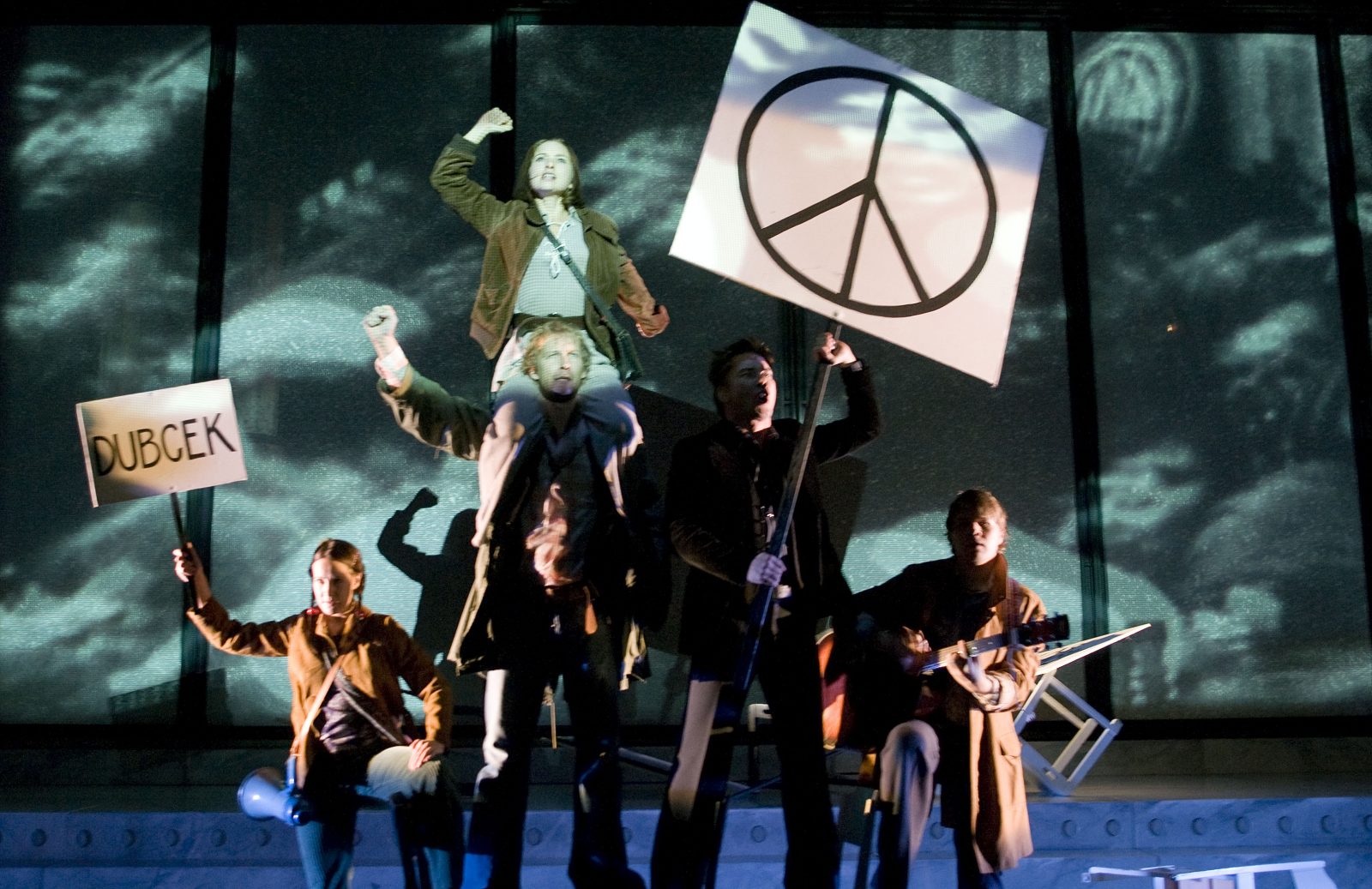
Beljakov’s Winter is directed by Milko Lehto, who has also become familiar to theatre lovers in Central Uusimaa from his many productions at the Krapi Summer Theatre.In his direction, Lehto has succeeded in producing a performance that keeps the audience in their grip throughout the play. Milko Lehto has done a particularly commendable job in his performance Young Yearners of the Revolution to bring out the intense fervor with which they reacted to Belyakov and his aspirations. The songs resound in quite a frenzy.Antti Litja (Kekkonen), Pekka Laiho (Beljakov) and Pertti Koivula (Leskinen), who played key roles, took their roles to an amazing level. They found the essence of the characters they portrayed meticulously, down to many small nuances. The other roles in the play are played by Aarno Sulkanen (Vuorineuvos), Vuokko Hovatta, Niko Saarela, Marja Salo, Hannes Suominen and Sami Uotila (youth), who can be very satisfied with their successes in their roles.
Read more
Salonjokilaakso, 08.11.2007
Review
Seppo Suominen
BELYAKOV AND THE TAISTO PEOPLEBelyakov’s Winter Drama
is based on the
The University’s Political History
Professor Kimmo Rentola
to the book Revolution
ghost to the investigations, the play of which
has written the script
long-term (1992-2007)
Turku City Theatre
Director Ilpo Tuomarila. Immediately
At the outset, it should be noted that from recent history
interested
From the viewer’s point of view, the play
is a great choice for the Helsinki
City Theatre’s versatile
supply. History-based
The play is always
low risk for its creators, because
The history itself is rarely unambiguous
and there are interpretations
several. Belyakov’s winter is one of the
interpretation and also certainly,
at least partially, fictional
like that.The play has several levels,
but the main levels run
On the one hand, the radicals of the 70’s
in the lives of left-wing youth
and its development and elsewhere
At the top of Finland’s political ranks
in the inner circle. At the mega level
Urho Kekkonen
“institution” and the Soviet Union
relationship.At the personal level,
Kekkonen (Antti Litja) and
unnamed
Vuorineuvos (Aarno Sulkanen)
friendship and discussion
About the future of Finland.
Kekkonen is depicted as an old man,
but the Finnish
as a master, although it starts
slight uncertainty to detect.
Will everything go anyway
relations with the East from Finland’s point of view
in a good direction.The play depicts the Minister for Foreign Affairs
Väinö Leskinen
and Kekkonen
strongly so that Kekkonen
Run away from the widow
and Leskinen doesn’t seem to
either notice it or
caring. True or false?Helsinki Soviet Union
the embassy’s relationship with Finland
mirrored Belyakov’s
(Pekka Laiho), who
befriends Foreign Minister Väinö
Leskinen (Pertti Koivula)
and finally get this
almost on his leash, demanding
from him always more and more
More loyalty than a superpower
and indicates
if necessary, the Soviet Union’s
strength and disappointments of Finland’s
domestic policy.Young Left Radicals
were real in the -70’s
radicals and their own line
interpreters. In their opinion,
was very simple
change the world for the better
and live as an equal. The play
radical youth (Vuokko
Hovatta, Niko Saarela, Marja
Salo, Hannes Suominen and
Sami Uotila) are so credible,
That is exactly the kind of
They were then. Society
that require structural changes,
but so black and white
and only one narrow
looking in the opposite direction. If young people
are unsure of their ideologies at the beginning
strength, they get
Confirmation Ambassador
From Belyakov on the right line
and ideology.I’m generally against
the form of presentation
which seems to be the theatre’s
very much in the field of
fashion, i.e. moving
to support the play.
I haven’t seen it once
that it still works, it is always
has rather disturbed
watching the play. Now
works and that’s because
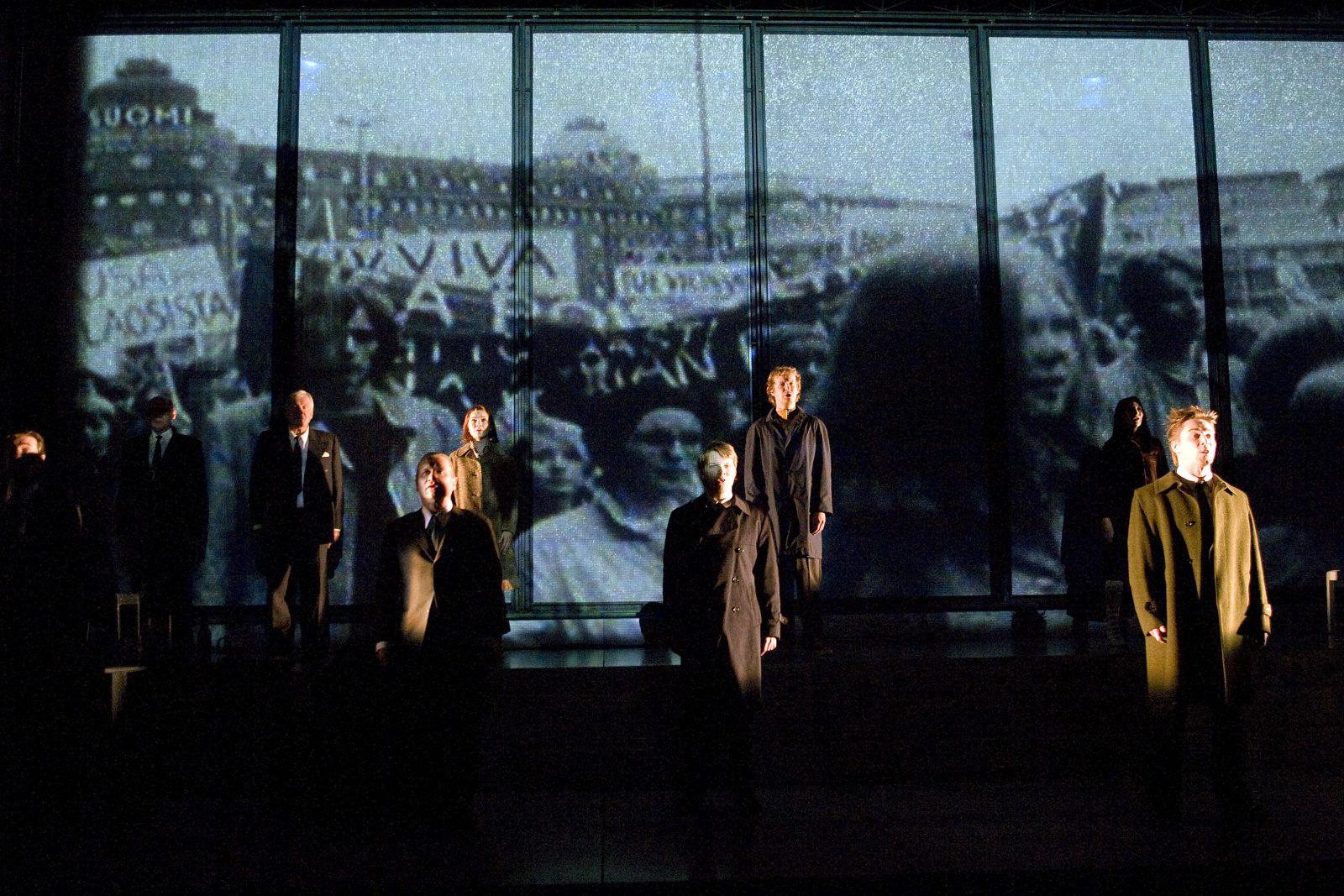
Moving image was used on stage
events, and not
On the contrary. Authentic images
in the back strengthened the atmosphere and
says a lot about the time when the same
time on the theatre stage
The actual thing happens.Helsinki City Theatre
marches once again
Strong enough for the stage
acting skills that almost
The three-hour performance is
great theatrical enjoyment from start to finish.
Katariina Kirjavainen’s excellent
set design, which Risto
Heikkerö’s lighting design
nicely supports, creates for the play
the more suitable visual
framework.In three words, I recommend.
I liked it very much.
Read more