Hufvudstadsbladet, 20101125
Review
Jenny Jägerhorn
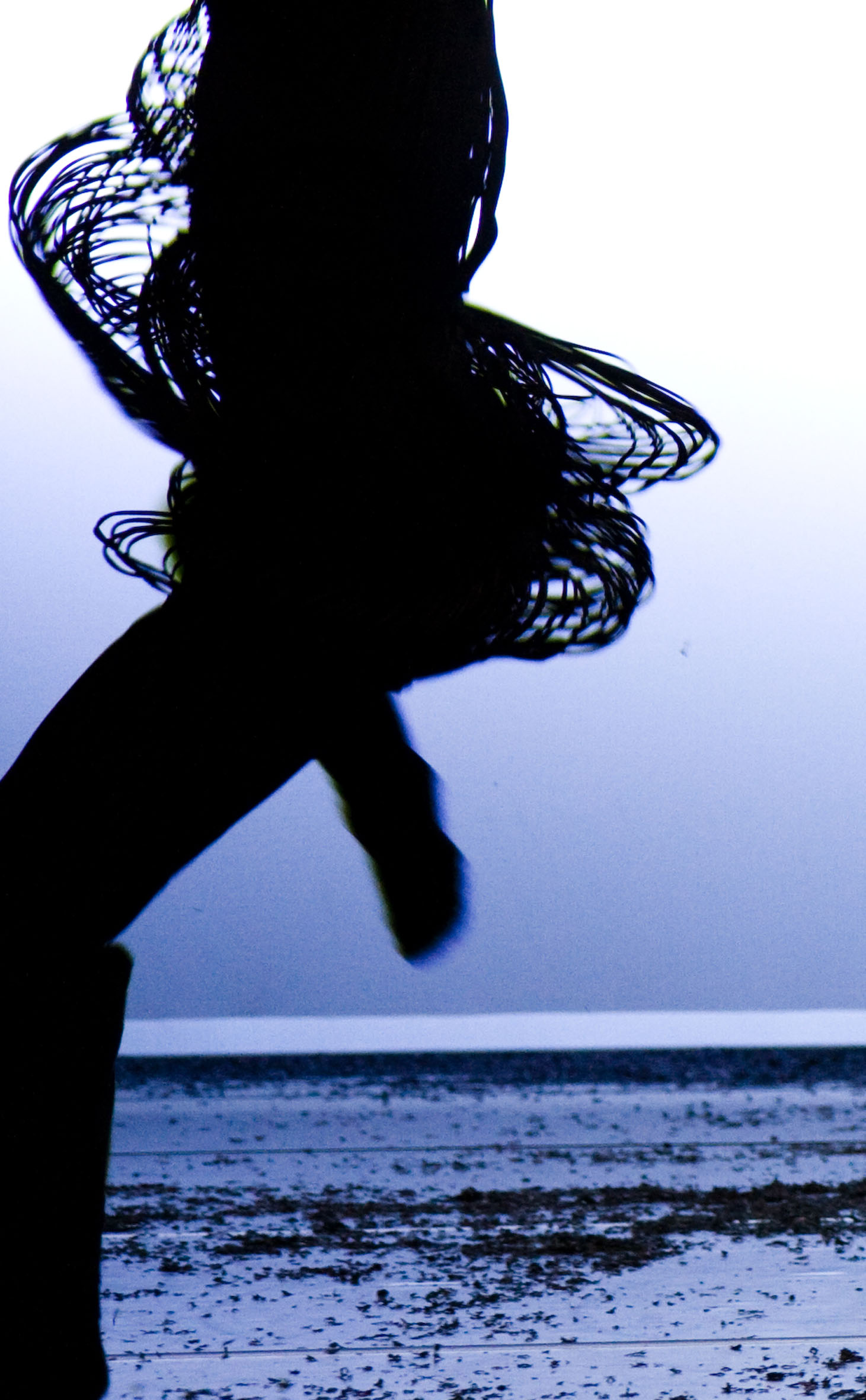
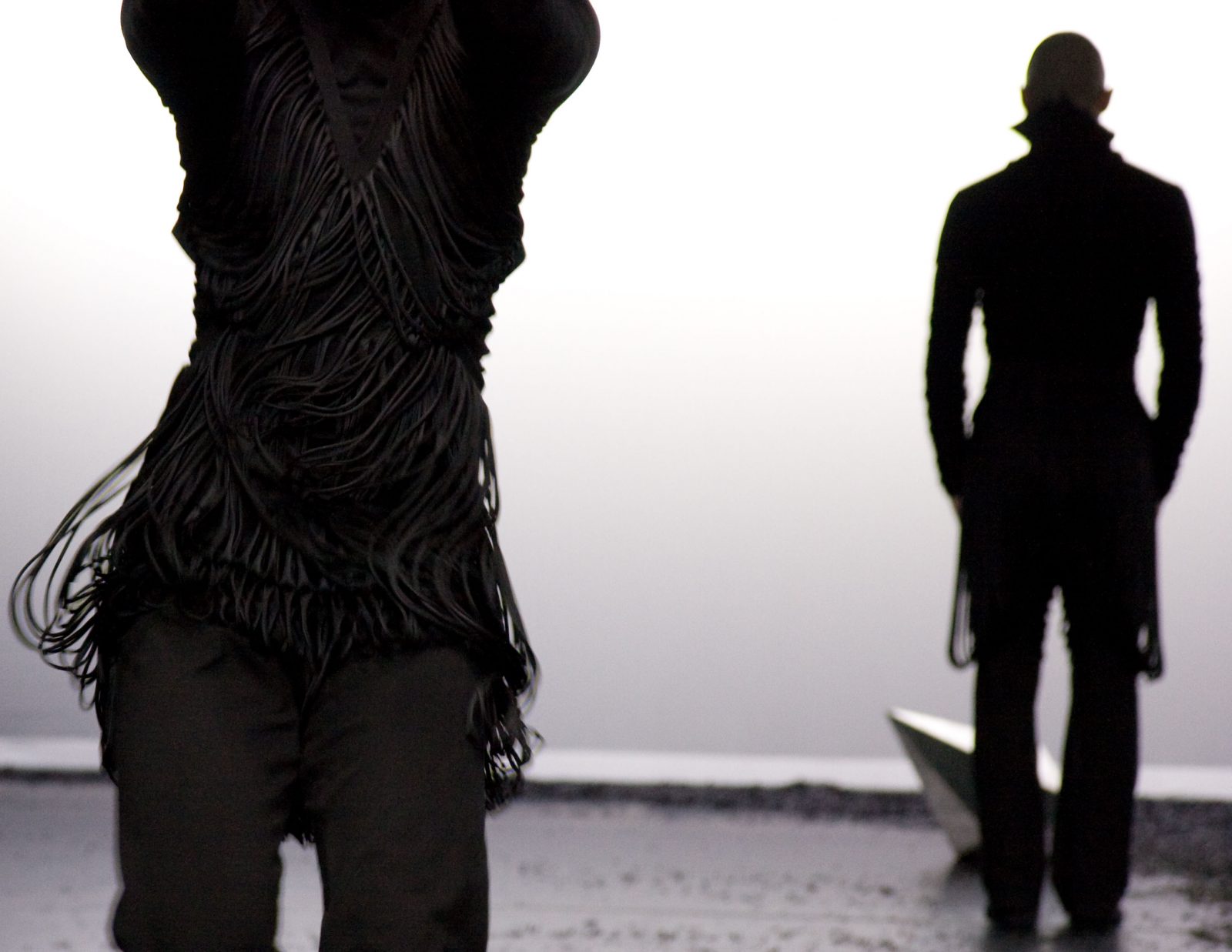
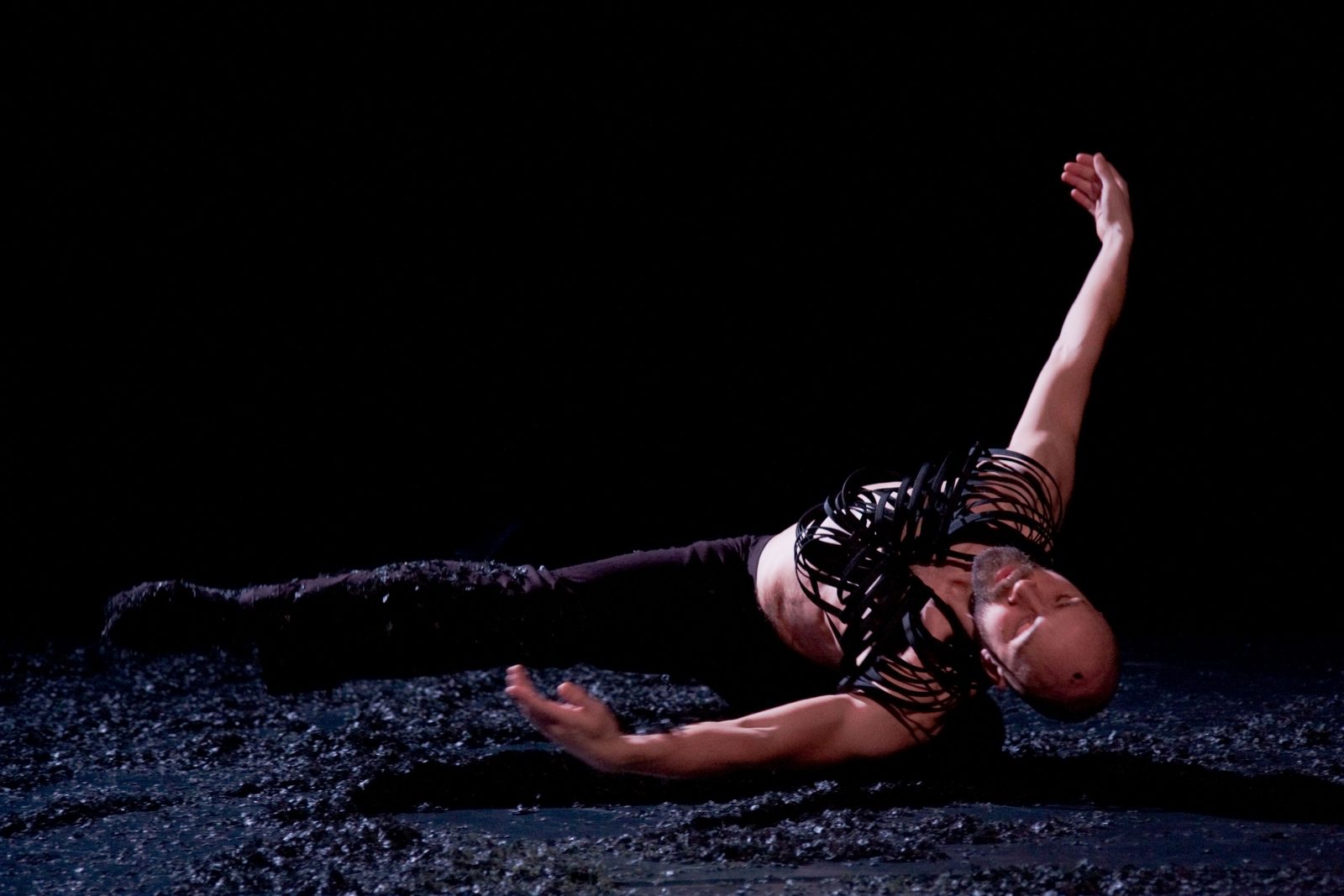
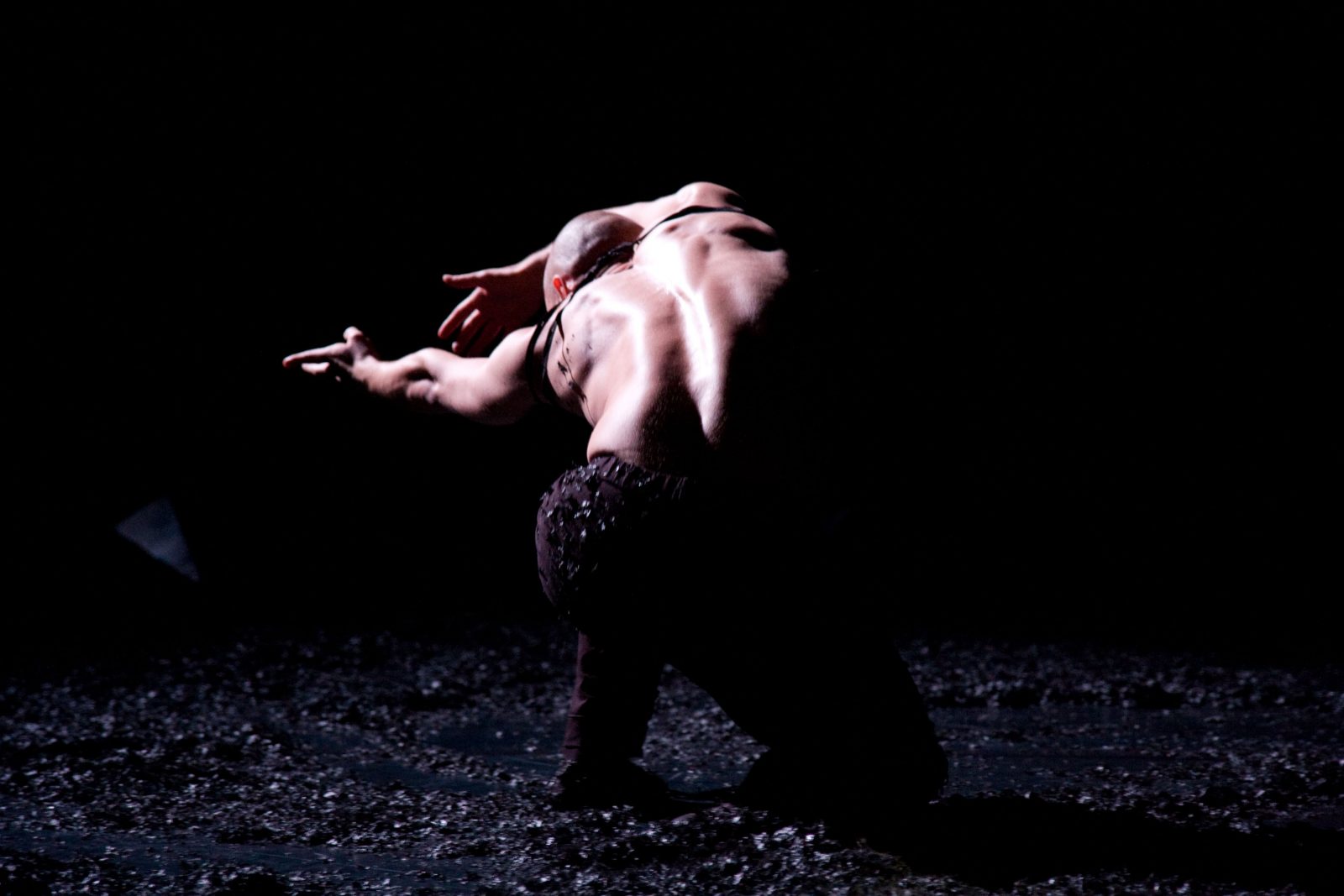
Enchanting dystopian dance Blackness in endless infinity, both seductive and frightening. It is as if all colour has been stripped away in Kenneth Kvarnström’s dystopian world Destruction Song II.The public hardly find their seats before they are surprised by an ear-splitting sound shock. Three faceless, black masked angels of death take the stage in a world where black ash covers the ground and a shiny dark light falls softly on hanging metal prisms. The only glimpse of a human presence is the dancers’ naked flickering figures that, like the chirping of birds, witness life amid the enveloping deadly blackness. At the start, the timing is somewhat uneven between the dancers Kenneth Bruun Carlson, Jenni-Elina Lehto, and Valtteri Raekallio, but they quickly find a common rhythm and dance with certainty and expressively both in unison as well as when the choreography cleaves into duets and solos. In Janne Marja-aho’s following expressive solo, the naked back is in focus. He is alone and desperate, a survivor after a catastrophe. The black is broken and light floods in through an opening at the back of the stage. The dancers dressed in black resemble their own silhouettes against the light and move at an increasingly accelerating tempo. The rhythm is like a pulsating heart and, in the dance’s seamless waves of movement, it appears as if one single organism is moving – billowing, powerful, and meticulous. Kvarnström’s brilliant body language with interesting details, and the intensive meeting that dissolves in slow meditative frequencies, make it all hypnotically intensive. The pressure increases and one feels an approaching explosion. Nevertheless, after chaos arrives, order and the rumbling music is replaced by an acoustic guitar solo from which humanity emerges. Marja-aho and Sofia Karlsson, who also danced in the original version 2008, unite in a final duet in a strangely beautiful farewell. Karlsson remains and is united with the angels of death.
Jukka Rintamäki’s minimalist, electronic sound world and the scenographer Jens Sethzman’s stripped aesthetic perfect Destruction Song II into an incomparably excellent interplay, where the whole seduces and all one wants is to remain seated and to be absorbed by the beauty and melancholy. It is alleged sometimes that it is difficult for the uninitiated to understand modern dance. However, you do not need to understand Destruction Song II – just enjoy.
Read more
Etelä-Suomen Sanomat, 24.11.2010
Review
Sara Nyberg
AFTER THE DESTRUCTION, THE WORLD IS BLACK The black-toned Destruction song II thrills with dance and atmosphere. Kenneth Kvarnström , the artistic director of the Helsinki City Theatre’s dance group, creates an unbroken line of movement in the deep black world. The choreographer really makes the dancers dance, the smooth movement flows through the hour-long performance. The movement material is once again clear and familiar to many. At first, there is emptiness and a rumbling sound of destruction. The stage wrapped in black is like after the end of the world. Shock turns people into shells, so much so that their faces are also covered in black. Gradually, they peel off their clothes, notice each other, start something, work, life. At the end comes the song, with tenderness, strength and also selfishness. For a long time, four dancers dance the same movements in a tight group. The direction of the front is largely straight ahead. They don’t see each other and don’t seem to look at their audience either, the alienation is total. They dance an elastic movement as empty shells. Jukka Rintamäki’s electronic music is enormous, it rolls over and rumbles. The volume doesn’t break your ears, but the enormity is like Hornets flying over a city. At first glance, the rhythm is indistinguishable, and it seems like a miracle thatKenneth Bruun Carlson, Jenni-Elina Lehto, Janne Marja-aho and Valtteri Raekallio are capable of perfect simultaneity of movements. The floor is covered with black plastic shreds that fly out from under your feet and with the force of movement. Jens Sethzman’s set changes shape, and as the dancers move, new patterns are constantly formed on the floor. The light comes as a strip from the side, sometimes the strip opens into the background background and shadows become pictures of the dancers. The rumble finally dies down and the rhythmic bang begins. In the second part, the dancers look at each other and at each other, there is a glimmer of humanity in their eyes. At the same time, we see Kenneth Kvarnström’s trademark, the skilful transport of the group. The duet at the end, which promises new strength, is the song of the work. It was interpreted at the premiere by Janne Marja-aho and Sofia Karlsson, who already danced in the first trio version of Destruction song in 2008. The third dancer at that time was Cilla Olsen. In a duet, the couple dances together, manipulating each other. There is a glimmer of tenderness in the movements, but perhaps the benefit gained from the relationship is the most important thing. Still, the vocals provide comfort, which is also hinted at by Rintamäki’s music, which is replaced by the delicate strumming of a lonely guitar. The starting point for the work has been the colour black and its variation. Swedish costume designer Helena Hörstedt has dressed the dancers’ basic black outfits with various black ribbons like liquorice string. There is a liquorice spiral hanging around his neck, the shirt reminds me of the Snöre liquorice ribbons bought on ships bound for Sweden. The costumes work well, the fabrics live with the dance and surprisingly there are also colors in the all-black. There have been unfortunate injuries in the six-member dance group. At the premiere, there were actually four dancers, with Sofia Karlsson, who is not mentioned in the programme, as the fifth. In future performances, the composition may be someone else. However, with a varying number of dancers, the work managed to look finished at the premiere. The skill of the dancers and the fact that music, set design and costumes work together with Kvarnström’s confident choreographic skills convey a comforting story of survival.
Read more
No comments yet