Rondo, 5/2007
Review
Harri Kuusisaari
A CAN ALSO ACCEPT A BANK CARD
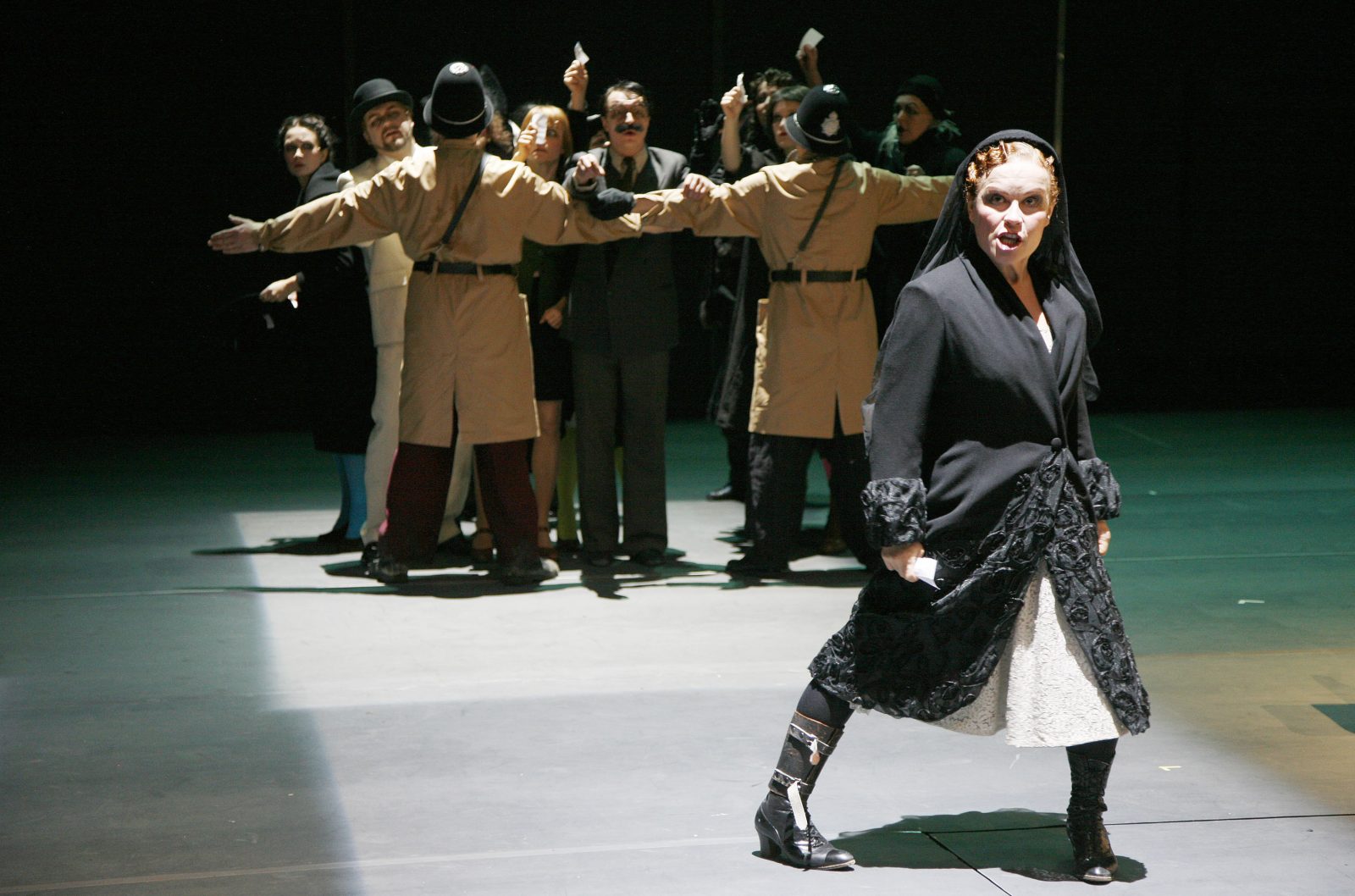
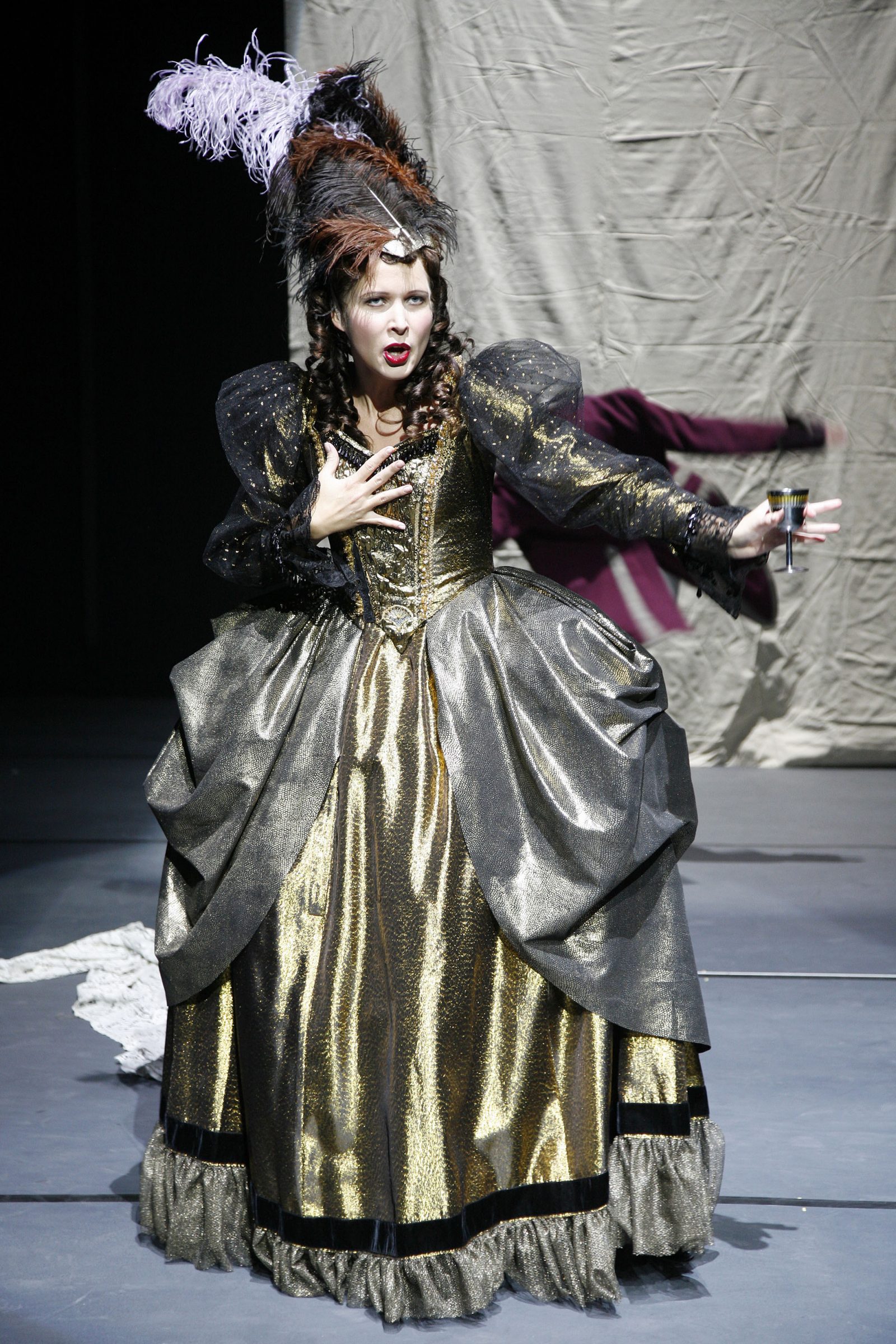
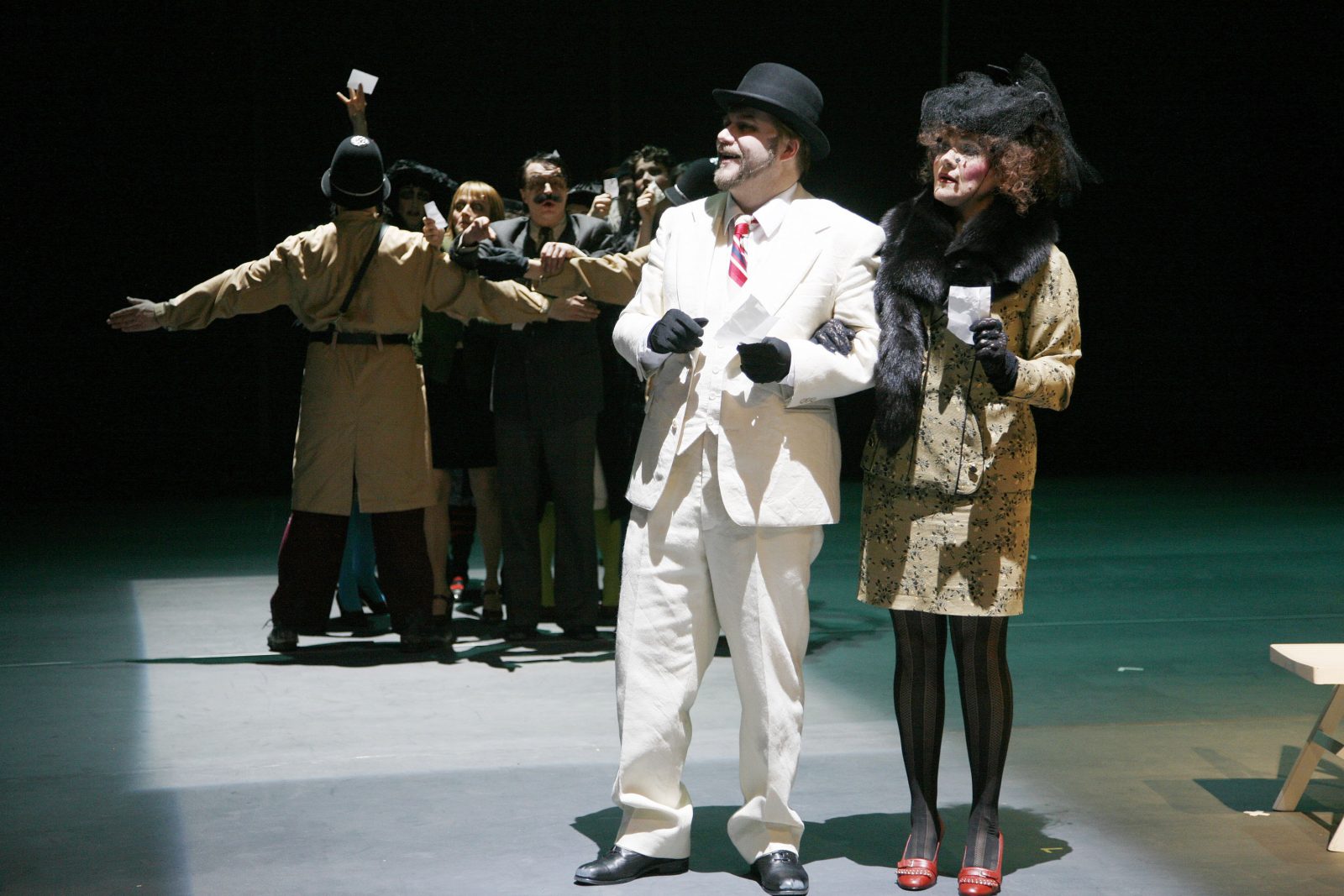
The beggar’s opera also bites as a critique of globalizationThe audience was able to experience the harsh fate of the early 20th century proletariat in the criminal world of London and in the Finnish wilderness at the same time, when Brecht and Weill’s The Beggar’s Opera was performed at the Helsinki City Theatre and Sallinen’s The Red Line at the Finnish National Opera. Of course, the works do not have much in common, after all, the critique of capitalism in The Beggar’s Opera works primarily by means of satire and alienation, while the power of The Red Line lies in its directly identifiable human destinies. Still, the social puncture of abscesses has the same purposes, and Sallinen has listened to his Weill. The new interpretations also had something in common: in both cases, the temptation to bring the work up to date was not succumbed to, but the classics were kept in the epoch, but the skilfully stylised stage work emphasises their universality. There is also prickly humour and carnivalestics: preaching is not fashionable in Finland in the 21st century. The era of the global market economy has certainly not overtaken Brecht’s social critique. The beggar’s opera transfers the laws of business to the world of crime and shows how greed, insensitivity and exploitation are rampant. The performance at the Helsinki City Theatre has some funny tips for modern times. accept a bank card as a means of payment, and Song of the Instability of Human Conditions is performed in the shadow of shopping carts, palm trees and the wheel that turns the world – the text and stage images give an apt picture of the different aspects of globalisation.
Read more
Teatteri, 2007/4
Review
Irmeli Niemi
BEGGARS ON THE STAGE OF GLOSSY SMILES.
Kari Heiskanen aptly finds an alienating satire in his interpretation of BrechtDraped in black jewelry covers familiar from my great-grandmother’s Psalter
The handbook gives a starting hint of what to expect here
Helsinki City Theatre’s Brecht opera. Piety, or rather,
Hypocrisy is one of the dominant principles of the performance. It is strengthened by
especially the music of Kurt Weill . Pulled onto the stage
The brass band plays punctually, briskly and
Earnestly, always as needed. The performance moves back and forth
from real reality to the 1920s and the indefinable
historical time, when the Briton John Gay recklessly took the
to mock at the expense of Italian opera. This basic work
comes to mind already in the title of the opera, to which Bertolt Brecht gave a new
the prefix “Dreigroschen”, an opera of three pennies.Gay’s Beggar’s Opera had been rediscovered in Britain in the 1920s.
and immediately became a great success. Brecht’s partner
Elisabeth Hauptmann saw it, sensed the possibility of success and
translated it into German. The composer Weillin, who was known as a young man
atonal modernist, although not really trusted, but the result
exceeded all expectations. We also grabbed the edge of the race
In Finland, with the Swedish and Finnish performances following
each other.Now, eight decades later, Brecht and Brechtianism
The interpretation includes a lot of wisdom, changes and contradictions.
After all, there is a whole wide range of plays in between, Marxist and Chinese
the pressure of the effects of theatre theory and, at its most extensive and threatening,
changes in the social significance of theatre art as a whole, and
submission to the licensing methodology of market forces.Director Kari Heiskanen seems to have realised all this
triumphantly. He will create a beggar’s opera for the stage of the Helsinki City Theatre, which has been performed several times
have populated the seductive glossy smiles of musicals. The background is a familiar storyline from musicals: a girl child who rebels against her parents and runs away
marry a robber who is perceived as a competitor and a threat,
an argument about the same man, alcohol, promiscuity, and finally a prize,
amnesty, even nobility. But with a keen view and Weill’s
with the help of this overly sweet cake is glazed with alienating satire,
which reveals the difference between morality and matter, dream and fear,
between surface polish and deep emptiness.
The beggar’s opera must not be made too serious, even though it
The basic claim is the cruel proposition of poverty, greed and exploitation.
Trinity. Maybe that’s why the actual horror images are stylized
detached from realism through the use of posters, posters and songs.
level. Eroticism, religion and violence feed situations in which
The message works in the traditional ways of alienation: amazement,
Through quick shifting and a telling rhythm. People
meet each other like snapshots in a digital camera and at the same time
and in the expression allowed by the exact form. This is theatre,
Theatre in the frame of every bare stage and bright lamps
laughs and cries about the strange way the world is going. In many small situations
conveys a hidden social meaning, which is reflected in the
The perpetrators could have learned a lesson.The performance has a delightfully cast from whom
Singing is also fluent. From under the black corners of Oskari Katajisto’s eyes
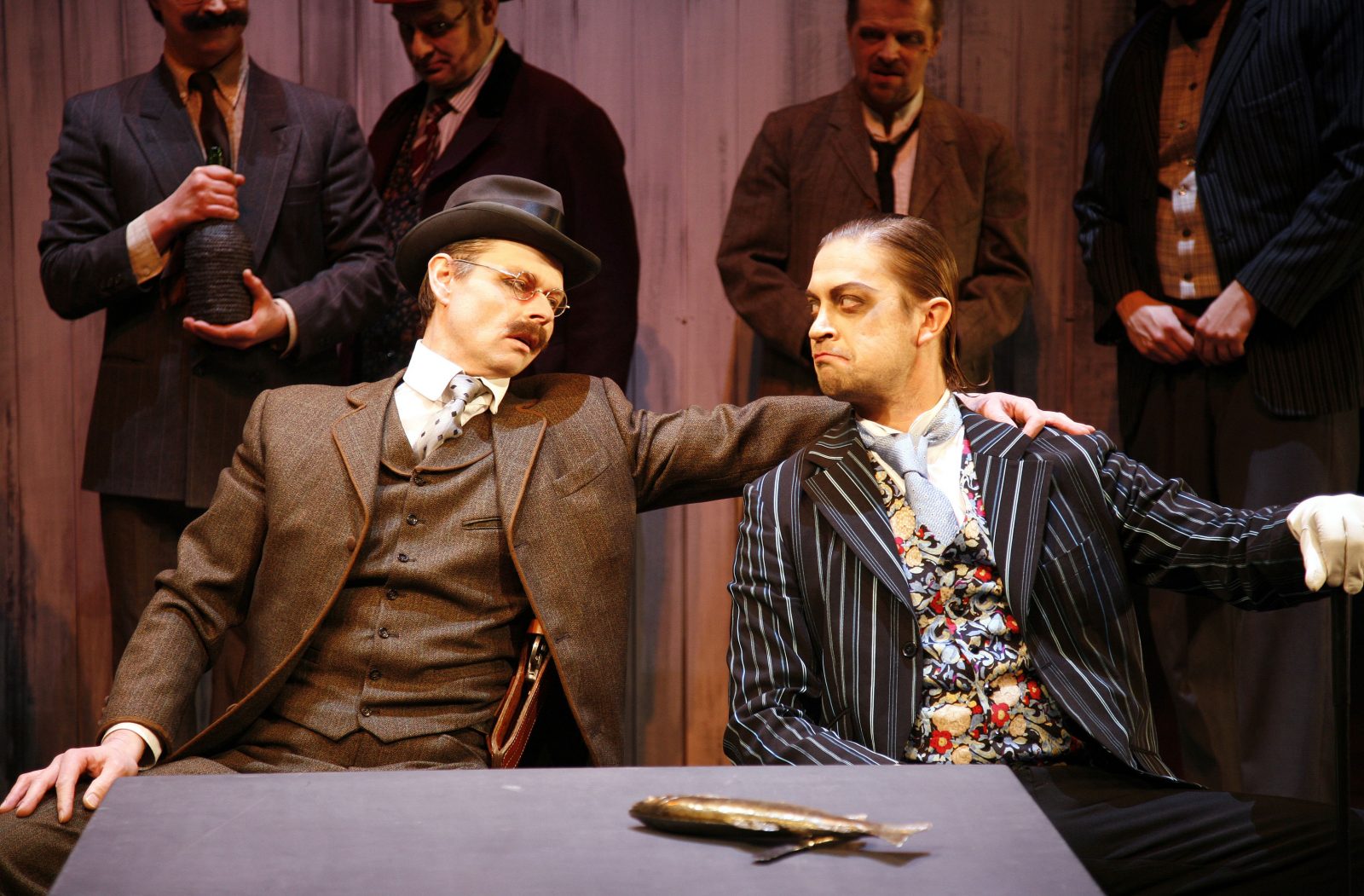
the slithering Macheath makes a more believable conqueror of women than
a cruel bandit, and that is probably the intention. Heikki Sankari’s father’s
Peachum and Kari Mattila’s public servant paraffy
Chief Police Officer Brown does his role neatly, perhaps a little
Lukewarmly.Especially women excel. Undeniably, for them, Weill is
composed the best bits. Riitta Havukainen’s
Mrs. Peachhum, who has been left in the dust of history, has a strong voice and
the character of being, Vuokko Hovatta gets to be in love and
even bitter nuances of the determined Polly, Ursula Salo builds
In the song of the pirate Jenny, defiantly the tragedy of life and – in many ways
sugar on the bottom – the quality of Laura Pyrrö’s singing voice has been
so that Lucy’s often omitted from the performance
aria, a demanding opera parody like no other.
Read more
Ilkka, 07.04.2007
Review
Juhani Koivisto
NO MUSICAL ENTERTAINMENTHere’s the real Beauty and the Beast phenomenon: Helsinki City Theatre is simultaneously performing a glorious Disney musical and the Beggar’s Opera, which is the exact opposite of it! It’s a brave act, but it’s worth it when both genres are done with skill.
The goals of the beggar’s opera are the exact opposite of those of grand musicals: the audience should not enjoy themselves, but think. Bertolt Brecht’s central goals were alienation: theatre should not try to create an illusion of reality, but the viewer should be made aware of the performance. This was served by Weill’s striking songs, which were not meant to be beautiful, addressing the audience directly, the texts on stage and the asceticism of the stage.
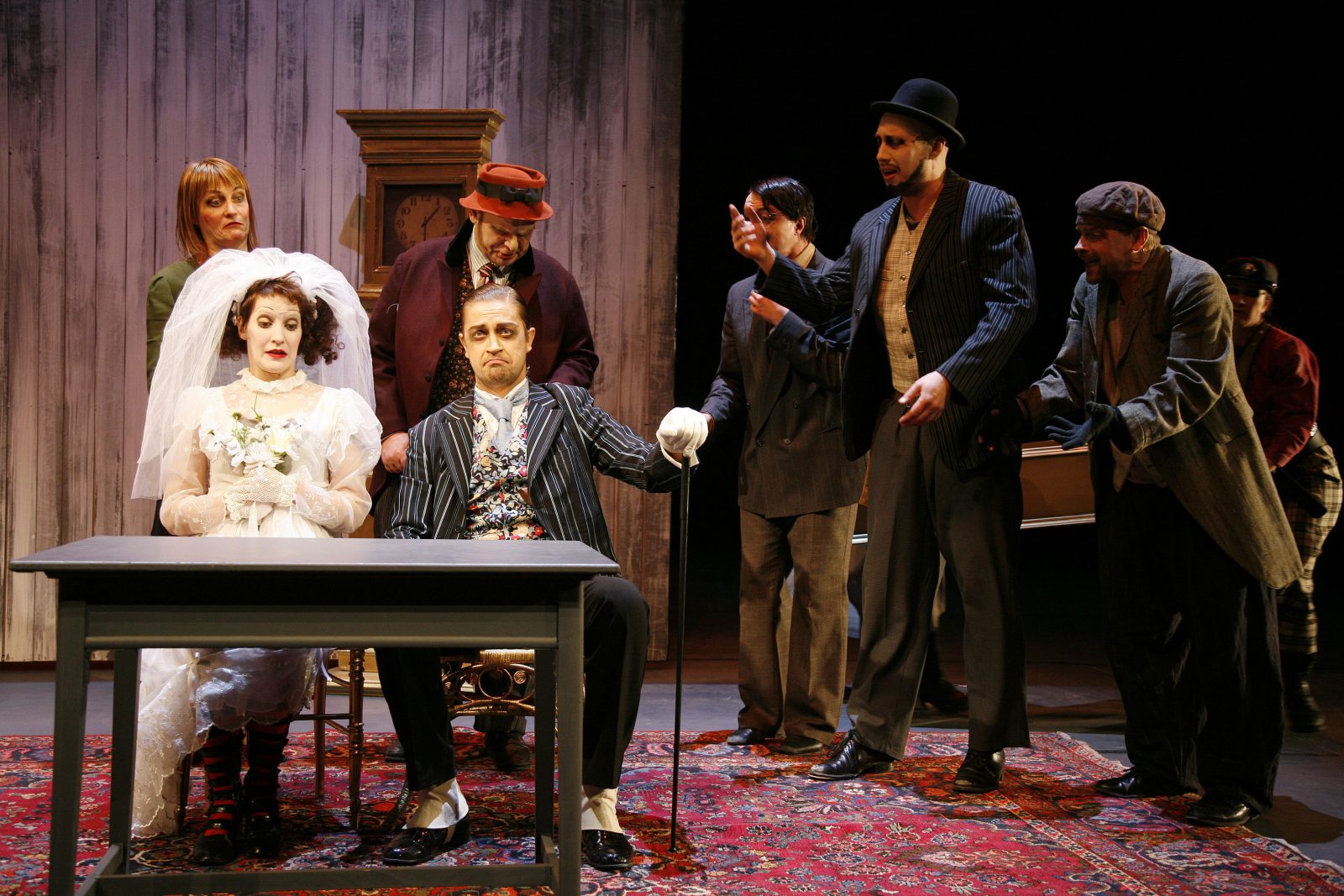
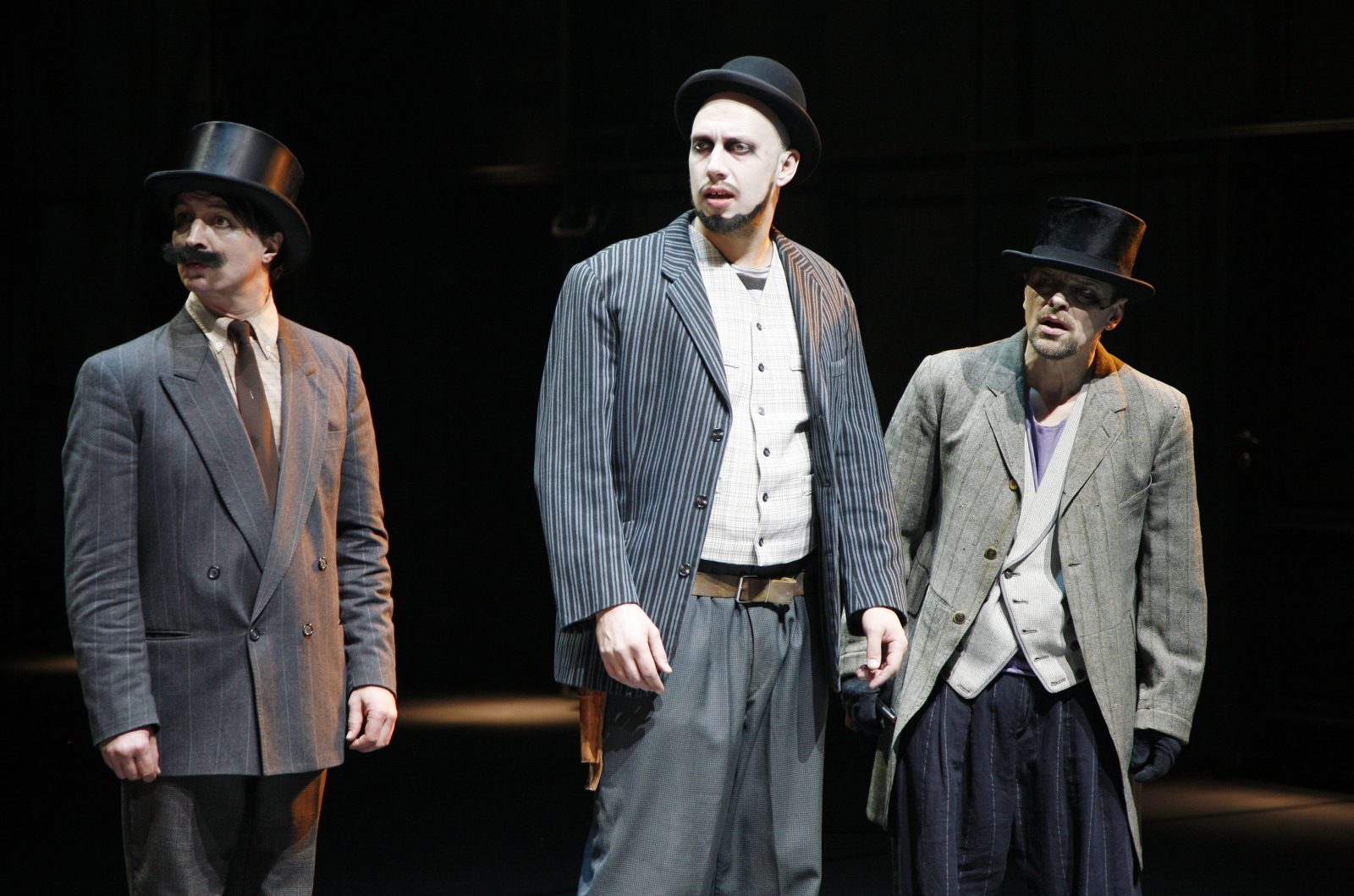
The beggar’s opera is directed by Kari Heiskanen and has been produced strictly and uncompromisingly in the spirit of Brecht’s ideas. This performance is like a lesson in theatre history, as all the means of Brechtian theatre are consistently cultivated from start to finish. An empty stage has been built on the stage, the sets really look like a set, the lights are steep and the people in the spots seem to be under a magnifying glass. The acting is stylized and sometimes even the conductor of the performance intervenes in the events. Of course, it is not a question of presenting theory, but from these starting points excellent theatre is made with life and colour. However, it is not worth going to see The Beggar’s Opera with musical expectations. It’s not meant to entertain. However, it also does that in its own rough way, and spectacular theatrical effects are also experienced when the sets collapse. In this genre, the actors’ personal role is, of course, crucial. In the main roles, Oskari Katajisto, Vuokko Hovatta, Riitta Havukainen and Heikki Sankari perform their roles to the fullest and with thought.
Read more
Uutispäivä Demari, 28.03.2007
Review
Rolf Bamberg
BIG CITY SHARKS AND TRASH FISH
Read more
Etelä-Saimaa, 27.03.2007
Review
Jutta Sarhimaa
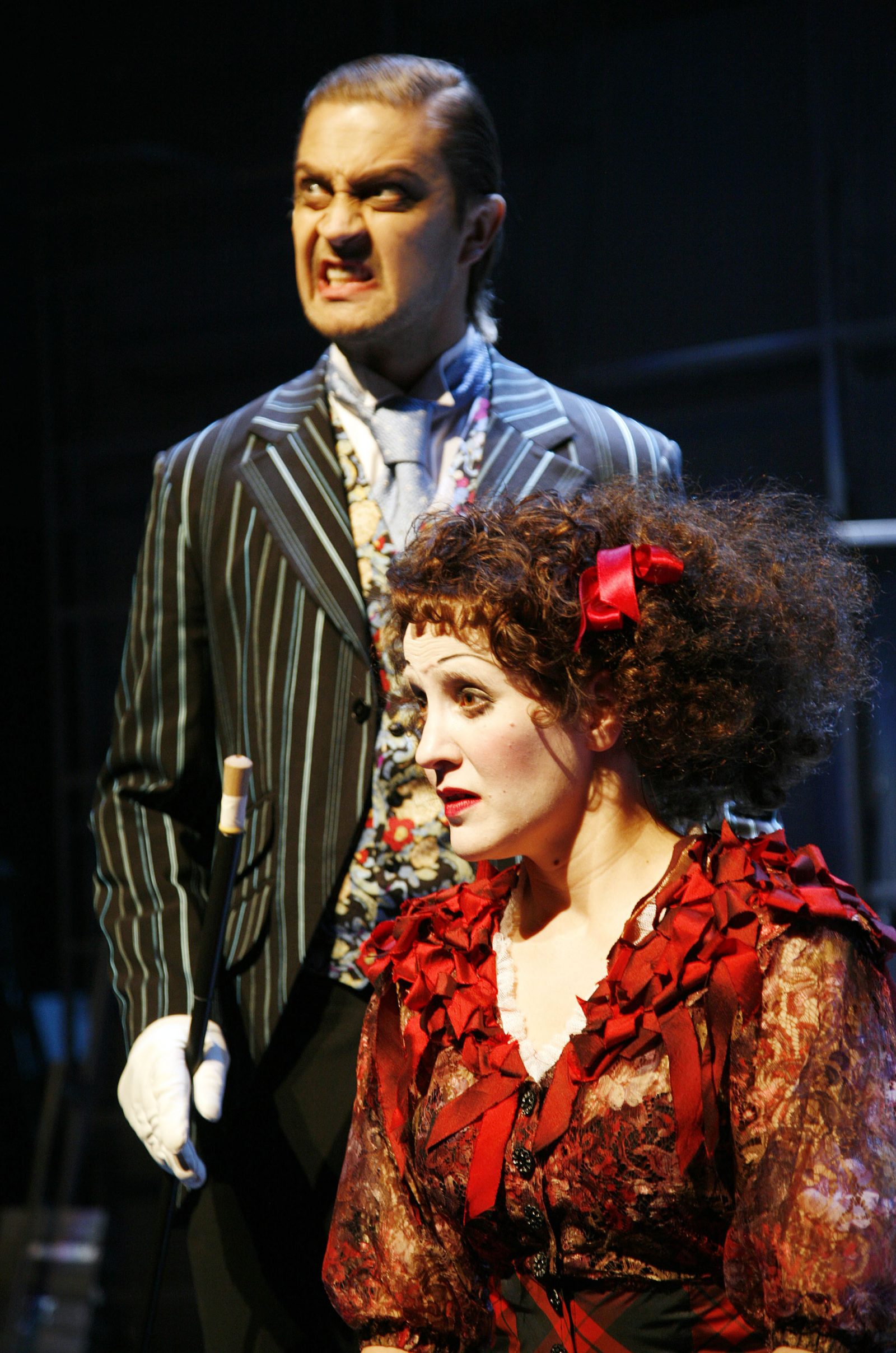
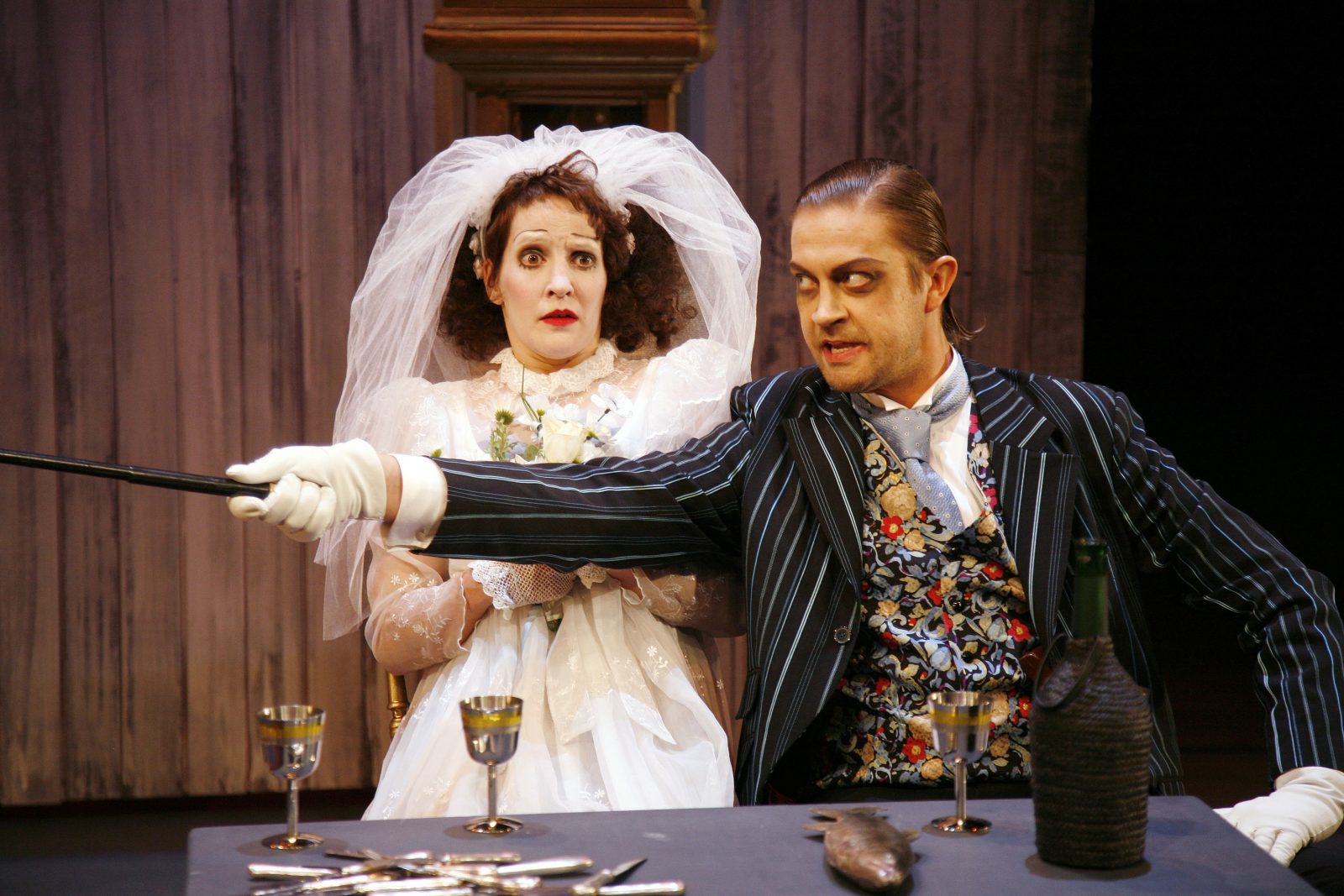
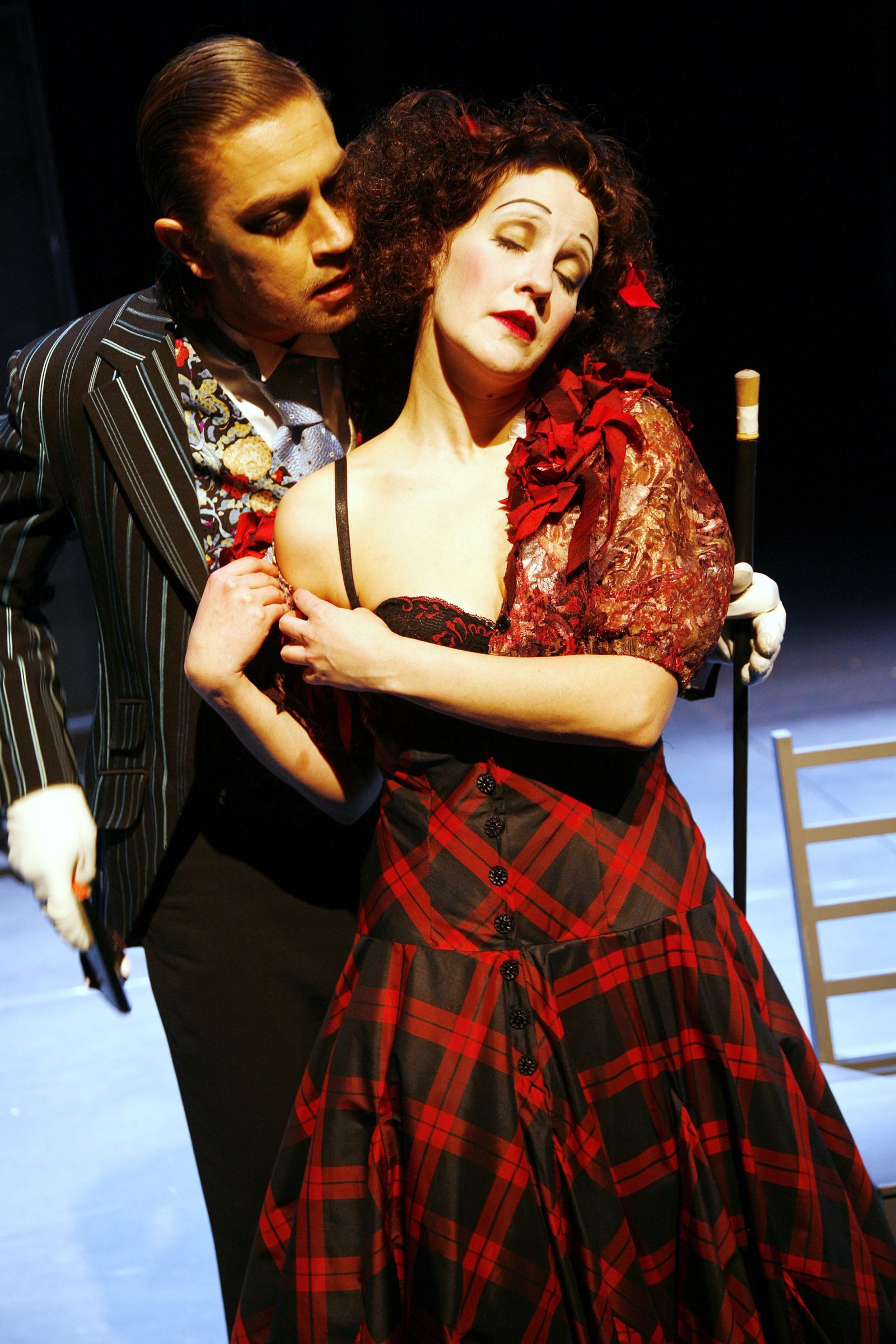
ENTERTAINING, GENUINE BRECHT The first Brecht is a landmark case for everyone, those who have experienced the Bavarian boy’s epic theatre know that. I’m glad that for me it was the Helsinki City Theatre’s anti-bourgeois rejoicing The Beggar’s Opera, which is also called the Threepenny Opera .A more critical and successful form of entertainment is rarely available in Finland on this scale.Originally written by the British John Gay , The Beggar’s Opera was given new, more flamboyant clothes under the young Brecht and made a breakthrough on the big stages of Berlin at the beginning of the last century. The least thanks go to Weill, whose memorable, wonderful songs form the backbone of the Helsinki performance. There are no filler songs in the cavalcade of hits.The London of the Beggar’s Opera , which beats the beaten, is boiling: gangster Knife Mackie (Oskari Katajisto) sows terror and pours down women like hay. Polly (Vuokko Hovatta) also loses her legs, and she doesn’t know how to say no when she comes across a slacker. What’s hidden under Mackie’s silk gloves?
Read more
Hämeen Sanomat, 24.03.2007
Review
Pirjo Puukko
THE COLOURFUL COMING OF THE BEGGAR’S OPERA
Read more
Kirkko & Kaupunki, 2007/13
Review
Marja Kuparinen
WHEN EVERYTHING IS ON SALEOne can well imagine the resonance of the premiere of Bertolt Brecht’s opera The Three Penny in Berlin in 1928, where social antagonisms began to escalate towards the rise of National Socialism. The background to the performance, which mocked capitalism, was the English The Beggar’s Opera (1728), revived in London in 1920. It included poems by Francois Villon and music composed by Kurt Weill. Soon the story of the Puukko-Mackie was also sung in Helsinki and is still being sung.
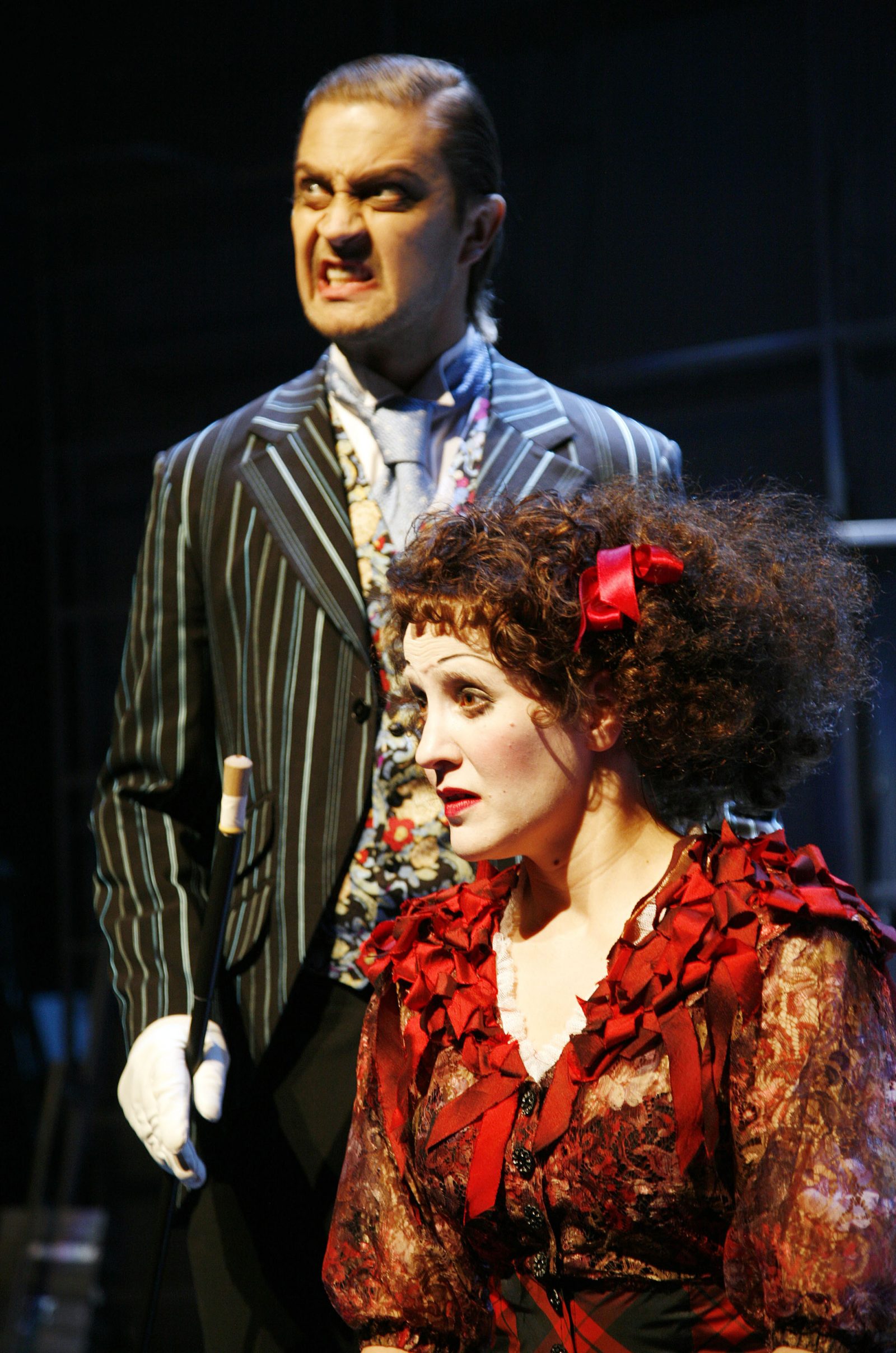
The Beggar’s Opera at the City Theatre, directed by Kari Heiskanen, is as cold as this time, and its hero Puukko-Mackie (Oskari Katajisto) is straight out of a textbook on narcissism: everything possible belongs to me. Money and power are decisive, and conscience is an unknown concept. It is only when the authorities begin to put a noose around the man’s neck that something like an emotion emerges. And lo and behold, the villain is rewarded generously.The Beggar’s Opera has been miraculously well preserved. Its observations about the power of money and man’s predatory thirst and ruthlessness still bite. No one has a clue about solidarity when it comes to self-interest. The play shows the audience reality, and everyone in their seat can easily fill in the gaps and make interpretations. If the investments do not generate enough profit in Finland, they move on to other markets. Look at people, look around!
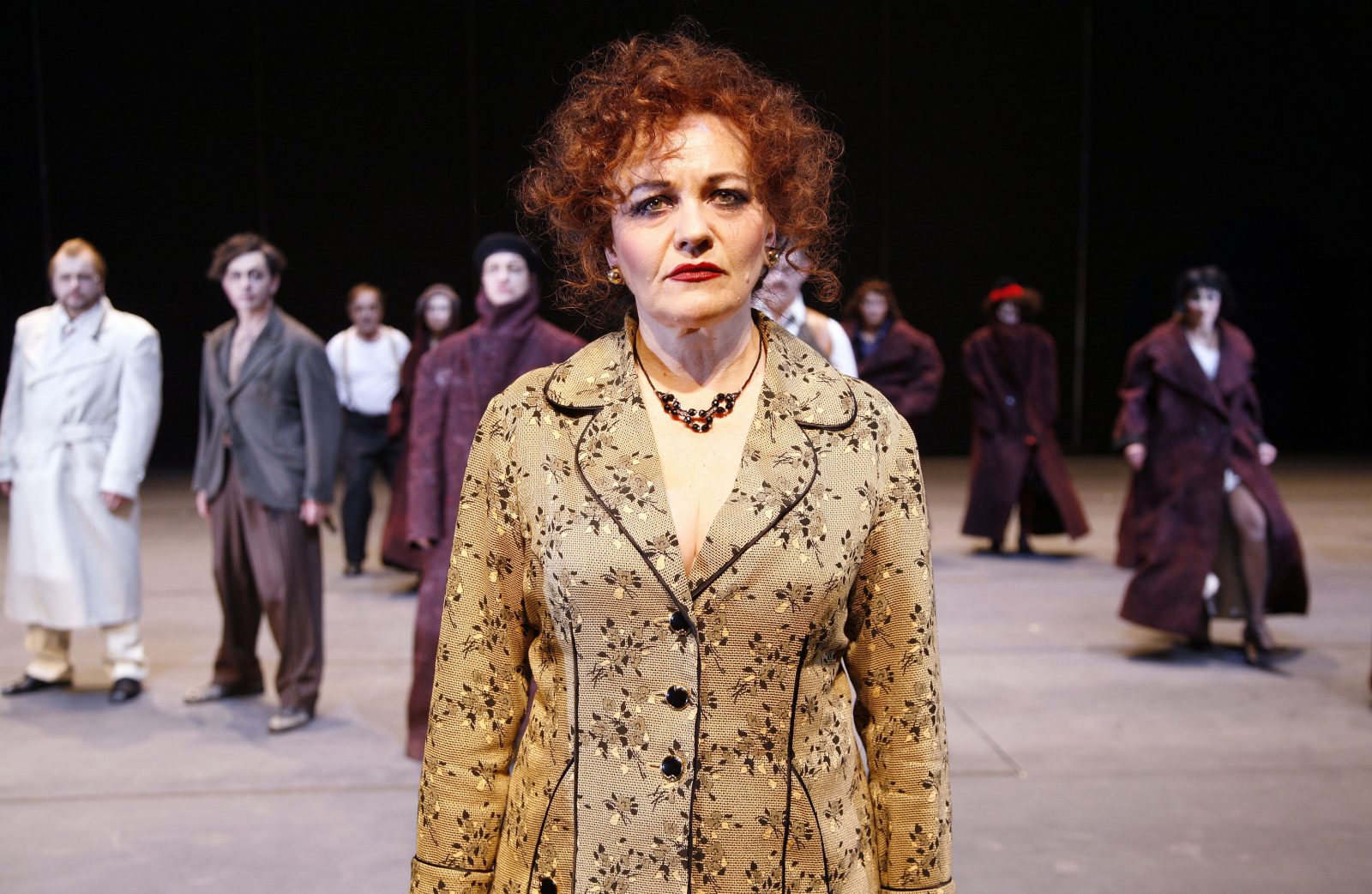
Bertolt Brecht , like the Mackies, was a ladies’ man. It is said that he had a hypnotic effect on women. Brecht made agreements with them that bound women to fidelity, but gave him complete freedom. In this sense, the women of The Beggar Opera , Polly Peachum (the finely singing Vuokko Hovatta), Kapakka-Jenny (Ursula Salo) and the whores who have been through a lot are very similar to Brecht: Strong, sharp-tongued, fearless and independent. They quickly realize what is going on and stand their ground. They also burn the audience quite well.
Read more
Karjala, 07.06.2007
Review
Terttu-Elina Kalaja
KARI HEISKANEN’S MASTERFUL DIRECTION
Read more
Nykypäivä, 30.3.2007
Review
Jaakko Kaartinen-Koutaniemi
BEGGARS DANCING MERRILYWhen Knife Mackie walks across the stage, who can resist? There’s a walking stick and white smooth gloves, lace-up shoes, a knife in your pocket – a couple of steps dancing and a stab in the back from the shadows.Like Mackie, the Helsinki City Theatre’s The Beggar’s Opera entertains just as it should, without remaining toothless.The German Bertold Brecht wrote his big breakthrough, a musical play based on an old English folk opera, in 1928. Kurt Weill composed the music for The Beggar’s Opera from elements of cabaret, jazz and melody. Both the text of the play and the songs are completely ageless – after all, they come from the heart of modernism.Director Kari Heiskanen has made the City Theatre’s The Beggar’s Opera seem spontaneous and loose. This has been achieved through very precise work. The orchestra sounds intoxicated and one-handed, in a wonderful and compelling way. The dance numbers and songs have the same natural roughness that amuses and delights. A few times, the texts are lost in unclear articulation, but especially the solos of Vuokko Hovatta , who plays the girl Polly in the play, are absolutely wonderful vocally.The ensemble carries its role excellently, especially Oskari Katajisto as Puukko-Mackie, Riitta Havukainen as Cecilia Peachhum.
The Beggar’s Opera is a multiple satire and turns everything upside down: What is bad, the dirty proletariat, has been brought to the stage of the theatre. Comedic clumsiness is achieved through skill. Vulgarly ugly speech makes a valuable audience laugh, because it is done in the name of Brechtian distancing. The implausibility of the story corresponds to reality.The performance of Knife Mackie, Polly, Mr. and Mrs. Peachum, thugs, prostitutes and cheating beggars approaches a cavalcade of television sketches. But The Beggar’s Opera makes one doubt whether this is a mirror in front of the viewer. What do I think about this?The texts of the play state that this is what a human being is like: to deceive, torment and persecute another until he has gained the last cent of benefit for himself. Human misery has not refined human nature, but has made the characters in the story extremely cynical.
The beggar’s opera does not present a picture of the life of the low-income people of our time at the mercy of capital. It gives way to the serious stigma of political theatre. But it is a question of morality and humanity: If you laughed and enjoyed watching the ugly poor stumbling and obscene quips on stage, what should we really think of the real suffering and poor of today? What about the endurance of love, loyalty and friendship, are they true or is it only the low mind of a person after all?
Read more
Kansan Uutiset, 27.03.2007
Review
Arja-Anneli Tuominen
THE BEGGAR’S OPERA HITS STRAIGHT INTO THE VEINHelsinki City Theatre’s Beggar Opera returns to Berliners
to its roots; rough cabaret style, where cutting satire meets rough
humor. The famous Brechtian distancing is also partly derived from cabaret,
where they sometimes explain to the audience what is going on and how to deal with the
should be treated.The audience of the City Theatre, accustomed to caressing musicals, may be
at first it is difficult to relate to the brutal story directed by Kari Heiskanen ,
but gradually it seems to suck the audience to its side – at least for the most
some of them.
Liisa Ryömä has made a very successful Finnish translation of Bert Brecht’s
lyrics, the lyrics are up to date, the songs still work in Elvi Sinervo’s
Finnish translations. Kurt Weil’s music always captivates. If I am asked
I much prefer to listen to it than Sound of Music.Knife Mackie is a London gangster with at least that resemblance
that he loves women and is loyal to them,
for many at the same time.
Read more
Kymen Sanomat, 25.03.2007
Review
Harri Parikka
HUMAN DIGNITY IS ALSO FOR THE TOAD
In 1928
Premieres
Got a classic
is still themed
topical.
Over the years, The Beggar’s Opera, a collaboration between Bertolt Brecht and Kurt Weill, has become one of the great theatrical successes of the last century, which does not seem to bite much in the teeth of time. The agelessness of the story is well illustrated, among other things, by the fact that it could easily be transferred to the present day without suffering the whole hardly at all.
The experienced and very confident Kari Heiskanen has placed it somewhere at the beginning of the last century and made the performance a work that respects the Brechtian legacy very well.
Read more
Turun Sanomat, 24.03.2007
Review
Irmeli Haapanen
A FRESH-LOOKING BEGGAR’S OPERAThe breakthrough work of the German reformer of the performing arts Bertolt Brecht (1898–1956), The Beggar’s Opera (The Threepenny Opera), a satirical treatment of capitalism, was premiered in Berlin in 1928, just over a year before the Wall Street stock market crash. Although the Great Collapse generally undermined people’s trust in capitalism, time has shown that the lack of trust was short-lived.Today, the joint work by Brecht and composer Kurt Weill, based on John Gay’s ballad opera (The Beggar’s Opera), which dates back two hundred years, is at least as topical as it was 80 years ago. At the Helsinki City Theatre (HKT), Kari Heiskanen directs a fresh and funny interpretation of the Beggar’s Opera, spiced up with tasty alienating effects.In addition to the play, Brecht’s The Beggar’s Novel (1934) has been used in the adaptation, and some changes and modernizations have also been made to the text.
All
trade
The beggar’s opera is a brutal story of capitalism, when everything – including love and pity – is for sale. Against each other are the robber and murderer Knife-Mackie and the human trafficker Peachum, who has monopolized begging. Both are like mafiosi, in whose arsenal of means blackmail and corruption are commonplace.So nothing has changed. Even Mac’s last-minute rescue from hanging and being rewarded for all the villain’s work is reminiscent of modern golden handshakes.Today, the critique of globalisation fits all of this like a nose to the head, and Heiskanen takes his interpretation in that direction. A concrete example is Song of the Instability of Human Conditions, which is performed in the midst of palm trees referring to low-cost production countries and a large wheel that turns the world around.The shopping carts complete the whole and grotesquely highlight the different aspects of the market economy, while the song ironically states that circumstances hinder man’s pursuit of good and consideration for others.Despite this, there are certainly more effective ways to make political theatre and to activate people intellectually, which Brecht sought, than Brecht’s plays. The Beggar’s Opera still deserves a new comeback, because according to the Theatre Info Centre’s performance database, the last performances of the Beggar Opera before HKT were seen in 1970 in the Turku and Kemi City Theatres. The peak season for the work was the 1960s.
Emphasized
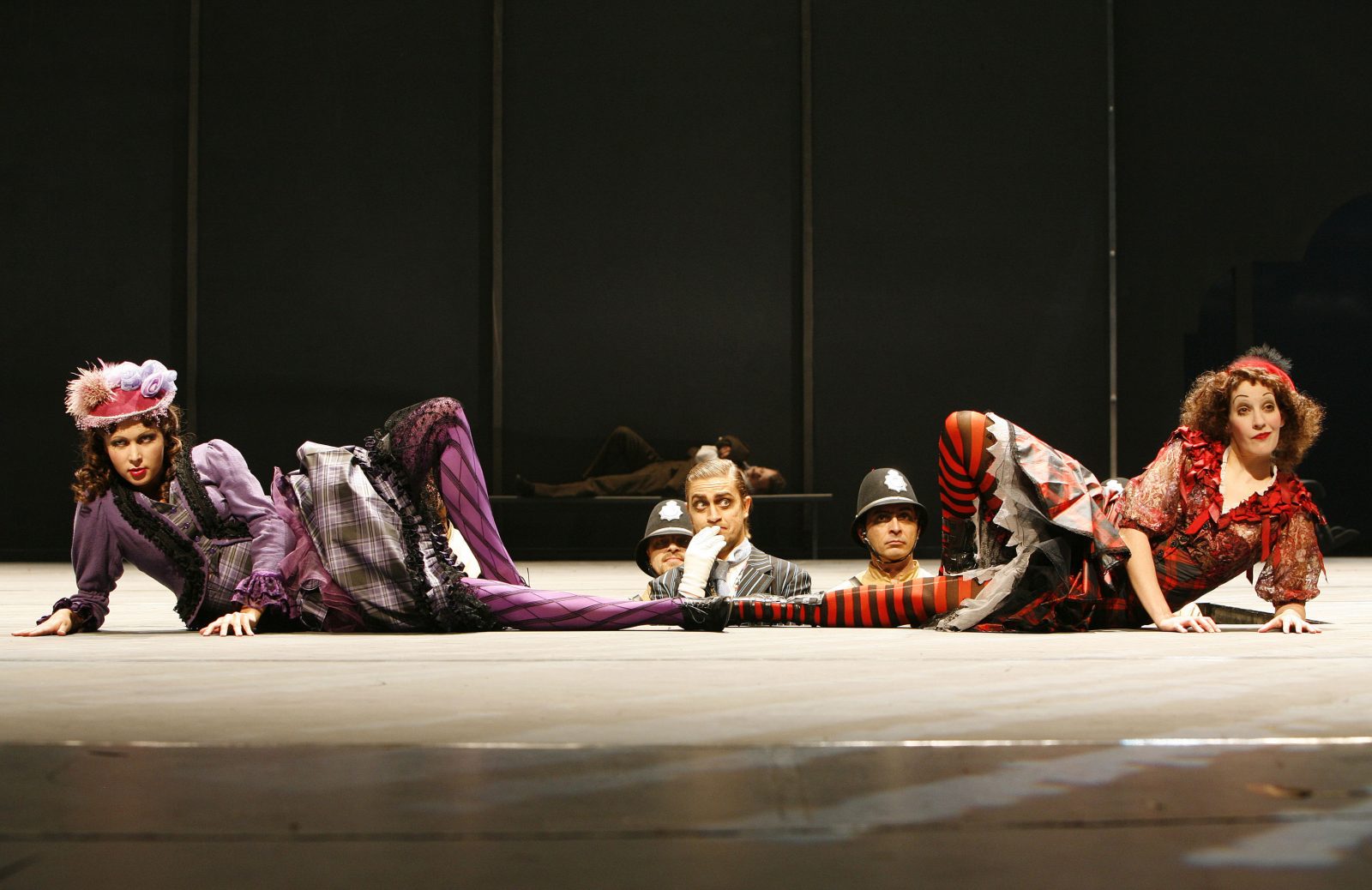
TheatreWhen the text of the Beggar’s Opera still speaks to me, the music still sounds good and Hkt shows confident quality work, the whole is very entertaining theatre.And emphatically, theatre in particular. The alienation effects launched by Brecht are in frequent use, and the viewer is kept aware at all times that he or she is in the theatre. The stage has been stripped down as if completely without sets. The light ramps are visible, and there are no other things to do. The characters are blatantly masked and costumed, they move, talk and sing in a deliberately pretentious manner like representatives of a certain type of person. They talk more to the audience than to each other, and Heiskanen has also brought in a narrator (Leena Rapola), who at least pulls out of the illusion when she makes contact with the audience.The performance also features a clip made by means of finger theatre, and one of the funniest alienating insights is an aria by Chief Brown Chief Lucy’s daughter, which parodies ballet and opera mannerisms. This is all the sweeter when the role of Lucy is played by opera singer Laura Pyrrö. The anachronistic rants about shop stewards and the free movement of labour are also spot on.The cast as a whole does a good job. No one stands out in particular – except for Pyrrö’s singing skills – but everyone takes care of their part in the whole with care.The main actors – Oskari Katajisto as Knife Mac, Heikki Sankari as Peachhum, Riitta Havukainen as his wife and Vuokko Hovatta as Polly’s daughter, Kari Mattila as Police Chief Brown and Ursula Salo as Tavern Jenny – are an equally strong group in terms of both acting and singing skills.
Read more