Kotiliesi, 17.02.2009
Review
Essi Salonen
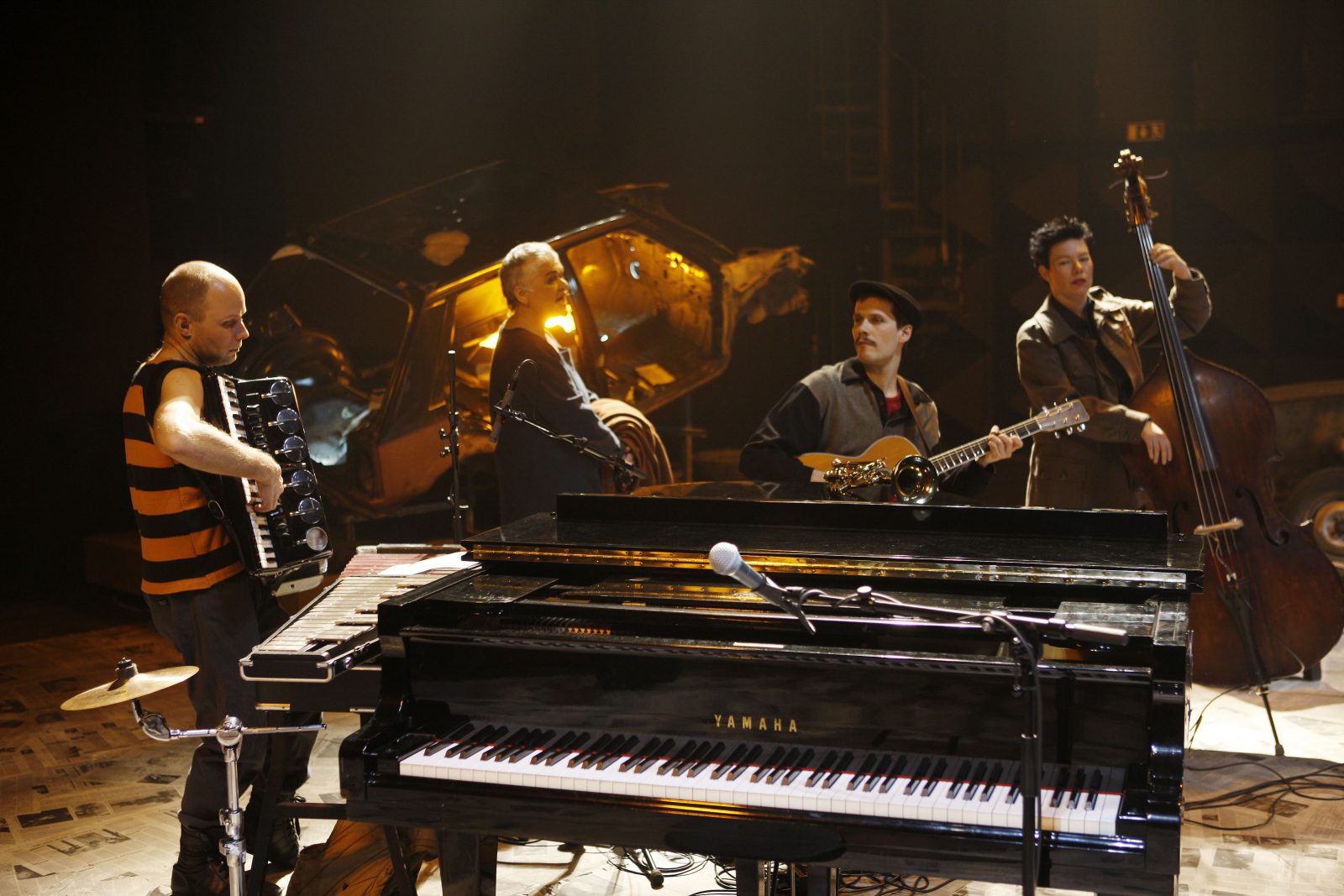
Songs from prison camps Directed by Pirkko Saisio , Forbidden Songs, consisting of poems and compositions written in Soviet prison camps, is ruggedly beautiful theatre. Saisio’s lyrics, which are also mostly translated into Finnish, are shocking and even funny at times. The songs interpreted by Saisio, Jonna Järnefelt and Janne Marja-Aho talk about prison life, death, love and longing. Forbidden Songs also comments on the state of modern Russia. One of the highlights of the one-and-a-half-hour evening is Pirkko Saisio’s incisive interpretation of Vladimir’s Vysotsky’s Pense Horses. The orchestra consists of Jussi Tuurna, Sara Pujula and Topi Korhonen.
Read more
Nykypäivä, 06.02.2009
Review
Venla Hiidensalo
Forbidden songs passed from hand to hand in the Soviet UnionSONGS FOR FATHER IN THE SHADOW OF THE SUN Forbidden Songs, which premiered at the Helsinki City Theatre’s studio Elsa, is a collection of songs secretly performed and listened to during the Soviet era, which criticised those in power or told the underworld in its own slang about the reality behind the scenes. The performance also sings about the war in Chechnya and the murders of journalists. The Forbidden Songs has been dramatized and directed by Pirkko Saisio, who has also translated most of the songs into Finnish. Alongside Pirkko Saisio, they are interpreted by Jonna Järnefelt andJanne Marja-aho. Dangerous poetry The performance sarcastically states that poetry was only truly appreciated in the Soviet Union, as a poet could end up in a prison camp and death because of his words. The poet Juz Aleshkovsky, the author of the song Comrade Stalin, was sent to a prison camp for a couple of years in the early 1950s, where he learned the slang of the underworld. In the song, he reminds Stalin of the coincidence that comrade Stalin was also exiled to the swamps of Siberia before he came to power, where he later sent his political enemies.Aleshkovsky’s songs Comrade Stalin and Lesbian Wedding were known throughout the country, but the author did not dare to take them up until twenty years later. The forbidden songs were circulated from hand to hand as tape recorders. Arkady Severny’s songs were listened to as rattling home recordings all over the country, but only one album was released by him, and that too in Turkey.
During the Soviet era, the songs of the underworld developed their own poetics and slang. For example, the saying “to write with a Finnish pen” meant to stab (finka also means knife). The songs told about topics that did not fit into the official Soviet reality, such as prostitutes, prison life, vagabonds and clashes in the underworld. In the song, love is a strange land that you can’t say no to.
Read more
Kauppalehti, 02.02.2009
Review
Veijo Sahiluoma
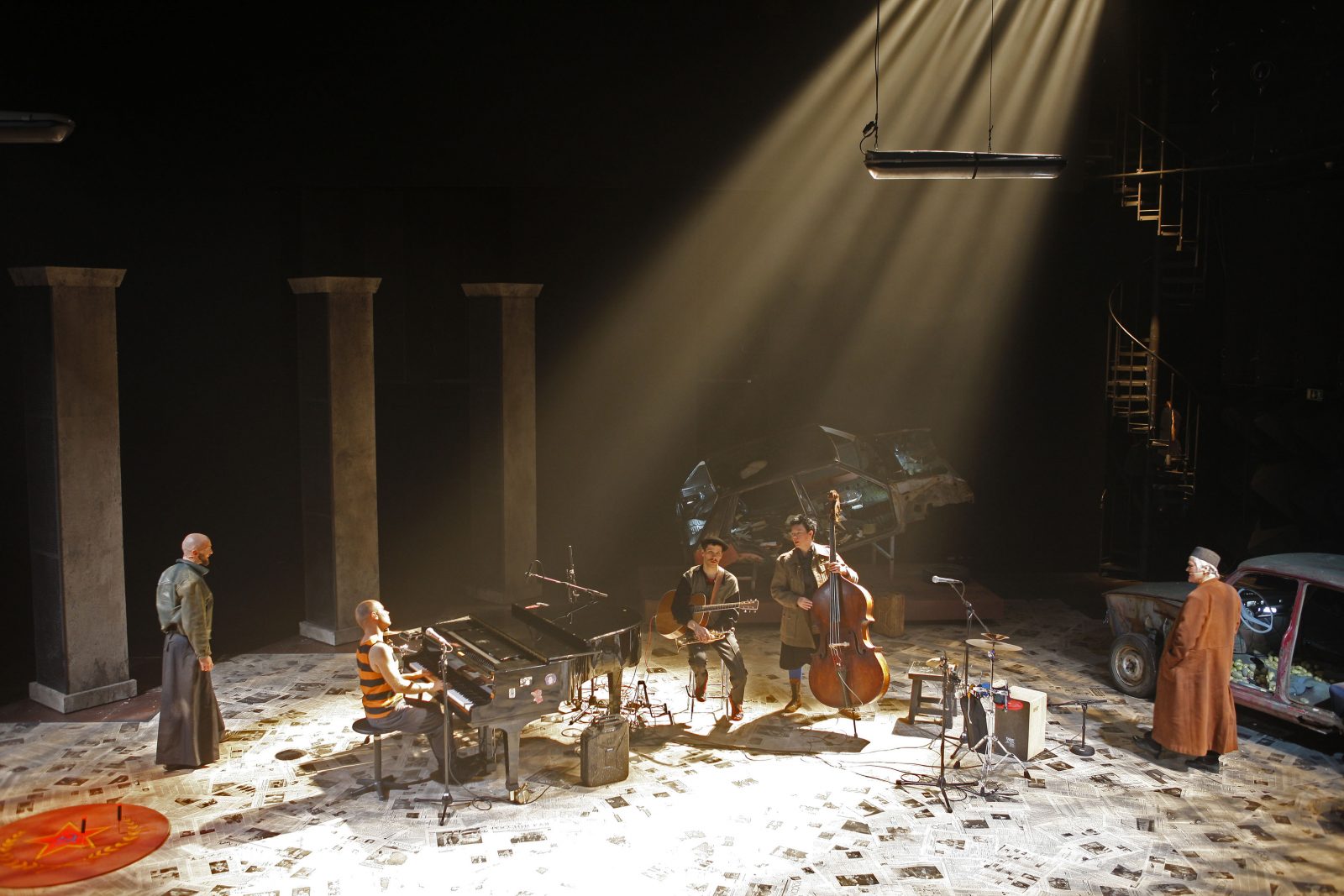
System Black ShadowsThe Forbidden Songs cabaret brings everyday life to the foreReinterpreting the recent past has become fashionable. In cinemas, Valkyria, which tells the story of an anti-Hitler conspiracy, andFrost/Nixon, which returns to the reasons for US President Richard Nixon’s forced resignation, gather viewers. The Helsinki City Theatre’s cabaret Forbidden Songs , which highlights the terror the Soviet Union directed at its citizens and the harsh everyday life associated with it, can be read in the same genre.Not so long ago, the band AgitProp propagated the Soviet system to the Finns through song. The model was taken from across the eastern border, and the message got through well, especially in the conditions of the 1970s. Many middle-aged and older people still listen to this music in a nostalgic mood.Forbidden Songs is an anti-agitprop, i.e. a Brechtian-style grotesque cabaret that brings greetings from the Siberian taiga, the Stalin Canal and the Black Sea coast of Odessa, among others. Vladimir Vysotsky plays a central role in the performance, as he acted as an everyday critic of the Soviet system with downright harrowing self-sacrifice and thus voluntarily remained outside the system. In a way, Vysotsky was rehabilitated eight years after his death in 1988 at a major concert in Moscow to celebrate his 50th birthday. He even received a stamp in 1999.The Forbidden Songs has been dramatized and directed by Pirkko Saisio, whose karma also plays a significant role in the entire performance. Equally convincing is Jonna Järnefelt, who stretches to many roles according to the content of different songs. Janne Marja-aho reaches the level of grotesque both as Madame Banjou and as a numb serial killer.The music is provided by Jussi Tuurna, Sara Pajula and Topi Korhonen. Pajula and his double bass achieve incredible performances. An hour and 20 minutes and 20 songs of the performance go by like an instant. There seemed to be no end to the applause at Thursday’s premiere.Saisio has done a great job in Forbidden Songs. He is the dramatizer, director and key performer of the performance, but also the lyricist and translator of many songs. Kaj Chydenius and Pirjo Honkasalo are also among the translators of the songs.Vysotsky was popularized in Finland by Mika and Turkka Mali. In smaller circles, Vysotsky has been recorded in several places in Finland. Now, however, the moods of the songs of Vysotsky and his kindred spirits feel very authentic in the midst of car wrecks and misery.
Read more
Helsingin Sanomat, 31.01.2009
Review
Lauri Meri
Songs come alive, does a person changeDramatic singing evenings are one of the Helsinki City Theatre’s most beloved programme guidelines. As the series of song evenings is rarely supplemented, it is also constantly needed.
Forbidden Songs continues the path paved by Bellman, Brel and German cabaret songs. It has been compiled from Russian “songs of the underworld”, songs written in prison camps and folklore, or forbidden and often anonymously disseminated texts by well-known poets.
The poems collected by Pirkko Saisio have their own long history. The origins of many of them are unknown, nor what kind of different versions of them have been circulating. The songs and poems that Saisio has translated into Finnish largely together with Pirjo Honkasalo and Jukka Mallinen are a natural part of the living tradition. The one-and-a-half-hour singing evening is given weight and impact above all by the fact that the performance also has its own history. Saisio has been working with almost the same entity almost twenty years ago at Lilla Teatern. At the time, the show was called Mutsi, mä rakastan huijari.The former title track has been re-translated by Saisio as Mutsi, mä digaan huijarii. The song of the composer and lyricist, whose origin is unknown, has been updated to the present day the most strongly of all the songs in the performance, and in that sense it could have given its name to the entire performance.< BR>What is the truth about the war in Chechnya, the murder of Anna Politkovskaya and the Putin youth? The ensemble chosen by Saisio is enriched with all possible contradictions, and the performance becomes excitingly polyphonic, if only thanks to the multi-talented group of performers made up of different types of characters.
Jonna Järnefelt was involved already twenty years ago. Janne Marja-aho , who is better known as a dancer, is actually conquering a whole new territory as a singing actor. Pirkko Saisio once again demonstrates her expressive precision, which is convincing both in the simplistic bare jealousy song and in the rehabilitation scene approaching the opera, which is based on a text by Daniil Harms .
Jussi Tuurna is responsible for the composition of Harms’s satire, the fresh arrangements of Forbidden Songs , and he also conducts the performance’s small orchestra. All three musicians have a strong presence in the fast-paced action as strongly defined personalities. Perhaps the greatest and most eloquent contradiction in Forbidden Songs is brought out by Jukka Mallinen in his introduction to the programme. The intellectuals have begun to oppose songs that have become the manifestations of Russia’s new spirit. The language of the underworld is rooted in the public sphere, politics and business.
Read more
Tiedonantaja, 13.02.2009
Review
ET
Strong from power… and violence The Helsinki City Theatre’s Studio Elsa is currently performing a production of Forbidden Songs , dramatised and directed by Pirkko Saisio. In addition to Saisio, Jonna Järnefelt, Janne Marja-aho and a trio led by Jussi Tuurna will take the stage. The performance is an intense nearly one-and-a-half-hour ensemble, with songs that shed light on Russia’s reality, past and present from different angles. Open violence, murders of journalists open and close 20 songs, which provide material for reflection on the essence and roots of power – and violence – their relationship and relativity. The songs are about marginalized, helpless and powerless people who long for their friends, love and freedom. They also tell about their authors, often anonymous, who nevertheless have such partners as Vladimir Vysotsky, Bulat Okudzhava and Osip Mandelstam.
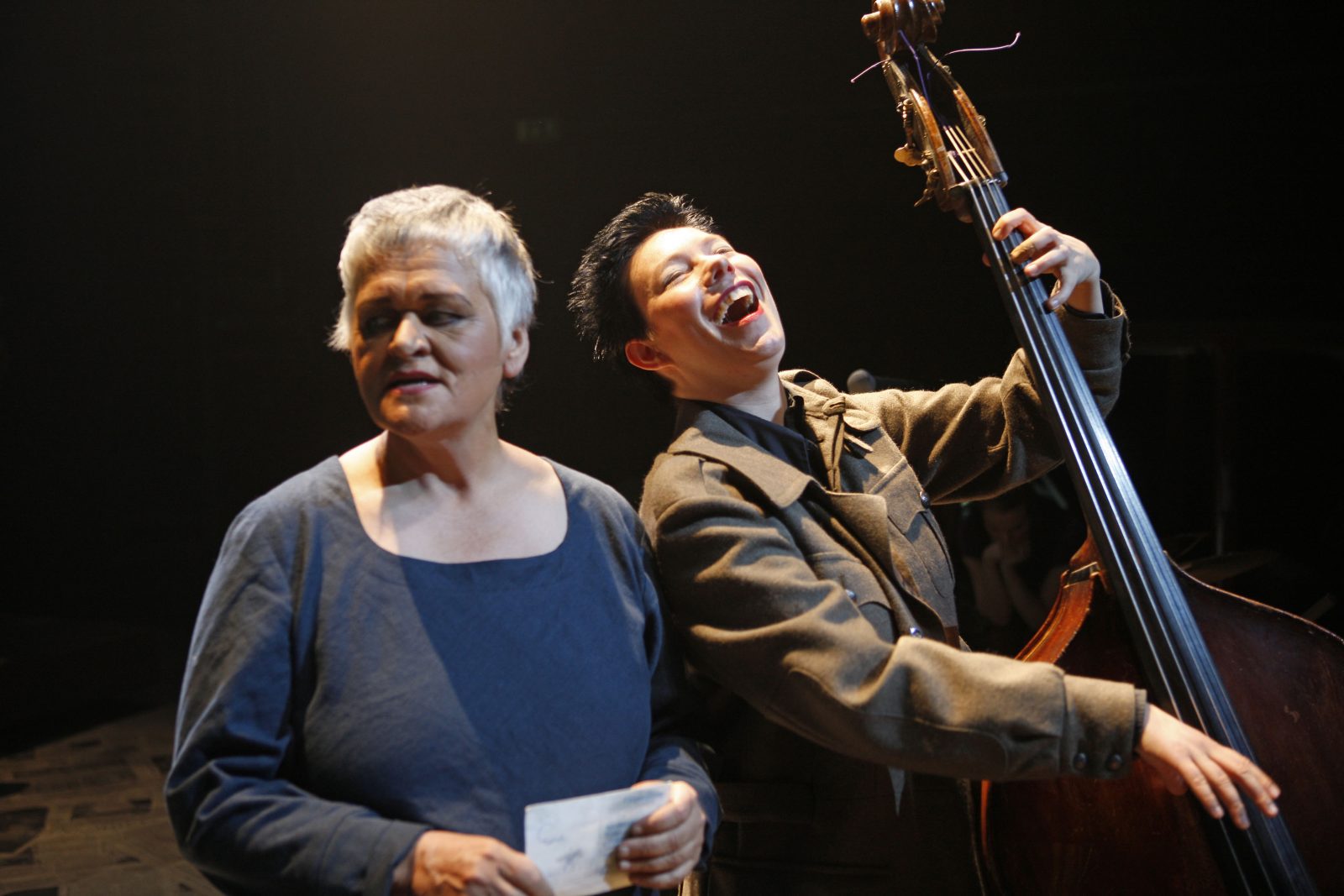
The songs form a polyphonic, internationalist whole, which helps to understand how in conditions of blind arbitrariness and subservience, people’s suffering was allowed and succeeded in preserving a literary form so that everything is clear even decades later. In Russia, poetry, even the unnamed, has shown astonishing vitality, starting with Alexander Pushkin, who wrote a moving poem in December 1825 for his friends who participated in the rebellion and were exiled to Siberia. At the climax of the forbidden songs, this tradition is represented by Osip Mandelstam’s St. Petersburg, Vladimir Vysotsky’s Lukewarm Horses , and Bulat Okudzhava’s Francois Villon’s Prayer. The highlights of the forbidden songs are Pirkko Saisio’s interpretations of the songs of Vysotsky and Okudzhava, especially Francois Villon’s prayer, which concludes the performance. Speed and optimism pulsate with the song Anna palaa, in which the musicians also get to show their skills. No wonder it had to be presented as an extra. One of the highlights of the forbidden songs was Sara Puljula’s bass solo in the song Ja sä vaan naurat.
Read more
Skenet, 05.02.2009
Review
Martti Mäkelä
FORBIDDEN SONGS
Read more
Hufvudstadsbladet, 31.01.2009
Review
Elisabeth Nordgren
Protest songs from Soviet-era prison camps
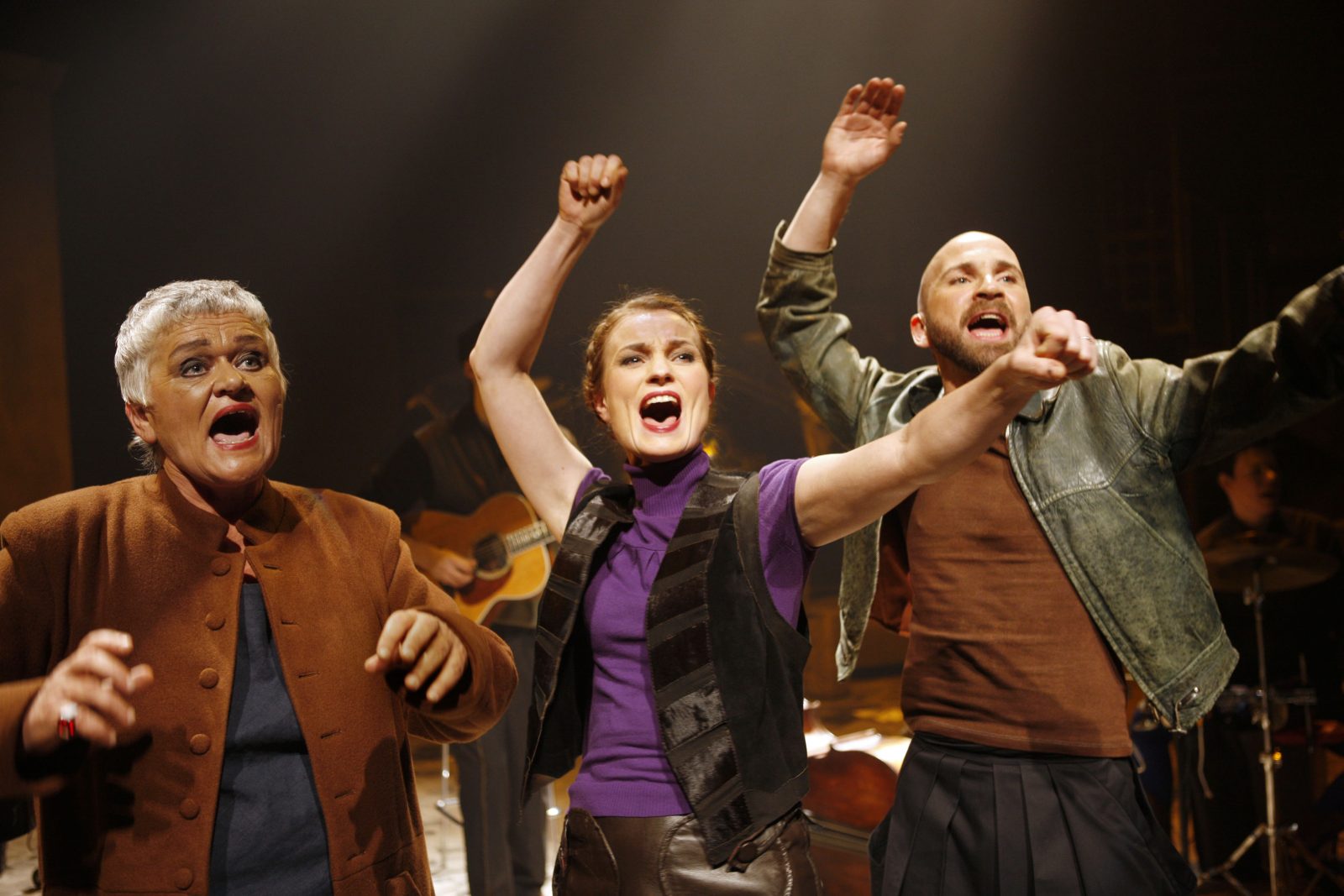
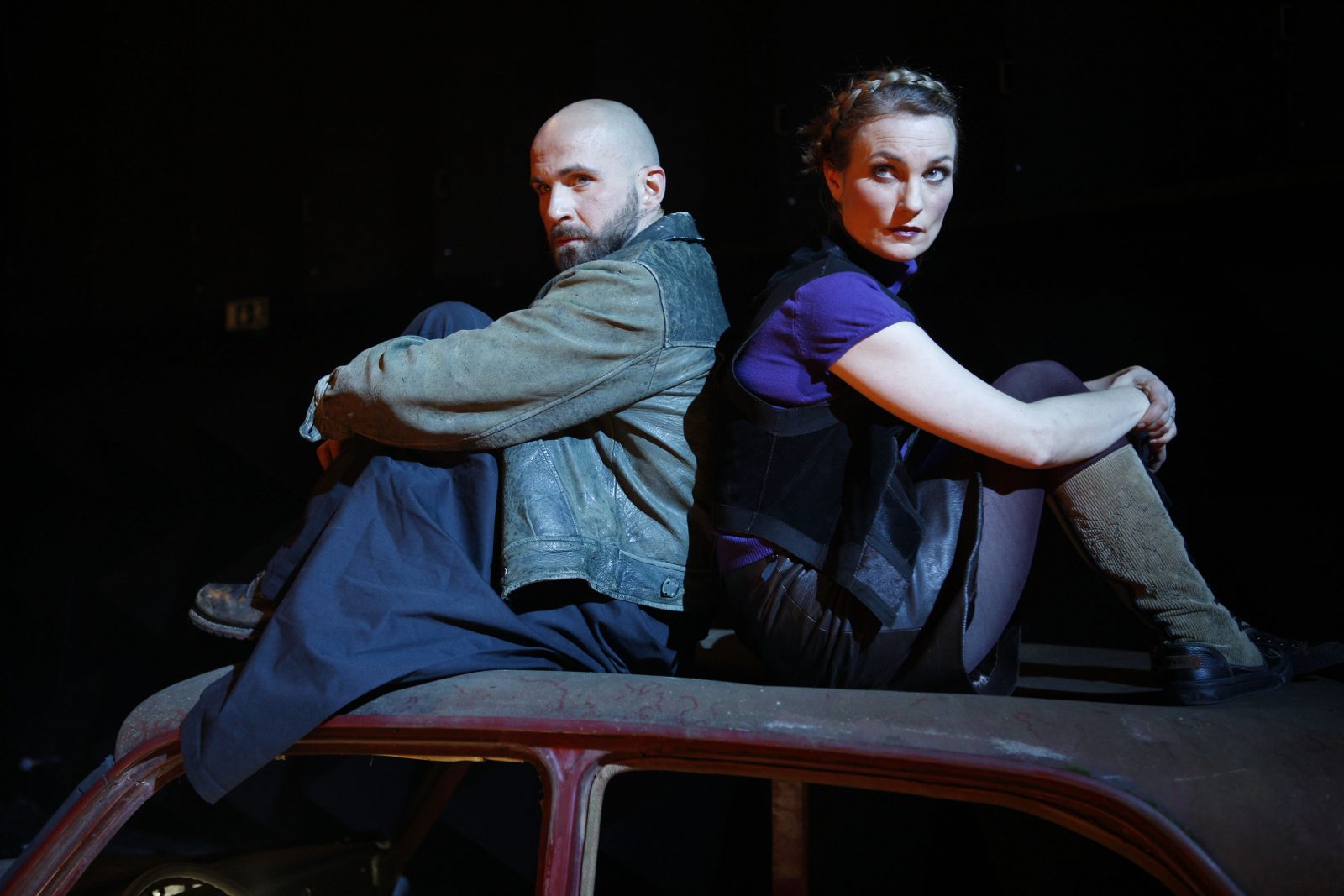
Kielletyt Laulut (Forbidden Songs ), dramatised and directed by Pirkko Saisio, is an evocative, highly engaging musical performance with theatrical elements. The performance is based on poems, compositions and commentaries that were mainly created in prison camps in the Soviet Union.Rarely has the Helsinki City Theatre experienced such expressively vehement protest moods and ironic playfulness as now, through the relevant connections to the past, the Soviet Union and today’s Russia. In the musical performance, which will be performed at the theatre’s Studio Elsa, Pirkko Saisio, Jonna Järnefelt and Janne Marja-aho will perform with songs, lines, dramatised elements and alternately choreographed elements. The orchestra, consisting of Jussi Tuurna, Sara Puljula and Topi Korhonen, also participates in the acting and singing. The interaction between the orchestra and the singing actors works excellently. Depending on the content of the songs, which are about everything from longing for freedom to longing for love, the actors occasionally change character and character personality. In this way, there will also be a change of pace under Saisio’s direction. Janne Marja-aho creates breathtaking acrobatic positions and is jokingly clever in his interpretations. Both Pirkko Saisio and Jonna Järnefelt play out intensely in their interpretations.
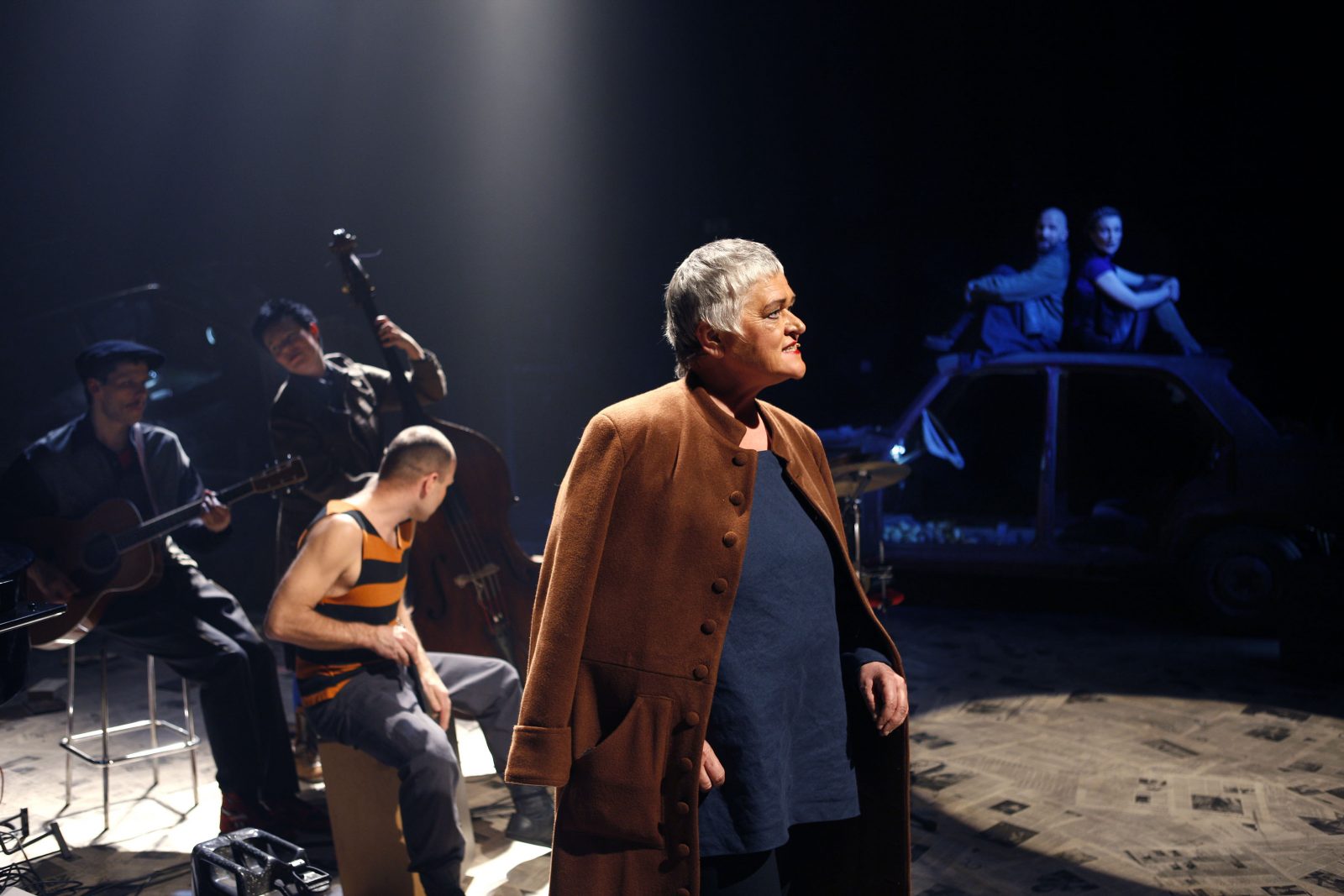
Criticism of StalinThese include some songs written and composed by the famous satirical poet Bulat Okudzjava (1924–1997) and the song St. Petersburg set to music by Alla Pugacheva (b. 1949) to words by the poet Osip Mandelstam (1891–1938), who was sentenced to hard labour and died in a prison camp near Vladivostok. The well-known protest singer, poet and actor Vladimir Vysotsky (1938–1980) contributes two songs. In addition, Pirkko Saisio has written the lyrics to several melodies. The moods change from ironic jokes to melancholy, melancholy, sadness, aggressiveness and resignation. Both at the beginning and at the end of the performance, reference is made to the recently murdered young Russian journalist Anastasia Baburova and the lawyer Stanislav Markelov , who worked at the same newspaper, Novaya Gazeta, as Anna Politkovskaya. The dramaturgical tension gradually rises from a more light-hearted tone at the beginning towards dark gloom at the end. The décor, with its two car wrecks and newspaper on the stage floor and often a rather dim world of light, also contributes to the melancholy atmosphere. The irony comes through, among other things, in the red-painted star on the stage floor, against which the three performers each point their “finka”, the Finnish puukkon, also known in the Soviet Union. In these scenes, the KGB, the FSB, democracy in the Soviet Union and holy Russia are alternately celebrated. The programme booklet is provided with translator Jukka Mallinen’s excellent informative introduction to the Soviet underworld with its motley subculture, where the forbidden, fascinating songs symbolised anarchism and long-awaited freedom.
Read more