Kirje Siperiasta
Note: No longer in repertoire!
Cast: Lilga Kovanko
Control: Milja Sarkola
Translation: Anneli Mäkelä
(price includes entrance to the museum’s exhibition)
Accessibility tools
AI-translated page—pardon any small errors!
Note: No longer in repertoire!
Cast: Lilga Kovanko
Control: Milja Sarkola
Translation: Anneli Mäkelä
(price includes entrance to the museum’s exhibition)
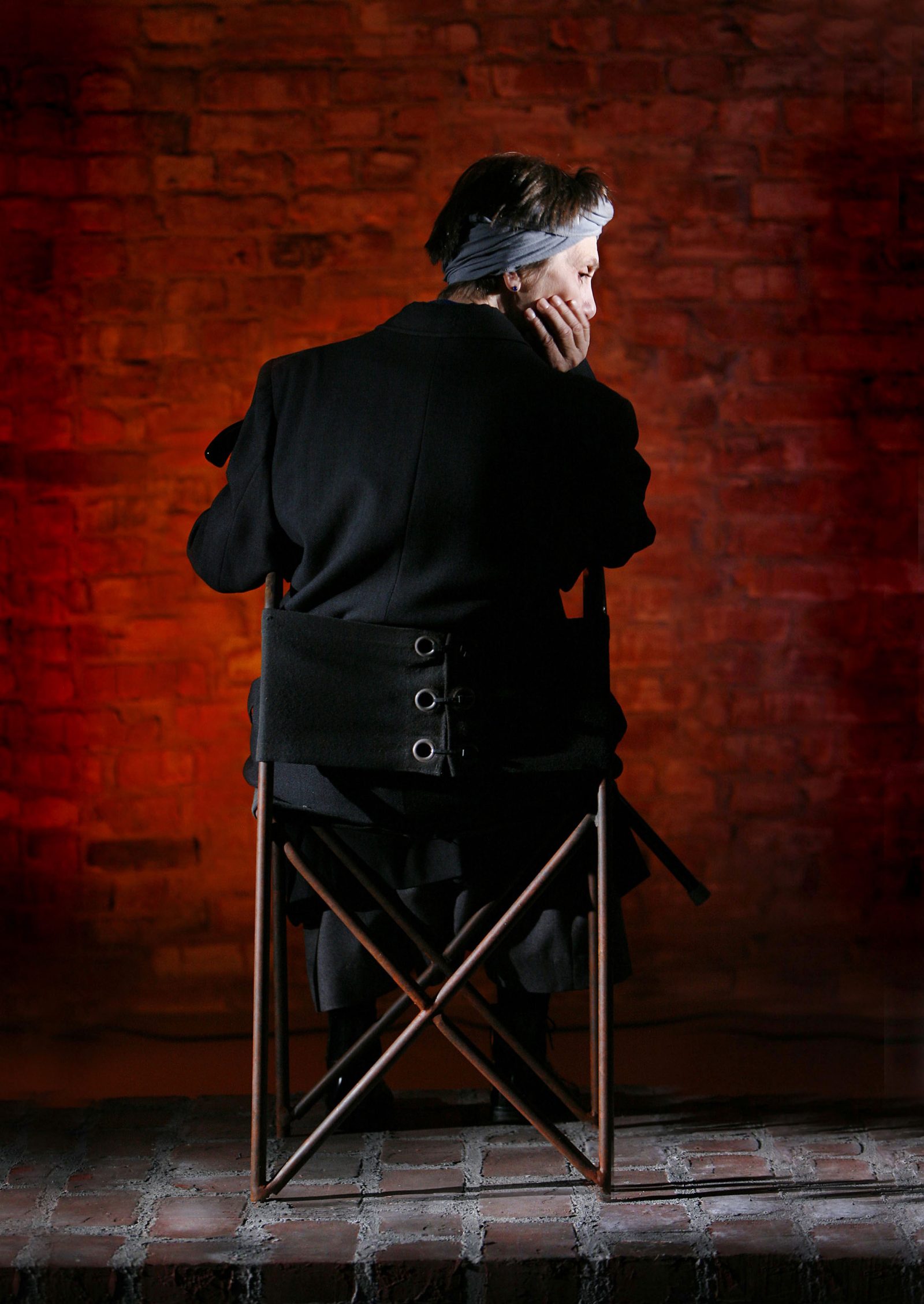
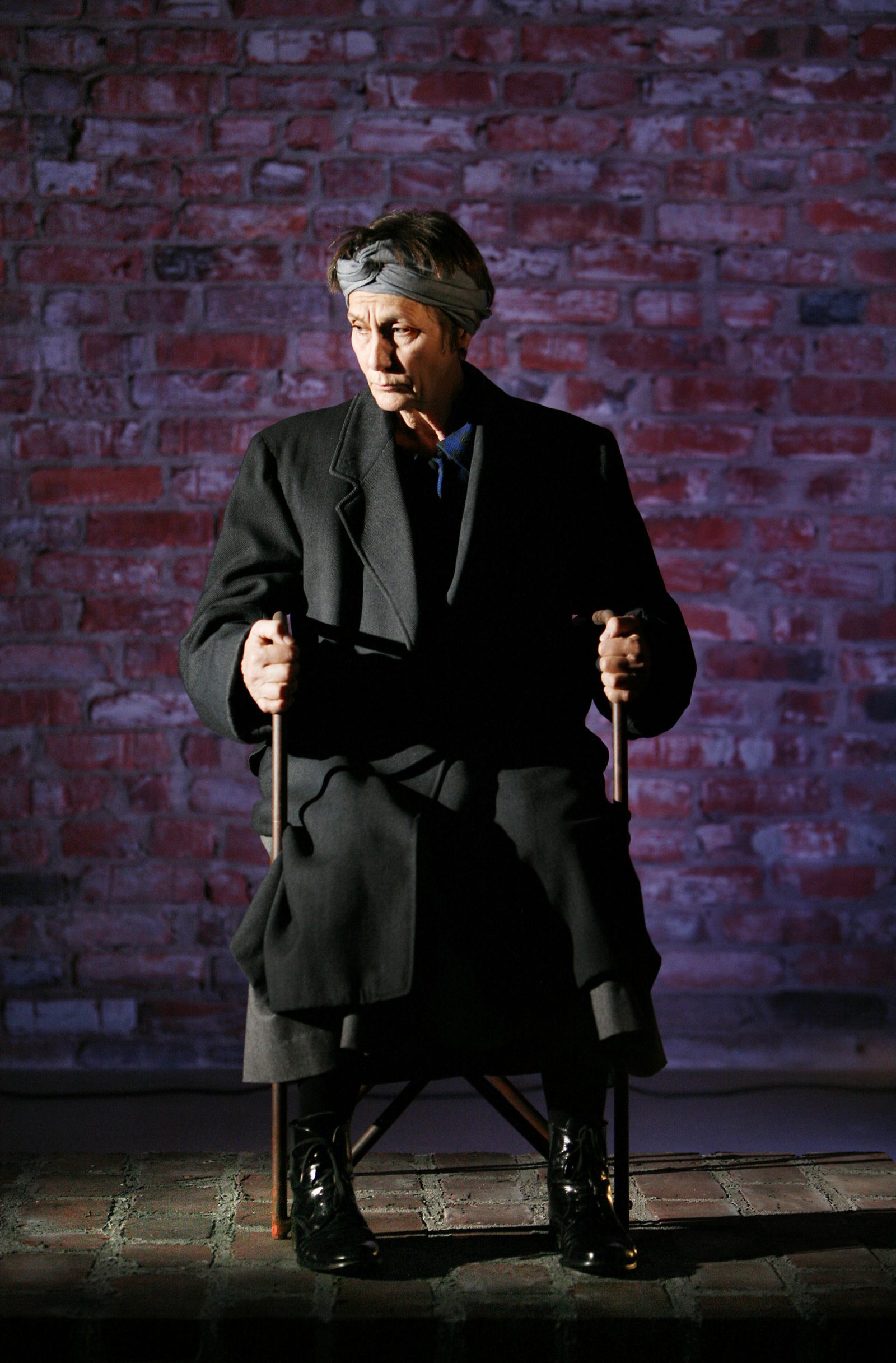
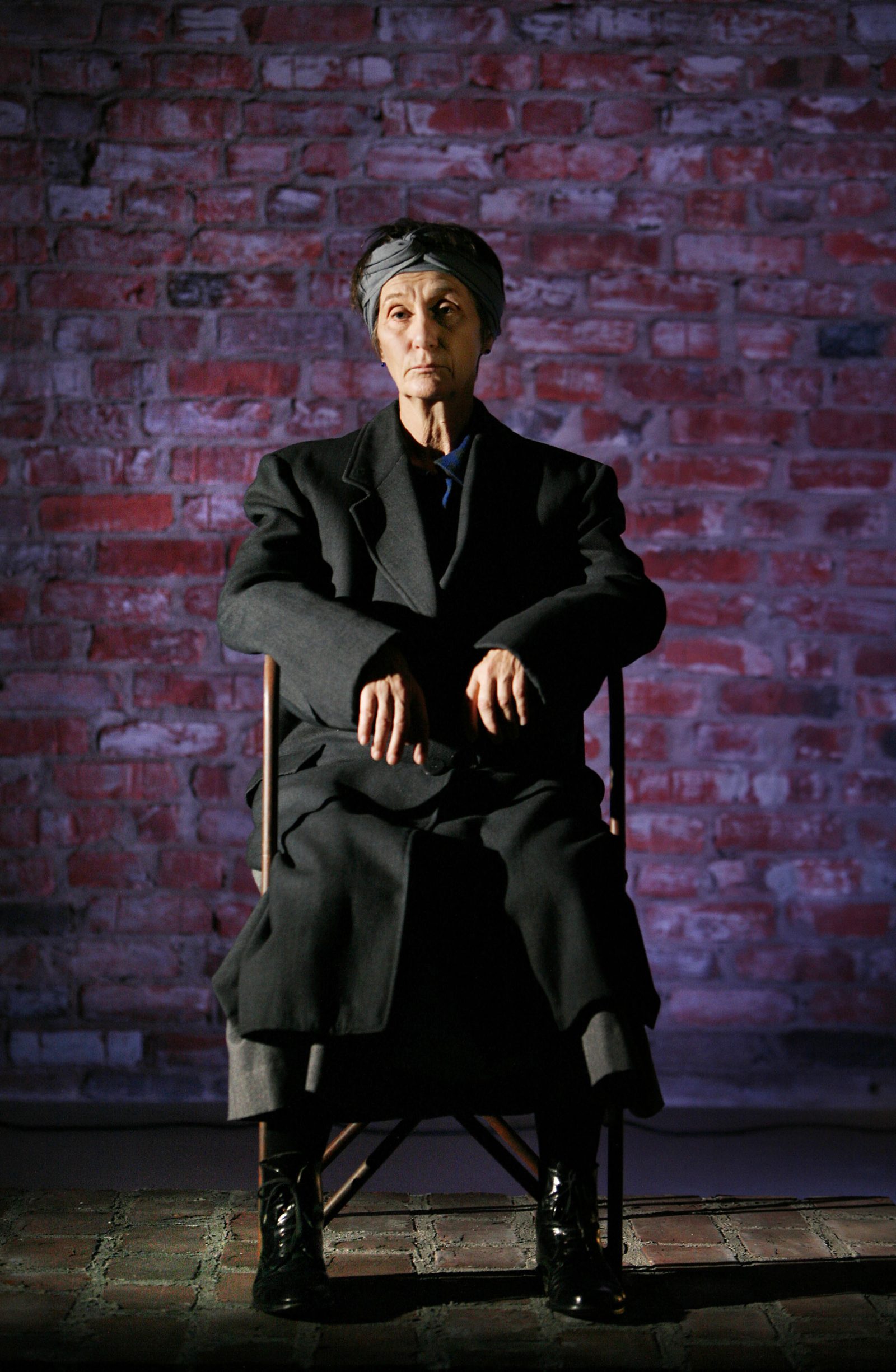
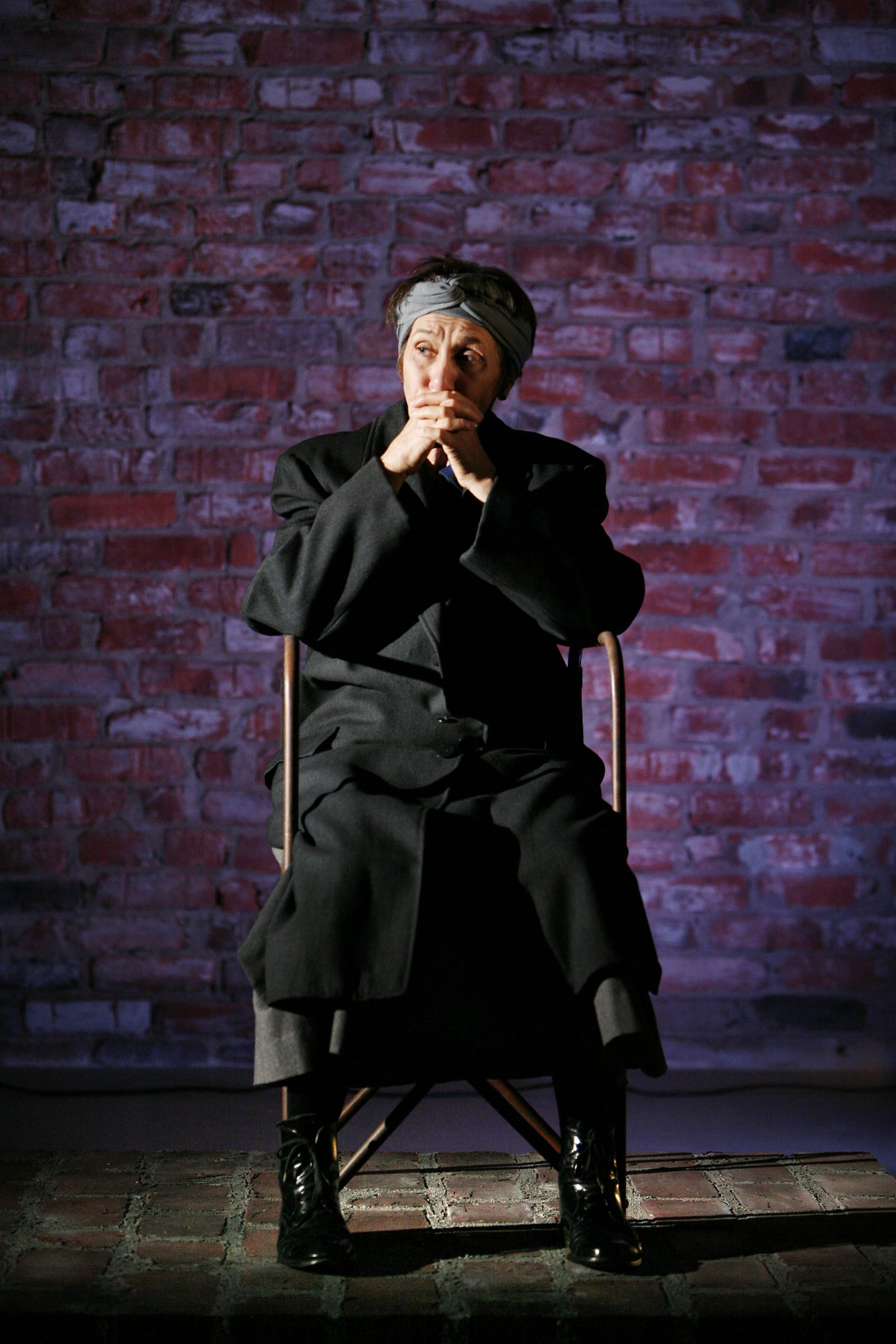
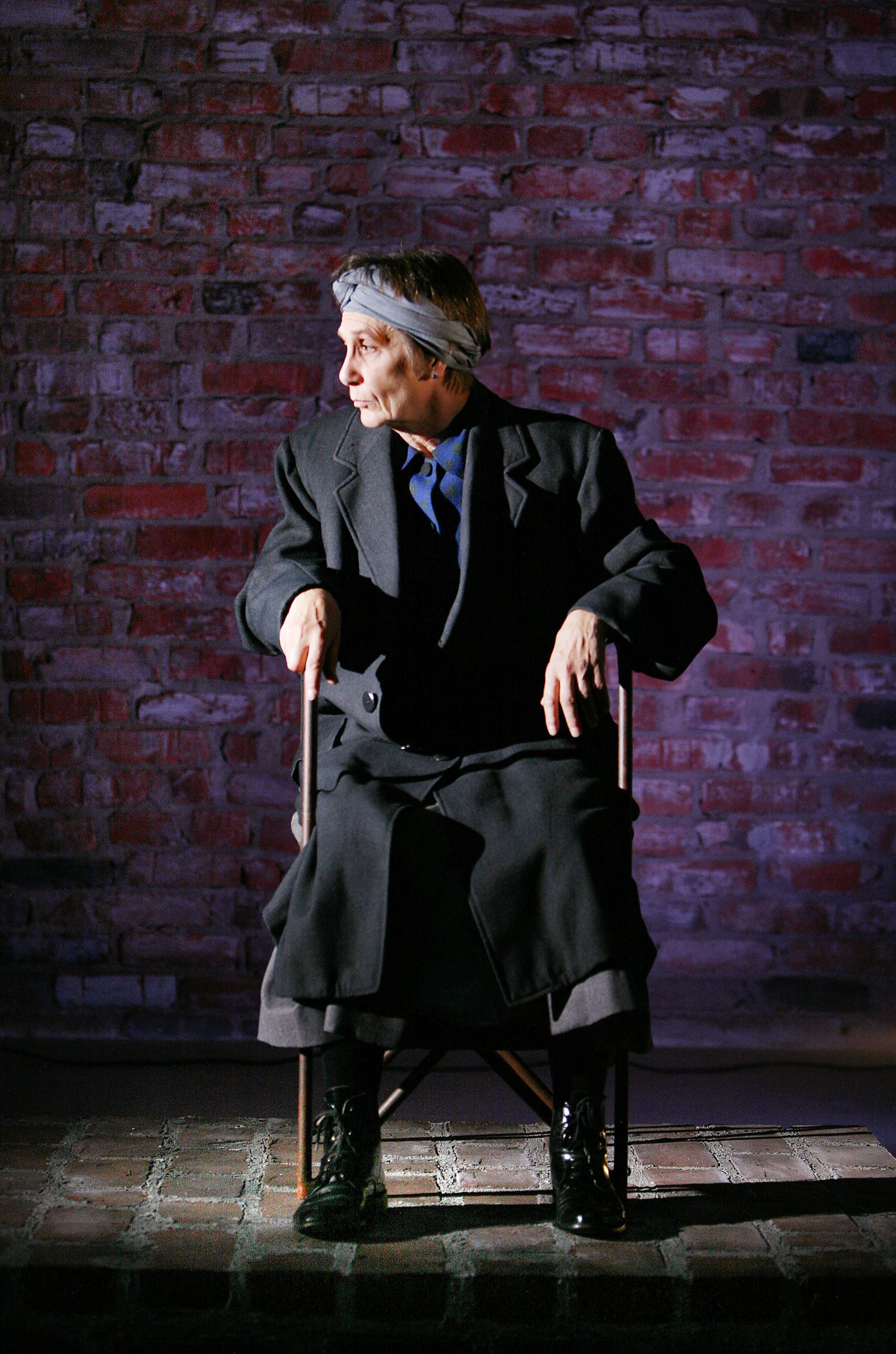
ELNA’S HISTORYThere is something special about hearing people, who on the outside look strong and healthy, talk about a life full of suffering. I have heard survivors of concentration camps, war, torture and poverty. People who have been deprived of their loved ones, their pain threshold and their dignity. Everything except his physical body. A body that, despite everything, can stand, can walk, can talk and can live on. I’ve thought about it many times, the contradiction in the fact that a body that surrounds a person who has experienced so much suffering can even radiate strength. But then it is also almost impossible to fully understand the meaning of suffering. But it is not impossible to learn to pay attention to it, to the causes and to the consequences. And to listen. The letter from Siberia recounts Elna Sundgren Schdanoff’sfate in Russia from 1937 until the years after Stalin’sdeath in 1953. The text is written by Elna’s nephew, Christian Sundgren , and dramatized by director Milja Sarkola.It is a monologue performance with and about a woman. The aged Elna has made an active choice to tell her story and carefully selects the bits and memories she wants to share. A simple room with brick walls, a chair, a cup of tea with sugar, a radio and a few immortalized dates give room for the performance to focus entirely on the story being told and how it is told. With no greater guilt than being married to a right-wing engineer, Elna was imprisoned in 1939 and sentenced to five years of forced labor camp followed by another five years of exile. Elna tells a story about life in prison, on eternally long and painful journeys to and from the labor camps in Siberia, about her stay in the camp and in the exile afterwards. Lilga Kovanko’sElna tells the story with a pleasant Russian intonation and is mostly collected and quiet. In contrast to the past she talks about, here on stage she has full control over what happens. The cool control makes her distant and I therefore experience her more strongly by listening than by looking at her. I’m listening to a story about a world where it’s minus fifty degrees Celsius, where babies are snatched away from their mothers and where loneliness is immense even when it’s so cramped on the floor where you’re lying that you can’t turn around. But above all, I listen to a story of uncertainty.Uncertainty about her own fate and that of her closest family members has characterized Elna’s life ever since the day her husband was imprisoned. The uncertainty has given rise to the resignation that is created by not having control over one’s own life, but at the same time it has also been the prerequisite for a life-giving hope. What you don’t know has happened, you can’t yet fully grieve. Elna Sundgren Schdanoff’sstory was published in book form in 1997 and takes on another dimension in Kovanko’s and Sarkola’s interpretation. The letter from Siberia becomes a performance about telling, but also a performance about silence. In parallel with Elna’s story, there is always the certainty of how long after Stalin’s time people turned a deaf ear to her and others’ similar testimonies. “We didn’t listen to her,” Christian Sundgren writes in the program leaflet. And he has not been alone in not wanting to tarnish his ideals with horror stories from the Soviet Union. There were so many other more beautiful stories to listen to. The narration and silence in the Letter from Siberia remind us that we must constantly ask ourselves: Who are we listening to? And who do we not listen to?
Read moreWITNESS TO THE INCOMPREHENSIBLEHow fragile and vulnerable is not a single person in the world, especially in times of upheaval Historical Stages – During Dictatorships, wars and famine? This and much more gets the warm, melancholy the monologue The Letter from Siberia the spectator to ponder over.The play is based on Elna Sundgren Schdanoff’s own depiction. Her nephew Christian Sundgren published Her life stories in book form ten years ago. Now Milja has Sarkola has created a responsive monologue for the scene that bases on the stories.In the ascetic space with bare brick walls meet we by an elderly woman, Elna, as low-key but brave shares with us everyday observations from the horrific spoon. An evening In 1937, they suddenly pick up her husband and imprisons even her without stating any real reason. For Elna’s Part follows five years of penal servitude in Siberia and further Five years of banishment only because she was married to the engineer Votya Zhdanov. Unique story that is not uniqueThe incredible journey through Siberia in the middle of winter, the nature (or lack thereof) on food), mice, lice, the rats and the inhumane conditions says Elna (Lilga Kovanko) for us about as if it were any ordinary story at any time. Gently, delicate and sometimes cheeky she says – with her feet on earth. Lilga Kovanko takes be in his Russian and give Elna A Russian accent that sits well in the context and liberates the acting expression. Milja Sarkola’s direction is extremely chose-free.The horrible sad thing is that this unique story does not is unique at all. It’s endless the sufferings of many people who have their voice heard through story. During the Stalin era Millions were forcibly displaced people to the Gulag in Siberia. During other World War II, millions were killed people in the concentration camps and what is happening Not today? Being able to see a sentenceHow can you even survive such fates, is the big question. And Why do some people survive and others not? This Among other things, psychiatrist Viktor Frankl has written about and one of the His central ideas are that You have to be able to see a sentence with the whole thing, if not other than that, the meaning of to survive, to be able to testify. And that even the meager everyday life gives comfort. Elna’s personal support becomes the hope of getting reunite with her husband and love to the sons. Through his story she becomes a witness.A funny detail among all that was so different in life At that time, the connections and the perception of time. Everything was slower and absurdly slow That’s when you had something to hide.Elna had to wait for more months on telegram reply – not to mention that she had to wait tens of years on a death notice and that she not even in their entire lifetime Got to know the whole truth about her husband’s fate. This feels incomprehensible during our e-mail and mobile times.The small space up there at the Amos Anderson Museum Really suitable for This kind of stripped-down theatre. The letter from Siberia invites in a thought-provoking hour full of melancholy, sadness and courage “A whole life.
Read moreSIBERIA TEACHESOne of the finest performances of the theatre autumn is Brevet från Sibirien, which is quietly focused on one actor.Part of the atmosphere of the performance is the attic of the Amos Anderson Art Museum, which is in theatre use for the first time. Rarely do space and story meet in such perfect harmony.The play, which is part of Lillan’s repertoire, is also very topical. The performance, dramatised from Christian Sundgren’s novel, takes us to the time that the Russian Revolution began 90 years ago, which is also called the human experiment. Narrator of the play Elna is an experienced and eyewitness to the Soviet Union’s period of terror, Joseph Stalin’s deportations and prison camps. The letters saved by chance and other documents describing the time give Elna’s experiences probative value. Milja Sarkola has dramatised and directed the story to a space where the bare brick walls represent prison cells. One human destiny gives a voice to millions. Journeys from one camp to another, train journeys that last for months and the cold of Siberia, uncertainty about the fate of loved ones and one’s own future are condensed into a travelogue to hell. Lilga Kovanko expresses the distressing emotions of a great tragedy in small details. She never stays in misery, nor does Elna’s story. The greatest heroism is silent fighting and uprightness.Even in the most difficult circumstances, Elna does not give up. Kovanko plays the more harshly the protagonist suffers. Impressive.We have heard, read and seen a lot about the fates of those who were deported to Siberia, but Elna’s story is valuable among them. It’s personal and accurate.
Read moreTHE WOMAN WHO SAW HELL IN CLOSE-UPFive years in penal servitude in Siberia and another five years in exile meant that Elna Sundgren Schdanoff was one of the millions of unfortunate people who saw the innermost courtyards of hell in Stalin’s infamous Gulag Archipelago. Her nephew Christian Sundgren wrote about her personal depictions of a hardship that surpasses all understanding in the book The Letter from Siberia in 1997. Now the story is compressed down to an hour-long performance in Lilla Teatern’s monologue of the same name and with a superb Lilga Kovanko on stage with the spartan brick walls of the Amos Anderson Art Museum’s sixth floor.If the book creates its own images in the reader’s head in the manner of books, The Letter from Siberia in monologue form is a prime example of the verbal and visual impact of theatre. We see what the director and the actor want us to see, and that is the unimaginable suffering Elna Sundgren Schdanoff went through and survived. Professional workDirector Milja Sarkola has not only trusted in the strength of the story itself, but at the same time avoided any hint of melodrama by allowing Lilga Kovanko to take over the stage in a low-key but at the same time maximally intense way. The story rolls on stubbornly, like the long train of innocently imprisoned people on their way to Siberia. The alternative, to make the stage an arena for big and bombastic emotions, would most likely have meant focusing on the wrong places.Now, instead, Lilga Kovanko – finally – gets to show what she, as a stage professional, makes of a role that is cut and dried for her. With her innate Russian accent, with her touching little gestures and with her sadly melancholy, gentle and at the same time indecisive character, Lilga Kovanko sucks the viewer into the blackest of black holes in a way that makes time stop around us. How to survive?Anyone who has read stories about the Gulag Archipelago probably also knows the survival mechanisms. For some prisoners, religious faith became the lifeline, but for Elna Sundgren it was the hope of seeing her husband and son again in Moscow that carried her through hardship. The man was imprisoned before her in 1937 and she also managed to get some signs of life from him – before she herself as the wife of a prisoner – ended up in penal servitude and in internal exile.The fact that reality – without Elna’s knowledge – did not meet her expectations was probably also her salvation, as she herself says towards the end of the play. She survived and was given the right to travel to Finland. But the love for Russian remained forever and with a strange power that Elna barely understood herself. The Letter from Siberia is a unique performance that Lilga Kovanko with her low-key intensity makes rise above most things I’ve seen on our Finland-Swedish stages.
Read moreIN SIBERIA, LOVE WAS SLAUGHTEREDA Helsinki-based Amos Anderson Museum The sixth floor is currently in operation in the evenings as a theatre, when half a hundred one viewer at a time Lilga Kovanko’s transformation Elna Sundgren as Schdanoff, one of the reasons for Stalin’s persecutions of millions of victims.Stalin’s killing has been written about so much so that many might be numb to the whole thing, but still Lilla Teatern’s Brevet från Sibirien play awakens to think again what happens when One madman takes over the power of millions people’s lives. Drama based on Christian Sundgren’s book of the same name, where Elna is stored Sundgren Schdanoffin An account of the pain of his life years.Although the performance only has one person, it’s not just monologue, but Milja Sarkola’s direction and Lilga Kovankon interpretation make it a play, which at least the premiere audience followed for an hour and a quarter with unshakable concentration. Visible red brick of the house structures the surface is like that of the Lubyanka Borrowed from the cellars and those hung on the wall of the public space Mark Maher Exhibition Facial images bring to mind Secret Police Archives. The play Bringing to the museum is successful experiment: Brevet från Siberia has been surrounded by with an atmosphere that almost the viewer working at your fingertips Kovanko contributes to the supplement.The story of the play is not unique, rather, On the contrary. With his father’s work Helsinki resident who moved to Russia The family returns to the revolution from the witch’s cauldron to Finland, but with a Russian married daughter Elna stays with her family to Kamenskoye. At the end of the thirties The man is imprisoned and the hell Doors open to Siberia – the result is the same as that of many for others as well.The play teaches how Hope makes a person endure almost impossible and what does it look like It feels like when you hear that However, hope has only been as a pledge for nothing. The story is almost stereotype of its kind. For the viewer makes it touching and unique Lilga Kovanko, a master of his trade. He does not play Elna Schdanoff, she is Elna Schdanoff.
Read more