Kirkko ja kaupunki, 2006/33
Review
Janne Villa
STALIN ALSO MASTERED COMPOSERSThere are four masters in the City Theatre, none of whom is inferior to the other, even though even in “equal” communist countries, some were always more equal than others. If in the 20th century Hitler was the devil’s right hand, the left was used by Stalin, whose left hand was Andrei Zhdanov, the officially beloved chairman of the post-war Finnish Control Commission.
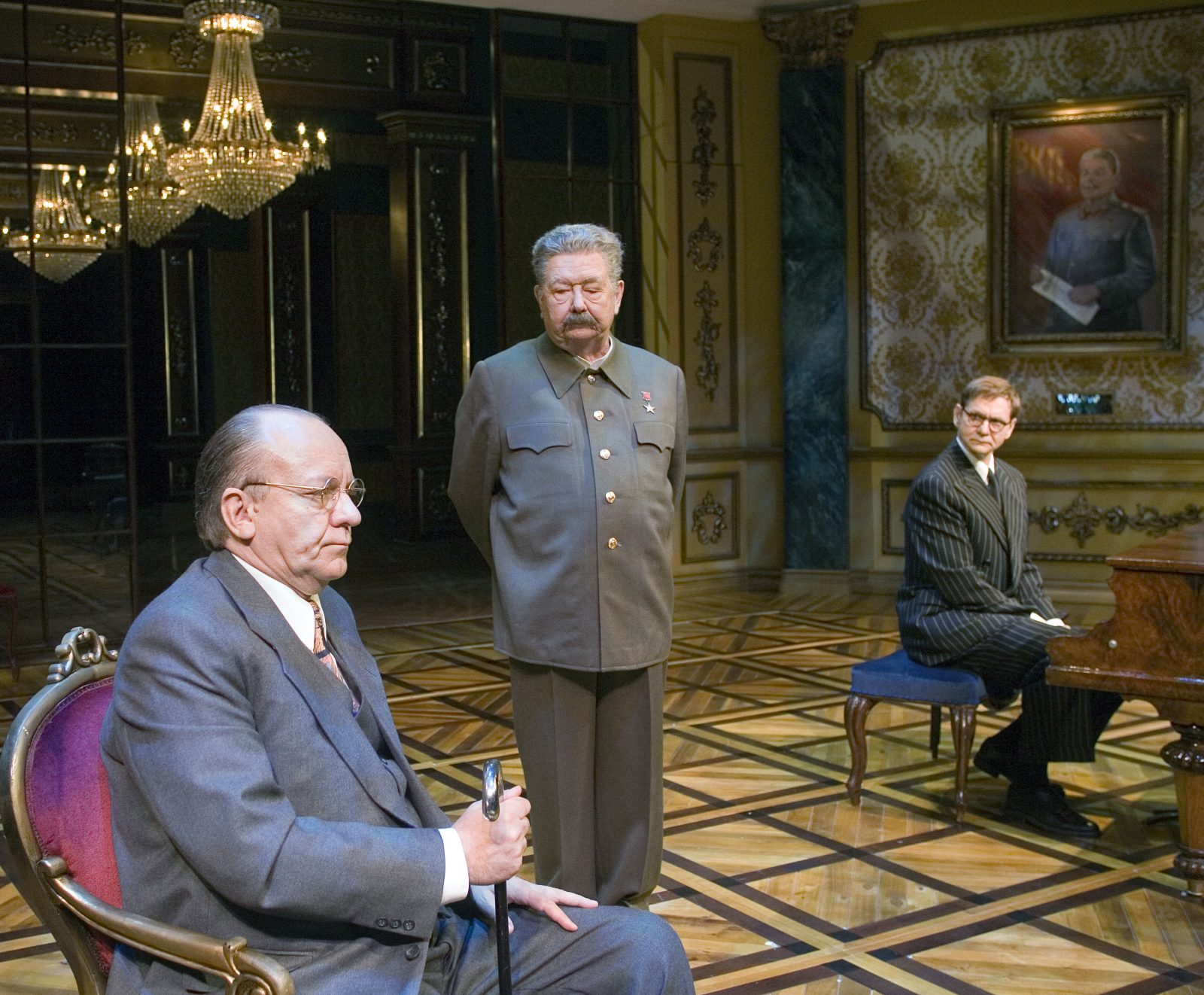
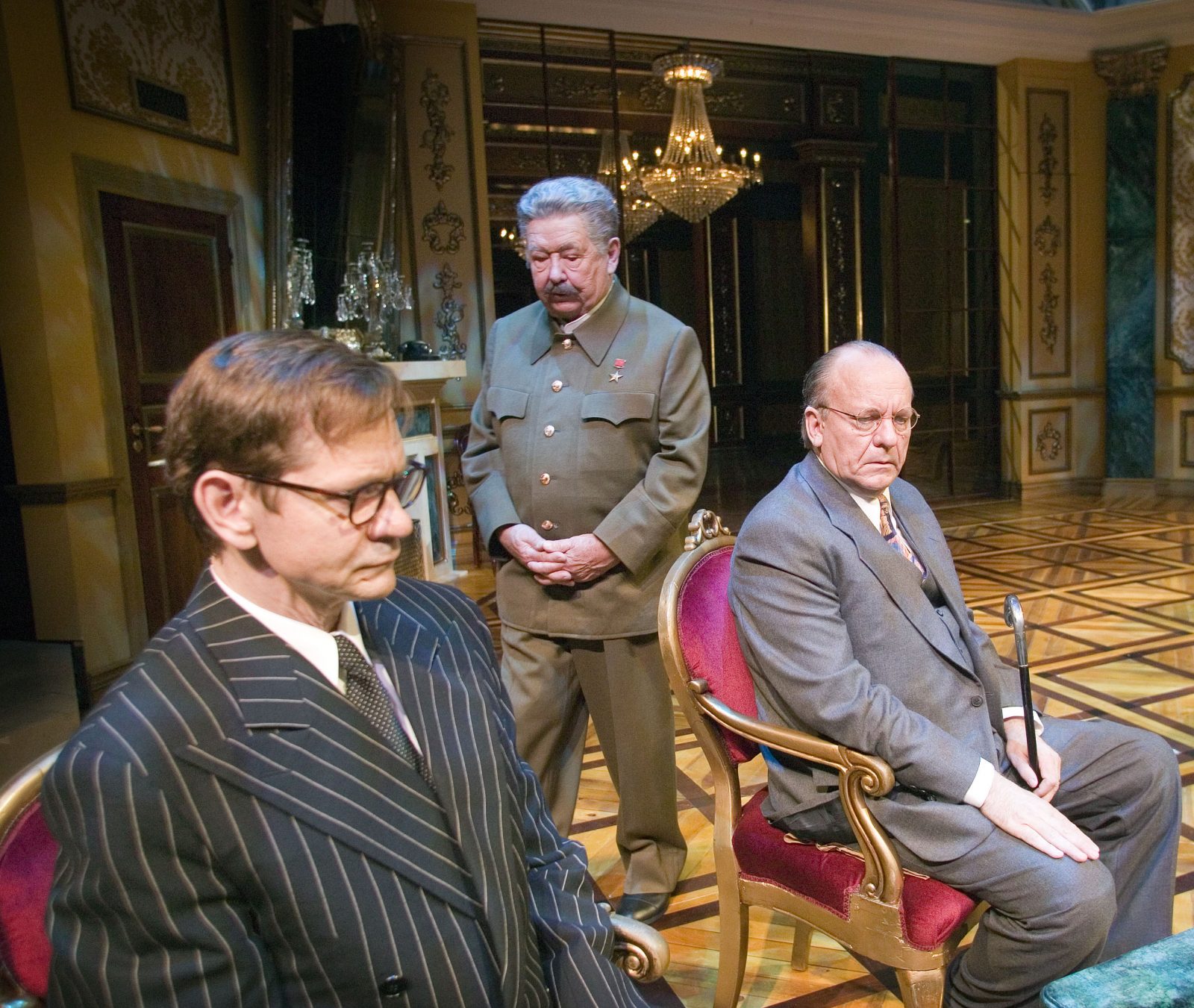
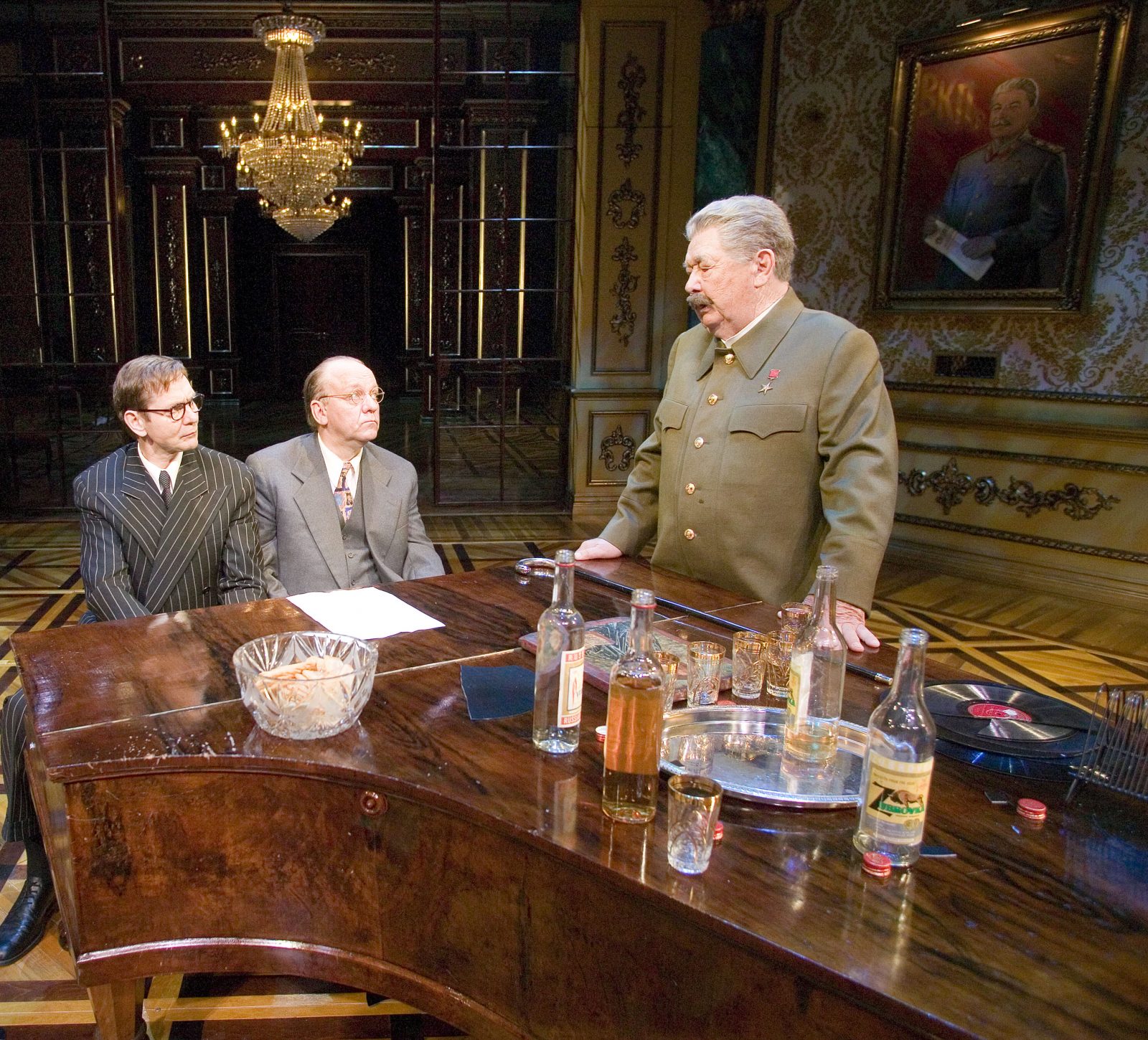
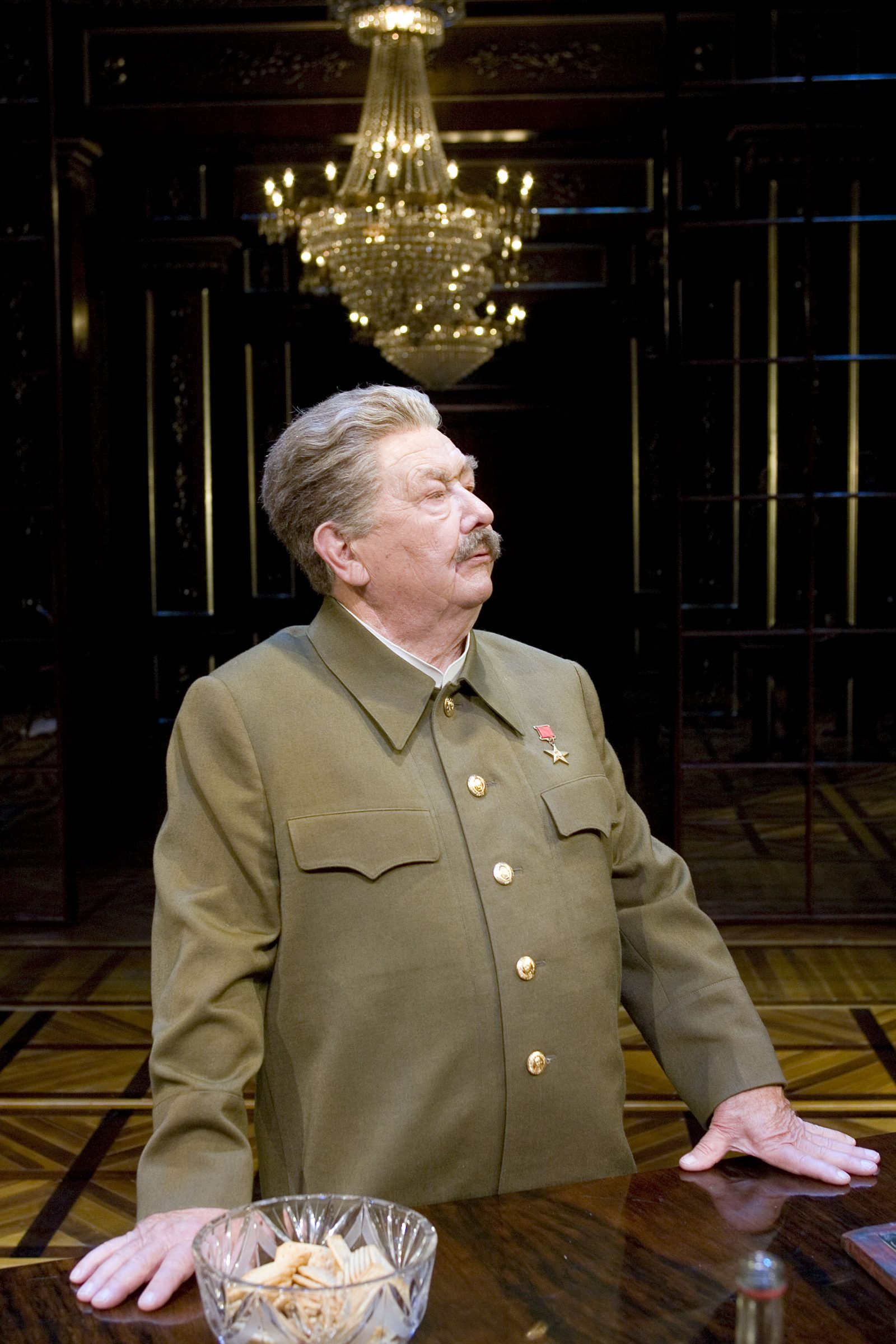
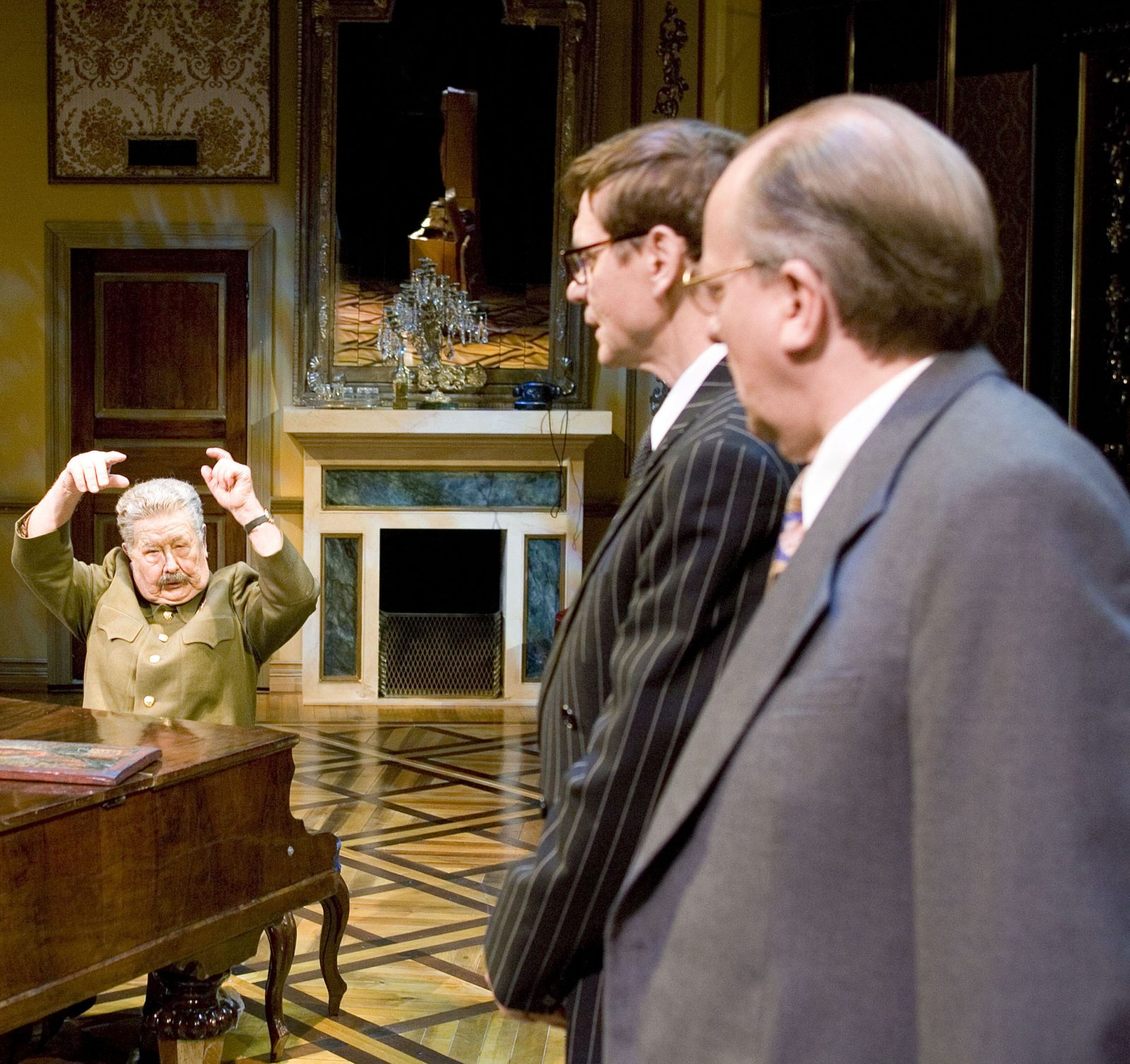
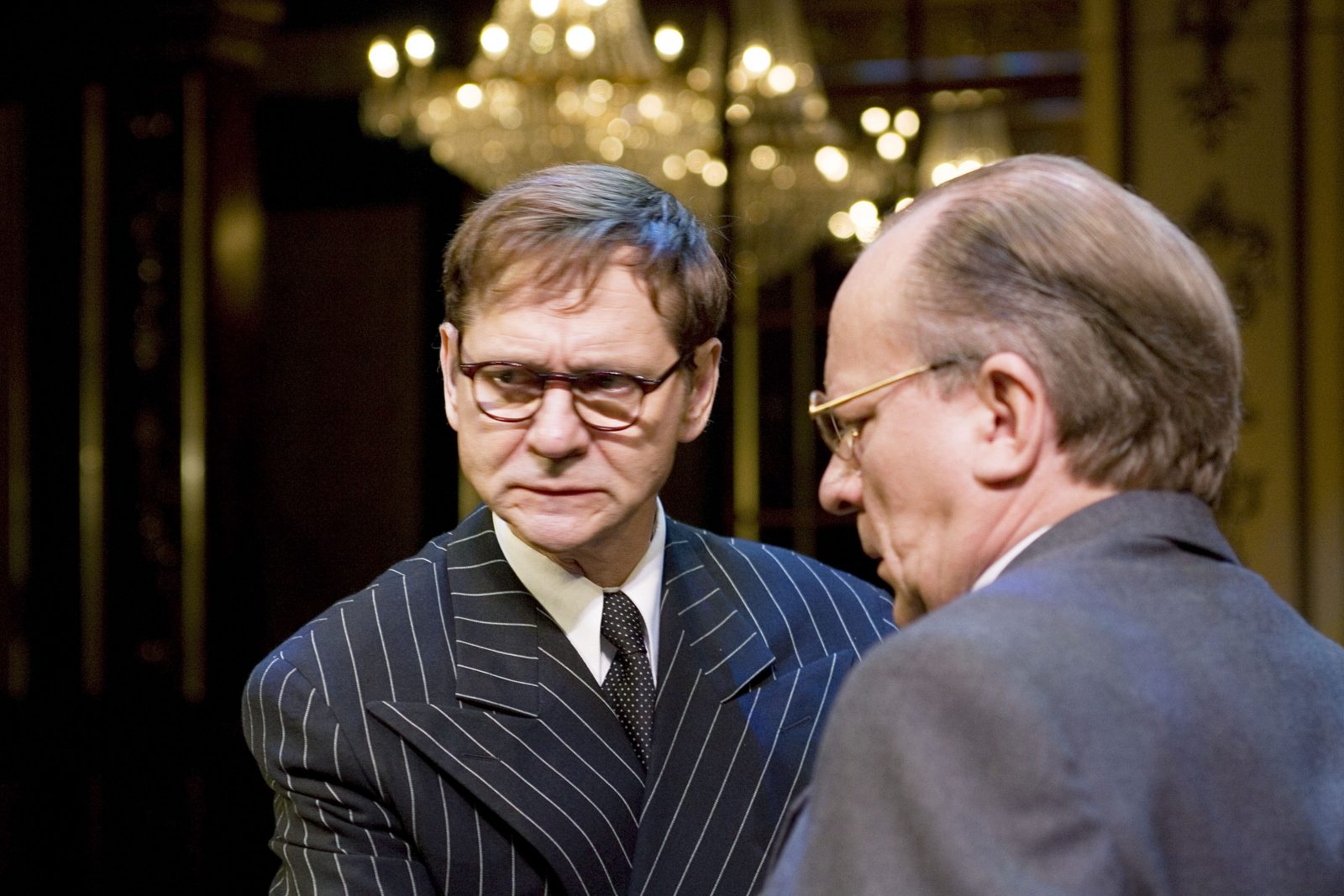
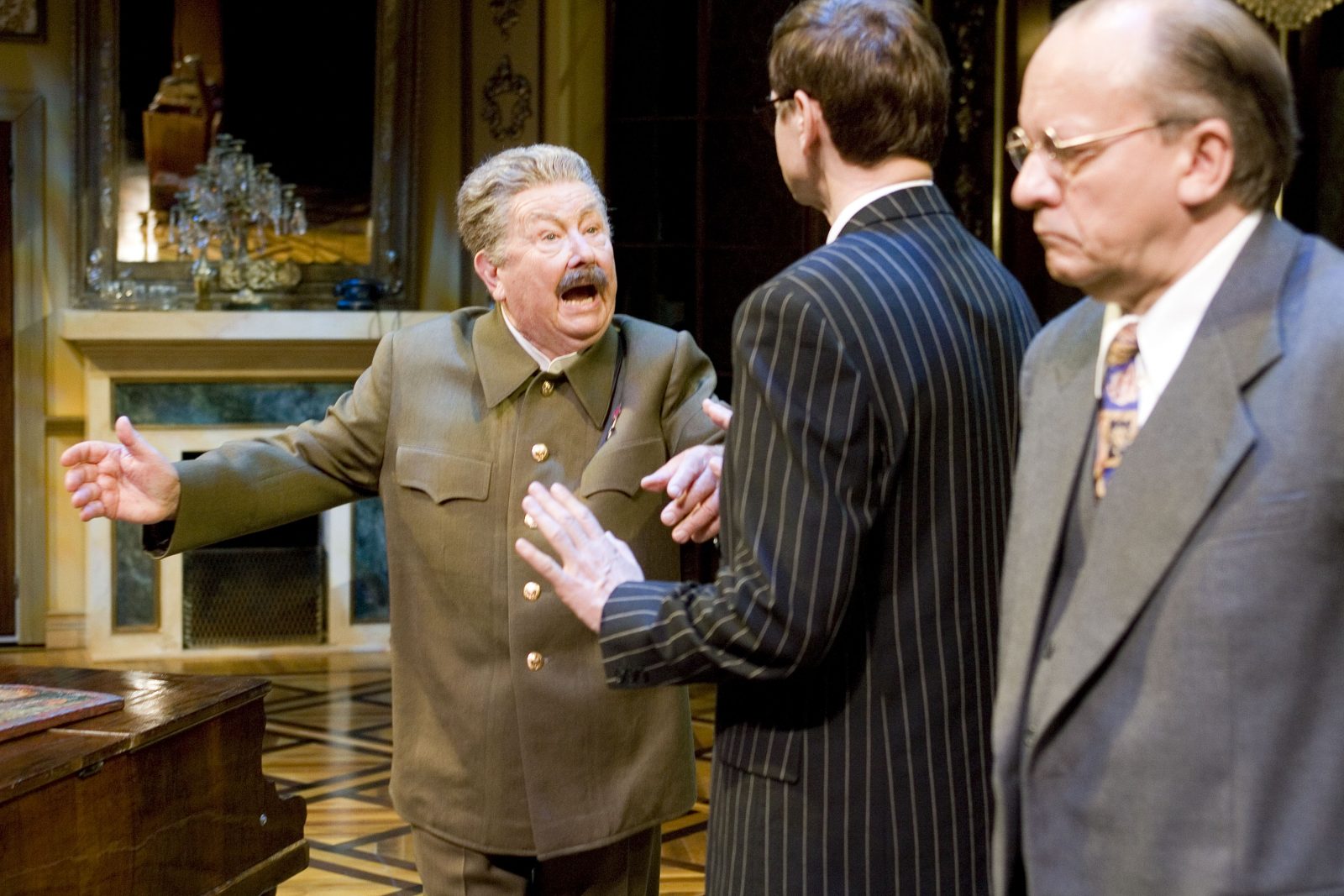
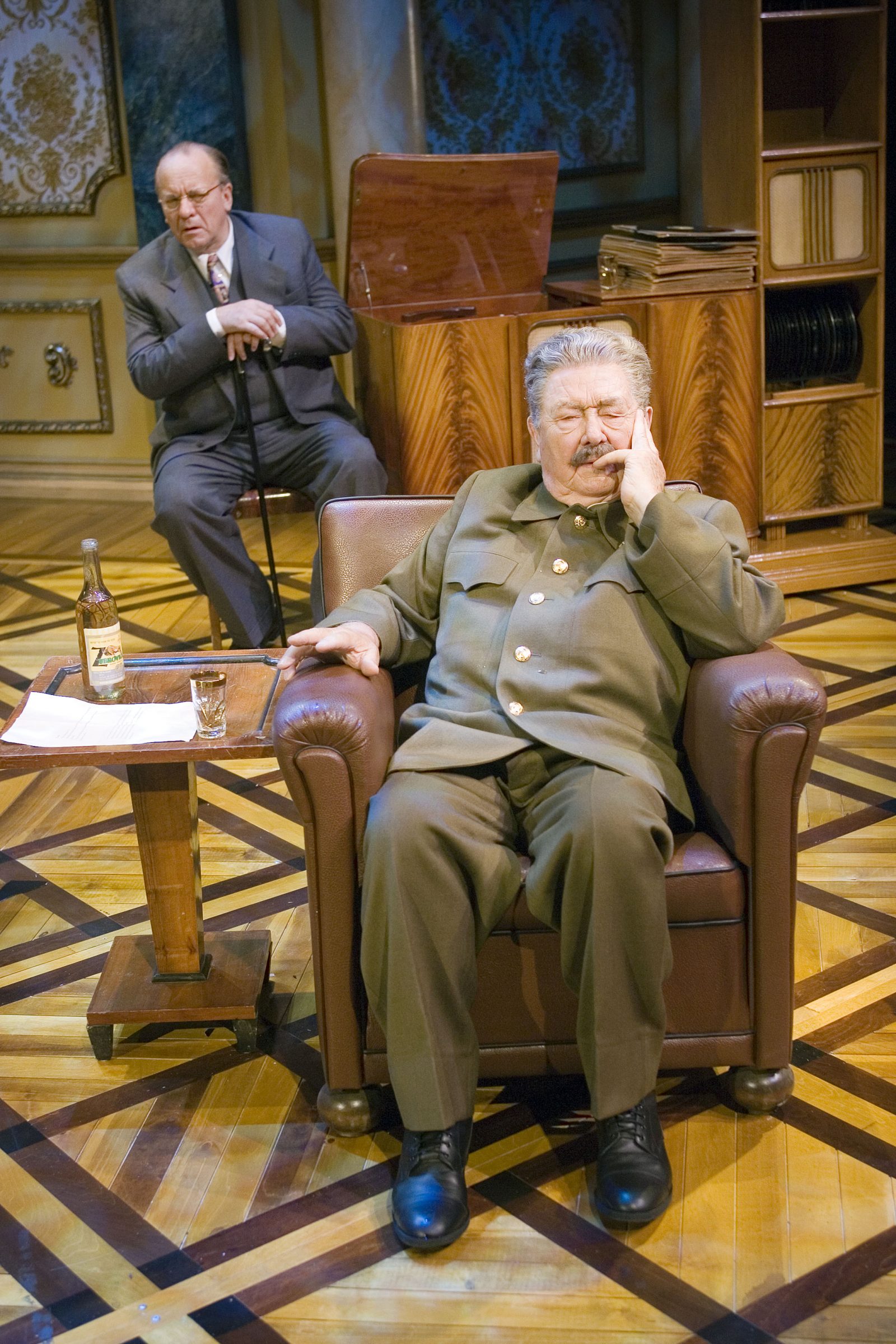
In 1948, in the master class, squire pals Stalin (Lasse Pöysti) and Zhdanov (Martti Suosalo) teach Sergei Prokofiev (Esko Roine) and Dmitri Shostakovich (Asko Sarkola) to compose as a good communist should. Father Sunny gently tells us what kind of music would build the Soviet nation. Zhdanov accompanies the swords, threatening the swords, with a blow to the head, if the overly obscure and bourgeois art music does not become more melodic, simpler and thus more beautiful.The undercurrent of humour is black, the flow of the underworld. Artists don’t have much to hold back in laughter, no matter how crazy the musical visions of despotic rulers are. Many of the composers close to the composers accused of corrupting music were liquidated and their lives were also in danger.The theme of the struggle between the wills of artists and those in power develops into wild climaxes after a slow first half; in major, when the quartet tries to compose Stalin’s wretched Georgian poem together, and in minor, when millions of people murdered by Stalin rise from their graves to Shostakovich’s gut-wrenching music.The theme resonates with our time: What are we willing to do, or do we do out of opportunistic desire just because the powers that be, the market, mammon and glory tell us to?
Read more
Ilkka, 05.09.2006
Review
Juhani Koivisto
THE ENGINEERS OF THE HUMAN SOUL IN THE DOCTRINE OF A DICTATORThe freedom of art is lost when secular and spiritual power are pitted against each other. But time evens out the situation. Or does anyone today appreciate Stalin as much as Dmitri Shostakovich or Sergei Prokofiev, who are celebrating their centenary? In time, Stalin did get the artists in line. In a famous article in Pravda, he attacked the modernists of his time, especially Shostakovich. The composer was forced to bend, even join the party and compose the obligatory praise chants. But music could not be shackled, and in symphonies and chamber music he was free to express himself. In the play Masterclass , the dictator and the composers are pitted against each other in a very concrete way. Stalin and Zdanov invite Shostakovich and Prokofiev as their guests and teach them what real Soviet music should be like. The matter was important, after all, Lenin had called artists engineers of the human soul. The events culminate in a vodka-soaked attempt to compose a joint cantata under Stalin’s direction. Of course, the end result is nothing but ridiculousness.The play is chilling in showing how even great people have to submit to political power. The Master Class , which takes place in one room and operates with only four people, is at its best in a small space. In Seinäjoki, the Master Class was seen in 1997 as a fine and intense interpretation on a small stage. However, at the Helsinki City Theatre, a chamber play has been produced for the big stage, and then really strong actors are needed. Fortunately, these four men have enough stage radiation and strength to take over the entire stands.All the ingredients of a great theatre In other words, the performance has all the ingredients of a great theatre, as long as everything falls exactly into place. At the premiere, there was still a slight search for the right rhythm and style, and during the first act, the play’s appeal began to wane. Fortunately, in the second half, the atmosphere intensified and we were able to properly grasp the core themes of the play. When two of the greatest composers of their time are forced to comrade Stalin to comrade Stalin to compose a cantata to a headless text, we are in the middle ground between funny and tragic. At least in the premiere, the central scene turned too much to comedy.
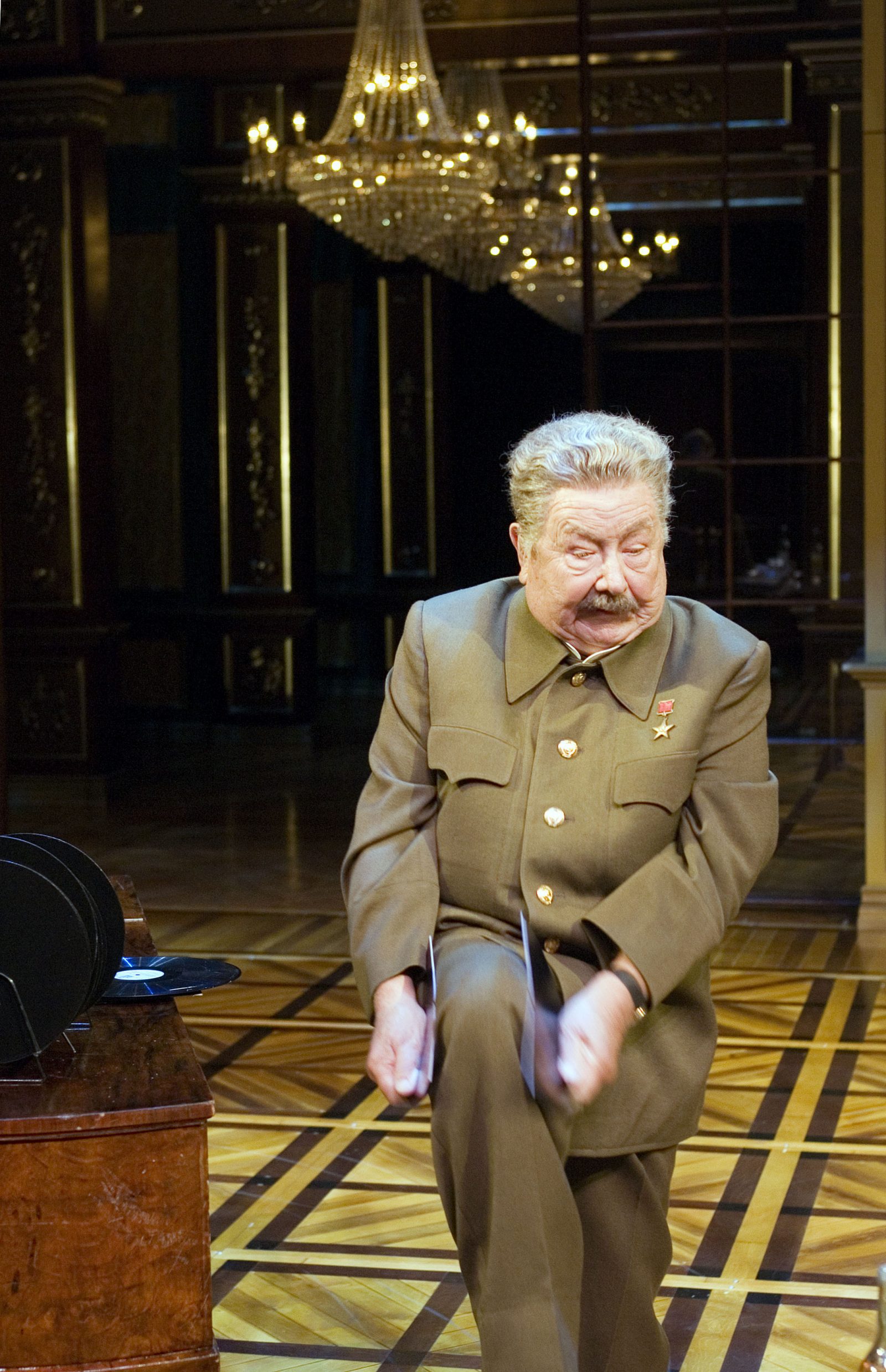
Lasse Pöysti makes Stalin more of an insecure and tired old man than a cruel leader. Stalin appears to be surprisingly humane, but every now and then a dictator emerges for whom human life is worth nothing.
Asko Sarkola Shostakovich is an anxious composer, while Martti Suosalo’s Zdanov is a rough commander who delights the audience with his dance and song performances. Esko Roineen Prokofiev retains his dignity and a strong interpretation is created with small gestures. Most importantly, everyone has depth and everyone is a multi-level person.
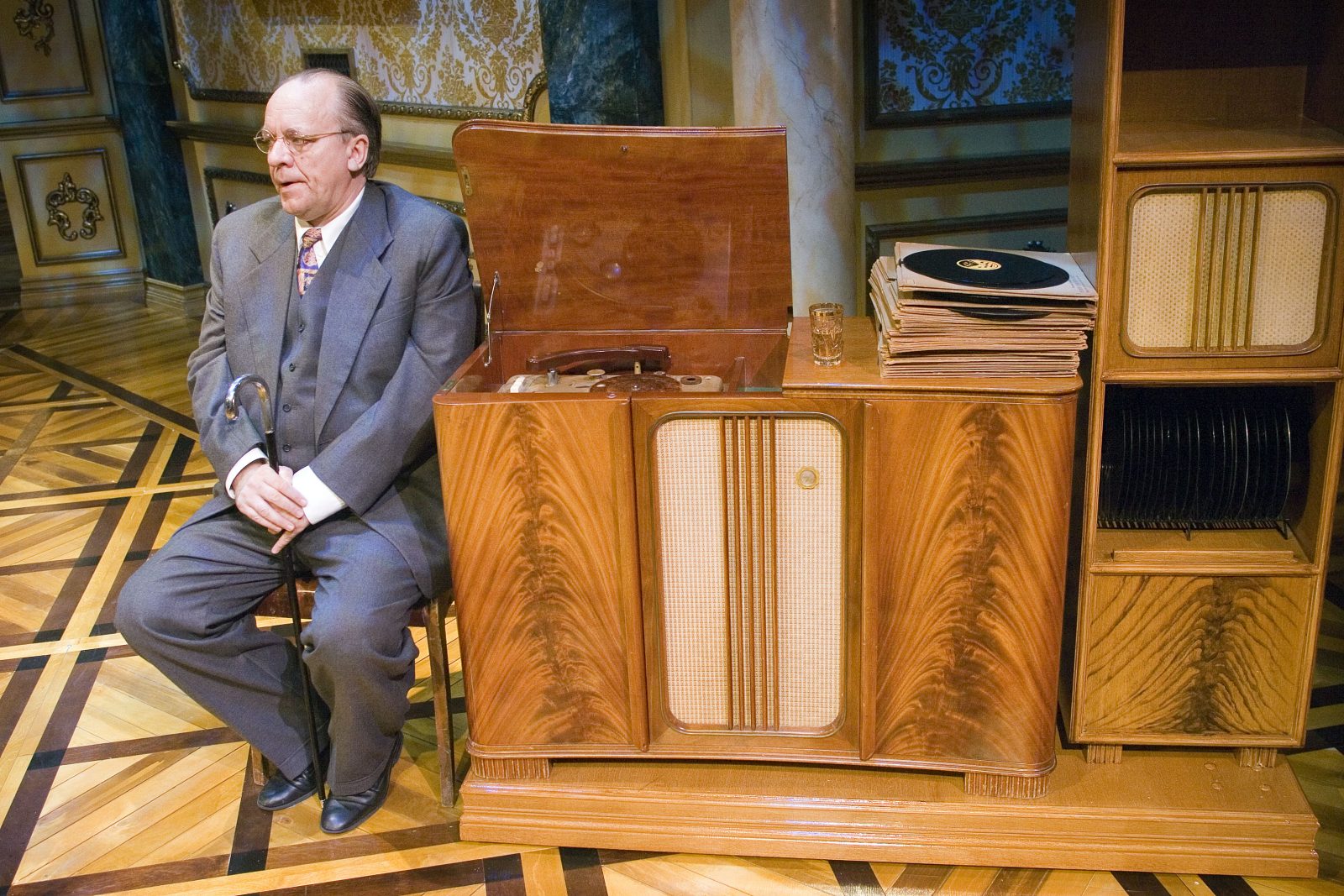
Hannu Lindholm’s set design has the splendor of the Kremlin, and Maija Pekkanen’s costumes are an accurate representation of the times. The whole is meticulous work, including the script that provides the necessary background information and the music skilfully played by pianist Jukka Nykänen .
Read more