Länsi-Uusimaa, 29.4.2008
Review
Kaarina Naski
With reverence, enthusiasm
Westö at the Helsinki City Theatre
Read more
Karjala, 24.04.2008
Review
Terttu-Elina Kalaja
Meaningful observations
Read more
Tiedonantaja, 11.04.2008
Review
Erkki Susi
WHERE WE ONCE WALKEDAt least the undersigned went to the premiere at the Helsinki City Theatre with excitement and rather scepticism. How has director Kari Heiskanen managed to condense and transfer to the big stage Kjell Westö’s fine brick-and-mortar novel Where Did We Walk Once Upon a Time? Has the compulsion for condensation and simplification succeeded in preserving the essentials, but has it succumbed to rotten compromises and emphases that woo the current “prevailing opinion”?The doubts turned out to be mostly unfounded. The play has managed to pick out almost all the most essential, touching and telling things from the novel without hiding it or making compromises. There would have been room for further condensation, and reading the book is essential for understanding many of the scenes. The whole ensemble is doing a great job. The brilliant staging is crowned by a black-and-white cavalcade of images of people and life in Helsinki.However, doubts continued long into the first act. The year 1918, and especially the beginning of the Civil War, is the weak point of Westö’s novel, and the picture given by the play does not differ much from it. A picture emerges of a planned subversion against the legitimate authorities and a war with the help of Red Russian soldiers. The whites will then take revenge on all this.This did not happen in reality. The seizure of power began after a long hesitation in a situation where the preparations of the White side for the armed suppression of the labour movement had already been completed, and partly already implemented. The role of Russian volunteer soldiers in the revolution and the war was marginal. And the White Terror was a top-down and consistent continuation of what was already planned before the war.A picture from January 1918 is no small problem. After all, the events of the Civil War are decisive in the play, because they affect the later lives of the characters. Two of the central characters of the book and the play, Eccu Widing and Cedi Lilliehjelm, are even destroyed, because they cannot forget what kind of bloodshed those who were guilty of during the “revenge expeditions” of the Whites, what they had experienced.But in the play, the problem is smaller and more understandable. By condensing the first half of the novel away from the beginning of the play and moving it into later flashbacks, the first act clearly has a perspective on 1918 that of the Swedish-speaking bourgeoisie, manor owners and upper middle class of Helsinki. The perspective can only be skewed. The Reds who participated in the inspection and expropriation patrols are seen through their eyes, as impersonal characters, lawbreakers and robbers who were appropriate to slaughter when the fortunes of war turned.As personal and introductory characters, the Reds, the representatives of the workers, appear on stage only from the end of the first act, in the form of Allan Kajander, who only becomes one of the main characters. And Alluhan was just a minor boy during the class war. From a Swedish-speaking working-class family, by the way.o o oWhat happened then? The play brings out the sweet life of the Helsinki gentry, the longing for love, business, prohibition and speakeasies, where they also try to drown out the nightmares of war, the arrival of a new fashion, jazz in Helsinki.The victory of the Whites divides the already divided city. The workers and the poor are toiling and straining somewhere. Until Allu’s and his family’s lives move the world north of Pitkäsilta to the middle of the stage.Mussolini and his fascists rise to power in Italy, and there is no shortage of those in Finland who want to end the unfinished “war of independence” to the last detail. Soon the Lapua movement marches to Helsinki and the deportations of dissidents begin.Football hero Allu becomes politicized and participates in the activities of the underground communist movement. Hitler comes to power in Germany. In no time, the German school in Helsinki is teaching a full head of Nazi doctrines. Europe and Finland are being driven towards war along with it. Allu is told that he goes to prison and is sometimes released, but he is recaptured and executed when the Continuation War begins. At the end of the play, additional refresher training begins.o o oOf the play’s many characters and their performers, a few stand out above the rest.
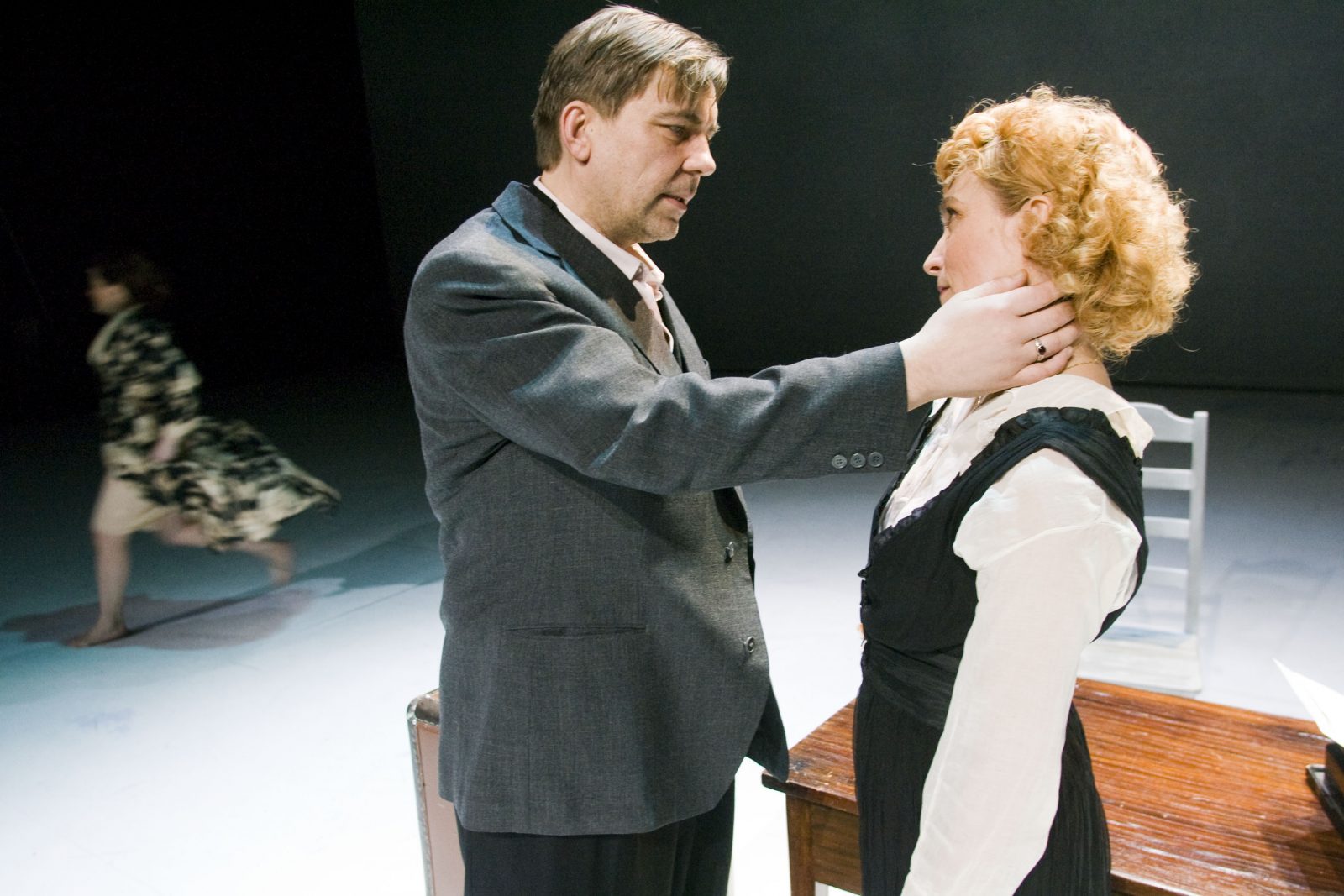
Pekka Valkeejärvi plays one of the finest roles of his career as the humanist intellectual Ivar Grandell, who is not saved from reminiscence by avoiding commitment. He commits himself unconditionally to his love for actress Henriette Hultqvist, played by Leena Rapola . The character, which is somewhat reminiscent of the tailor Halme, is present throughout the play almost as a narrator.The tragic character of photographer Eccu Widing is drawn credibly by Eero Aho. As father Widing, Seppo Maijala is also convincing. Eccuak’s even more tragic character is Cedi, interpreted by Pekka Huotari , who seeks justification for his bloody deeds of war in right-wing fanaticism, but breaks down.In the role of Lucie, Vuokko Hovatta is a plausibly modern female character even by today’s perspective, but the adaptation does not give enough room for Lucie’s complexity.
Niko Saarela plays a handsome, down-to-earth role as Allan Kajander. He is not available for the bourgeoisie to buy, not for a football club or otherwise. Allu is not destroyed by the “legacy of his red childhood” but by the principle he himself has adopted and the bullets of barley.
Read more
Kirkko ja kaupunki, 09.04.2008
Review
Marja Kuparinen
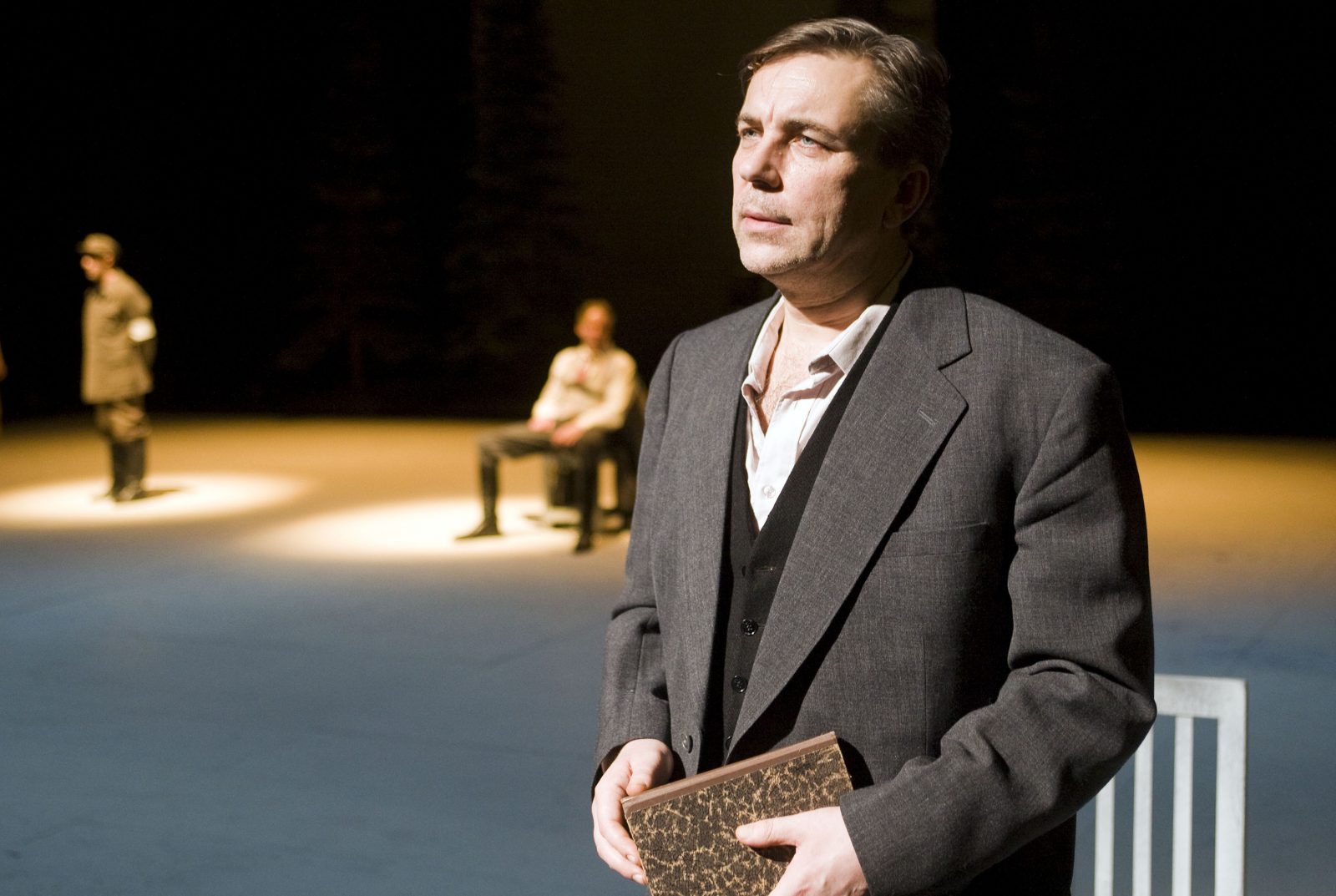
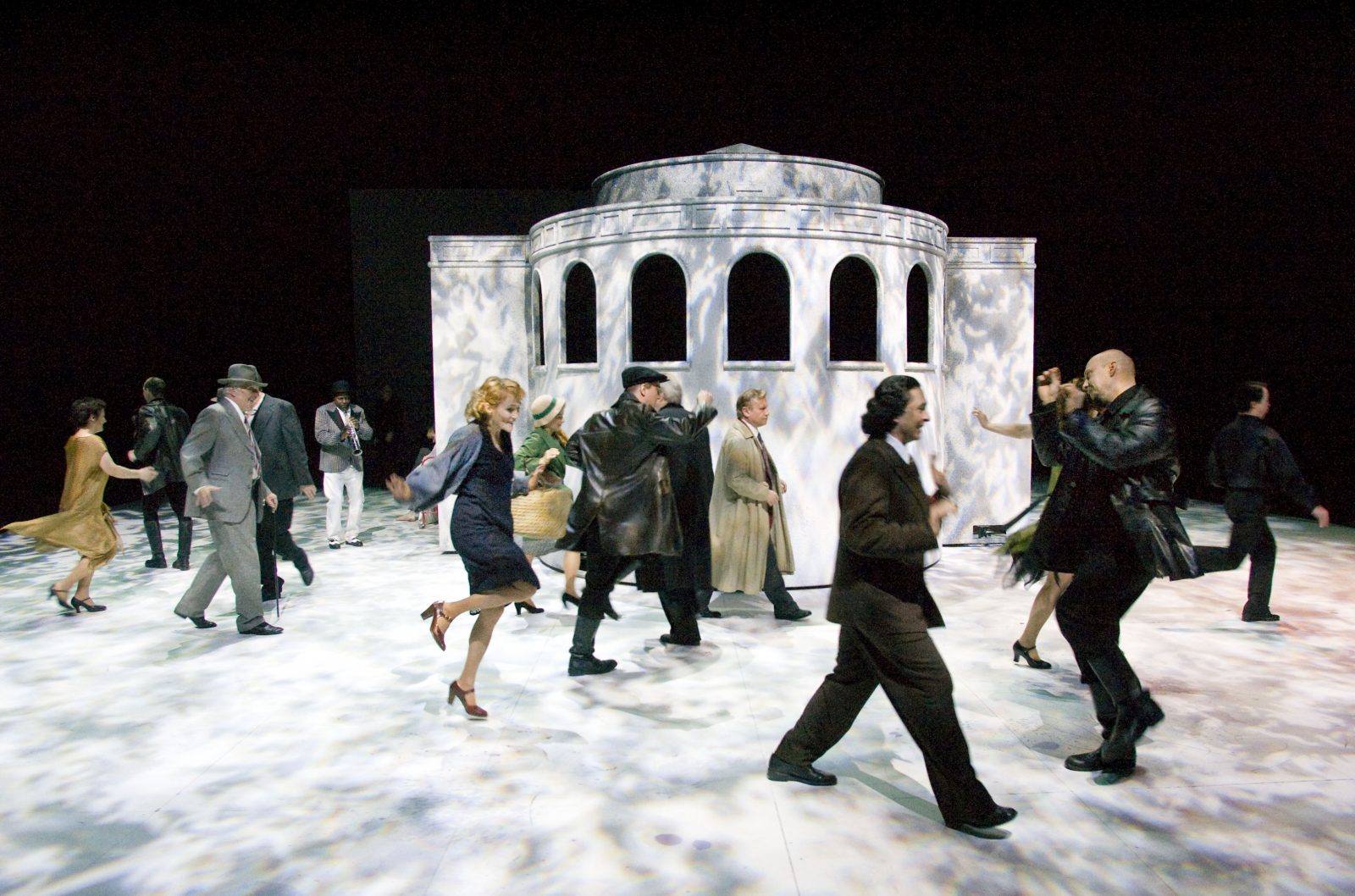
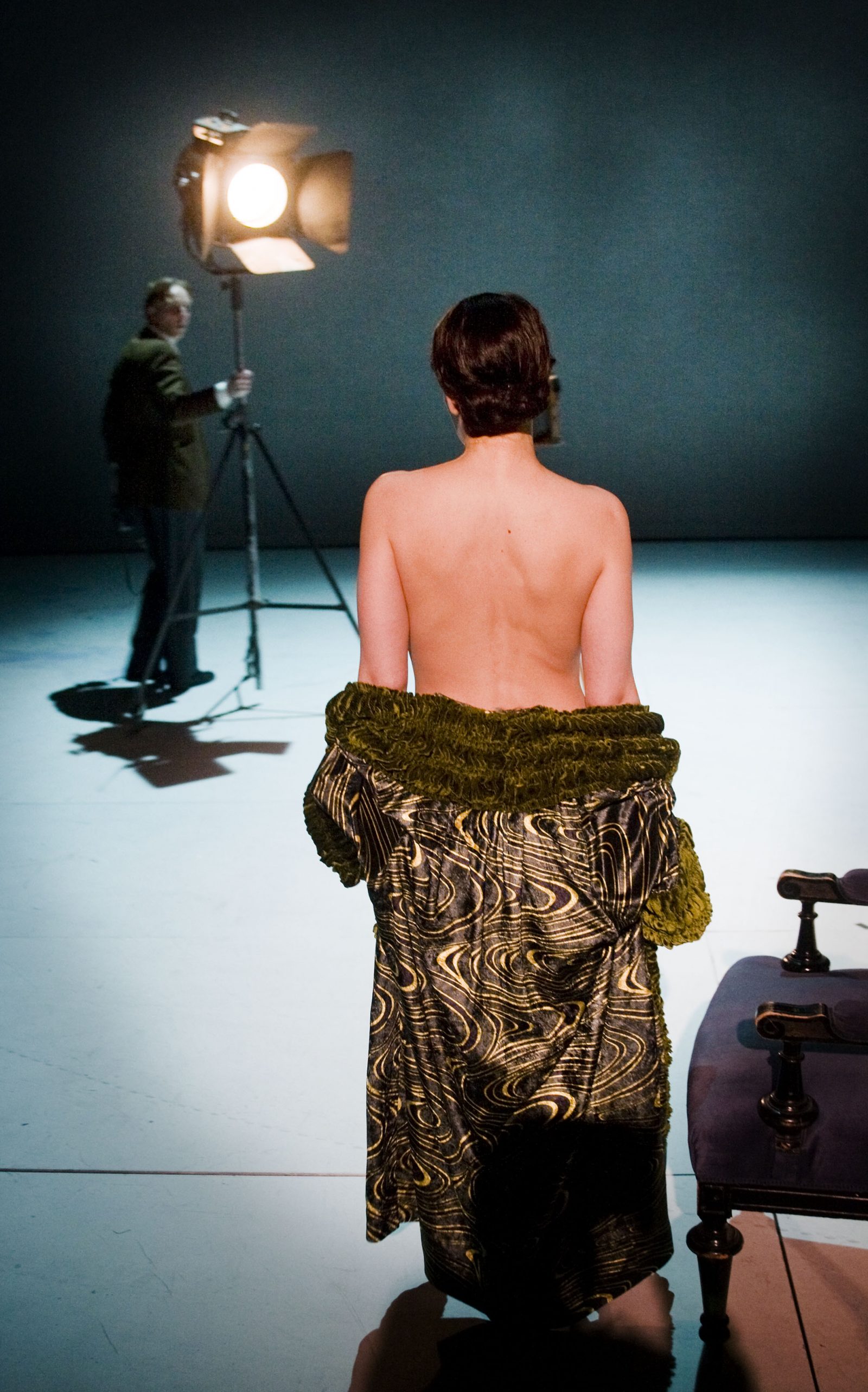
Helsinki, my old darling At first, the stage is black and white and almost deserted. White walls and canvases descend from the ceiling as a background for people and scenes, just like in a photographer’s studio. Short scenes are sometimes placed on each side of the stage; There is only a name. People meet for a moment, run to the side, or leave into the background. At the back of the stage there are café tables, where they settle motionless, like the pages of an album, only to rise again in front of the viewer’s eyes. Time changes, a civil war is fought, young people are frantically striving for a new world to which fathers have no access, revenge lives and the Lapua movement rises, football is thrown far, and the same iron bed moves on to more and more scenes. There is an awful lot of empty space between the actors. Who are they, after all, and what do they aim for in life?
Directed by Kari Heiskanen, Kjell Westö’sWhere We Walked Once Upon a Time has moved to the City Theatre’s big stage. Beforehand, there was reason to be nervous about how a story with so few lines would become a drama. Yes, it does, and the result is a story that holds its grip even tighter towards the end, offering stunningly beautiful stage images. It gets under your skin and gets a lump in your throat: I’ve lived it before, and it’s never been easy. There they are: the skilled but weak photographer Eccu Widing (Eero Aho), the strong Lucie Lilliehjelm (Vuokko Hovatta), who believes in the value of the human being, Ivar Grandell (Pekka Valkeejärvi), who believes in the value of the human being, and Allu Kajander (Niko Saarela), who grows into a man in a tough school, not to mention the others. It may be that a viewer who has not read the book will initially think about the gallery of characters and historical events – it helps if you read the meritorious script well, preferably in advance. But at the latest, the faces of the photographs on the screen from past years and the wistfully sweet music tune the mind to the same frequency as Westö’s book. The protagonist is a city where generation after generation hopes, makes mistakes, pursues happiness and is disappointed, finds themselves and stumbles over their weakness, lives their time and disappears. A person’s memory may remain on the page of a photo album for a while. Then the picture may end up on the shelf of the City Museum and, as it does now, it will be given a new life in a photo exhibition in the theatre’s lobby. Towards the end of the play, Grandell, who has been crushed by life, sums up what it is all about to her beloved Henriette (Leena Rapola), who has returned disappointed from Stockholm. In the words of the book: “In every single place where a person has walked, there is a memory of him. That is why heat sometimes rises from the streets as we walk along them. That’s how we remember all the people who have walked there, loved and hated and hoped and suffered. Remember that Henriette, please: as long as someone knows that we have walked here, and as long as someone remembers us fondly, the streets will bear our name.” Thank you.
Read more
Helsingin Sanomat, 05.04.2008
Review
Kirsikka Moring
HELSINKI’S PICTURES TELL A BLACK AND WHITE STORY
Kari Heiskanen’s panoramic translation of Kjell Westö’s Helsinki photographs is warm and cruelA simple large stage gives space to the little people in historyThere is no need to be scared, even though there is mass in the story. Almost 600 pages of the novel are transferred to a three-hour theatre evening, but the performance captures the viewer’s mind.The play does not repeat the novel, but picks up a concentrated series of exaggerated scenes, drama. You don’t woo the viewer, you have to be vigilant.
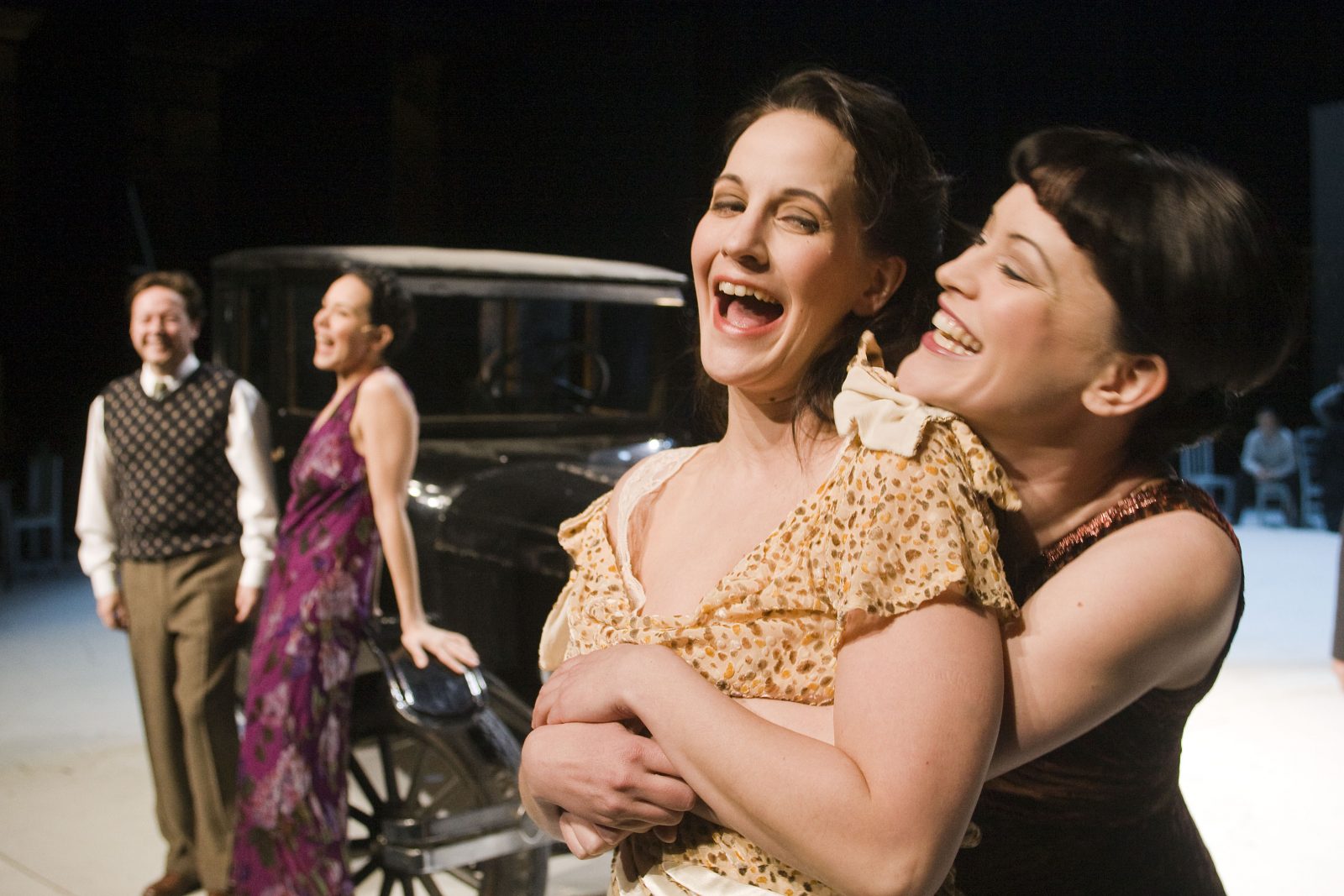
The black and white city is divided between the two sides of the Pitkäsilta bridge. Helsinki’s history is captured in photographs that intertwine great historical revolutions, from the collapse of the Tsarist regime to the division of the war-torn city.Little people are fighting for their existence in the stunted quarters of Helsinki, which is growing into an industrial city. The better-off are already driving cars, dancing swing and radically looking for a third gender.
Vuokko Hovatan Lucie is cold and beautiful, too.Some people also smell money. The spirit of Helsinki smells of gunpowder and banknotes.
Kjell Westö’s novel
Where We Once Walked enters the stream of images with a flicker. It compiles human destinies and ideas into an extensive album. None
Väinö Linna Westö is not. His urban history does not have to seek the reconciliation of the nation.Lightning flashes both in the photographer’s lamps and in the history of the city. Images of the Red Brigade with guns in their arms quickly change to other images: corpses lying on the streets of the city.
The huge historical panorama is as if it was made to be shown. Its narrators, people reaching over the barricades, are drawn in the pictures sharp and colourful. Soon we will probably see the stories as a movie as well?
Kari Heiskanen has written a play based on the novel that lives the atmosphere of the original work, picking up close-ups, but also the great perspectives of the time. There is still room for condensation, but in general, the scenes are clearly taken by stylized, cleanly epic theatre.The most astonishing thing is how the large stage of the City Theatre is limited to very intimate scenes, fixed points between two people. The set opens up the space and closes it in a single room or bed, if necessary.
Katariina Kirjavainen has not loaded the stage with unnecessary stuff, but lets her imagination speak, almost smell. We look at the scenery through the eyes of the camera. People step out of the canvas of the photo studio and mark their own paving stones.
The photographs give the performance a very concrete historical frame of reference, in which the viewer can place the fast-moving moments of the story. Dramaturgically, they could have been used even better as structuring the narrative.Well-chosen historical photo compilations are projected onto a screen that spans the entire width of the stage. Here is our Helsinki, stained with blood, living its industrial morning. Ugly and beautiful.The image of the times is also created by
Maija Pekkanen’s precise costumes. The costumes observe, recognizably tell about the way of life of both the working-class quarters and the wealthy population. In Finland, you rarely see such stylish costumes anymore!
The play condenses time, bringing to the surface the declarations of the Reds and Whites, and eventually also the people of Lapua, to solve the world.On stage, philosophies quickly turn into bloody action, and no one remains untouched.In Widing’s photography studio, all this translates not only into images, but also into human disintegration.
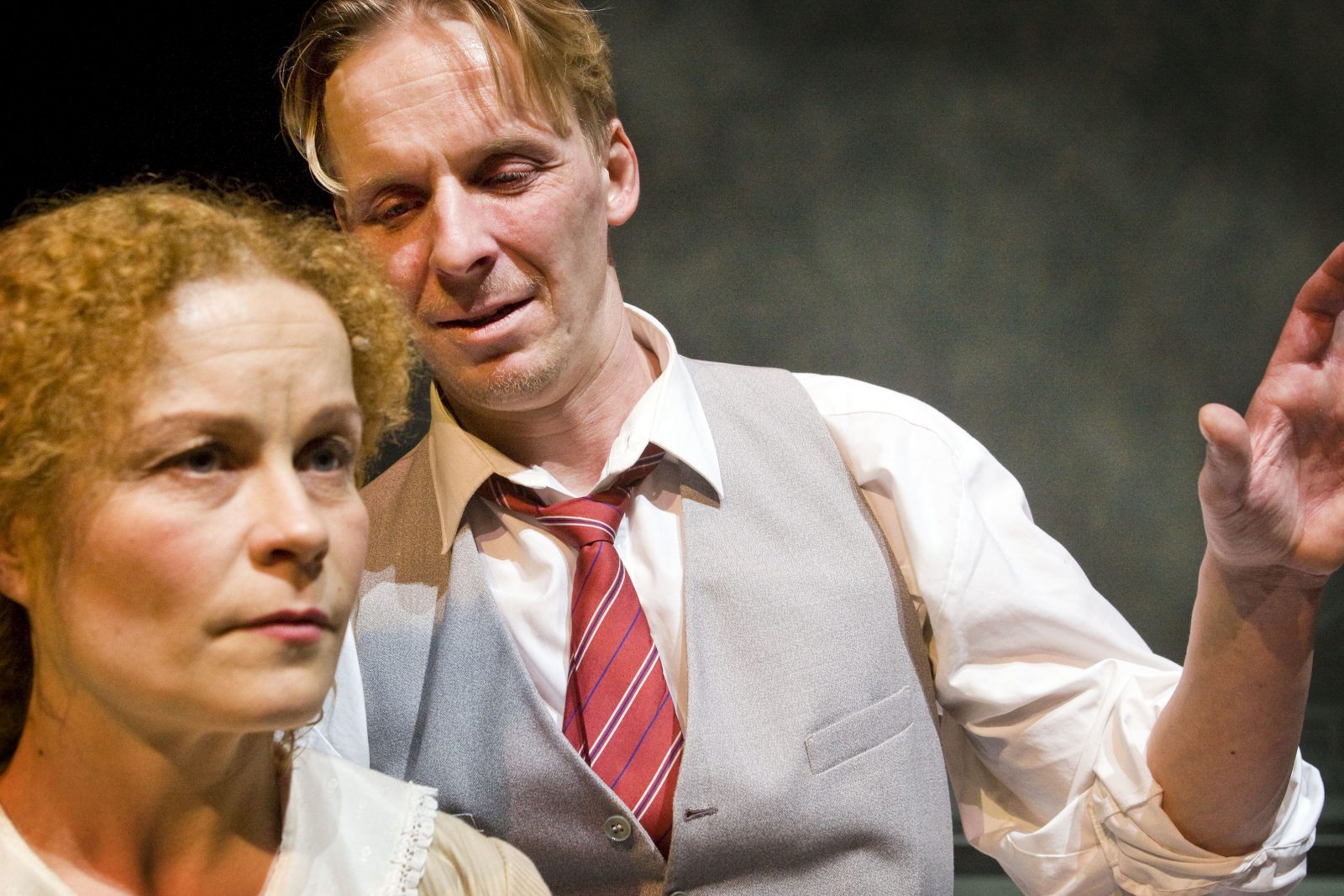
Eero Aho impressively interprets the two extremes and fractures of the young Eccu’s enthusiastic life.
The performance is warm and cruel. It is abundant, but not a spectacle. Over the years and the hard way, the director has learned to use the possibilities of the City Theatre’s big stage.At its best, the coordination of many roles also produces solidarity, ensemble theatre.Rising above the rest
Pekka Valkeejärvi’s thoughtful and structured interpretation of Ivar Grandell, a dissident of his time, and his love story, one of which is
Henriette Hultqvist, beautifully portrayed by Leena Rapola .
Seppo Maijala takes his bright place as Father Widing, who believes in photography.
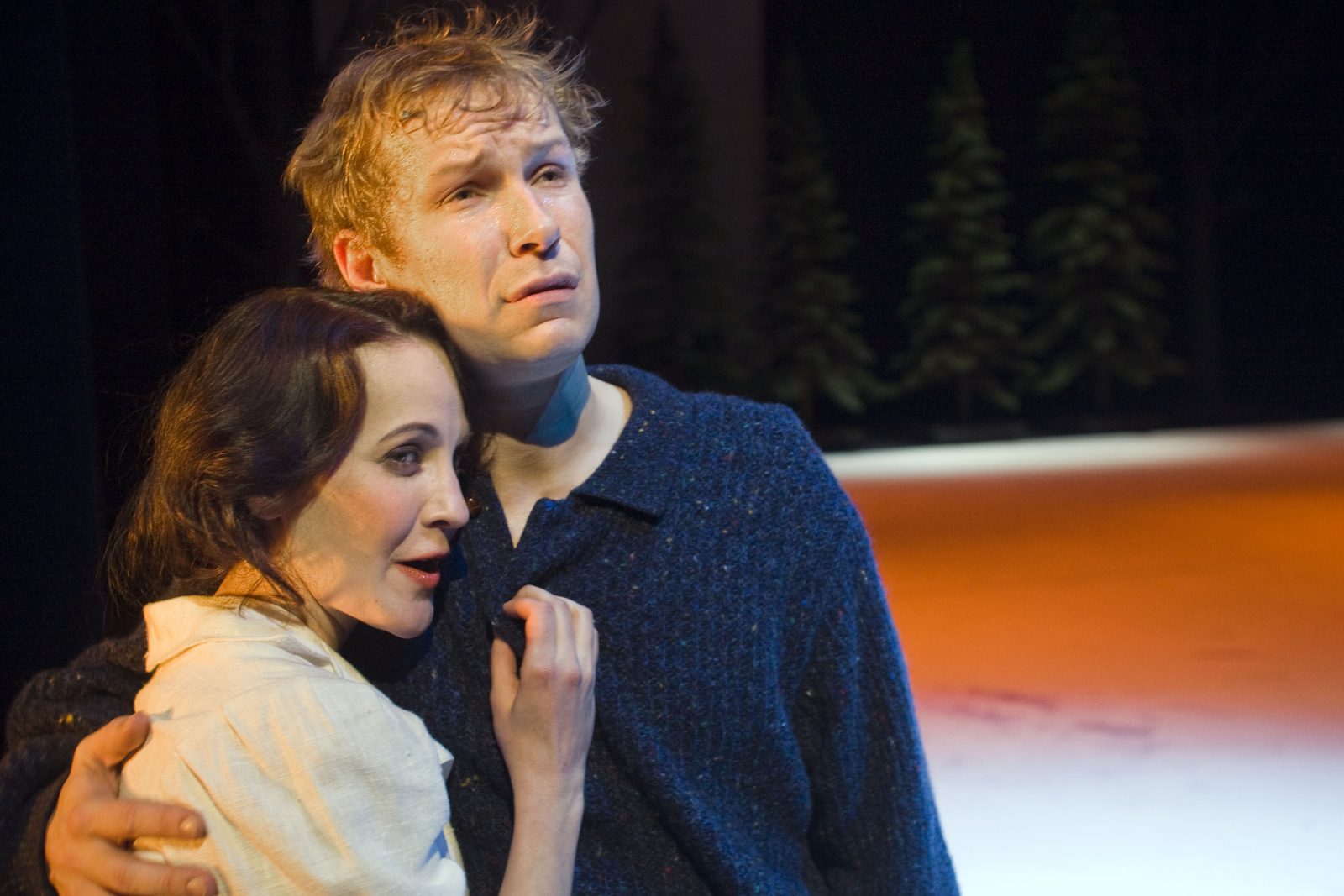
Niko Saarela tells a believable story with a fast pulse about the football hero Allu, who is destroyed by the legacy of his red childhood.The power of opposites is brutal. Helsinki has a charged, angular history.
Read more
Kulttuurivihkot, 25.04.2008
Review
Ari Lahdenmäki
War breaks both the worker and the bourgeoisie
Read more
Nykypäivä, 18.04.2008
Review
Venla Hiidensalo
A great play about individuals scarred by the Civil War in Helsinki
WHEN THE POLITICAL BECOMES PERSONAL
Based on the novel by Kjell Westö, the City Theatre’s play Where We Walked Once depicts not only Helsinki, but also the tensions of the Civil War and the fates of ordinary people as victims of these tensions, executioners and pawns. The play is dramatized and directed by Kari Heiskanen.
Read more
Viikko-Eteenpäin, 10.04.2008
Review
Soili Hämäläinen
FOR FINNS, PAST AND FUTURE
Read more
Hämeen Sanomat, 06.04.2008
Review
Pirjo Puukko
Westö’s Mind of Man and Landscape as Interpreted by Kari Heiskanen Where We Walked, written by Kjell Westö, draws a picture of the capital of an independent country, its inhabitants and the conflict caused by the difference in starting points. Bringing a brick work to the stage is quite a chore. The story, which takes place over a long period of time, with its several central characters, is inevitably fragmented and difficult to construct. Directed by Kari Heiskanen, the performance leans heavily on the Brechtian tradition and focuses more on phenomena than on characters. People’s fates feed the center of events and quickly flee from there. Above all, the characters represent their worldview and social place, and through them culture and its philosophies are born. On an almost empty stage, the spotlights pick up fast-moving scenes like camera images, panning the whole of Helsinki across the stage with the power of photographs and running troops into both battle and dance.
Read more