Hämeen Sanomat, 18.11.2008
Review
Pirjo Puukko
THE MOLE DEPICTS FINNISH HISTORY IN A CARNIVALESQUE WAY
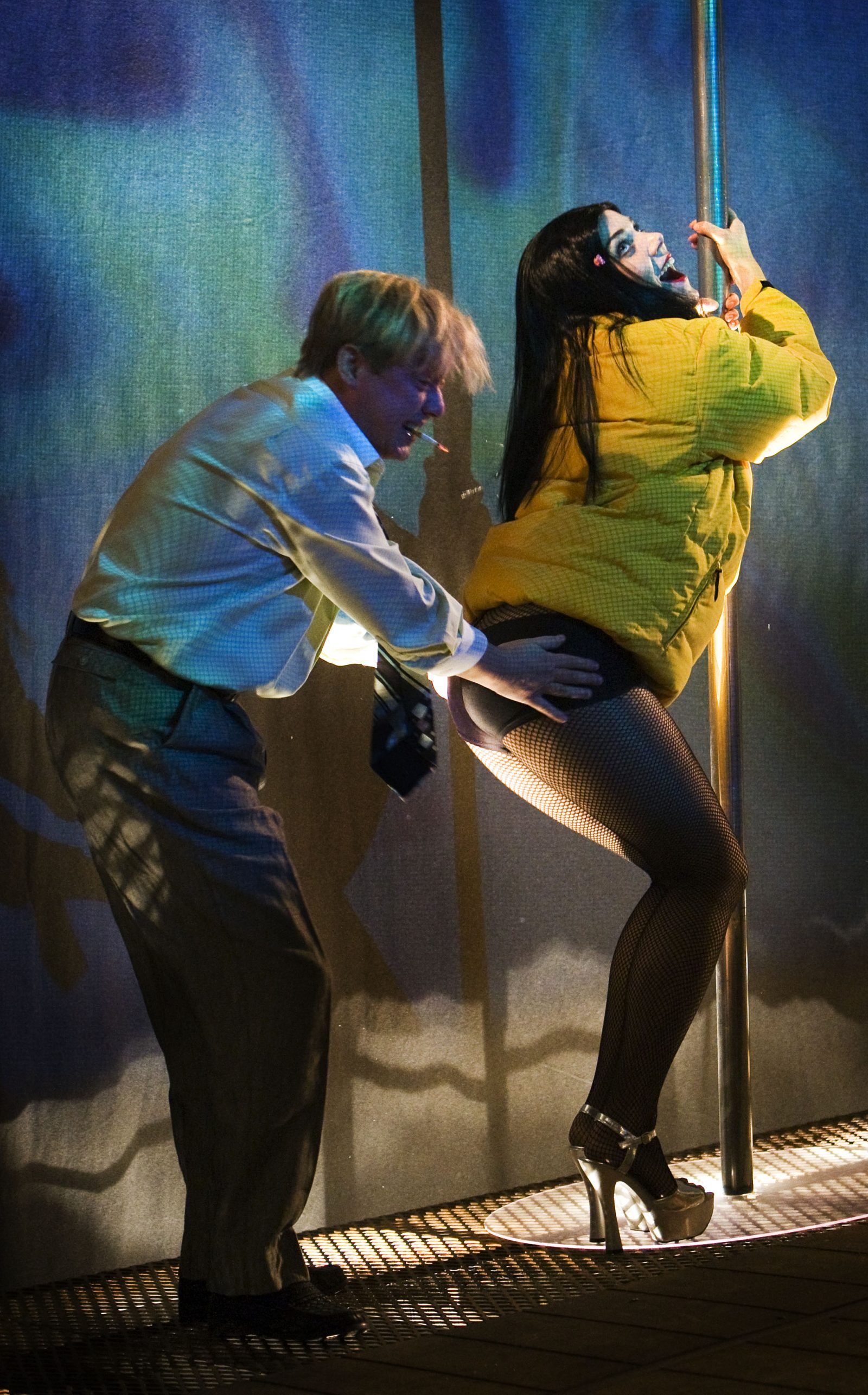
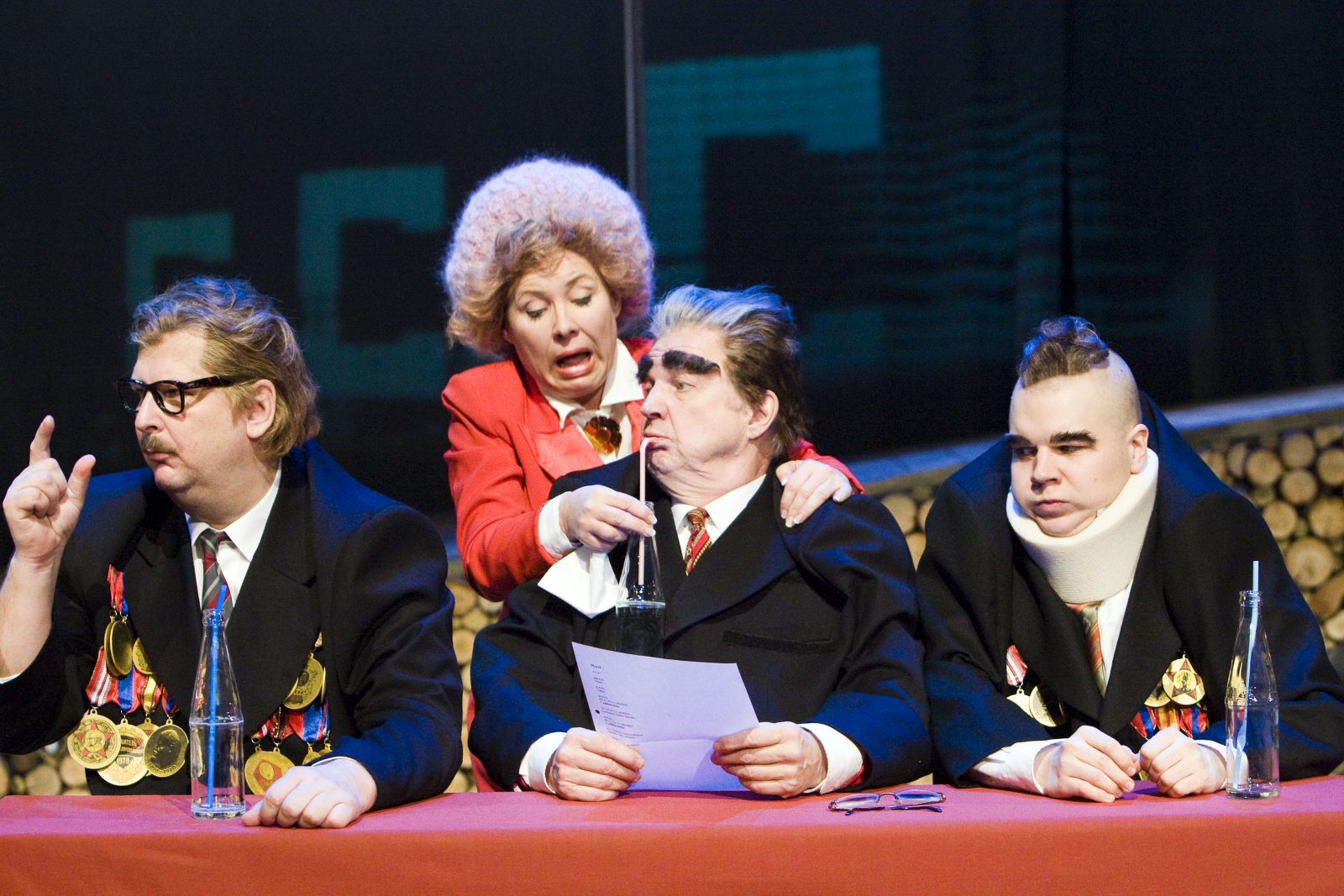
Jari Tervo was not nominated for the Finlandia Prize, but he was able to premiere the play version of his play Mole at the Helsinki City Theatre.The performance outlines the relationship between Finland and the Soviet Union through the filter of Finlandization, without shying away from grotesque colors. The game is so intense that it doesn’t matter if a few pieces fall.
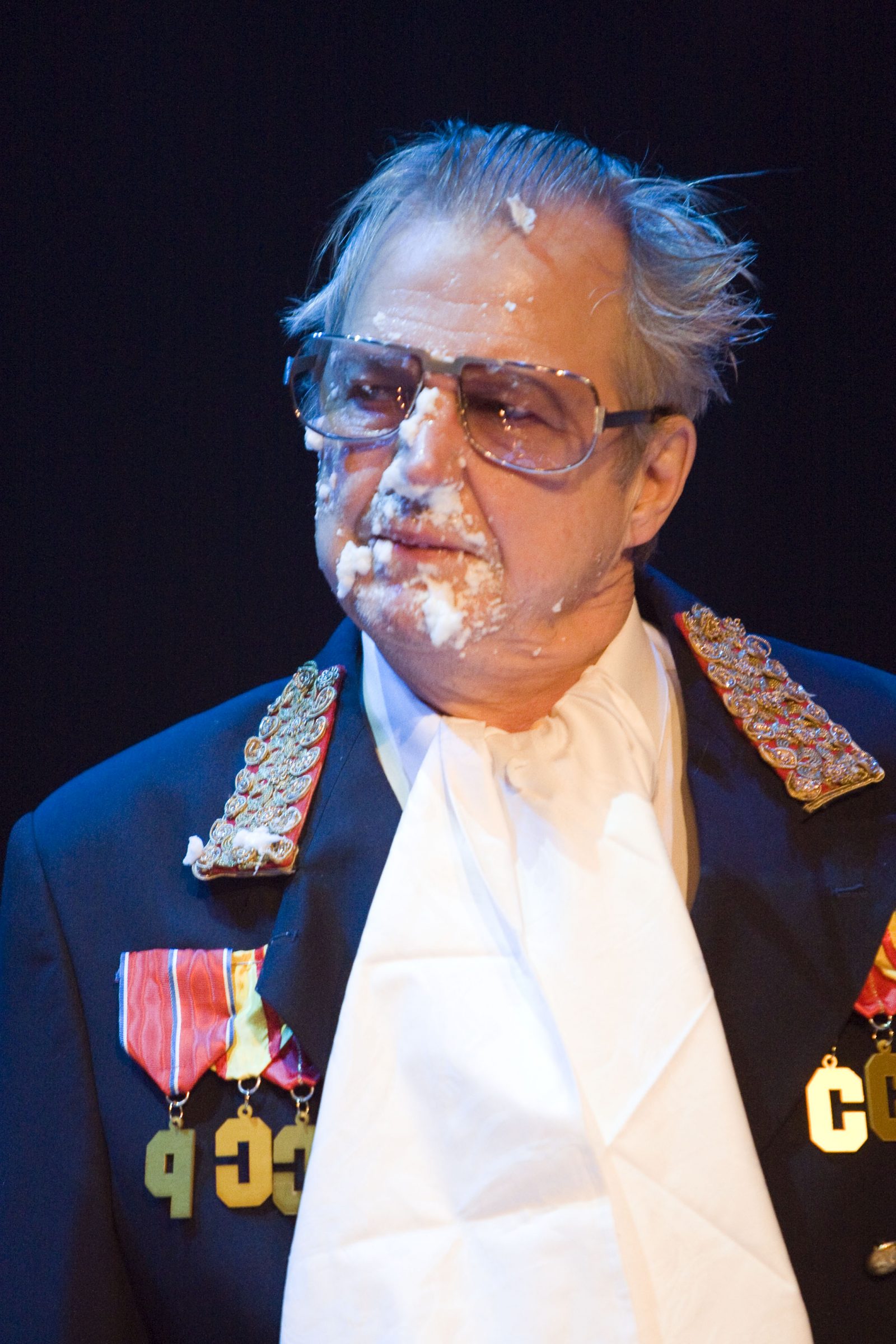
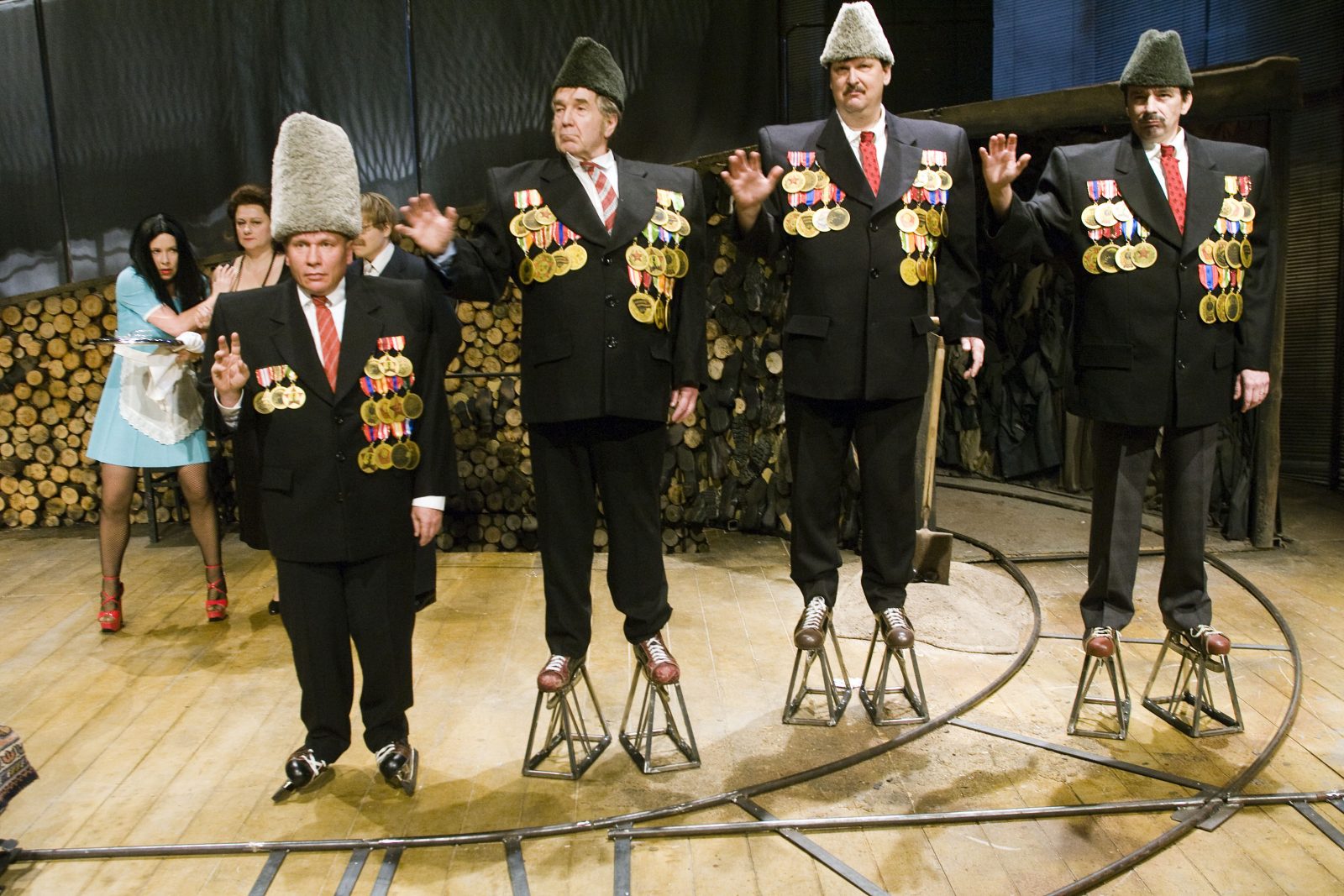
Sami Keski-Vähälä’s dramatization focuses on Kekkonen’s last decade, to which the past drives its wedges through the delusions of an old man. Kekkonen is the centre of his memoirs, but as a side thread there is the activities of the black sheep of the communist family, Supo detective Jura Karhu.Already at the beginning of the play, the way in which everything should be approached is expressed when the ball grill Sputnik collides with a huge teddy bear named Misha. Props are often used to steer the interpretation in that direction: cosmonauts in sheepskin caps and ice hockey players stumbling on their hockey skates wearing their huge prenikas.The common thread should be the search for a spy, a mole. One assumption is that the mole is Kekkonen. However, the common thread twists into many twists and turns during the performance.
Read more
Kauppalehti, 17.11.2008
Review
Veijo Sahiluoma
RECENT HISTORY IN SWING
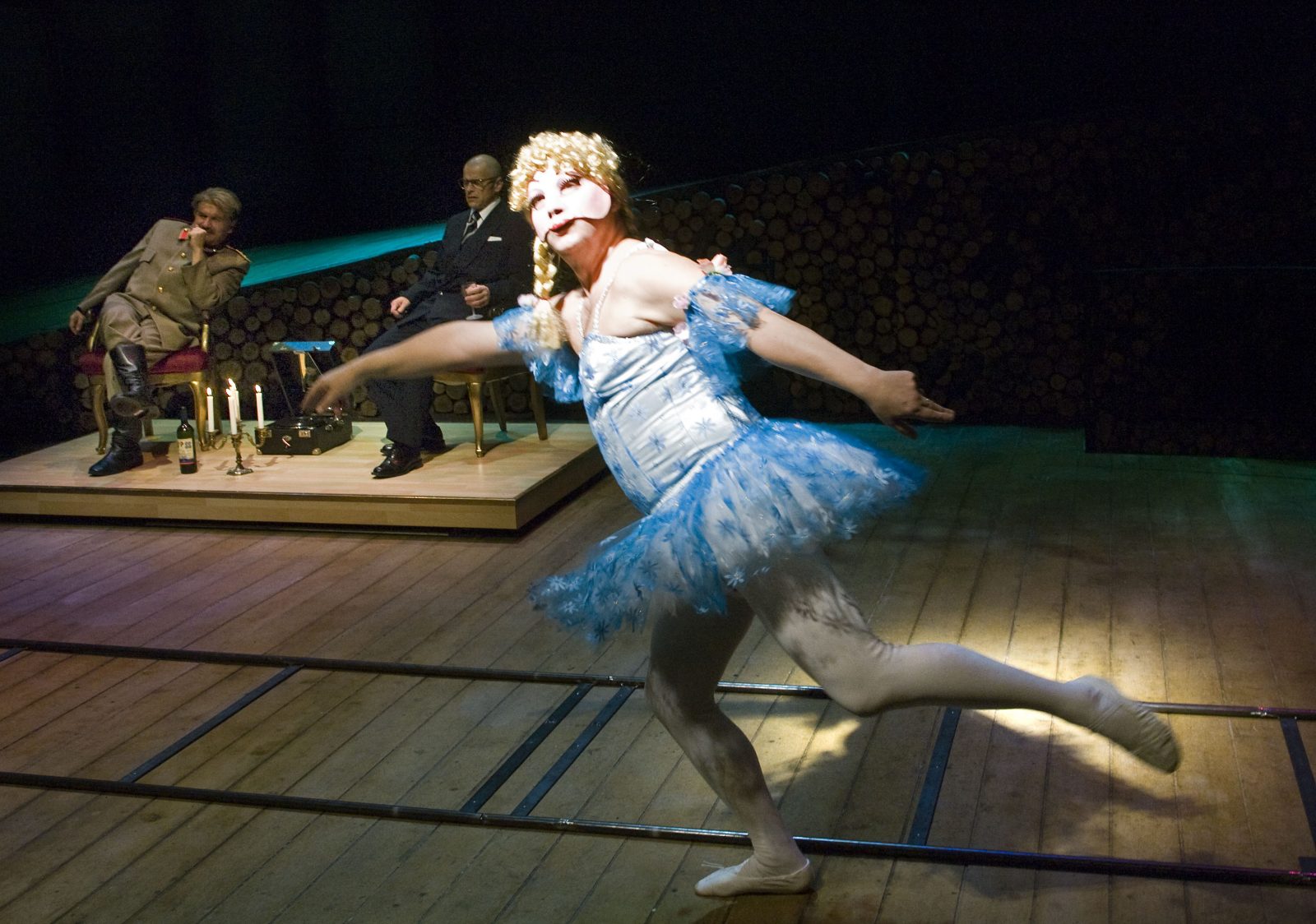
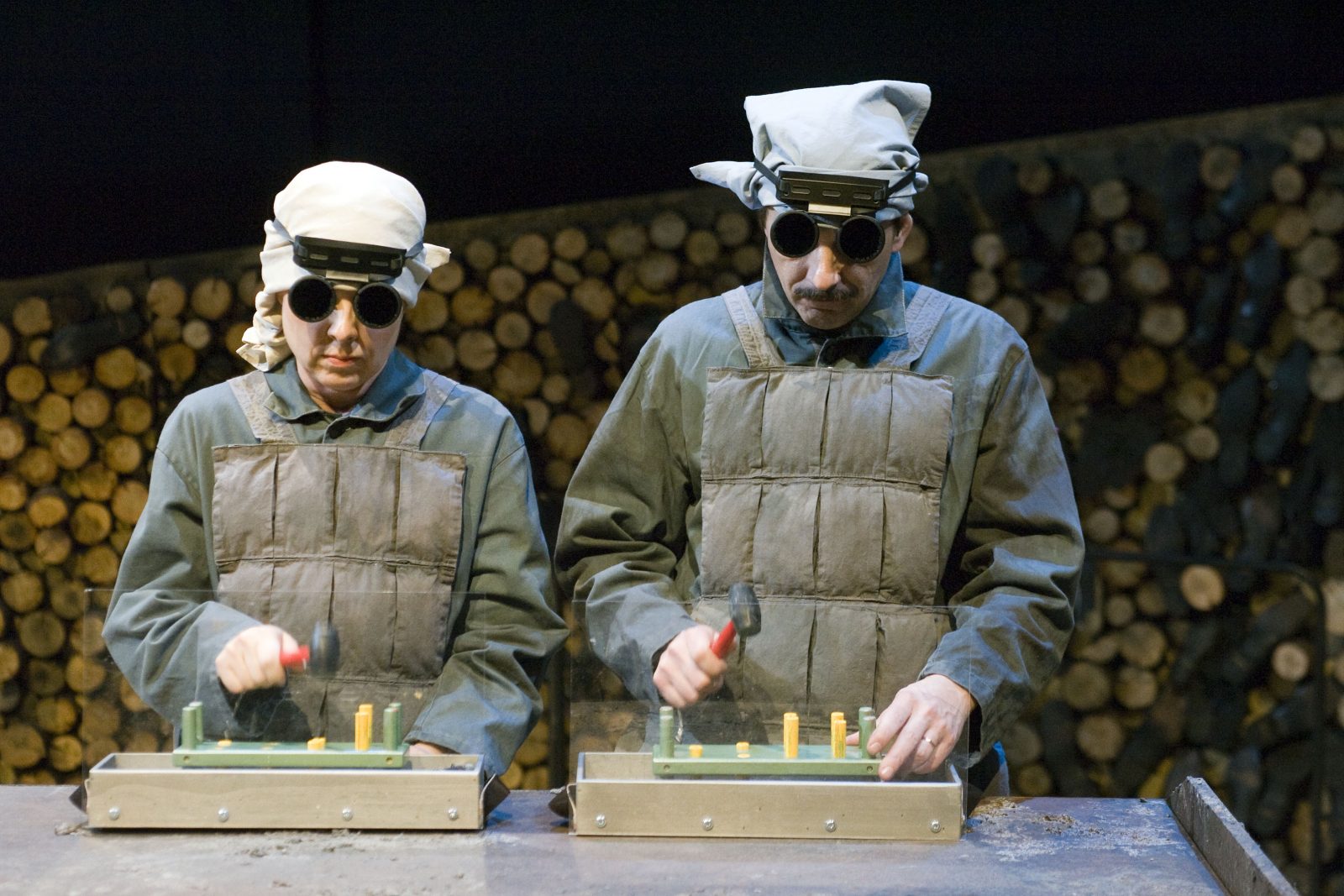
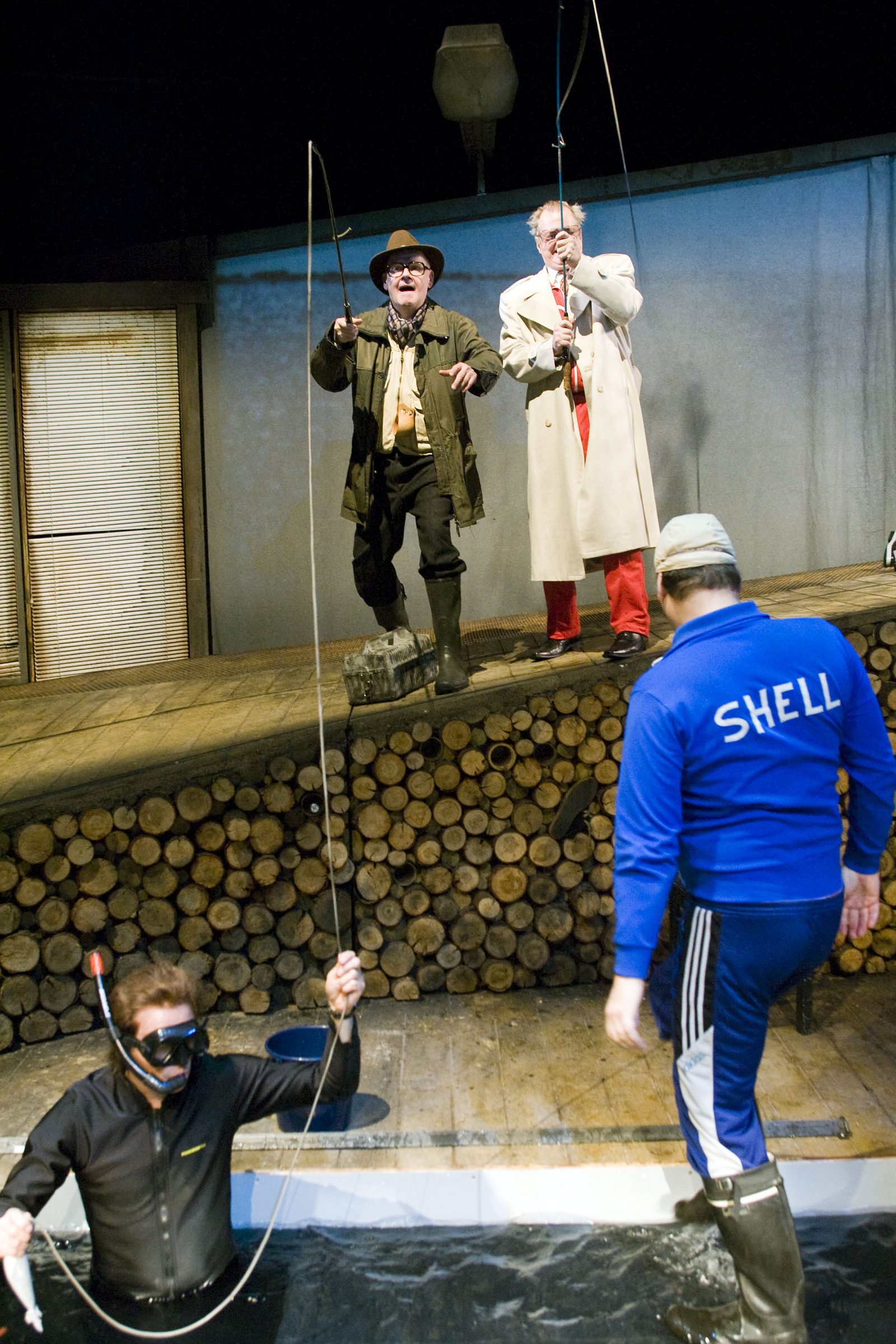
Helsinki City Theatre’s Mole makes you laugh like a TV showHelsinki City Theatre has brought a dramatised play based on Jari Tervo’s novel Mole to its Small Stage. The premiere proved that Tervo is a great humorist, whose colourful interpretations of recent history are also suitable for the theatre stage.As a novel, Mole is extensive and multi-layered. As a dramaturg, Sami Keski-Vähälä has done a great job and has created a play for Mole .Director Milko Lehto has had an almost similar challenge, as he has managed to fit the scenes that come at a fast pace in many different environments on the small stage of the City Theatre and right in front of the audience’s eyes.This has also required a lot of thinking and simplification from set designer Markus Tsokkinen . In the play Mole, the spectator side and even the audience are often used as UKK’s dance partner.Events and hilarious scenes in the City Theatre’s interpretation of Mole last for almost three hours. The interpretation is so entertaining that the time in the audience does not get long.However, the play cannot be called a farce, even though there are plenty of farcical features. The scenes that take place in the spotlight on a small stage are reminiscent of traditional television sketch shows.
Read more
Etelä-Saimaa -verkkolehti, 14.11.2008
Review
Matti Saarela
FINLAND IS DEAD, THE MOLE PERFORMS AN AUTOPSY
Jari Tervo’s Mole is a Lump. This most significant Finnish novel of the new millennium to date is an extraordinarily multi-layered work.Dramatizing Mole on stage is a completely impossible task. But the same is true, of course, of many other great classics of world literature.
Our luck is that no one has ever remembered to tell William Shakespeare and his spiritual heirs.Tervo himself says in an interview published on the City Theatre’s website that in his book he describes power and love, they just often look like violence and sex.Certainly so, but the truth lies in the details, in the nuances. An overly perfect picture is not credible. The age-old elements of power are subjugation and deception. In war and love, all means are allowed, as they say.In addition to everything else, Mole is also a political thriller. Therefore, there is no reason to tell its plot here. This side can be enjoyed by those viewers who, for some incomprehensible reason, have not yet read Tervo’s book.In any case, dramaturg Sami Keski-Vähälä and director Milko Lehto have also encountered the basic problem of the politician himself when they take up Tervo’s book.
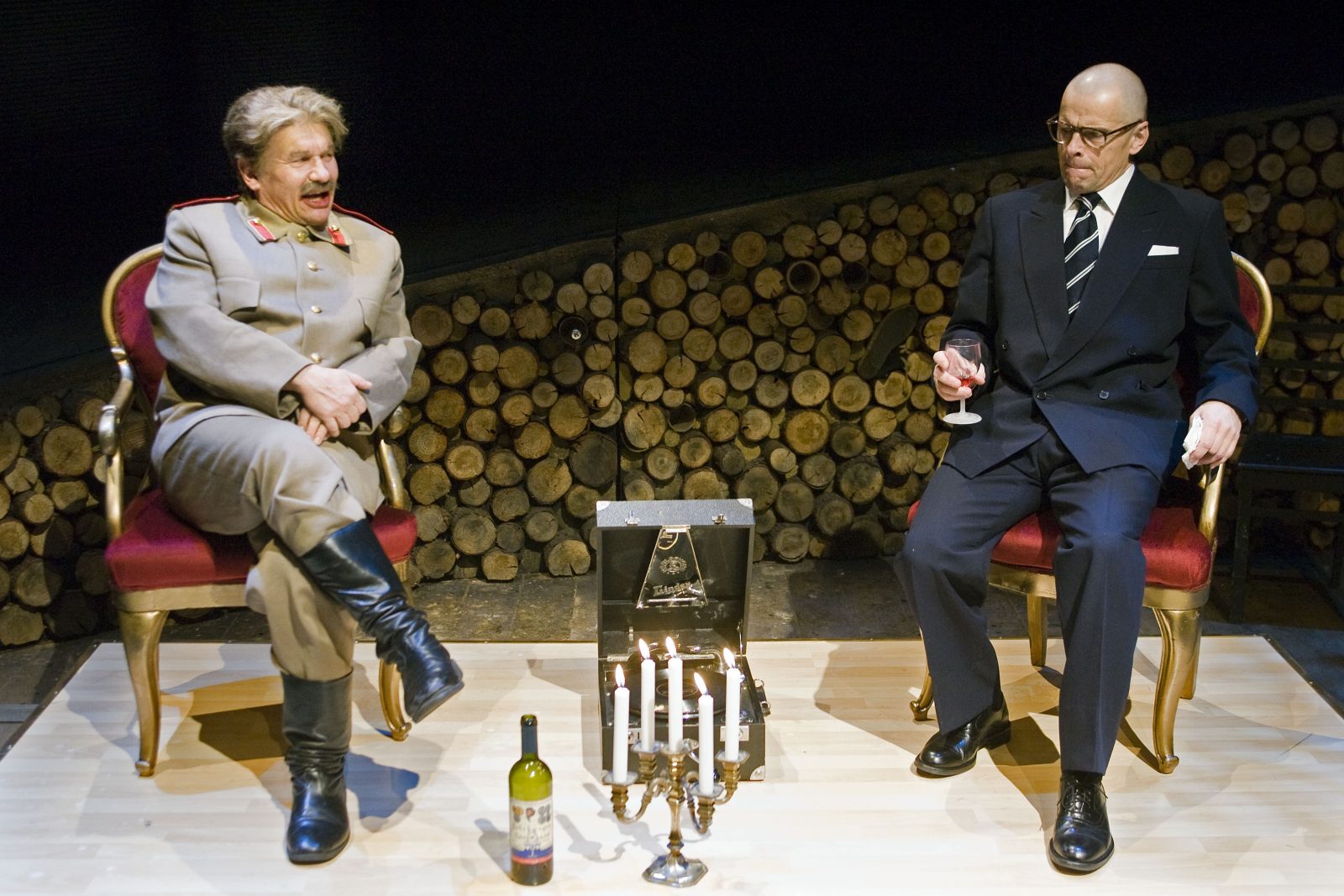
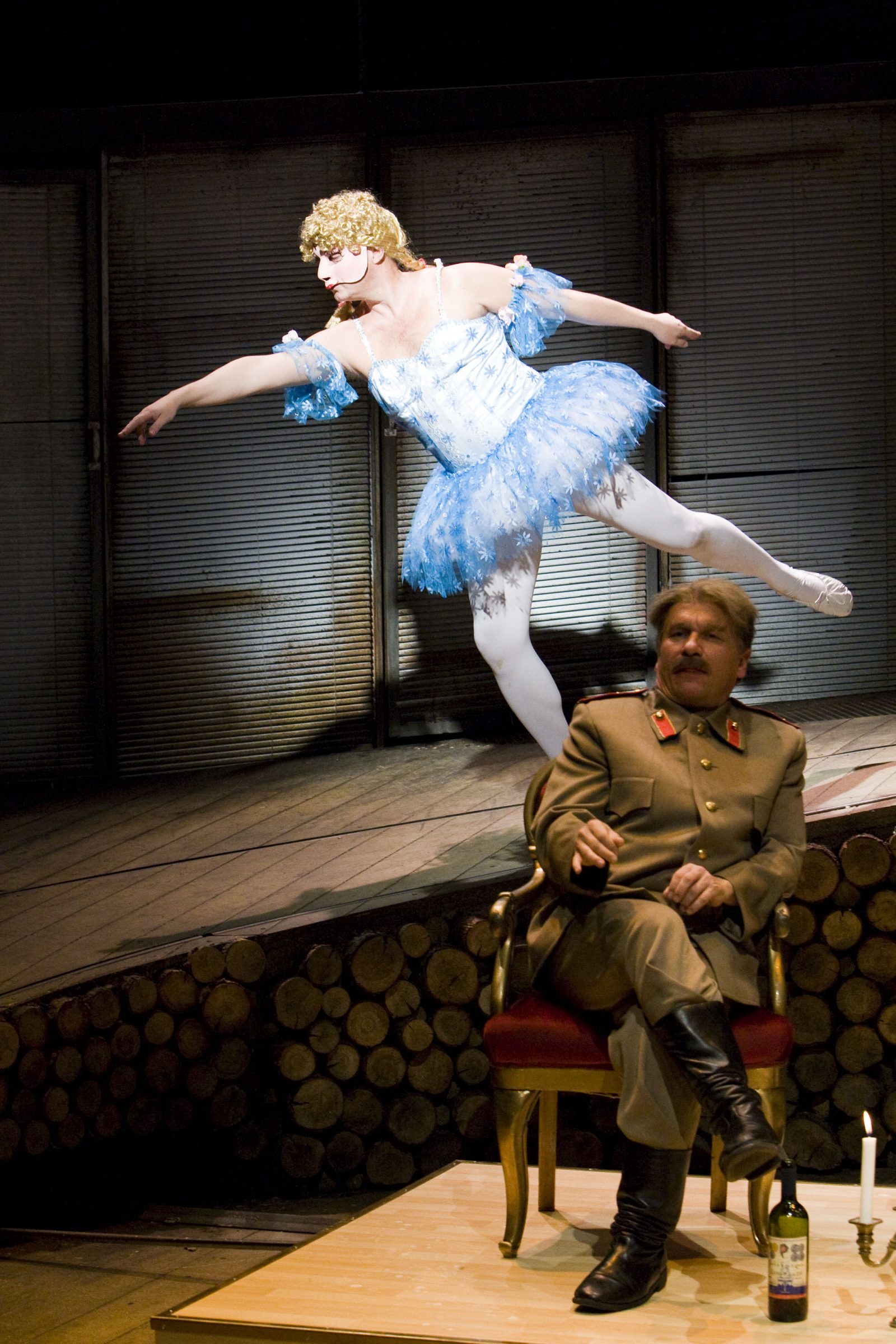
How to reconcile one’s own political convictions, or in this case, artistic vision, with the boundary conditions of reality?Tervo’s verbal tragicomedy turns into a farce in natural theatrical expression. On the other hand, Tervo’s book is full of brilliantly written and in-depth dialogue, which is also proven by the fact that as an audiobook, Tervo’s Mole is a real treat.One of the key scenes in the book is the conversation between Urho Kekkonen and Joseph Stalin in the Kremlin shortly after the war, which ends with an enigmatic dance performance.Keski-Vähälä and Lehto have cleared plenty of space for this scene in accordance with its importance in the first act of the play.
For this reason, the first and second acts are a slightly different pair than Foreign Minister Pertti Paasio’s shoes back in the day. The throttle is really pushed to the bottom only after the intermission.The installation of the mole tells the viewer that there is currently one brighter star shining above the Finnish theatrical sky, which the others are looking towards Bethlehem.Luckily, there are plenty of bugs and myrrh in this treasure chest of ideas. On top of that, the City Theatre’s working group is doing very well in the wit competition.
For example,
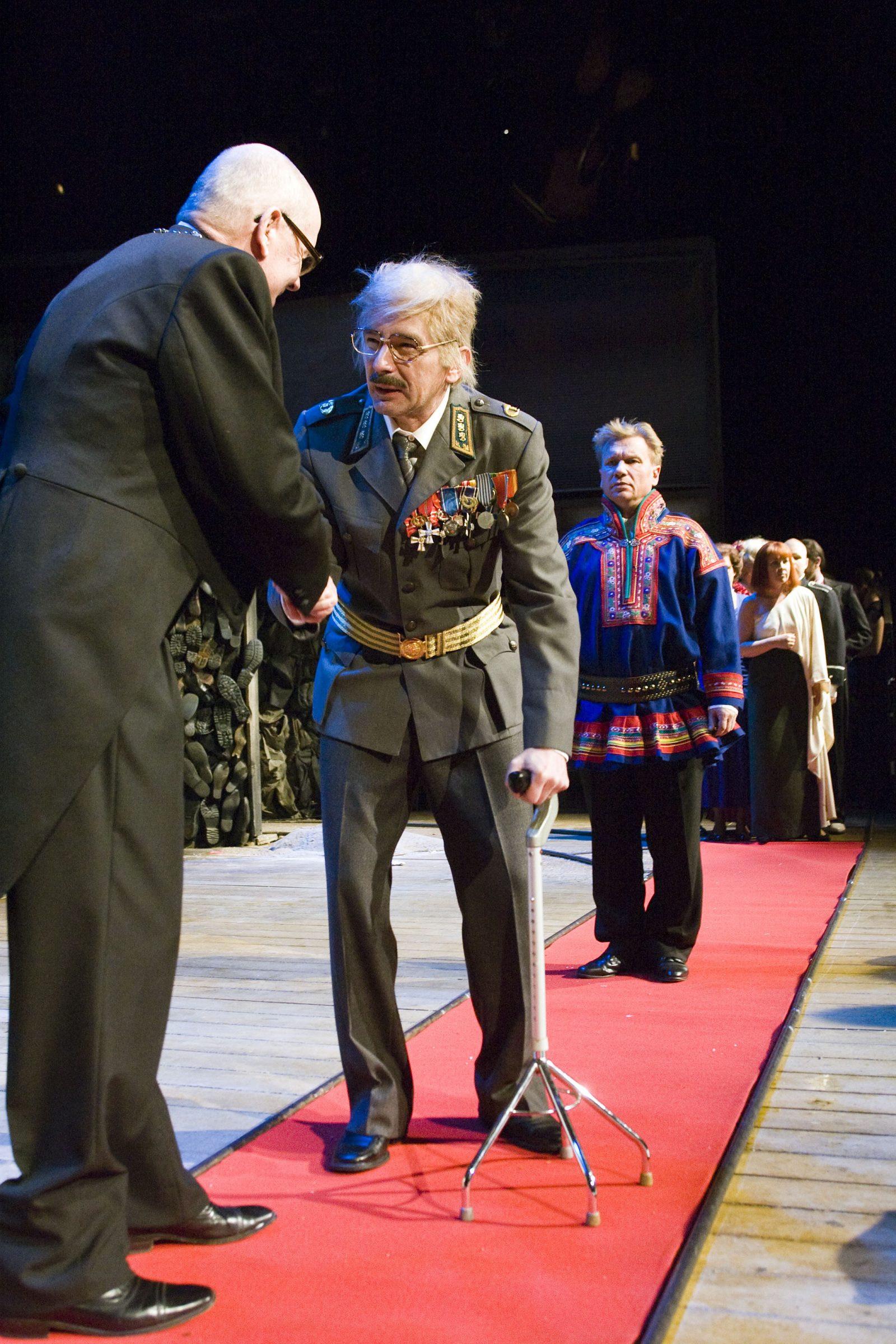
the scene in which a “sign language” interpreter interprets Kekkonen’s speech in what was then West Germany is hilarious.Direct quotes from another work of art are also an old and highly recommended way to keep the reader or viewer on the map. When the surviving soldiers in Kristian Smeds‘ The Unknown Soldier sing that Finland is dead, Mole is a kind of autopsy. What disease did this man of principle actually die of?Tervo seeks an answer to the question from two statements concerning the ethics and morality of the use of power. Firstly, according to him, Finland was a kind of baker of Treblinka, who fed and clothed the world’s largest and most efficiently run concentration camp, the Soviet Union, for its own benefit.Another claim, or rather self-evident, is that Joseph Stalin, the chief architect of this reign of terror, was not a monster, but a human being.In his book, Tervo tries to imagine what kind of a hole each of the key political actors in “Central Slovakia” managed to dig for themselves on this battlefield of reality and human emotions, and he does it so skillfully that even quite smart people mixed fact and fiction together when arguing about Tervo’s book.The hero of Tervo’s book is Jura Karhu, a detective of the Finnish Security Police, a kind of Don Quixote who fights against windmills with the power of scepticism. Not even the Finnish Security Intelligence Service knows everything, and there is no folder for everything… At least not perfect.In the book, Stalin justifies his atrocities with reason, they are logical moves from the point of view of the author. The killing of millions of people is not a moral problem, but a practical problem that is very difficult to solve. No one would do such a thing without a very valid reason.Tervo emphasizes Stalin’s humanity by making Jura Karhu his doppelganger. Ever since he was a young man, Jura has been nicknamed Dzhugashvili because of his appearance.Keski-Vähälä and Lehto do not take advantage of this opportunity in their choice of roles. The Stalin of the Helsinki City Theatre is simply the biggest dick of the bunch, and as such, he is unique.There is certainly a reason for this, and I think Rauno Ahonen is an excellent choice for the role of Jura Karhu in all his absolutes. With her performance, Ahonen gives the character dimensions that did not occur to me, at least, when I read the book.
Antti Litja is in his element in the role of the old Kekkonen. As Stalin, Pertti Koivula does what the narrow conditions given by the director and dramatist make possible.The other actors work on double, triple or even quadruple roles and also participate in spectacular crowd scenes. Helsinki City Theatre’s Mole is busy on stage itself, and the circus is certainly at least as fast-paced going on behind the scenes during the performance with endless costume changes.The aesthetics of set designer Markku Tsokkinen reminds the audience of one of the dimensions of Tervo’s book, which otherwise has had to be left out of the play almost entirely. The Siberian railway built on the stage also gives speed to the scenes.The inputs work like, eh… The toilet on the train.
The Mole starts off a bit awkwardly, but Lehto and Keski-Vähälä handle the second demanding part, the ending of the story, really stylishly. When Tervo ends his book somewhat enigmatically, Keski-Vähälä bangs a full stop at the end of the last sentence.The Soviet Union has not yet disappeared and will not disappear until the Russians themselves settle accounts with their own history. And of course, the same applies to us Finns.If you judge Helsinki City Theatre’s Mole on its most important feature, i.e. its attractiveness, the performance deserves a full ten.
Read more