Västerbottens-Kuriren, 05.12.2011
Review
Ann Enström
Wild play in exquisite dance work
It says in the programme that Kenneth Kvarnström’s dance work (play) compositionally resembles a chamber play. There, chamber play is a generic term used originally for the simple and intimate drama. Not the least by August Strindberg. Since then this generic term has also been transferred to other art forms such as, in this case, the dance. At the same time, it should be pointed out that in the field of theatre, the generic term chamber play was taken from a generic term in the field of music: chamber music. Chamber music for its part was intended to be performed by a small number of solo instruments or solo voices and thus can be considered as a type of antithesis to orchestral music. In (play), Kvarnström combines the chamber play with chamber music and introduces everything with the chamber’s opposite, an act of orchestral music, which of course creates a cathartic effect as a setting. From Marcus Fjellström’s melancholic decline in Degenerator to Mats Larsson Gothe’s fateful outburst in Symphony no 2, so intensively conducted by Shi-Yeon Sung, Kvarnström with the help of the orchestral music’s more grandiose opportunities for expression purifies the audience before the more intimate chamber play between music and dance begins in act 2. The scenographer and lighting designers, Jens Sethzman, creates a chamber for the dancers and musicians, where both parties can feel at home. The half-height backdrop has the same white colour and structure as the walls in the Tonsalen. In contrast, the floor surface consists of a classical dance mat. In other words, a meeting of two worlds. Kvarnström’s (play) consists of 10 scenes accompanied by music by an equal number of composers: Castaldi, Mozart, Chopin, Bach, de Visée, Vivaldi, Glass, Kapsberger, de Lassus and Shostakovich. It starts with warm up scenes in jogging clothes to music by Castaldi and Mozart. After which one of the dancers takes the microphone and talks a while about the musical pieces played, the rehearsal process and what is going to come later; an element of commentary in the performance that recurs at regular intervals. The aspect that fascinates above all is the meeting of opposites in the dance. There are elements of Japanese samurai culture, with blows and kicks, of the French court culture’s dance games, and then there are the Brechtian elements where the dance is suddenly interrupted in full flow by an alienating stamp, or similar, before the flow is picked up once again. Because in (play), Kvarnström plays wildly. At the same time, it is clear that the ten scenes are assembled epically in relation to each other to provide commentary and illumination with the help of clear contrasts. This is also reinforced by the fact the Kvarnström has let three different costume designers, independently of each other, Martin Bergström, Helena Hörstedt and Erika Turunen, contribute costumes for the dance work. I was struck by the fact that the only scene not fragmented by alienating elements in the dance is the one accompanied by Philip Glass’ String Quartet no 5, where it is the music itself that stands for the fragmentation. A scene that starts with a dancer talking about the large cloth pockets that are part of the costume, which is designed by Turunen, as well as the rather more facetious movements that did not make it into the choreography. The play with contrasts that appear between word, costume, dance and music is at its most clear in this particular scene. Kvarnström always offers surprises. It is difficult to know in advance what to expect in purely scenic terms. On the other hand, what can always be expected is an aesthetic experience, well thought-out down to the smallest details. (play) is an exquisite dance work with a number of rude elements for the already purified. (Translation: Multiprint Oy / Multidoc)
Read more
Västerbottens Folkbladet, 03.12.2011
Review
Annika Burholm
Man is also a humane
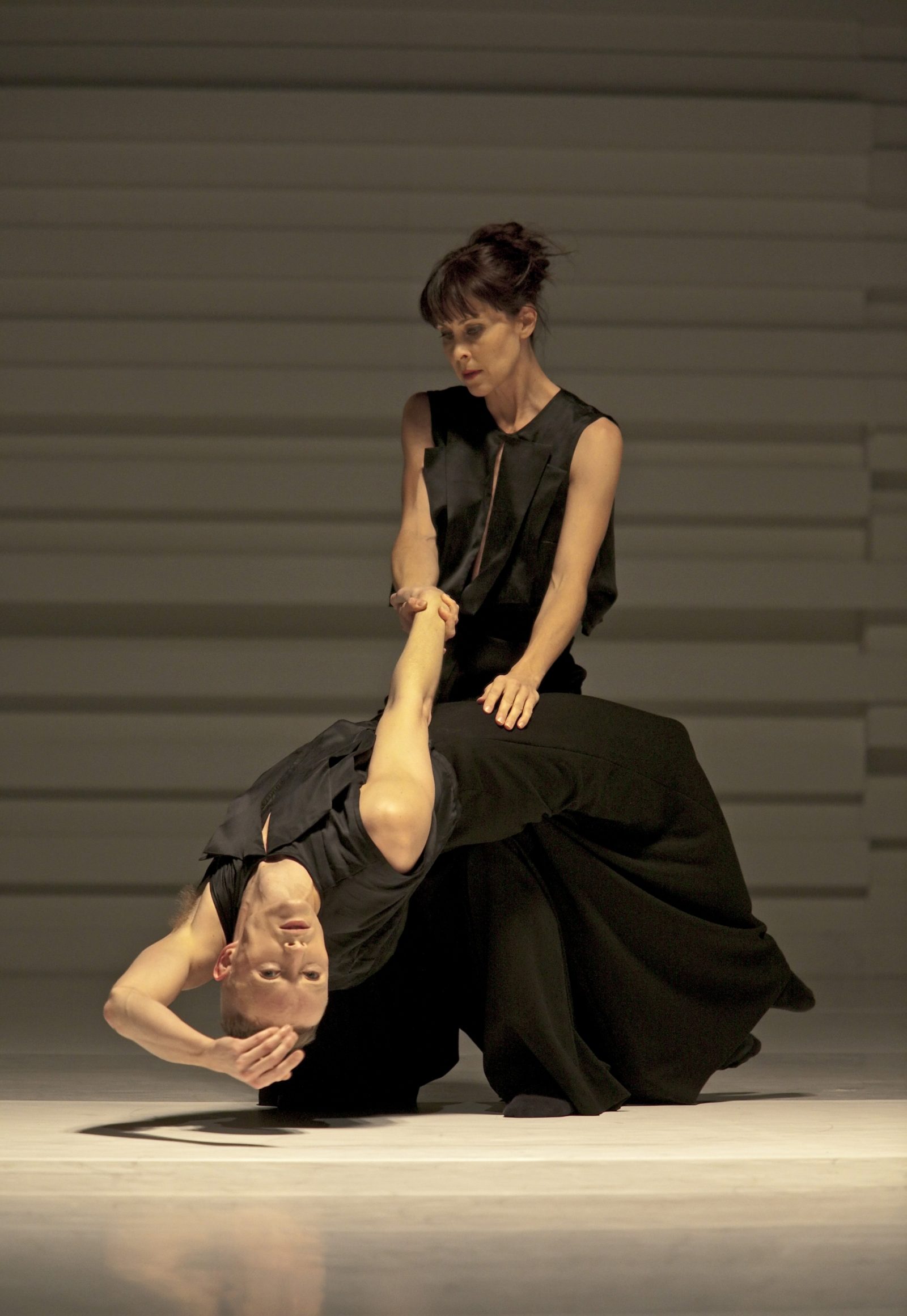
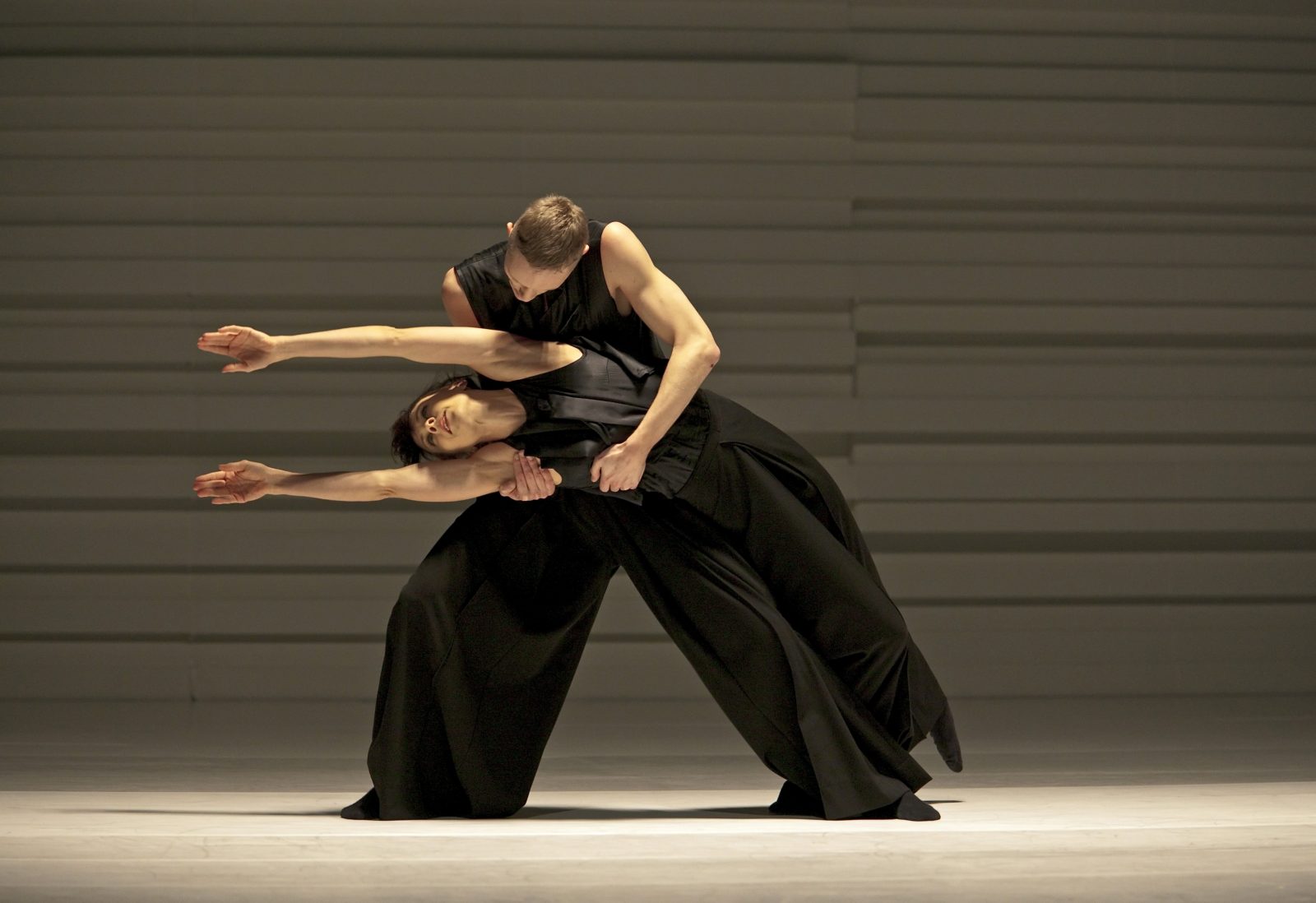
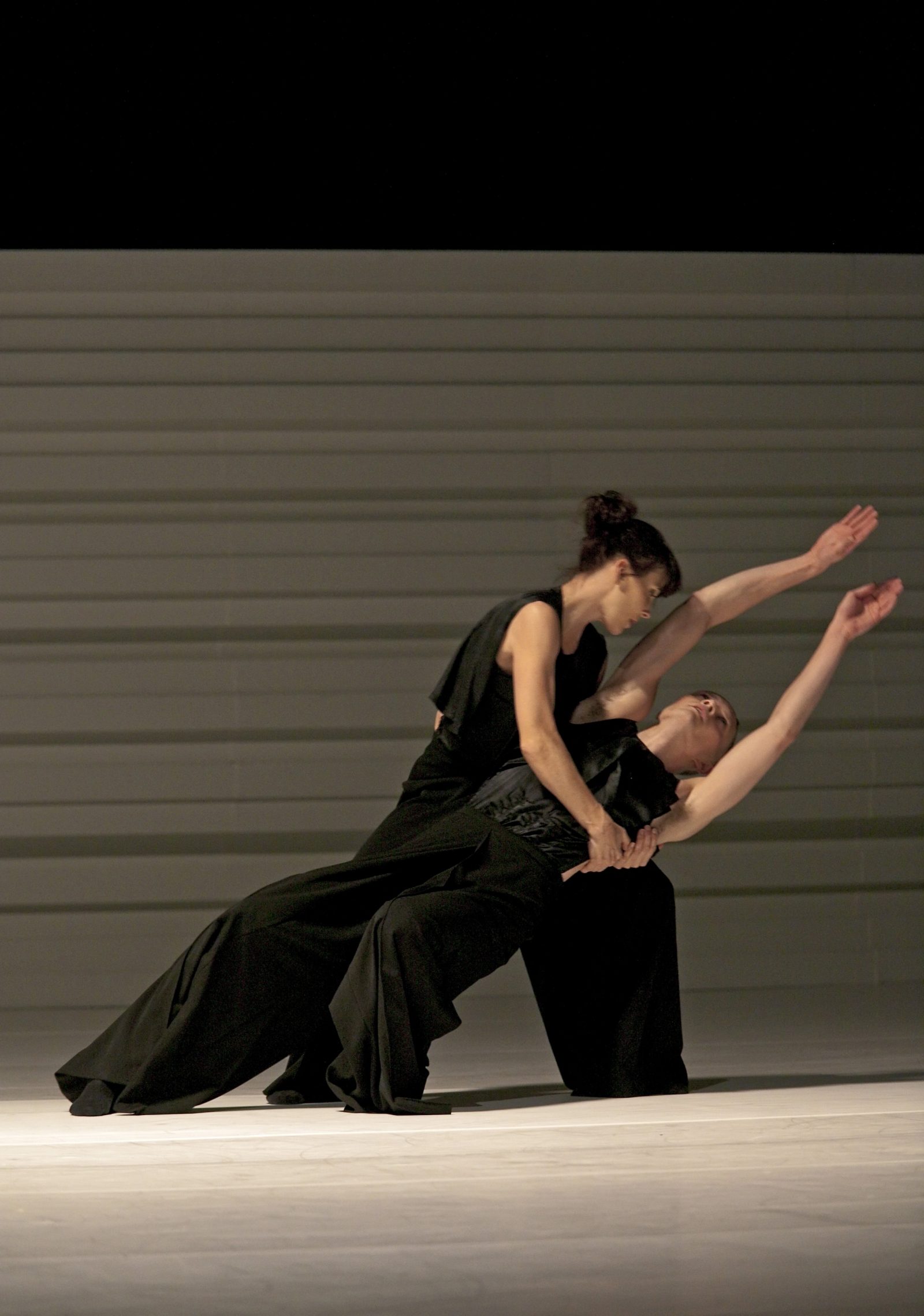
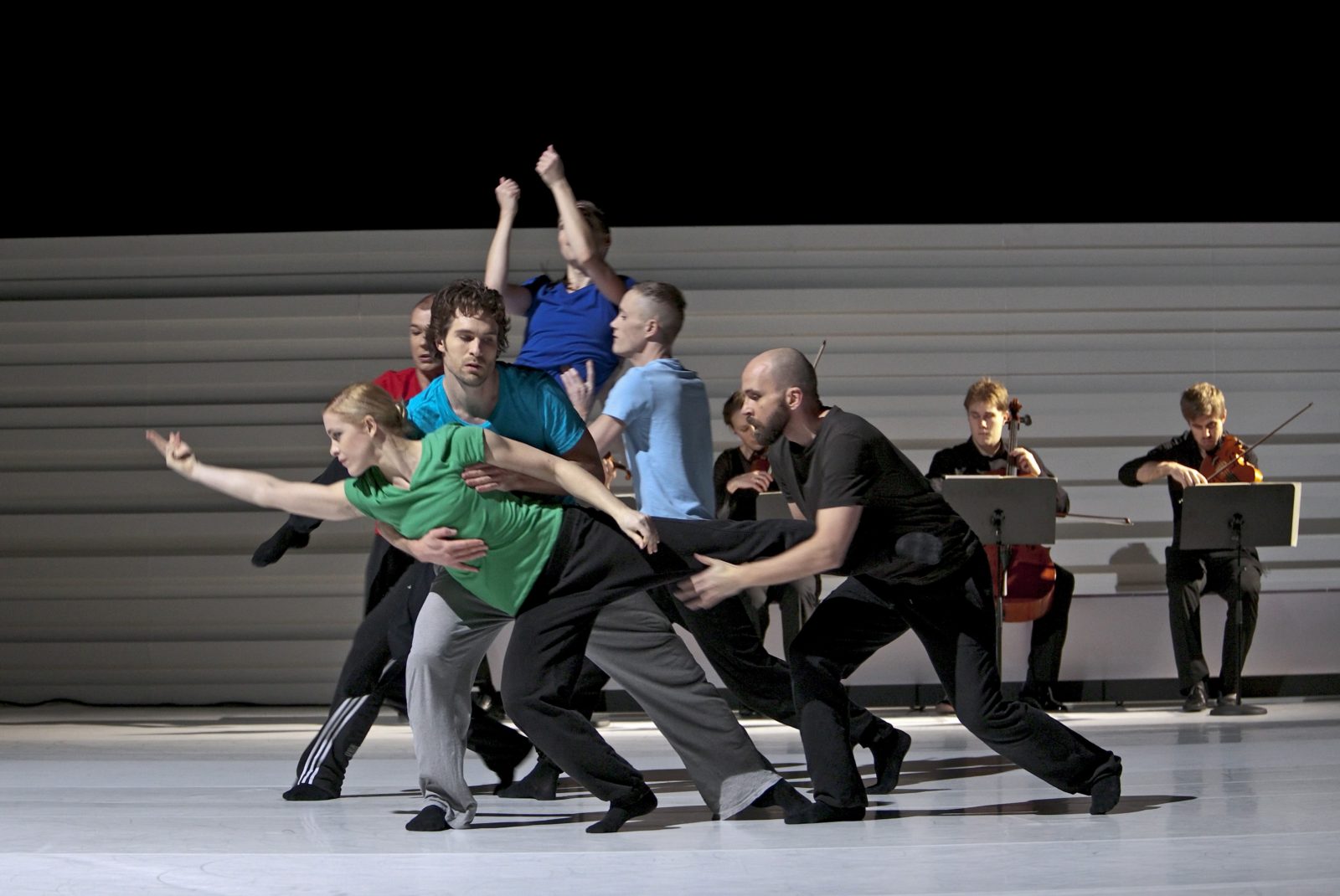
KENNETH KVARNSTRÖM mixes high and low and plays beautifully, totally wild and silly with the man’s role in his new dance ballet (play), which had its Swedish premier to a full-house at NorrlandsOperan last Friday evening. Instead of recorded electronic music, Kvarnström is working this time with live musicians on the stage: Violinists Karin Eriksson, Pontus Björk and Pär Lindqvist, Pelle Hansen, cello, Asuka Nakamura, piano and Jonas Nordberg, theorbo, a lute with a 1.5 m long neck, who play Mozart, Chopin, Bach, Vivaldi, Glass, Shostakovich and more. To splinter the public’s vision further (as K says in the programme sheet) the dancers, Kenneth Bruun Carlsson, Sofia Karlsson, Kai Lähdesmäki, Janne Marja-aho, Cilla Olsen, Valtteri Raekallio and Terhi Vaimala, are dressed in designer clothes and masks.
EVERYTHING STARTS so quietly, with music played on the long lute and the performers coming and going on the neutrally illuminated stage. Overall, the role of the lighting is subdued in this performance, which is fortunate, as there are so many impressions even so.
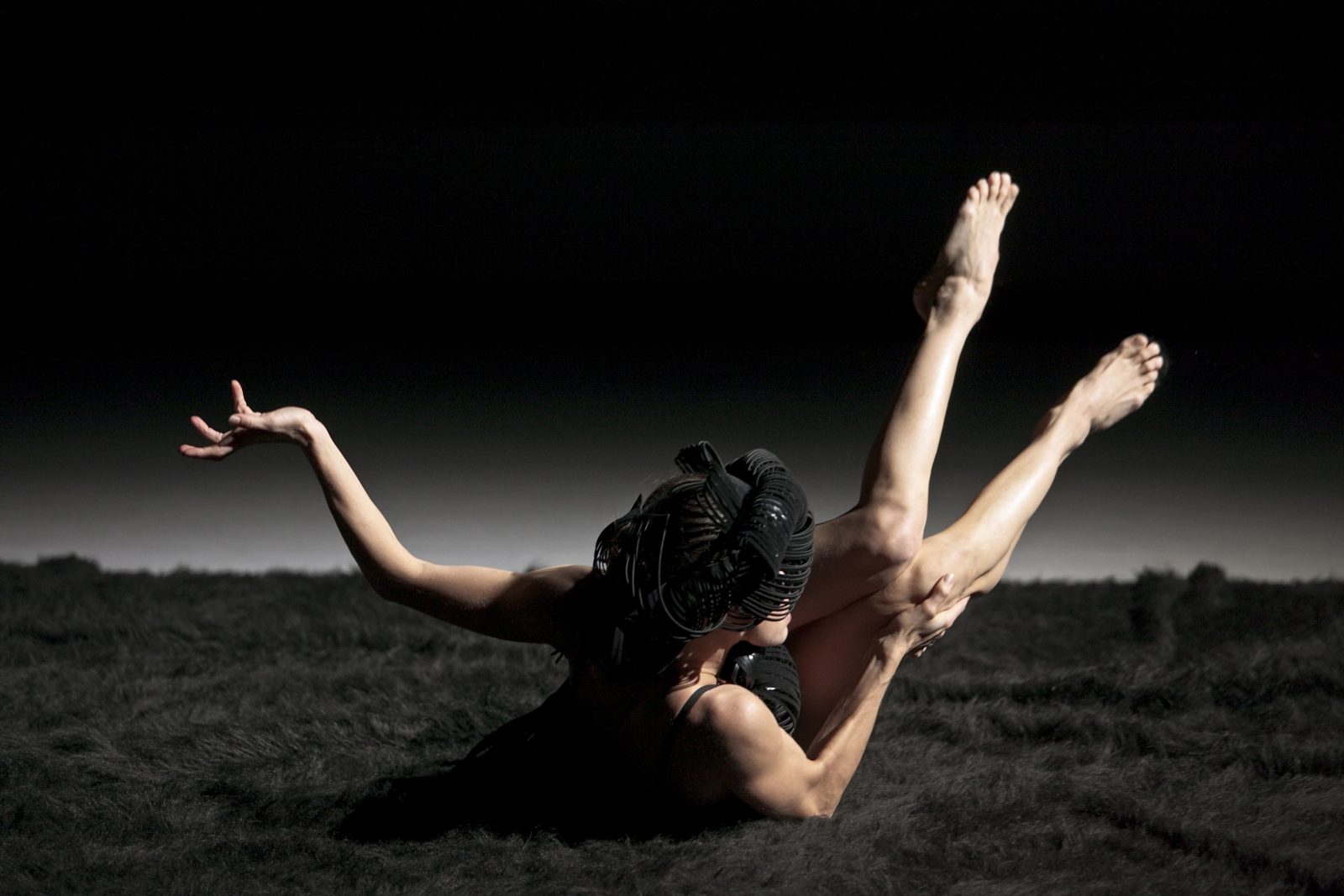
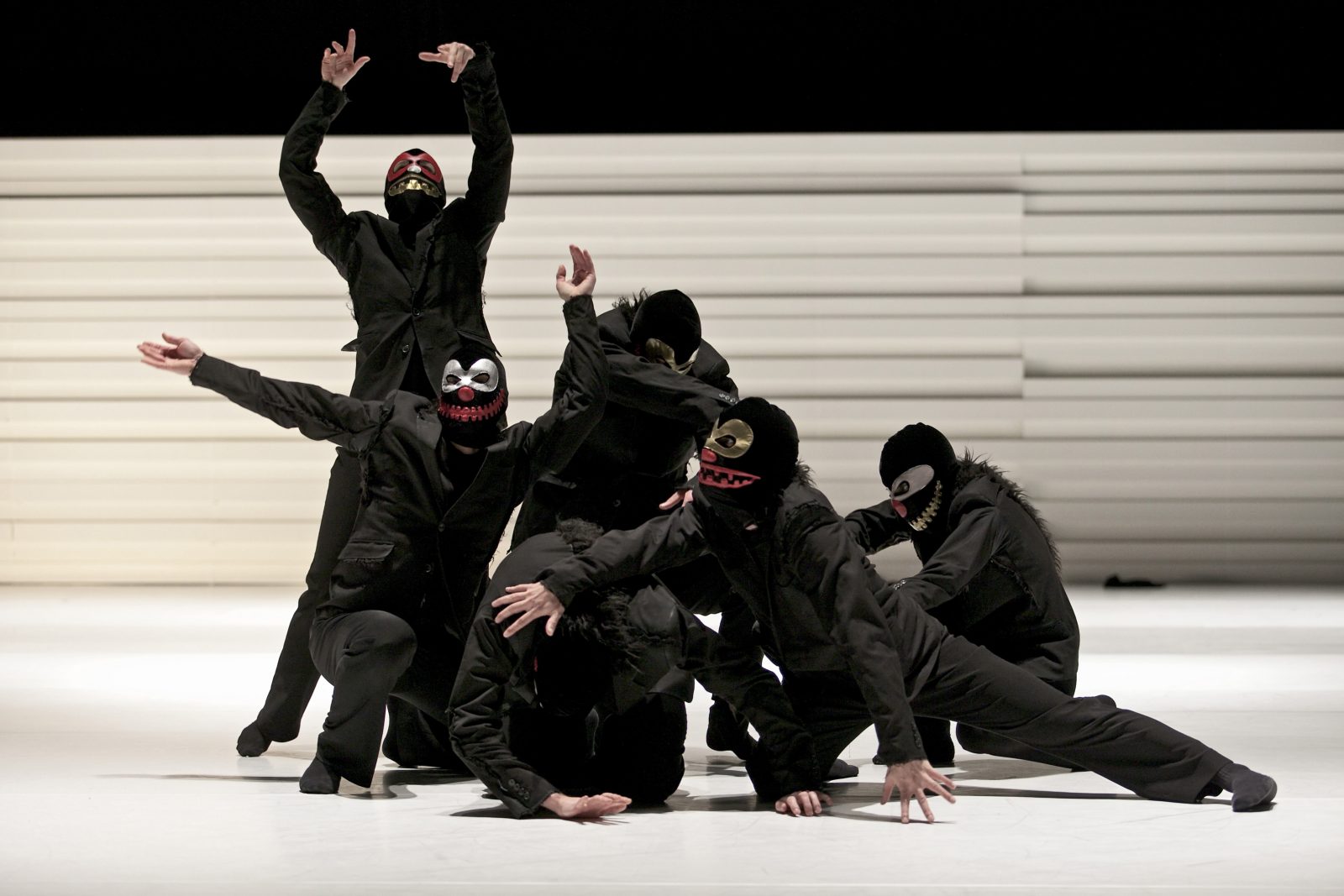
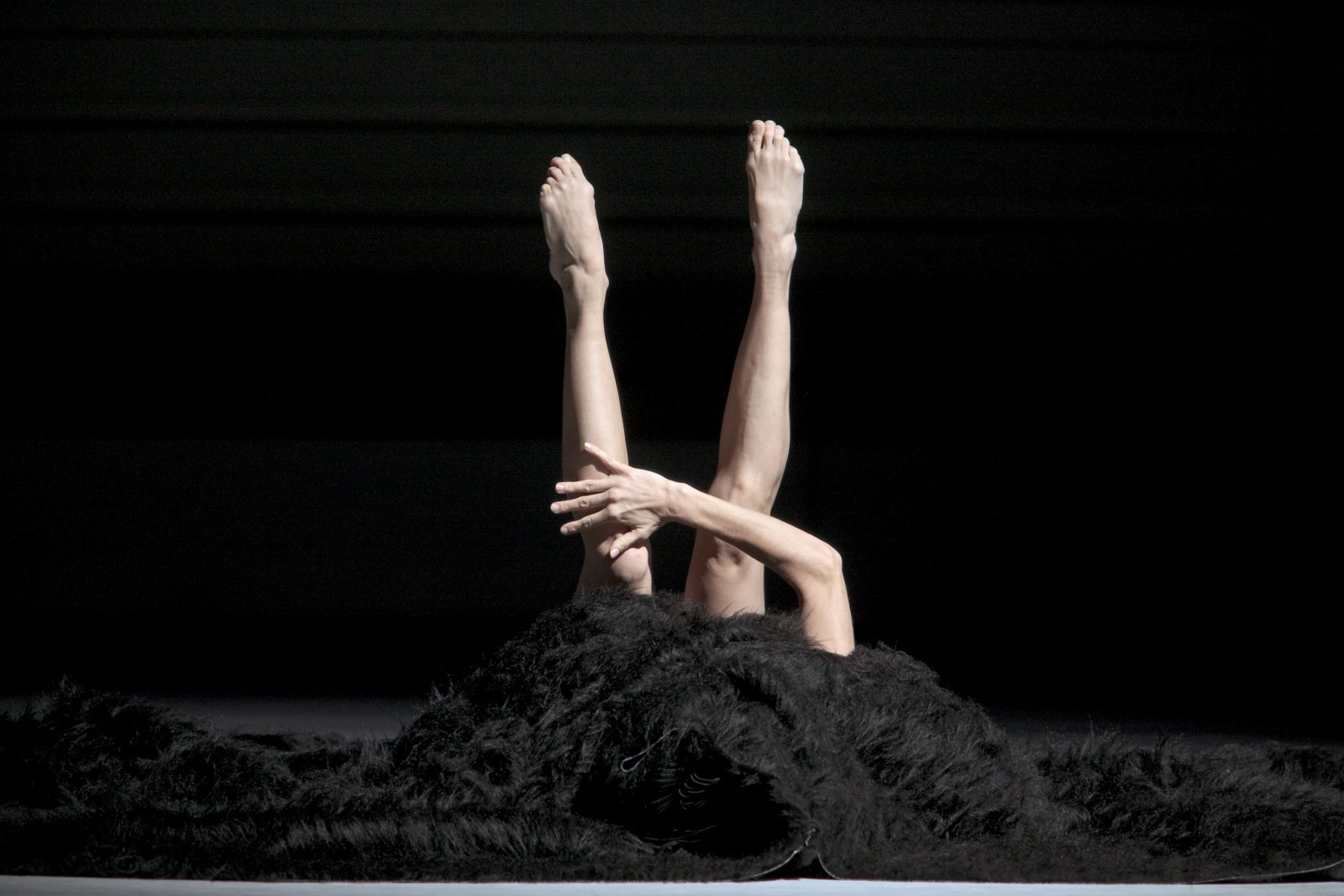
With Mozart, the promenade transforms unnoticeably into dance. Suddenly, they lift each other, oh, so lovingly. Gently the movements swell round in their shared dance body; I would have liked to be part and be caressed by the notes’ affection. After this warm up in tracksuits and colourful T-shirts, the contrast arrives. Chopin’s funeral march, danced by a woman in a black corset lying on a black Rya mat. Like an animal, she twists in anguish and sorrow. Like a striptease queen, she caresses herself. A physical music balancing between furtive vulgarity and the art of dancing, where the classical turns of the feet and legs cancel out the banality of the music hall. Both honest and melodramatic and finally rather funny, as she becomes entangled in the mat. A play with a female stereotype? A attraction to the low and to mix it with the high? These thoughts swirl round in my head. Moreover, they gather speed as three male underpantsless dancers in kilts dance a macho-feminine caress and war dance with smacking of naked buttocks, waving their naked tackle, but in the wrong (?) direction, caressing, stamping and bellowing, while the music calmly and elegantly picks out its classical sonata – and the remarkable happens, the music blunts the shock of the powerful freaky spectacle. The ear is stronger than the eye (which K also says in the programme sheet). Most of the sections, ten in total, are more simple, beautiful and gentle. Many movements recur, such as the lift, the twirls and the arm swings above the head, the first few times as dear friends, then slightly monotonously, but then one could take a peep at the musicians who played until their strings smoked. Or take pleasure in the sweeping costumes and the colours of the awesome masks. At the end, a male dancer in a jacket and underpants stands alone on stage. He has just taken off the sad panda mask. He looks nakedly out at the audience. As if he wants to say that even a man is a human. Ecce homo.
“PLAY” WAS the second act of NorrlandsOperan’s Kvarnström visit. Act I consisted of the symphony orchestra’s performance of Marcus Fjellström’s Degenerator and Mats Larsson Gothe’s Symphony no 2, conducted by Shi-Yeon Sung. Tempestuous, painful and bewildering works that moved with precision between the elephantine steps of armies and a mosquito swarm’s vanishing. (Translation: Multiprint Oy / Multidoc)
Read more
Uutispäivä Demari, 20111130
Review
Annikki Alku
Elegant and playfuplayfull
Read more
Turun Sanomat, 27.11.2011
Review
Kaisa Kurikka
Steady, unvarying dance
Read more
Etelä-Suomen Sanomat, 26.11.2011
Review
Sara Nyberg
“(play) is a mixture of enchanting dance and music, with a dash of Kvarnström’s sparkling humour.” (Translation: Multiprint Oy / Multidoc)
Read more
Ylen Puntari, 26.11.2011
Review
Jere Nurminen
The Master’s New ClothesChoreographer Kenneth Kvarnström continues his dance trilogy with a relaxed attitude. (play) is playful and humoristic. Live classical music and three costume designers create an interesting frame for the work. At times, it almost feels like being at a concert or a fashion show.
Read more
Helsingin Sanomat, 26.11.2011
Review
Hannele Jyrkkä
“The performance, made for the large stage, is good entertainment with no need for deeper analysis. After all, both the skilful visuals and the music majestically interpreted by Norrlands Opera’s string quartet and the lute and grand piano players is salve for the soul in November.” (Translation: Multiprint Oy / Multidoc)
Read more
Ylen Puntari, 20111126
Review
Jere Nurminen
The Master’s New ClothesChoreographer Kenneth Kvarnström continues his dance trilogy with a relaxed attitude. (play) is playful and humoristic. Live classical music and three costume designers create an interesting frame for the work. At times, it almost feels like being at a concert or a fashion show.
Read more
Elle.fi, 24.11.2011
Review
Mirjami Pullinen
(play) is a play on the noble and the humble The impressive work of modern dance met all expectations. I had the pleasure of being a fly on the wall when the modern dance work (play) was being created this fall. Namely the work, created by Kenneth Kvarnström and performed by the Helsinki Dance Company, took fashion to places where it is rarely seen: the costumes were made by three talented fashion designers. Esteemed Swedish fashion designers Martin Bergström and Helena Hörstedt created costumes for some scenes and the go-to designer of Finnish opera, modern dance and ballet, Erika Turunen for some scenes. 24. The opening night on November 24th showed what rehearsals full of laughter, tomato red fabric, and black masks can create.
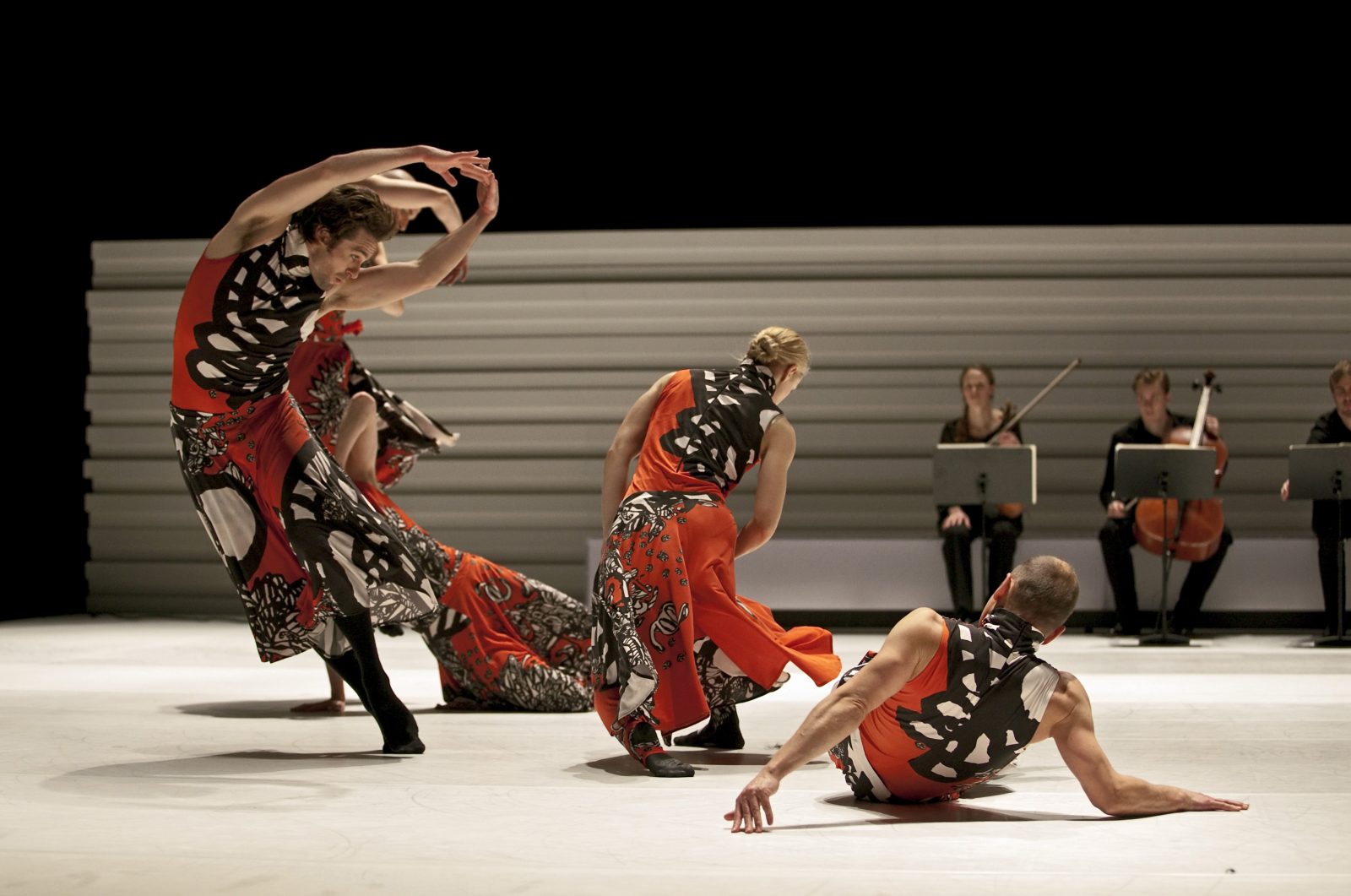
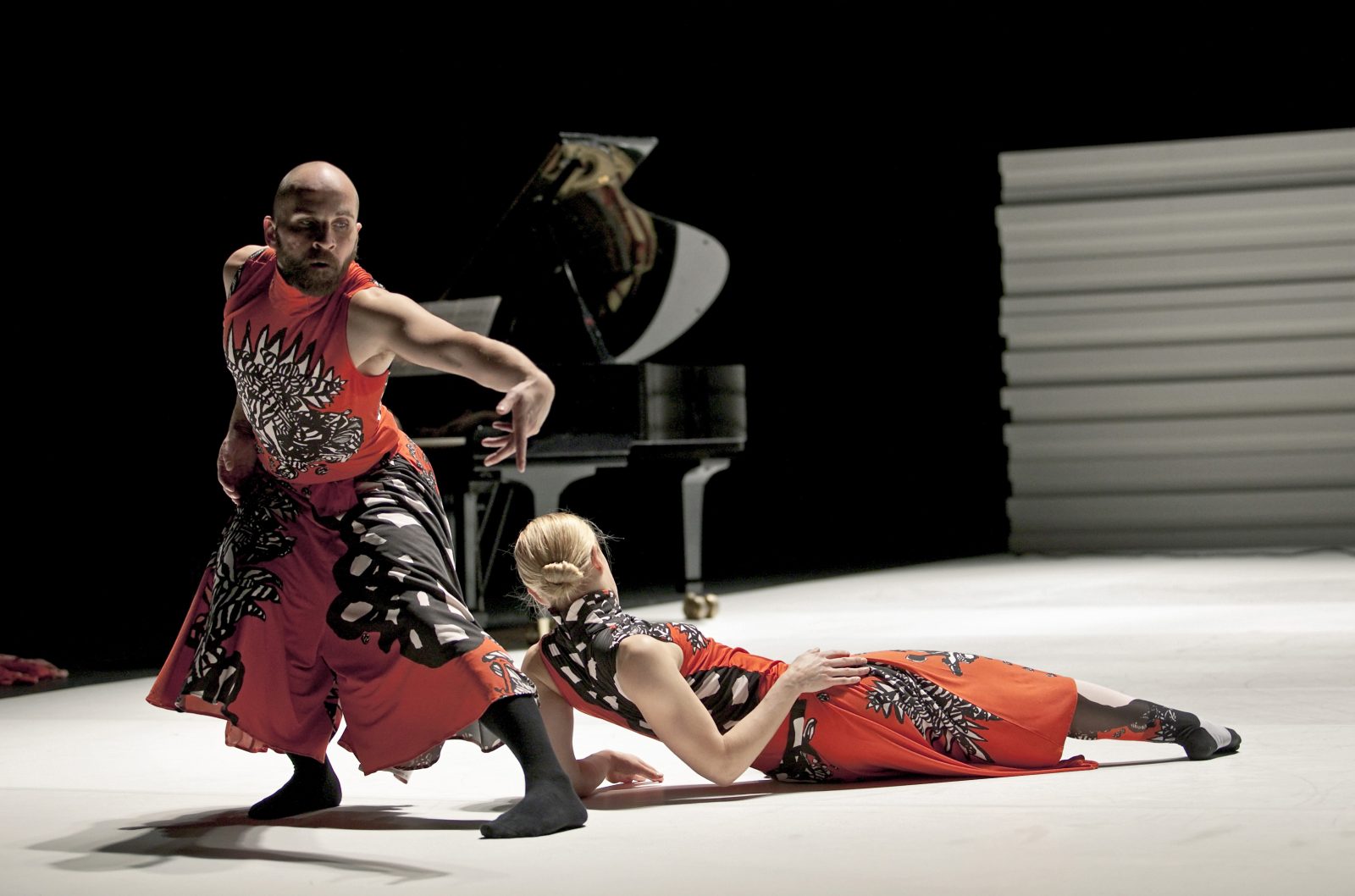
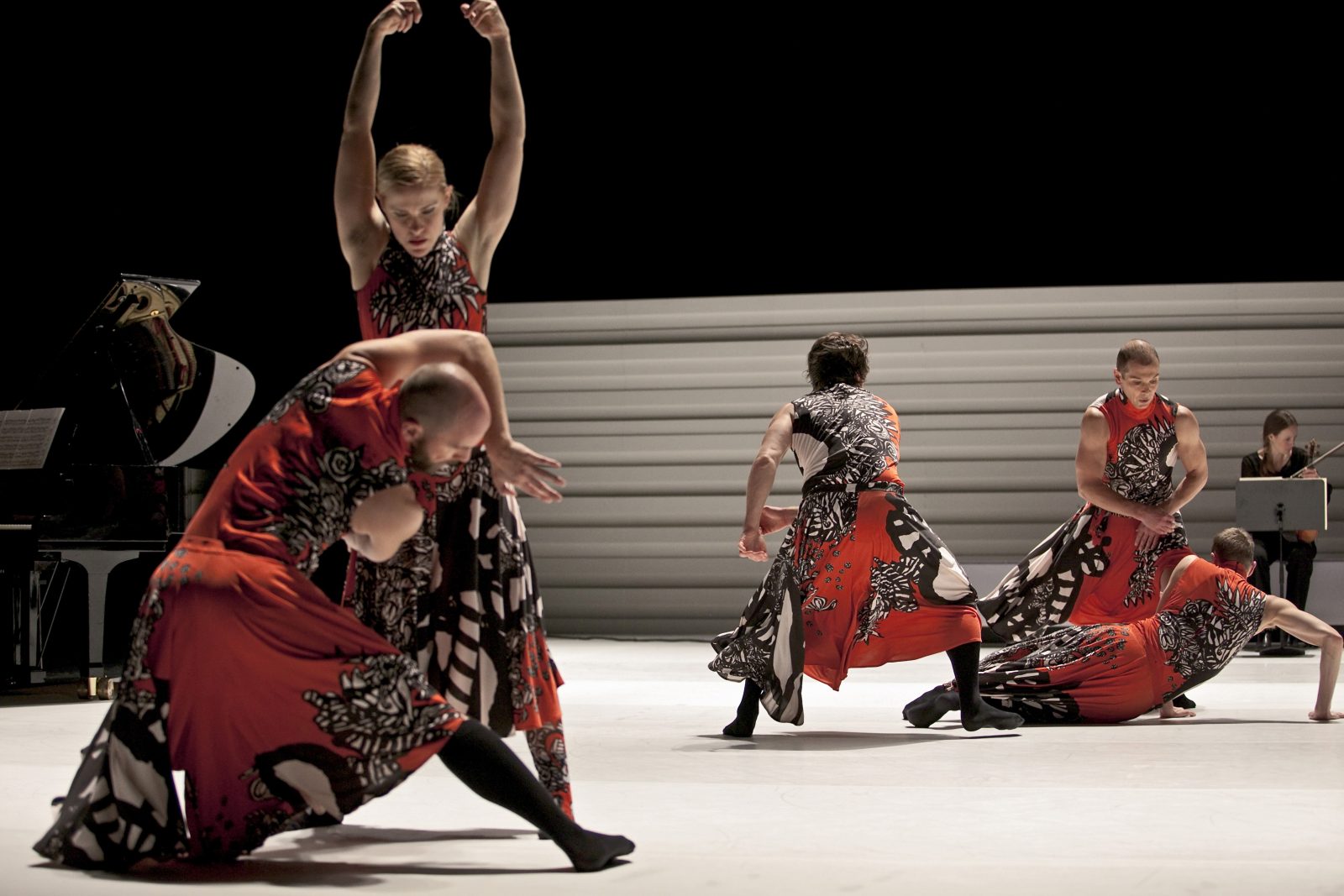
And create they did. The hour and a half extravaganza left the spectator with a pleasant buzz. The work had fitting surroundings on the large stage of the Helsinki City Theatre. (play) was comprised of parts differing in mood, of which the first saw an exercise of warming up with sweatpants aflutter. In the second part, Swedish dancer Cilla Olsen performed a strong, animalistic solo struggling on a black wool rug. Hörstedt’s black costume emphasized the stark mood in the scene elegantly. Later Bergström’s professional army of red suits took the stage. Their faces covered with masks conflicted intensely with Bach’s merry music. Turunen’s glowing, silky costumes followed the carousel-like movement beautifully and complemented the work, as well. In this scene in particular, the union of movement and costume seemed to rise to new heights: the choreographer respected the fabric and gave it life very elegantly. Even though (play) is naturally a show of strength in dance, it also demonstrates that modern dance does not have to be too serious. The audience chuckled as the dancers commented on their own performances between scenes, gave a little song, or teased each other about who really is doing all the work in the performance. Choreographer Kvarnström is also a master of switching tempo: just as the audience was sinking into solemn, deep moods, it was awakened by a tongue-in-cheek cavalcade of kilts and naked skin. The humour in the final scene was welcome, as it balanced the more tragic moods in the work. (Translation: Multiprint Oy / Multidoc)
Read more
Västerbottens-Kuriren, 20111205
Review
Ann Enström
Wild play in exquisite dance work
It says in the programme that Kenneth Kvarnström’s dance work (play) compositionally resembles a chamber play. There, chamber play is a generic term used originally for the simple and intimate drama. Not the least by August Strindberg. Since then this generic term has also been transferred to other art forms such as, in this case, the dance. At the same time, it should be pointed out that in the field of theatre, the generic term chamber play was taken from a generic term in the field of music: chamber music. Chamber music for its part was intended to be performed by a small number of solo instruments or solo voices and thus can be considered as a type of antithesis to orchestral music. In (play), Kvarnström combines the chamber play with chamber music and introduces everything with the chamber’s opposite, an act of orchestral music, which of course creates a cathartic effect as a setting. From Marcus Fjellström’s melancholic decline in Degenerator to Mats Larsson Gothe’s fateful outburst in Symphony no 2, so intensively conducted by Shi-Yeon Sung, Kvarnström with the help of the orchestral music’s more grandiose opportunities for expression purifies the audience before the more intimate chamber play between music and dance begins in act 2. The scenographer and lighting designers, Jens Sethzman, creates a chamber for the dancers and musicians, where both parties can feel at home. The half-height backdrop has the same white colour and structure as the walls in the Tonsalen. In contrast, the floor surface consists of a classical dance mat. In other words, a meeting of two worlds. Kvarnström’s (play) consists of 10 scenes accompanied by music by an equal number of composers: Castaldi, Mozart, Chopin, Bach, de Visée, Vivaldi, Glass, Kapsberger, de Lassus and Shostakovich. It starts with warm up scenes in jogging clothes to music by Castaldi and Mozart. After which one of the dancers takes the microphone and talks a while about the musical pieces played, the rehearsal process and what is going to come later; an element of commentary in the performance that recurs at regular intervals. The aspect that fascinates above all is the meeting of opposites in the dance. There are elements of Japanese samurai culture, with blows and kicks, of the French court culture’s dance games, and then there are the Brechtian elements where the dance is suddenly interrupted in full flow by an alienating stamp, or similar, before the flow is picked up once again. Because in (play), Kvarnström plays wildly. At the same time, it is clear that the ten scenes are assembled epically in relation to each other to provide commentary and illumination with the help of clear contrasts. This is also reinforced by the fact the Kvarnström has let three different costume designers, independently of each other, Martin Bergström, Helena Hörstedt and Erika Turunen, contribute costumes for the dance work. I was struck by the fact that the only scene not fragmented by alienating elements in the dance is the one accompanied by Philip Glass’ String Quartet no 5, where it is the music itself that stands for the fragmentation. A scene that starts with a dancer talking about the large cloth pockets that are part of the costume, which is designed by Turunen, as well as the rather more facetious movements that did not make it into the choreography. The play with contrasts that appear between word, costume, dance and music is at its most clear in this particular scene. Kvarnström always offers surprises. It is difficult to know in advance what to expect in purely scenic terms. On the other hand, what can always be expected is an aesthetic experience, well thought-out down to the smallest details. (play) is an exquisite dance work with a number of rude elements for the already purified. (Translation: Multiprint Oy / Multidoc)
Read more
Västerbottens Folkbladet, 20111203
Review
Annika Burholm
Man is also a humane
KENNETH KVARNSTRÖM mixes high and low and plays beautifully, totally wild and silly with the man’s role in his new dance ballet (play), which had its Swedish premier to a full-house at NorrlandsOperan last Friday evening. Instead of recorded electronic music, Kvarnström is working this time with live musicians on the stage: Violinists Karin Eriksson, Pontus Björk and Pär Lindqvist, Pelle Hansen, cello, Asuka Nakamura, piano and Jonas Nordberg, theorbo, a lute with a 1.5 m long neck, who play Mozart, Chopin, Bach, Vivaldi, Glass, Shostakovich and more. To splinter the public’s vision further (as K says in the programme sheet) the dancers, Kenneth Bruun Carlsson, Sofia Karlsson, Kai Lähdesmäki, Janne Marja-aho, Cilla Olsen, Valtteri Raekallio and Terhi Vaimala, are dressed in designer clothes and masks.
EVERYTHING STARTS so quietly, with music played on the long lute and the performers coming and going on the neutrally illuminated stage. Overall, the role of the lighting is subdued in this performance, which is fortunate, as there are so many impressions even so.
With Mozart, the promenade transforms unnoticeably into dance. Suddenly, they lift each other, oh, so lovingly. Gently the movements swell round in their shared dance body; I would have liked to be part and be caressed by the notes’ affection. After this warm up in tracksuits and colourful T-shirts, the contrast arrives. Chopin’s funeral march, danced by a woman in a black corset lying on a black Rya mat. Like an animal, she twists in anguish and sorrow. Like a striptease queen, she caresses herself. A physical music balancing between furtive vulgarity and the art of dancing, where the classical turns of the feet and legs cancel out the banality of the music hall. Both honest and melodramatic and finally rather funny, as she becomes entangled in the mat. A play with a female stereotype? A attraction to the low and to mix it with the high? These thoughts swirl round in my head. Moreover, they gather speed as three male underpantsless dancers in kilts dance a macho-feminine caress and war dance with smacking of naked buttocks, waving their naked tackle, but in the wrong (?) direction, caressing, stamping and bellowing, while the music calmly and elegantly picks out its classical sonata – and the remarkable happens, the music blunts the shock of the powerful freaky spectacle. The ear is stronger than the eye (which K also says in the programme sheet). Most of the sections, ten in total, are more simple, beautiful and gentle. Many movements recur, such as the lift, the twirls and the arm swings above the head, the first few times as dear friends, then slightly monotonously, but then one could take a peep at the musicians who played until their strings smoked. Or take pleasure in the sweeping costumes and the colours of the awesome masks. At the end, a male dancer in a jacket and underpants stands alone on stage. He has just taken off the sad panda mask. He looks nakedly out at the audience. As if he wants to say that even a man is a human. Ecce homo.
“PLAY” WAS the second act of NorrlandsOperan’s Kvarnström visit. Act I consisted of the symphony orchestra’s performance of Marcus Fjellström’s Degenerator and Mats Larsson Gothe’s Symphony no 2, conducted by Shi-Yeon Sung. Tempestuous, painful and bewildering works that moved with precision between the elephantine steps of armies and a mosquito swarm’s vanishing. (Translation: Multiprint Oy / Multidoc)
Read more
Uutispäivä Demari, 30.11.2011
Review
Annikki Alku
Elegant and playfuplayfull
Read more
Turun Sanomat, 20111127
Review
Kaisa Kurikka
Steady, unvarying dance
Read more
Etelä-Suomen Sanomat, 20111126
Review
Sara Nyberg
“(play) is a mixture of enchanting dance and music, with a dash of Kvarnström’s sparkling humour.” (Translation: Multiprint Oy / Multidoc)
Read more
Hufvudstadsbladet, 26.11.2011
Review
Jan-Peter Kaiku
Playful Meetings When seven dancers and six musicians take possession of the City Theatre’s main stage in a concept uniting modern dance, live classical music and fashion, we are served an event that does not belong to the everyday. Kenneth Kvarnström’s (play) is a joint production in the largest format between his own company, the Helsinki Dance Company and NorrlandsOperan and after three performances in Helsinki it is being put on in Umeå twice before going on tour in Germany next year. The title of the work is descriptive. Play and playfulness permeate the entire piece as well as the details. It also characterises the narration in the individual scenes that mirror various outcomes and meanings of the term play. Play does not mean they have saved on the quality or ambition. On the contrary, it is just this playful meeting between the seriously designed and performed individual elements that is the whole point. Without the play, the meeting between classical music from five centuries and the movement-oriented modern dance could easily have been both bombastic and introspective. The work is structured into nine scenes, each featuring its own music by composers such as Bach, Chopin, Vivaldi and Shostakovich. The series also includes more rarely heard music such as baroque music for the theorbo -lute, in itself a visually peculiar instrument. The individual scenes could stand as works in themselves, but of course they are tied together sequentially by the same musicians and dancers featuring in them in different combinations. Another unifying factor is Jens Sethzman’s scenography – a white background element and two luminous mobile elements that act as benches. The aspect most obviously tying together the scenes and concretising the playful concept in the work is the dancers’ short illuminating speeches to the public between the scenes. One of these is a recording of the dancers’ comments during a rehearsal situation. This in particular gets the audience laughing heartily. The movement vocabulary in all of the scenes consists of material characteristic for Kenneth Kvarnström. Individual dancers rise or fall in groups as well as other formations that come together and dissolve in an unbroken flow that we recognise again. Likewise the carefully structured pair scenes, which here mirror the awareness and congeniality rather than submission and dominance as many times before. Overall, the movement material is characterised by maturity and trust without any need to prove or achieve something. This has also been snapped up by the dancers, who emphasise this in their performance. Everyone is well aware of the aesthetics, as well as the material, to which they clearly take their own approach. The suite includes zippy comedy, rather á la Carmen?! from the 1990s, when Kai Lähdesmäki, Janne Marja-aho and Valtteri Raekallio in kilts put on a peepshow with drive. In a brilliantly coloured scene, to Bach’s Goldberg Variations with masked groups in fanciful red and black dresses, the play bursts into flower with visualisation and movement to become afterwards more minimalistic and stylised in the scene accompanied by music of Glass and Kasberger. A crystal clear duet for Kenneth Bruun Carlson and Cilla Olsen etches itself in the memory not just for the interpretation but also for the material’s sake. The finale’s mask game and caricatured rhythmical material to Shostakovich’s hectic tempos brings to mind Asiatic drama as well as commedia dell’arte. The playfulness makes the whole piece entertaining and finally it turns into a functioning entry into this scenic matter. (Translation: Multiprint Oy / Multidoc)
Read more
Hufvudstadsbladet, 20111126
Review
Jan-Peter Kaiku
Playful Meetings When seven dancers and six musicians take possession of the City Theatre’s main stage in a concept uniting modern dance, live classical music and fashion, we are served an event that does not belong to the everyday. Kenneth Kvarnström’s (play) is a joint production in the largest format between his own company, the Helsinki Dance Company and NorrlandsOperan and after three performances in Helsinki it is being put on in Umeå twice before going on tour in Germany next year. The title of the work is descriptive. Play and playfulness permeate the entire piece as well as the details. It also characterises the narration in the individual scenes that mirror various outcomes and meanings of the term play. Play does not mean they have saved on the quality or ambition. On the contrary, it is just this playful meeting between the seriously designed and performed individual elements that is the whole point. Without the play, the meeting between classical music from five centuries and the movement-oriented modern dance could easily have been both bombastic and introspective. The work is structured into nine scenes, each featuring its own music by composers such as Bach, Chopin, Vivaldi and Shostakovich. The series also includes more rarely heard music such as baroque music for the theorbo -lute, in itself a visually peculiar instrument. The individual scenes could stand as works in themselves, but of course they are tied together sequentially by the same musicians and dancers featuring in them in different combinations. Another unifying factor is Jens Sethzman’s scenography – a white background element and two luminous mobile elements that act as benches. The aspect most obviously tying together the scenes and concretising the playful concept in the work is the dancers’ short illuminating speeches to the public between the scenes. One of these is a recording of the dancers’ comments during a rehearsal situation. This in particular gets the audience laughing heartily. The movement vocabulary in all of the scenes consists of material characteristic for Kenneth Kvarnström. Individual dancers rise or fall in groups as well as other formations that come together and dissolve in an unbroken flow that we recognise again. Likewise the carefully structured pair scenes, which here mirror the awareness and congeniality rather than submission and dominance as many times before. Overall, the movement material is characterised by maturity and trust without any need to prove or achieve something. This has also been snapped up by the dancers, who emphasise this in their performance. Everyone is well aware of the aesthetics, as well as the material, to which they clearly take their own approach. The suite includes zippy comedy, rather á la Carmen?! from the 1990s, when Kai Lähdesmäki, Janne Marja-aho and Valtteri Raekallio in kilts put on a peepshow with drive. In a brilliantly coloured scene, to Bach’s Goldberg Variations with masked groups in fanciful red and black dresses, the play bursts into flower with visualisation and movement to become afterwards more minimalistic and stylised in the scene accompanied by music of Glass and Kasberger. A crystal clear duet for Kenneth Bruun Carlson and Cilla Olsen etches itself in the memory not just for the interpretation but also for the material’s sake. The finale’s mask game and caricatured rhythmical material to Shostakovich’s hectic tempos brings to mind Asiatic drama as well as commedia dell’arte. The playfulness makes the whole piece entertaining and finally it turns into a functioning entry into this scenic matter. (Translation: Multiprint Oy / Multidoc)
Read more
Helsingin Sanomat, 20111126
Review
Hannele Jyrkkä
“The performance, made for the large stage, is good entertainment with no need for deeper analysis. After all, both the skilful visuals and the music majestically interpreted by Norrlands Opera’s string quartet and the lute and grand piano players is salve for the soul in November.” (Translation: Multiprint Oy / Multidoc)
Read more
Elle.fi, 20111124
Review
Mirjami Pullinen
(play) is a play on the noble and the humble The impressive work of modern dance met all expectations. I had the pleasure of being a fly on the wall when the modern dance work (play) was being created this fall. Namely the work, created by Kenneth Kvarnström and performed by the Helsinki Dance Company, took fashion to places where it is rarely seen: the costumes were made by three talented fashion designers. Esteemed Swedish fashion designers Martin Bergström and Helena Hörstedt created costumes for some scenes and the go-to designer of Finnish opera, modern dance and ballet, Erika Turunen for some scenes. 24. The opening night on November 24th showed what rehearsals full of laughter, tomato red fabric, and black masks can create.
And create they did. The hour and a half extravaganza left the spectator with a pleasant buzz. The work had fitting surroundings on the large stage of the Helsinki City Theatre. (play) was comprised of parts differing in mood, of which the first saw an exercise of warming up with sweatpants aflutter. In the second part, Swedish dancer Cilla Olsen performed a strong, animalistic solo struggling on a black wool rug. Hörstedt’s black costume emphasized the stark mood in the scene elegantly. Later Bergström’s professional army of red suits took the stage. Their faces covered with masks conflicted intensely with Bach’s merry music. Turunen’s glowing, silky costumes followed the carousel-like movement beautifully and complemented the work, as well. In this scene in particular, the union of movement and costume seemed to rise to new heights: the choreographer respected the fabric and gave it life very elegantly. Even though (play) is naturally a show of strength in dance, it also demonstrates that modern dance does not have to be too serious. The audience chuckled as the dancers commented on their own performances between scenes, gave a little song, or teased each other about who really is doing all the work in the performance. Choreographer Kvarnström is also a master of switching tempo: just as the audience was sinking into solemn, deep moods, it was awakened by a tongue-in-cheek cavalcade of kilts and naked skin. The humour in the final scene was welcome, as it balanced the more tragic moods in the work. (Translation: Multiprint Oy / Multidoc)
Read more
No comments yet