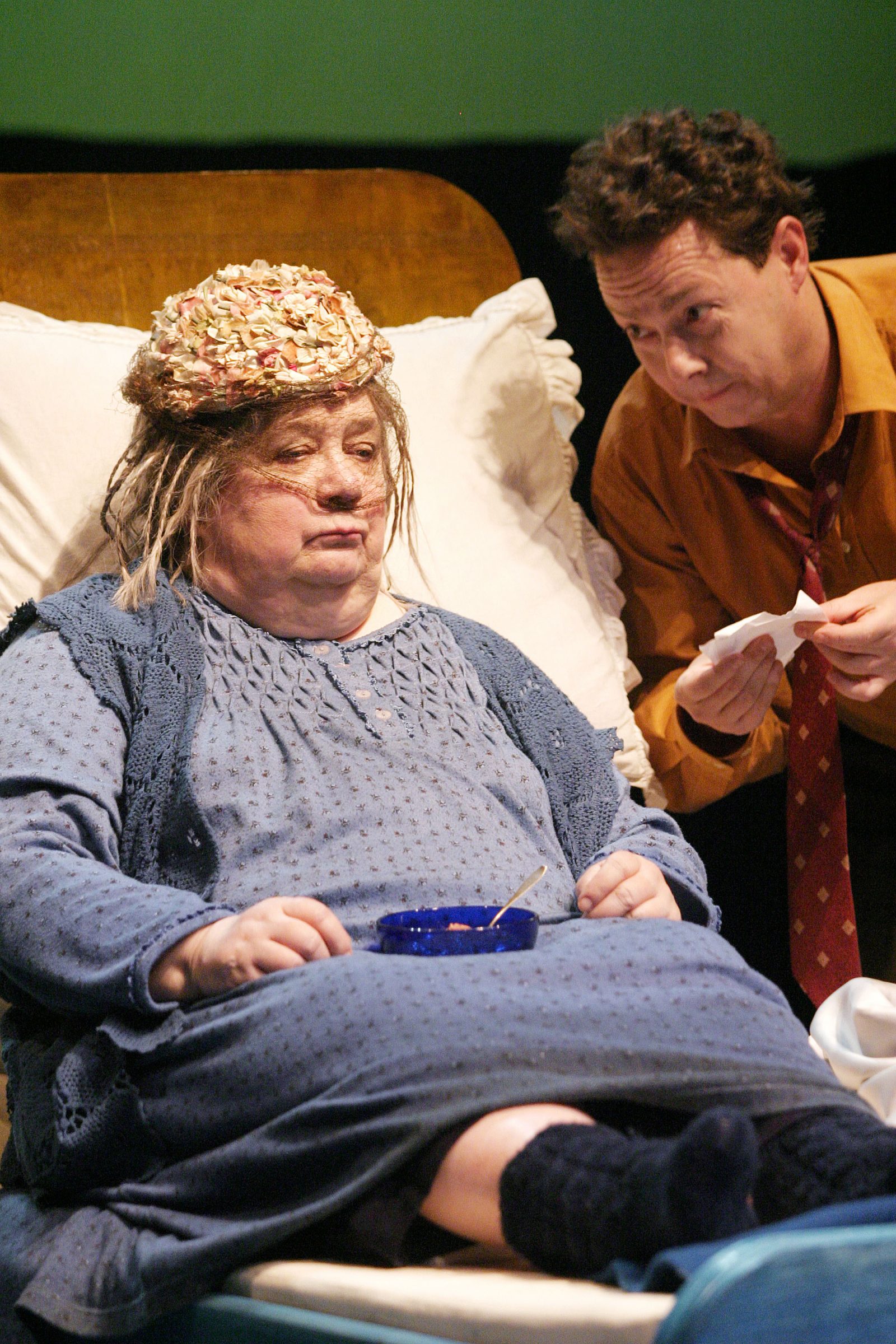
Täti ja minä
Note: No longer in repertoire!
Cast: Ritva Valkama and Jouko Klemettilä
Translated and directed: Raila Leppäkoski
Set and costumes: Jyrki Pylväs
Lighting design: Kari Leppälä
Sound Design: Kirsi Peteri
Accessibility tools
AI-translated page—pardon any small errors!
Note: No longer in repertoire!
Cast: Ritva Valkama and Jouko Klemettilä
Translated and directed: Raila Leppäkoski
Set and costumes: Jyrki Pylväs
Lighting design: Kari Leppälä
Sound Design: Kirsi Peteri
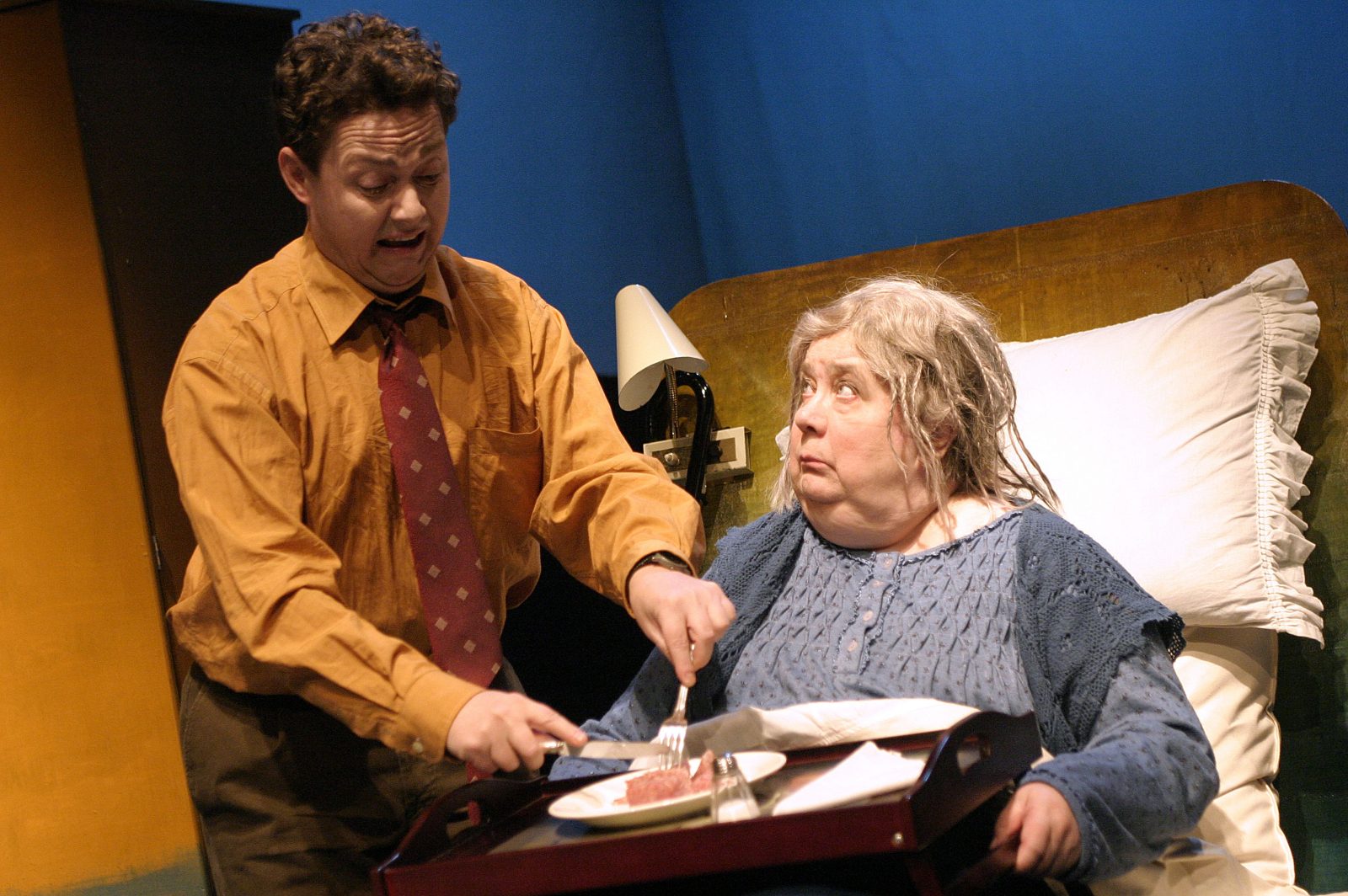
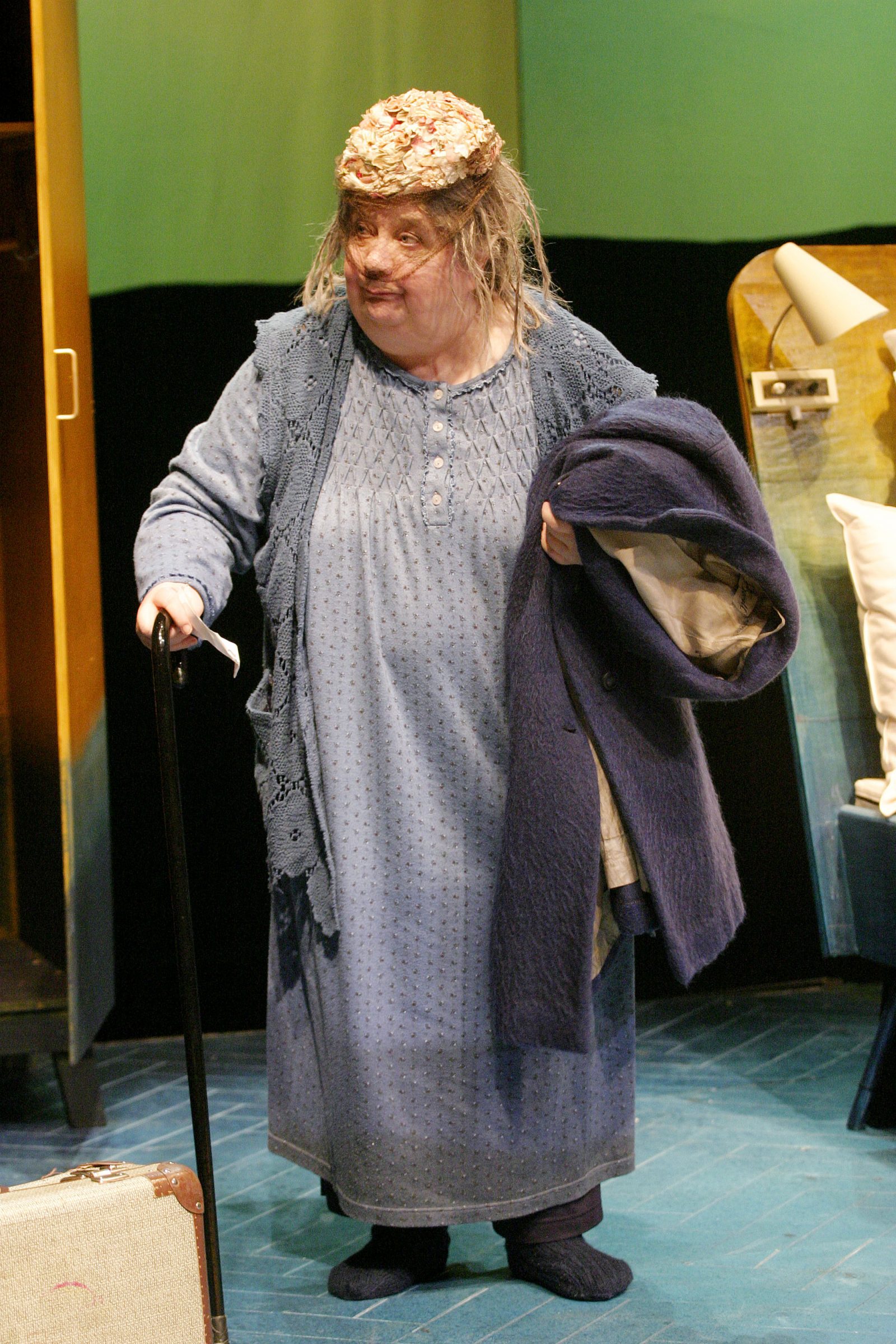
Rough but tender“I’ll guess how this will turn out,” said my colleague Morris Panychin during the intermission of the play Aunt and I . I already had the final solution in my head. We were both completely on the wrong track. Absurd, harsh and hysterically laughable in its brutality, it ended so sweetly tenderly that it was not only us middle-aged women who had a drop in the eyelid. The performance on the Elsa stage at the Helsinki City Theatre is definitely worth seeing, also because of the excellent actors. Ritva Valkama is absolutely incredible as a decrepit aunt and Jouko Klemettilä is brilliant as a greedy nephew. And a special thank you to the set designer for the joyful euthanasia machine! Warning: serious people, absolutely avoid this spectacle!
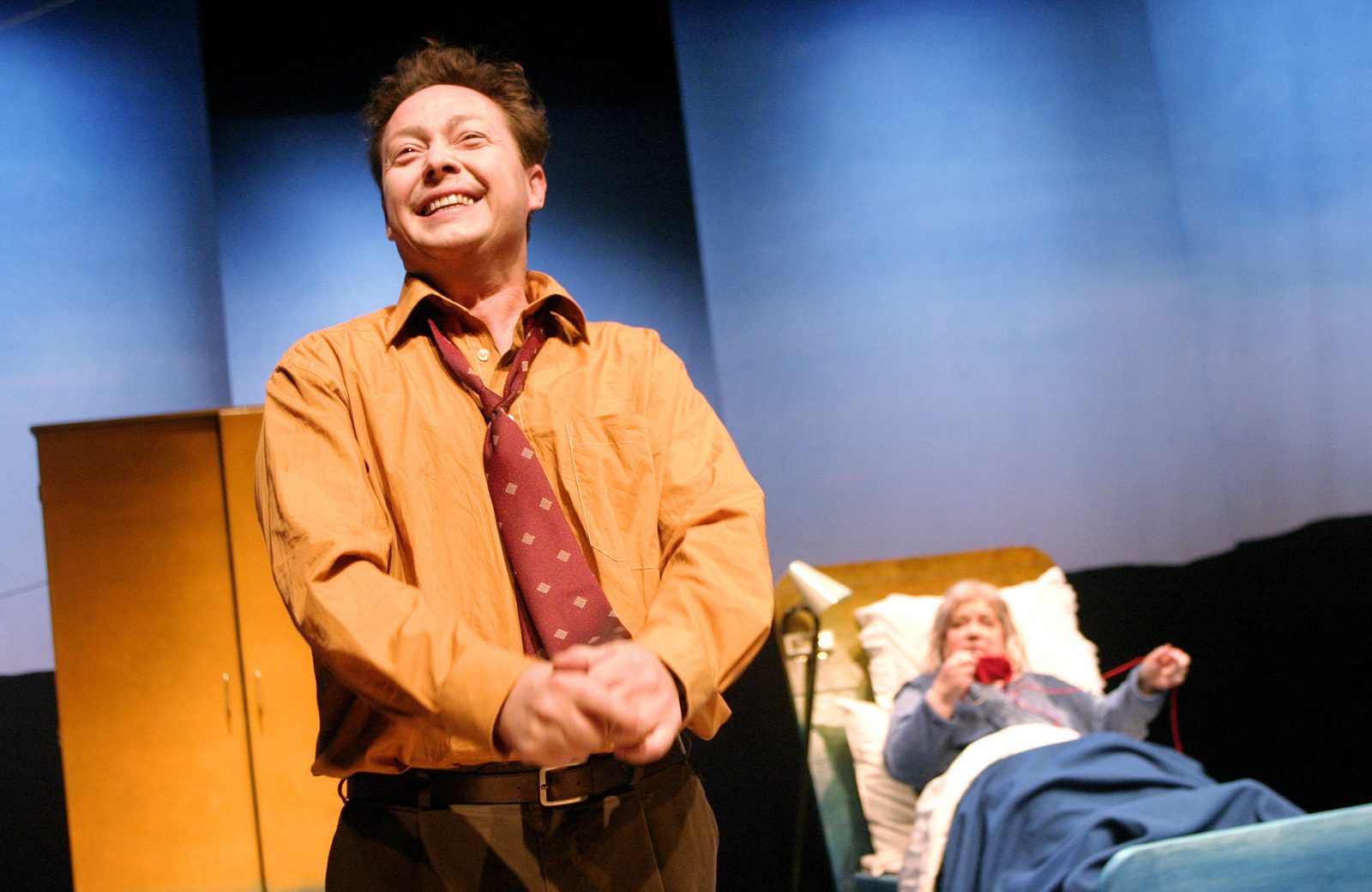
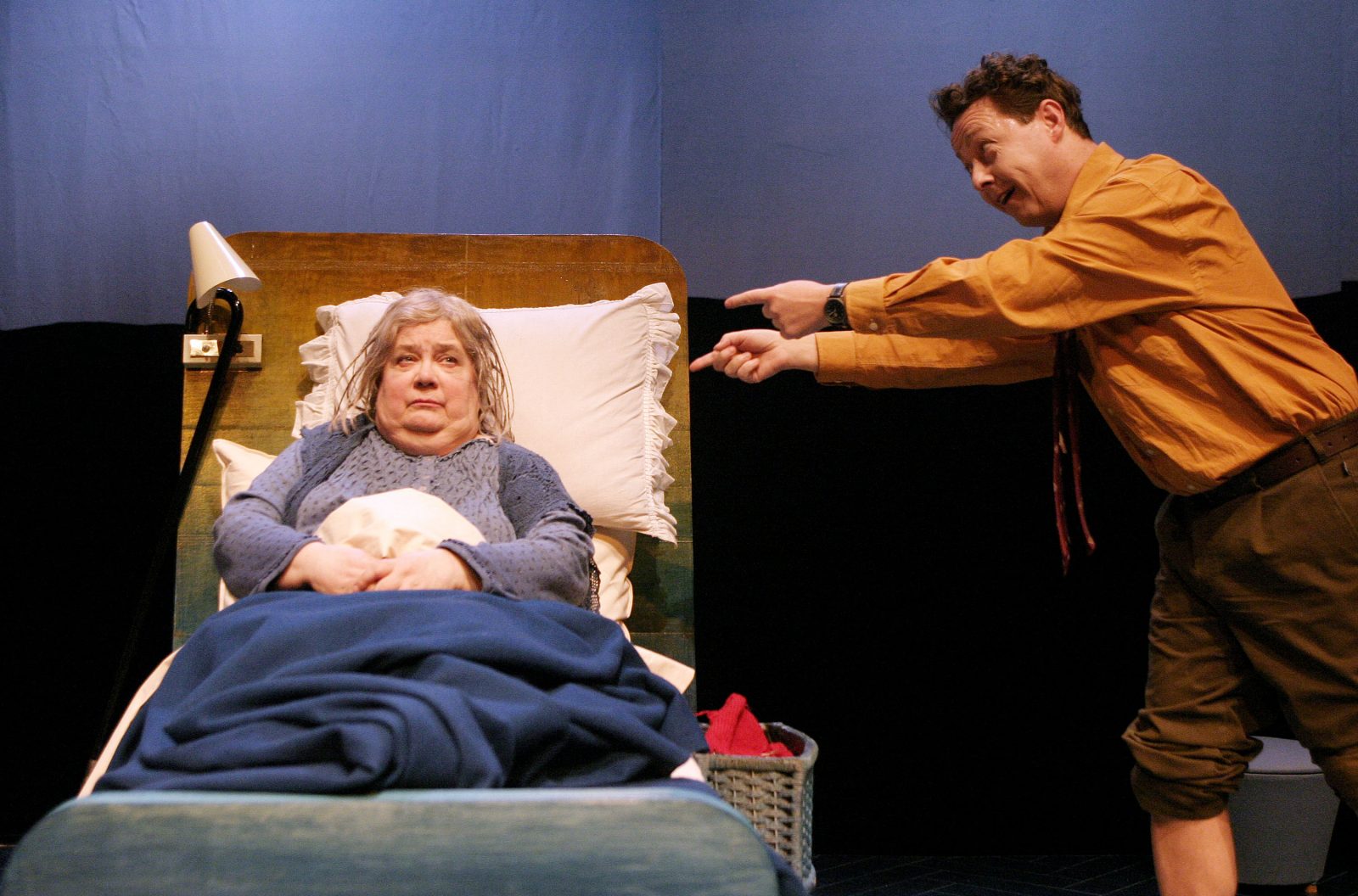
Read moreWHY ISN’T MY AUNT DYING ALREADY? Morris Panych’s play Aunt and I, directed by Raila Leppäkoski, highlights topical and important themes: loneliness, general indifference and the death that approaches us every day.It is not customary to talk about death, not always even when a serious illness makes it likely. The aunt in the play has decided to cross the relationship that has been chilling for years and has sent a letter to her nephew telling him that death is approaching. The nephew packs his suitcase and sets off on a journey that hopefully won’t be long, as his aunt is already checking in, as it were. Panych approaches painful questions with black and light humor. At the beginning of the play, the sketches and jokes are short, and the lights are turned off every now and then. The aunt’s weave grows, but death doesn’t come. The nephew starts to get nervous and arranges a funeral. The thought of hastening death is already on my mind. After the intermission, the scenes become longer and the emotions come into play better. The nephew’s background also begins to become clearer and compassion grows. Jouko Klemettilä is gorgeous, physical and wonderfully neurotic in his role as Kemppi. Maybe it would be refreshing to get into a different type of role after that?
Read moreHILARIOUSLY ON A SERIOUS TOPIC The importance of an actor’s charisma is emphasized in the chamber comedy directed by Raila Leppäkoski at Studio Elsa.
Read moreVALKAMA AND KLEMETTILÄ KNOW HOW TO TAKE THEIR AUDIENCEBlack humour bites firmly in the City Theatre’s two-person play Canadian Morris Panych’s play Aunt and Me (1995) is an exciting case. As the name suggests, there are only two people in the play: an elderly man who lives alone at home and a younger man who is eager for an inheritance. We don’t get to know much about the first, the second one unravels his strange life even more. Despite the strange setting, the characters feel close from the start, even if the viewer does not find any direct connections between them and their own lives.
Read moreAunt Hiljainen and Poju Pohelias bring theatrical joy Ritva Valkama is such a strong theatre brand that when her name appears on the cast list of any play, the performances are immediately sold out for the entire season. However, the theatre does not have to ride on the name alone, as Valkama’s acting is still diamond. Retirement has not extinguished the fire of doing things to the fullest. Canadian Morris Panych’s black but not dark comedy Aunt and Me is like it was written for an actor like Valkama. The role of an elderly aunt requires charisma and the skill of wordless acting. Valkama has plenty of qualities to share with others, and so he does: generously but with small means to share his brilliant expertise with the audience. When an actor like Jouko Klemettilä , saturated with elasticity, bubbles up as a counterpart in Studio Elsa, it would create a theatre that can be enjoyed even from a slightly more modest pen, but to top it all off, Panychi’s play is cleverly captivating even as a text. It is at the same time hilarious and mind-blowing in its absurdity, but also touching. And when the viewer is momentarily moved into a state of emotion, then suddenly the text hook explodes from the back left and we are in a completely different emotional state, with a curved face, i.e. a grin or a smile. Me yourself The basic pattern of Panych’s story is clear. A relative stumbles into the apartment building home of a lonely elderly person, whose actions are not guided by love of neighbor and a vocation to volunteer with the elderly, but by sheer greed, a desire to get hold of the supposed inheritance money. The old lady is bedridden and speechless, while the young man is all the more mouthy and lively in a mouse-like manner. The title of the play is also apt in the sense that Kemp, who was neurotized by the tricky family relationships of his childhood, is indeed one Self. He talks about himself incessantly. He is self-loving, self-sufficient, self-loathing and almost self-destructive. He is not very interested in his aunt’s life, only an encounter that has been loosely remembered from the haze of memories is worth noting, and even that is tinged with bitterness. Kemp is even more interested in his aunt’s death, but his mother is a resilient kind of person, and the rooster’s visions of the future do not want to come true, even though she tries to help the aunt to sleep peacefully. I’m about to get a kick in my own ankle for the worst time. And then Panych’s text makes a sudden braking and u-turn and no more than that, so as not to spoil the joy of future viewers. Silence art A couple of years ago, Raila Leppäkoski directed his own play Two Primates at the Group Theatre, in which silence was golden. It was practically a stage version of a silent film: Martti Suosalo pulled through the father/son roles with facial expressions and body, Iiro Rantala with the role of the neighbour on the piano. Not speaking is also an essential part of the play Aunt and I, and Leppäkoski has this demanding element of performance in his possession. Well, he has as good a game as Valkama as a “tool”, so it’s no wonder that things are going smoothly.Even though Elsa’s stage space is a bit dreary for a chain of events that is condensed into one small apartment – Jyrki Pylväs’ set design doesn’t make it much more compact, but Kari Leppälä’s lights are – the cooperation between the director and the actors achieves a strong intensity that sometimes grows to claustrophobic proportions. The actors have already been praised with many kinds of quality words, but it must be said that Valkama and Klemettilä’s ability to reach each other on stage when playing people who are a few light years away from each other is thrilling to watch. Listen, chemistry, physics and all other areas of the natural sciences meet in a way that brings us joy and upliftment.
Read moreVALKAMA AND KLEMETTILÄ AT THE GATES OF DEATH Aunt and Me is a tragic story. The main roles are played by endless loneliness, anxiety, death and, above all, the expectation of death. But when tragedy is black enough, it turns into comedy. Aunt and Me is the art of virtuoso actors. At Studio Elsa, we have two virtuosos. During the entire performance, Ritva Valkama utters only a few lines, but his facial expressions and gestures tell us things that words they wouldn’t even be able to tell. Jouko Klemettilä is a chatter waiting for his aunt’s death, Judging by it, it’s been a horrible childhood. (“Dad knew when he was going to die, he said, now I’m going to die, and shot herself,” “Mother always dressed me in girls’ clothes, she never forgave me for not being a girl.”)Klemettilä asks her aunt how she would like her ashes to be stored. He measures the aunt’s width and length to buy a chest of the right size, but Winter turns into spring, spring into summer and autumn, but there is no death. The script for the play Aunty and Me forbids revealing the plot to future viewers. Not revealed, although the story is a bit predictable. However, let me tell you that Valkama is an old lady lying in bed. He is more or less sick. Klemettilä is a nephew who has come to To make a will. Both the old woman Grace and the middle-aged man, Kemp, are infinitely lonely people who have fallen out of their lives and have no one – except each other, but they don’t notice that either, at least not Kemp.Grace is silent so as not to reveal anything by talking, she does reveal but Kemp is too full of himself and his speech to notice anything. Kemp has probably never been allowed to talk as much as Grace’s at the sickbed. He rewinds his miserable life without the “highlights” any kind of sentimentality, externally just to fulfill silence.Klemettilän Kemp is like a durasel bunny at first, but the pace slows down. Just when he senses a touch of love, it disappears… Simplified hard Beautiful theatre The author of the play Aunt and Me is Canadian theatre man Morris Panych. In the 1980s, he has made unfashionable social cabarets and musicals, but they were successful. Probably thanks to the macabre humor.Morris Panych’s texts have been described as absurd, but Aunt Panych, for example, And the self is no more absurd than human life in general.Morris Panych has directed dozens of performances and acted in even more. He hasn’t said no to TV roles either. For example, in Secret Folders He has been seen, probably as some kind of freak. My aunt and I are so exciting that I would like to see more Morris Panych’s plays.Panych makes simplistic, intensely beautiful theatre where humour is black as night and which demands a lot from the actors. And the play doesn’t need megalomaniac height. Two hours with intermissions is enough to tell story “to the dead and to those who have not yet reached the far,” as the author himself says. Raila Leppäkoski has directed and translated the play Aunt and Me into Finnish. He is clearly committed to it, and the result is in line with that. Excellent.
Read moreA SWEET LAUGH AT DEATHThe humour doesn’t get much blacker than this in large institutional theatres. Aunt and I talk about death in such a tone of voice that any kind of wisdom with the truths of life feels superfluous afterwards. However, the end here will come sooner or later, theorizing life will not help with that. The best thing to do is just accept the facts and start booking a burial place soon.Well, not now. Although the black humour in the play is harsh, the laughter is liberated. Carnivalization of life’s greatest realities, which often feel cold, is always in order. At the expense of death, you can, can and must have fun when we don’t even know for sure what will happen to us in the end.The tragicomic reckoning play that takes place in one room demands a lot from the actors. Ritva Valkama as the quiet Aunt Grace and Jouko Klemettilä as the even more talkative Kemppi are able to be lovable and also interesting, even though not much happens in the play. However, small actions are frenzied enough.The story is certainly not complicated. Forty-year-old bank clerk Kemp wants to escape his own life and comes to lay his dying aunt Grace to rest. However, the elderly person turns out to be a surprisingly persistent case. A year passes, during which both people open up in their own way about important and less important things.The tranquillity of the afterlife seems to stem above all from boredom with the current conditions. Still, it would perhaps be more pleasant to leave together than alone. Kari Leppälä’s lighting design and Iiro Rantala’s piano music add to the story’s wonderful sense of timelessness. Real moments arise on stage, which are sometimes fast, sometimes slow. Some of them are more memorable, others less so, but sadness and hope are always present.When a black comedy is made well, as in the Helsinki City Theatre, there are not only funny characters and downright therapeutic dialogue, but also self-deprecating features.Personally, I would like to see that Aunty also laughs, albeit quite cautiously, at the play’s crew, the entire large institutional theatre and the spectators who have come to the scene. The Death Joke extends to such tired conservatism and the eternal idleness of a short life in general. Why are we here when we could be somewhere else?What makes the Nordic premiere interesting is precisely how it approaches the naturally tragicomic essence of life. However, they do not want to go extremely far in stirring up a total atmosphere.As expected, the performance mainly stays within safe theatrical conventions, which is most clearly indicated by the epilogue-like summary at the end. Someone may still be left wanting to tear down the boundaries more drastically.On the other hand, the controlled interweaving of controlled chaos also allows for a catharsis that feels pure. The laughter at death is sweet.
Read more