History of Helsinki Dance Company
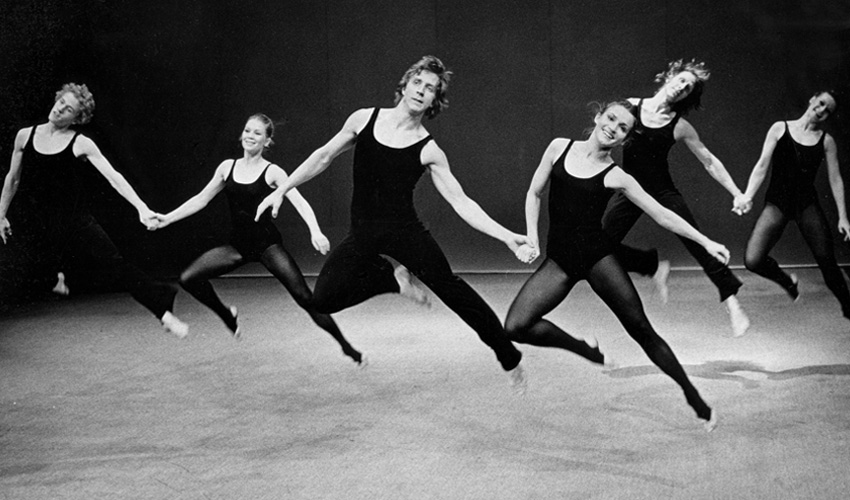
The story of Helsinki Dance Company began in 1965 when the Helsinki City Theatre was founded, when the theatre started the Theatre Dance School, a training programme for 25 dancers. The dancers mainly performed in musicals, and their choreographer was Heikki Värtsi from 1965 to 1968.
The next step towards a more independent dance group was taken in 1969, when the Helsinki City Theatre Dance Association was founded. Officially, the dance company of the Helsinki City Theatre is considered to have been born in 1973, when six dancers (Tuula Hyyryläinen, Maisa Savolainen, Lauri Lehto, Kari Rautsi, Marjatta Jaatinen, Arja Hakala) and dance master Seija Simonen were attached to the company on fixed-term contracts. Simonen was succeeded as a dance master by Maj-Lis Rajala from 1977 to 1982. Liisa Priha, who worked as the dance group’s choreographer from 1975 to 1982, was responsible for the planning and choreographies of the theatre’s dance programme.
Jorma Uotinen started as a dance master and choreographer for the Helsinki City Theatre’s dance company in 1982. During Uotinen’s tenure, the dance company’s activities became independent and grew its reputation abroad as well. Uotinen aroused enormous interest among both the press and the public, and a new era was about to begin. Uotinen managed to separate the group from the other activities of the theatre into its own unit. In the early 90s, the title of Dance Company Leader was introduced. Uotinen’s directorship continued until 1991, and his notable works included the popular Kalevala, Piaf Piaf and Cats.
Uotinen was succeeded by dancer and choreographer Carolyn Carlson, during whose leadership in 1991–1992 the company’s reputation continued to rise through international touring. Carlson created two choreographies for the Dance Company, Who Took August and September.
The dance company was awarded the State Prize for Dance in 1992. In the same year, Marjo Kuusela started as the leader of the group. During his term from 1992 to 1995, works by several guest choreographers were seen. During Kuusela’s season, the dancers also had the opportunity to try making their own choreographies. An example is Harri Kuorelahti’s and Ville Sormunen’s Do You Sleep Mr. Sandman?
During Kenneth Kvarnström’s term as director (1996–1998), the activities of the dance company changed so that the dancers operated as their own independent group and no longer performed in theatre and musical productions. This gave the group the opportunity to tour more freely in Finland and abroad.
Dancer and choreographer Ari Tenhula was the leader of the group from 2000 to 2002. Before Tenhula’s tenure, the dance group was visited by many foreign and domestic choreographers, such as Örjan Andersson, Tero Saarinen and Anzu Furukawa. Tenhula also wanted to increase the group’s international touring activities.
In 2003, the English dance choreographer Nigel Charnock, who had already been a guest choreographer during Tenhula’s term, was invited to lead the Dance Company. Charnock led the group until 2005 and created eight works for the group that emphasized physicality, acting and singing in addition to dance. At the beginning of Charnock’s term in 2003, the name of the internationalizing group was changed to Helsinki Dance Company.
In 2006, the company’s long-time dancer Ville Sormunen, who had also worked as the director’s assistant during Charnock’s tenure, took over the management. During Sormunen’s tenure, the group had guest choreographers such as Andonis Foniadakis, Ina Christel Johannessen and Anton Lachky.
Kenneth Kvarnström returned to the leadership of the group for 2010–2012.
During Jyrki Karttunen’s 2013–2017 season, the company was visited by several Finnish choreographers. The Repertoire also included many of Karttunen’s unforgettable and gentle humane works. During her time, children and young people were also taken into account in the programme. From 2017 to 2019, Karttunen worked as the chief choreographer.
In October 2020, dancer and choreographer Antti Lahti started as the leader of the dance group. During her term, the development of cooperation with various groups and organisations and the extensive utilisation of dancers’ professional skills in theatre productions have been emphasised.