The Colonel’s Tongue, Meänkieli
The title character of the play The Colonel tells the audience his life story in Meänkieli. But is the language form spoken in the Torne Valley a pure dialect or is it really its own, independent language?
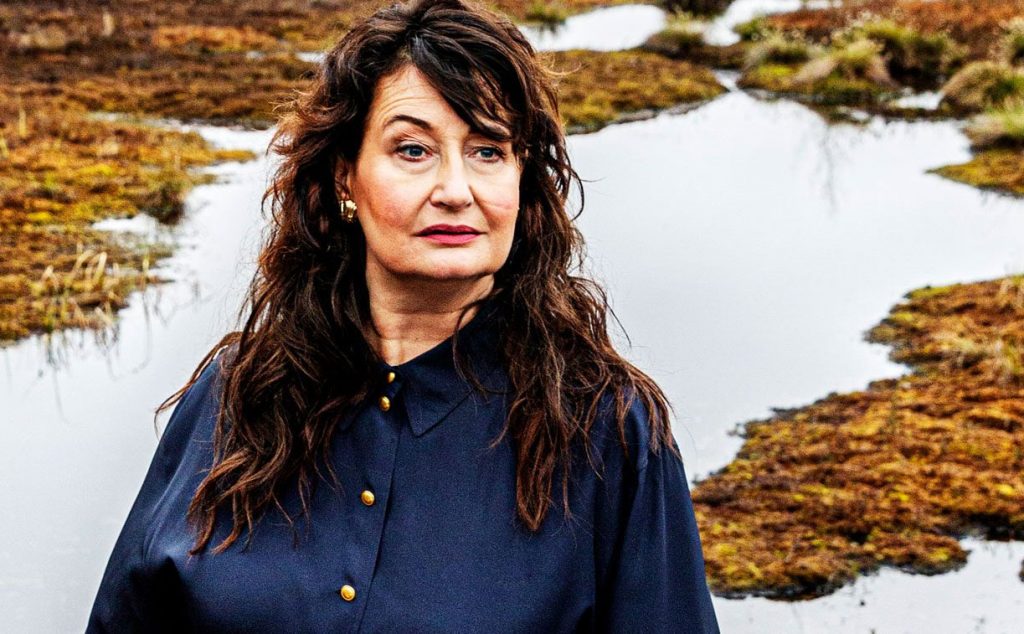
Born in Ylitornio, the writer Rosa Liksom wrote the novel The Colonel in her native language, Meänkieli.
Meänkieli is spoken in the Torne Valley on both the Finnish and Swedish sides. It has a very different status in neighbouring countries: on the Finnish side, it is a dialect of the Finnish language, which belongs to the dialects of Ostrobothnia, and on the Swedish side, it is an official minority language.
Language or dialect?
If Meänkieli is examined from the point of view of linguistic criteria, it is not classified as a language of its own, but as a dialect of the Finnish language, because the speakers of Finnish and Meänkieli understand each other well.
The situation changes if political criteria are weighed instead of linguistics. In this case, Meänkieli defends its position as a language that is a separate part of the identity and culture of its speakers.
Meänkieli began to separate from Finnish in 1809, when Finland moved from Swedish rule to Russia. The border was drawn through the Torne Valley so that a large number of Finnish speakers remained on the Swedish side. Over the years, Meänkieli, which is spoken in Sweden, has borrowed a lot of words from the Swedish language and retained in everyday use old terms that have already disappeared from the dialect spoken in Finland.
For decades, Meänkieli was allowed to live and develop in peace in northern Sweden, and the schools in the area initially provided instruction in Finnish. The situation changed at the end of the 19th century, when there was concern in Sweden that the Finnish-speaking population would be unnecessarily in solidarity with Russia in a possible conflict situation. The idea of a Greater Finland, which reared its head after Finland’s independence, did not diminish the Swedes’ suspicion of the Finnish language. It was decided to eradicate the Finnish language from Swedish territory.
In Sweden, similar methods were used to Swedishise the Mäki-speaking population, which the Finns applied to the Sámi until the 1970s: all education was given in Swedish, and only Swedish could be used at school under threat of punishment. Some of the children were even isolated from their families for the duration of the school weeks in workhouses, where speaking Finnish was of course also forbidden.
Despite the Swedishisation, Meänkieli remained the home language of many families. The Second World War extinguished the idea of a Greater Finland, in the 1950s the Swedishization measures were discontinued, and in the 70s, the Finnish language was restored as a school subject in northern Sweden. At this point, the problem was encountered. The written Finnish language proved to be almost impossible to teach to children who had learned a strong dialect at home and had no contact with the standard Finnish language in their everyday lives.
The problem was solved by teaching the children the language form they had grown up to speak at home instead of standard Finnish. The grammar of Meänkieli was built according to the spoken language. For a Finnish-speaking reader, a factual text in Mäki may seem strange at first with its mie and sie forms – while the written Finnish literary language differs significantly from the dialectal spoken language, the written Meänkieli faithfully repeats the forms of the spoken Meänkieli.
Does Meänkieli have a future?
Meänkieli was granted the status of an official minority language in Sweden in 2000. It is one of Sweden’s five official minority languages, along with Finnish, Romani, Sámi and Yiddish. In Swedish legislation, Meänkieli is thus counted as a different language from the Finnish that Finnish immigrants later brought with them. Speakers of minority languages have the right to use them when dealing with the authorities and to receive education and treatment in them.
Despite its official status, the future of Meänkieli seems uncertain.
On the Finnish side, the Torne Valley dialect is alive, but the differences between the dialects of the Finnish language are constantly levelling out. On the Swedish side, Meänkieli is disappearing. Efforts are being made to maintain the language skills of the young generation through various language immersions and projects, but most of the estimated 30,000 speakers of Meänkieli have already reached retirement age.
The aim is to keep Meänkieli alive through cultural means, among other things. Sveriges Radio broadcasts several programmes in Meänkieli every week, and Tornedalsteatern – Torne Valley Theatre, which tours northern Sweden, combines Swedish and Meänkieli in its performances.
Author Bengt Pohjanen published the first novel in Meänkieli in 1985 and, in addition to his own works, has translated children’s literature as well as parts of the Kalevala and the New Testament into Meänkieli. Rosa Liksom’s best-selling work The Colonel and its stage adaptations are currently making the language even more well-known in the south of the Torne Valley.
Siiri Liitiä
Learn more about Meänkieli
- What does Meänkieli sound like? Meänkieli activist Daniel Särkijärvi tells in a short video what Meänkieli means to him
- News about Meänkieli in Meänkieli on the website of the Swedish Association of Torne Valley Residents
- Meänkieli–Finnish/Swedish dictionary