The monologue expands on the themes of the classic work
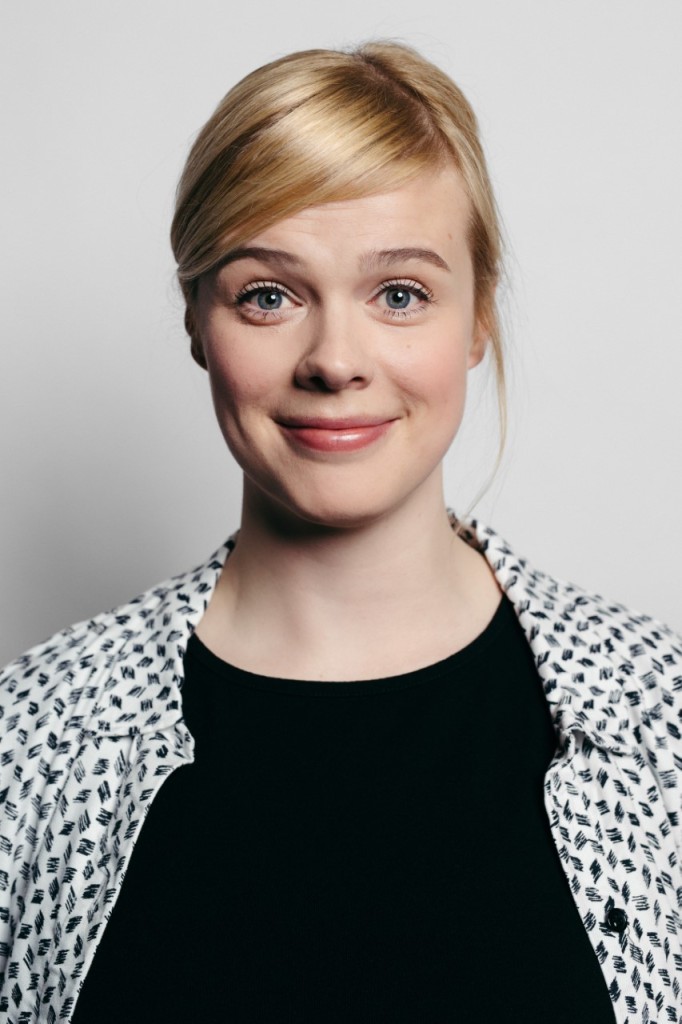
“A classic work gives permission for new kinds of interpretations and the exploration of new perspectives, which the audience mirrors against the already familiar work,” says Riikka Oksanen .
In the performance, an actress named Minttu arrives to rehearse a monologue based on Märta Tikkanen’s work. To her surprise, an audition audience invited by director Raffe awaits her in the auditorium. Raffe, on the other hand, is nowhere to be seen, and soon Minttu begins to receive strange instructions via text messages.
“Since this is a monologue, it felt important to find a clear direction for the performance, and some external factor that would put pressure on the stage,” Oksanen says.
Her and Aino Pennanen’s stage adaptation coexist an open and direct relationship with the audience and an immersive fictional reality when we are in the world of Märta Tikkanen’s text.
Oksanen and Pennanen took turns writing the text and specified the direction of the performance in the discussions that took place after each version. “We have done many performances together, so the cooperation is extremely organic and flexible,” Oksanen says.
Minttu Mustakallio also read and commented on the manuscript along the way. At the first meeting of the trio, it was considered whether only Tikkanen’s work would be used in the monologue or whether it would also include text by Oksanen and Pennanen.
“Minttu was excited about the idea that the entire performance would not be built solely on Tikkanen’s material. Minttu’s vision is extremely important to us, and she has provided great insights and ideas for the performance,” Oksanen says.
The germs of the “meta-level” that runs alongside Tikkanen’s work were thus already sown at that meeting, but the final form also surprised its creators. “In a good way, it’s something completely different from what we imagined when we first started the dramatization process.”
“Now comes something that is valuable to see. The big problems in a relationship are dealt with in a wise, interesting and sometimes even defiant way. I encourage people to go to the theatre because its opportunities to influence people are so diverse,” Mustakallio says.
She is now acting in a play based on Märta Tikkanen’s work for the second time at Lilla Teatern. The previous play, Man kan inte våldtas , premiered in 2020.
MÄRTA TIKKANEN’S classic book Århundradets kärlekssaga , published in 1978, is based on the author’s personal experiences and describes her tumultuous marriage to artist and writer Henrik Tikkanen .
In Oksanen’s opinion, the work of poetry is a startling depiction of a family sickened by alcoholism and an unequal relationship in which one ends up supporting and the other being supported.
Århundradets kärlekssaga also deals with the use of power and the suppression of another person’s agency.
Oksanen finds it fascinating to make visible how much power is used and the restriction of another person’s space in our society under different circumstances. The meta-level of theatre expands the theme of the use of power in Tikkanen’s work to include other than love relationships.
“It highlights the many different situations in which power is exercised and how used we are to being used to power being exercised over us.”
The meta level also brings a certain kind of comedy to the performance, which was important to the creators. “In order for the viewer to be able to sink into deep and gloomy moods, oxygen and air are sometimes needed.”
Oksanen considers Tikkanen’s work to be so immensely fine that bringing it to the stage is a privilege.
“Following Tikkanen’s example, we must be bold in how we deal with the themes of the work and what kind of stage language we build. We want to preserve the clear core of Tikkanen’s text. The one that makes people return to the text decade after decade.”
Text Ida Henritius