OÖ Nachrichten, 08.04.2011
Review
Karin Schütze
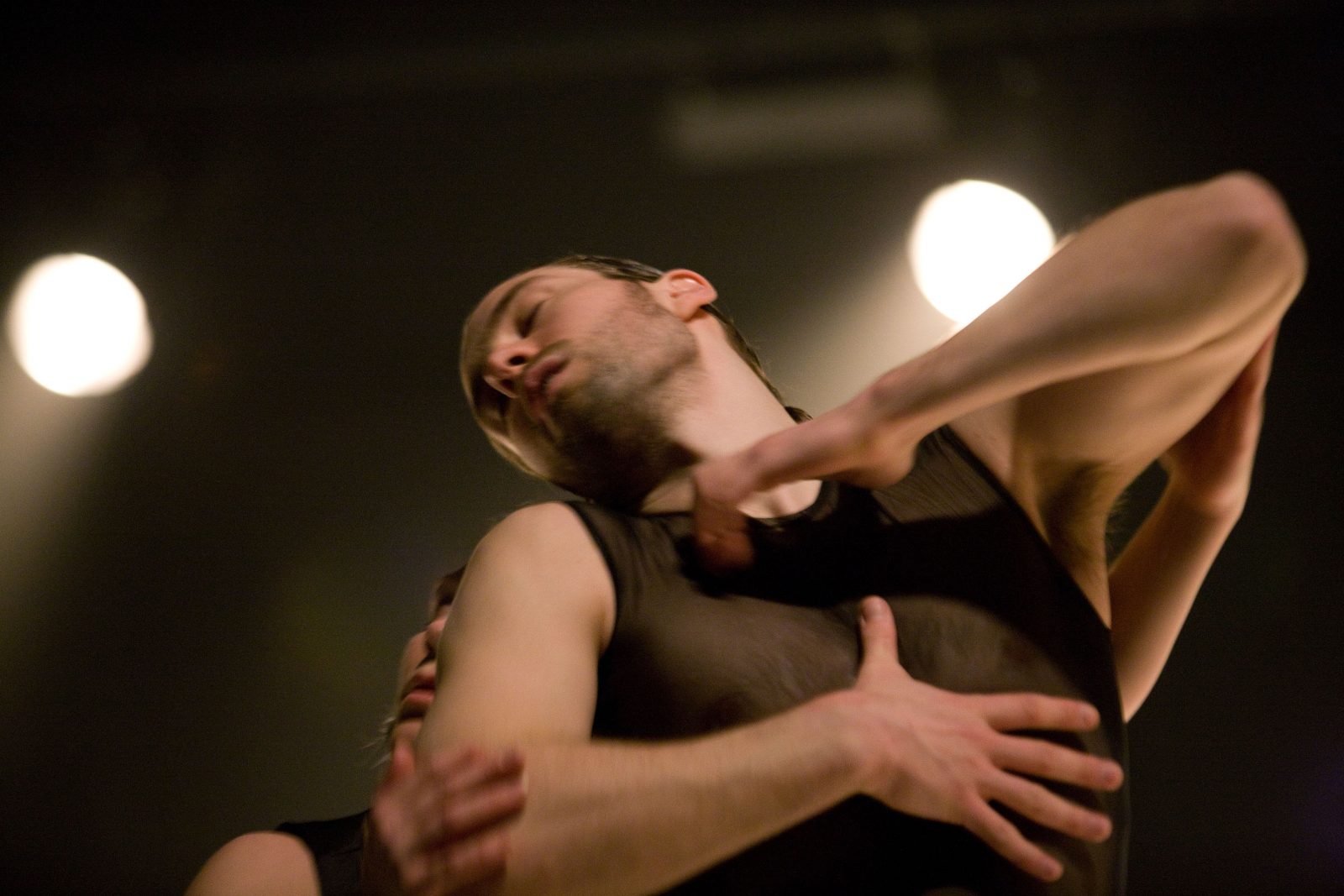
Dancing at your own limitsIn their work XPSD – Exposed – Helsinki Dance Company danced fascinatingly on the limits of corporeality on Wednesday at the Posthof Dance Days. Two dancers hatch from the twilight of the stage to the rhythm of thumping music, which monotonously pulsates and penetrates the auditorium, spreading something threatening there. One by one, all six dancers – four men, two women – appear. Not much seems to happen then. The movements seem calm but intense. Gradually, the movements begin to flow, as if the dancers had been caught up in an incessantly intensifying vortex. Like a danced crescendo that lasts about forty minutes. Forty minutes, during which almost every six dancers are on stage and in motion non-stop: A performance that requires top fitness and also takes the viewer’s breath away.
Fascinating aestheticsThe group’s synchronized movements, executed with incredible precision, the energy-draining duel parts with airy lifts, the floor parts – it is fascinating to see how the Finnish choreographer Kenneth Kvarnström uses the possibilities of dance and space with very small means and creates smooth transitions that ultimately have a great impact on the whole. Again and again, a reference to the Baroque way of dancing appears in the dancers’ harsh, broad steps, which could be descended from the court minuet. The flow of movements is more and more reminiscent of a flowing river, to which the dancers surrender. Physical strain is foreseeable and tangible. But even when the dancers are really approaching their limits, when they are completely “XPSD”, bare in front of their limits, fatigue in their movements is barely noticeable. What kind of endurance such a long-lasting, non-stop and intense movement required! And how dancers can remember all these steps and combinations! Each movement is like a thread in a carefully woven warp, there is no sign of improvisation. The aesthetics of the movements are fascinating, but the discipline of the dancers affects the viewer just as much. Can this go on for a whole hour? The crescendo must be followed by a decrescendo, a gradual return to the starting point. It can be seen in the stopped, danced encounters and human touches before the dancers disappear again into the darkness of the stage. Though only for a moment. The ecstatic crowd calls them out again and again with their venomous applause. An intriguing evening. (Translation: Multiprint Oy / Multidoc)
Read more
Svenska Dagbladet, 20101027
Review
Anna Ångström
Charged Effort that Gives Goose BumpsFinally! XPSD has landed in Stockholm after a tour with Riksteatern. Ever since the public got a sample of the piece during Parkteatern’s dance month, the moment has been much anticipated. And expectations are met – XPSD, created for Helsinki Dance Company and KKVarnström & Co., is just as good as the August trailer suggested it would be. Once again, Kvarnström, who had a strong comeback after his chief position at Dansens hus with the song Destruction in 2008, shows that he has a profound understanding of choreographic composition. Something that is no longer certain in a dance environment dominated by more experimental forms and performances.
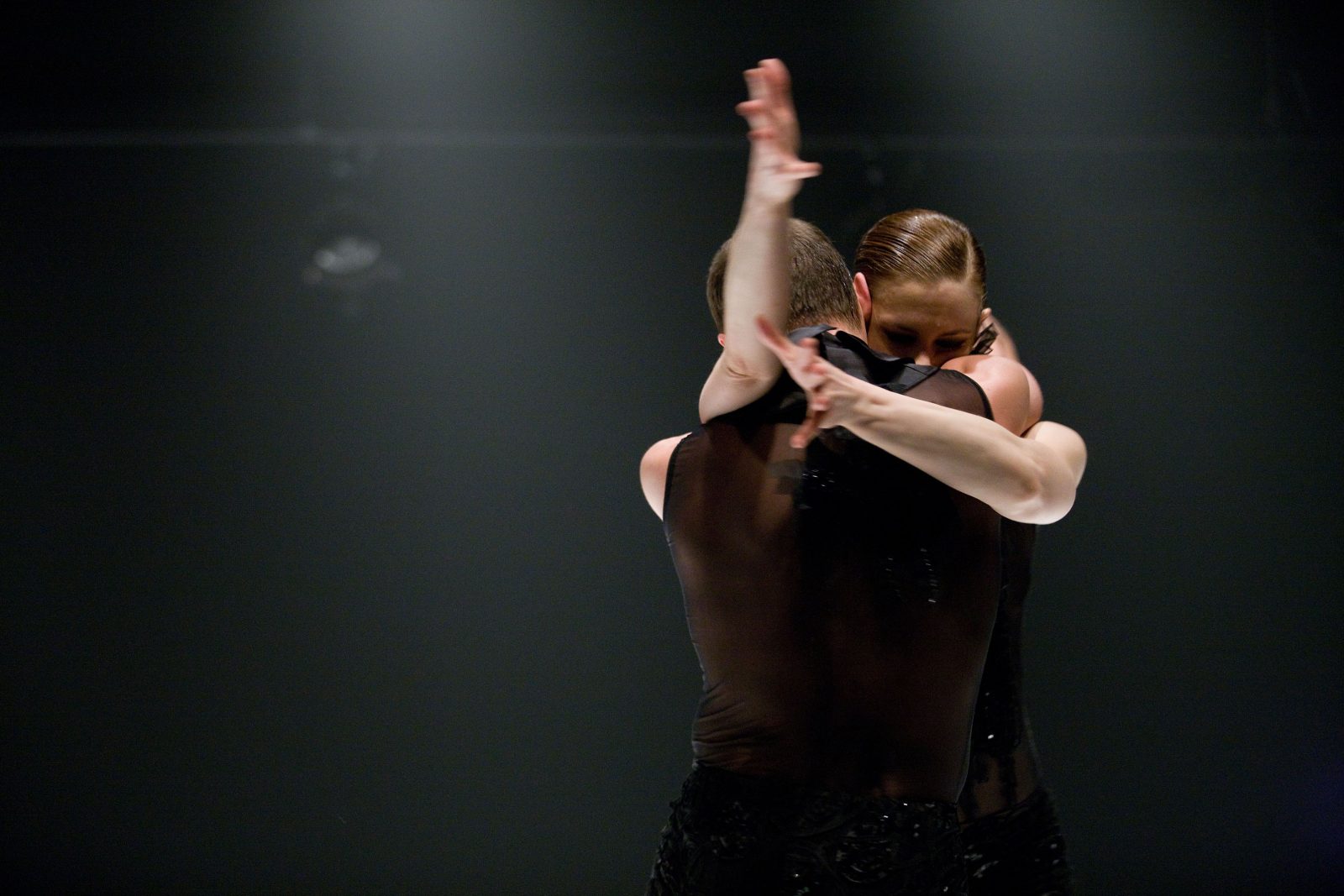
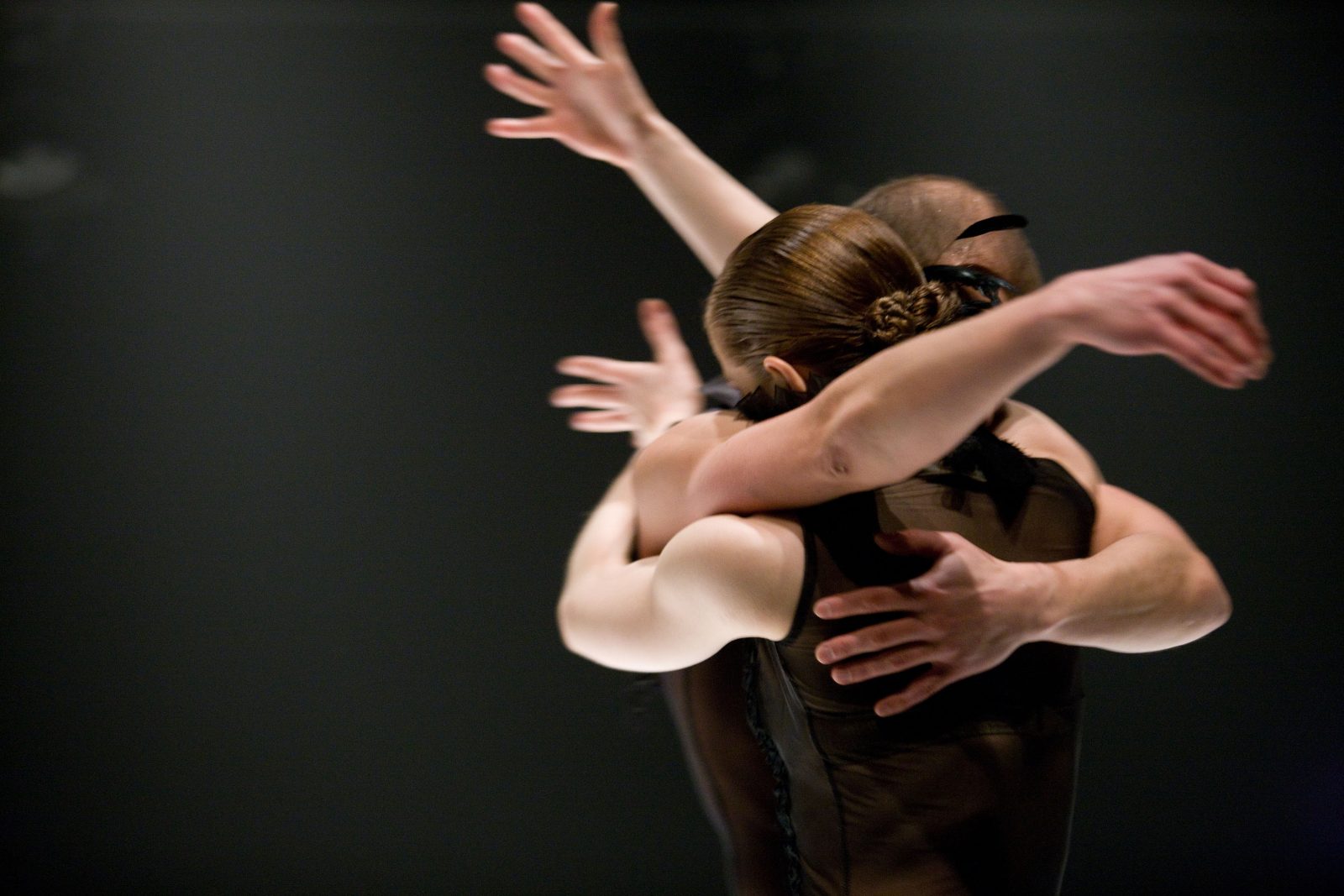
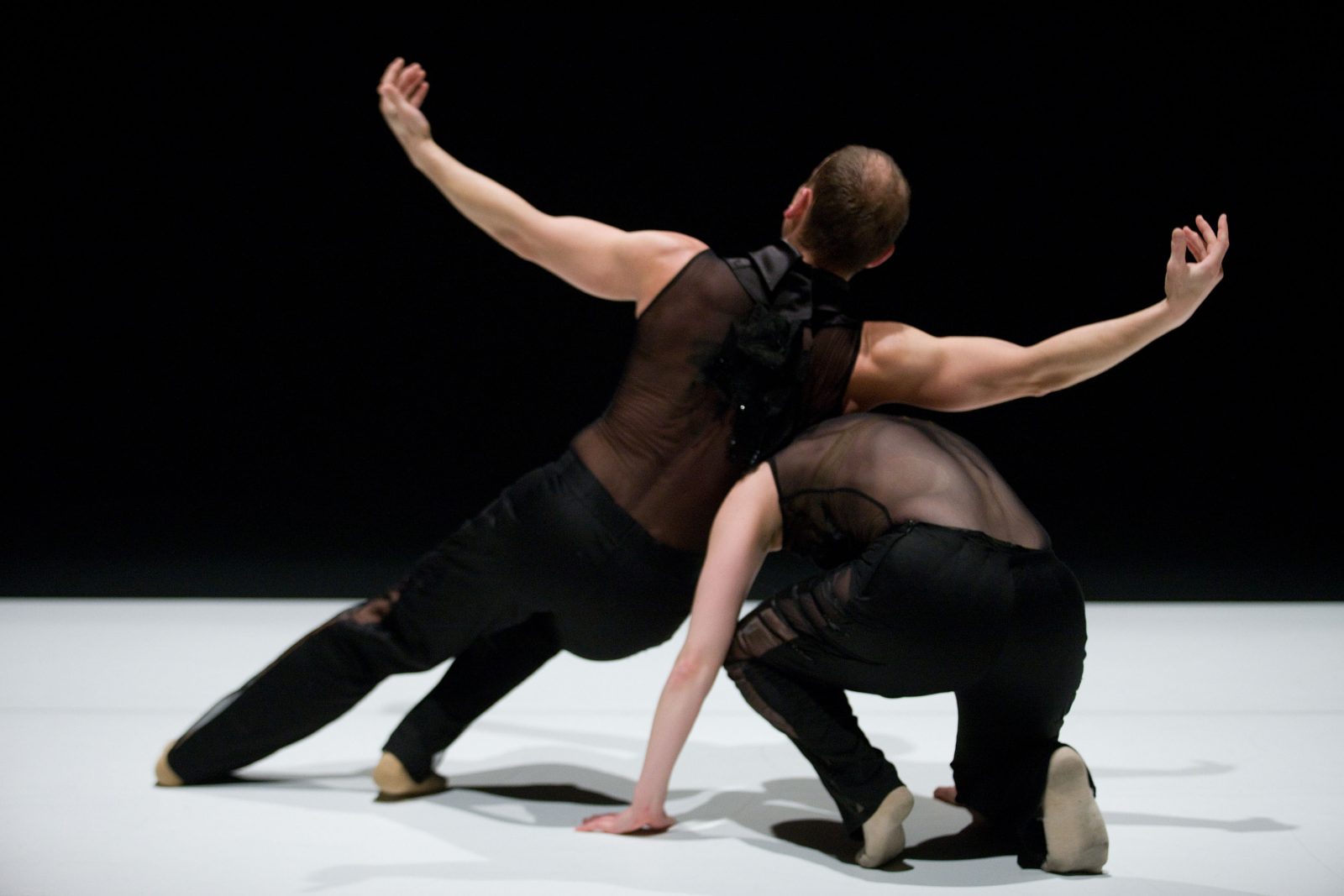
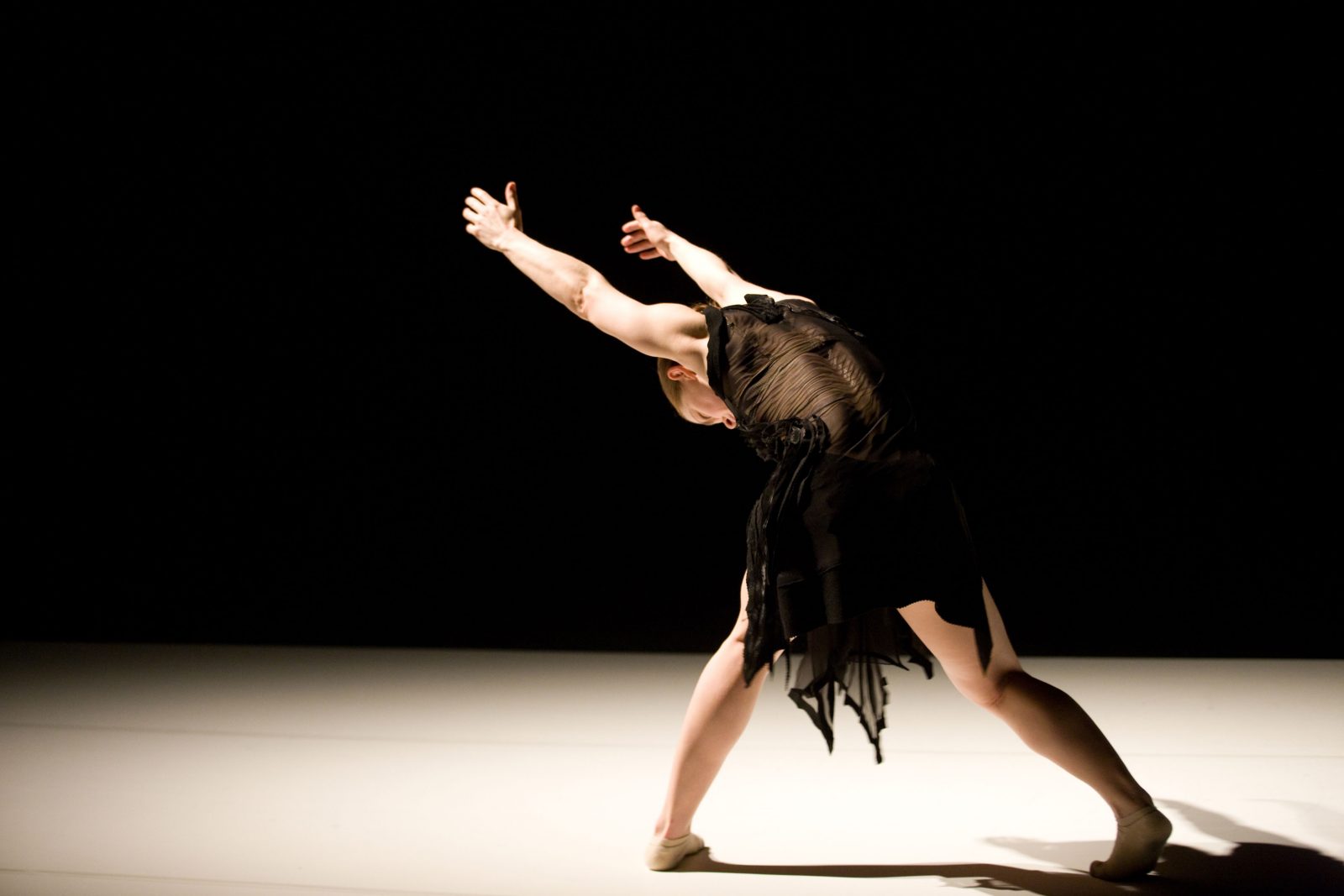
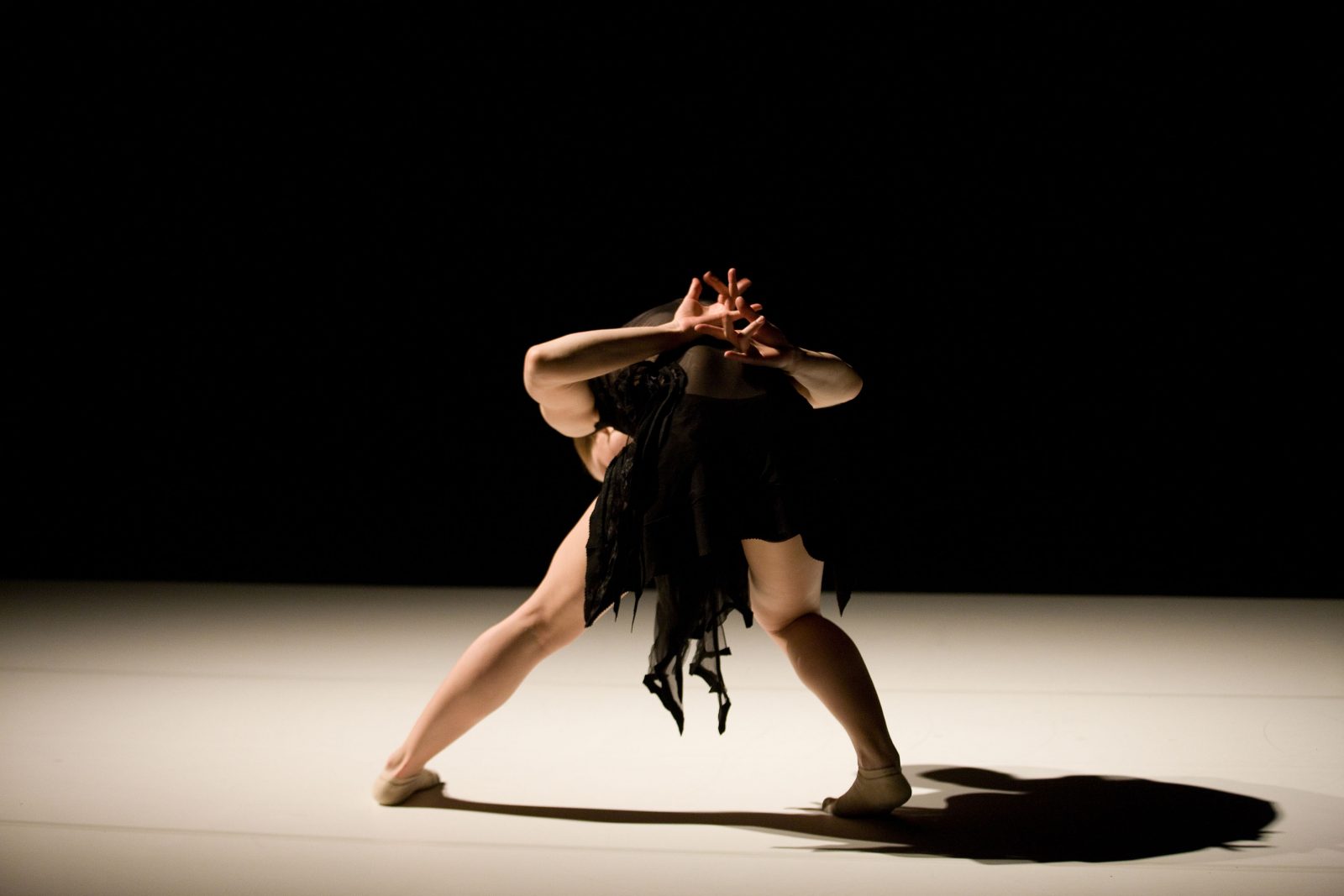
The room is carried away through the dancers and Vesa Ellilä’s light, which lets the bodies appear and disappear. Jukka Rintamäki’s music also contributes to an existential base tone; a raw pulse that dramatically increases with the tempo and layers of rings that create a complex web, before finally reducing to just an echo. Although the tinny base sound towards the end should probably be attributed to the speakers. The title’s play on letters is pronounced “Exposed”. The dancers are exposed to feelings, each other and to us in their transparent tops with high collars and hints of glitter. Erika Turunen designed a type of glam baroque that melts together with the choreography’s many intricate, mirroring variants of ensemble dances, trios and duets.
XPSD has two defined parts. First, the collectiveness it highlights. The six dancers form shifting patterns with synchronized movements, floor chain reactions with accents in their arms and hands. The gesture of their rib cage, as if they want to open themselves to the world, is recurring. As a contrast, they lift each other in elegant flows, a sensual interaction where genders are extinguished. The piece is full of chiseled “Kvarnströmania”, a distinctive and graceful power that, here, is mildly reminiscences of ballet and square dance. The form is repeated with increased intensity close to exhaustion. You can feel the burn, see the sweat fly in a surprisingly crazy drawn out crescendo.
After this repetitive exhaustion, individuals and relationships appear and the senses are focused. The duets twist and turn on tenderness, trust and weakness. Laura Vesterinen and Kai Lähdesmäki are incredibly present in a close death dance of dependency and submission, in which her strength finally leaves behind pain. There is an extreme charge in the nuances’ and dances’ relations to each other. Sofia Karlsson flies into the arms of the cavaliers, yet is suddenly left alone amongst turned heads. XPSD ends with a reverence that makes you want to bow back. It is dance of excellent quality, so characteristic of its creator and so fused by its interpreters that it gives you goose bumps.
Read more
Hannoversche Allgemeine Zeitung, 03.09.2010
Review
Stefan Arndt
An endless motion Unhurried, in the fast lane: Last evening, a performance by the Helsinki Dance Company kicked off Tanztheater International’s 25th anniversary celebrations. It couldn’t be better: A lone metal ring spins on the stage against the backdrop of motionlessness to kick-off the German premiere of Kenneth Kvarnström’s choreography “XPSD” at the 25th anniversary celebration of Tanztheater International. Once it’s spinning, the upright ring turns slowly, then it tilts, gathers speed and turns inexorably, until it lies motionless after a tired sigh; the stillness is the end. Kvarnström’s dancers from the Helsinki Dance Company dance with the same plan: the choreographer feels that a person’s real self emerges only after being pushed to the physical limits. However, this time Kvarnström, a regular guest performer with Tanztheater International and Movimentos for the last 10 years, expresses this belief gradually over the course of the piece: his dancers are slow and gentle in their movement. It’s an elegant continuity – once started, they flow effortlessly and the motion passes from one dancer to another: an endless motion. The music by the Finn Jukka Rintamäki goes well with the performance; it begins with metallic gasps like a leviathan machine and then creates an almost mechanical eddy that could probably carry the entire one-hour evening on its own. However, sometimes the flow stops all of a sudden. A dancer freezes, and then lets go of all control and falls in the arms of another. The dancer sometimes even appears to have acted the part and leaves the stage, expressionless. It seems at the time as if it isn’t the dance that’s difficult, it is the emotional stress. The interaction of the figures undergoes a constant and rapid change. The dancers form new groups repeatedly. The point at which their gentle closeness changes to unashamed violence is never clear. This passive splendour has been made possible by four men and two women. These athletic dancers raise the audience’s expectations with their very form: not elfin, but carry out the slowest moves at any time. The performance is an exhibition of open emotions, allusions to Baroque gesticulations sustained over long sequences in the act: the pairs (one of them being of the same gender) stand demurely against each other in two rows in the minuet. Collars eliciting historical fantasy on the otherwise body-hugging transparent tricots go on to further emphasise this aspect. Apart from these costumes by Erika Turunen, one searches for any excitement outside of the dance in vain: Kvarnström is a maestro at doing what he does best – use movement and its simplicity to tell tales that are thrilling and completely open all at once. All of this makes for an excellent kick-off to the anniversary show of the festival. Mayor Stephan Weil spoke highly of festival manager Christiane Winter, and the applause from the audience confirmed their appreciation of her. Winter feels that she’s been in the ‘fast lane’ with the festival for 25 years. This performance has actually demonstrated that deliberation and perseverance can also help in scaling such heights.
Read more
Hannoversche Allgemeine Zeitung, 20100903
Review
Stefan Arndt
An endless motion Unhurried, in the fast lane: Last evening, a performance by the Helsinki Dance Company kicked off Tanztheater International’s 25th anniversary celebrations. It couldn’t be better: A lone metal ring spins on the stage against the backdrop of motionlessness to kick-off the German premiere of Kenneth Kvarnström’s choreography “XPSD” at the 25th anniversary celebration of Tanztheater International. Once it’s spinning, the upright ring turns slowly, then it tilts, gathers speed and turns inexorably, until it lies motionless after a tired sigh; the stillness is the end. Kvarnström’s dancers from the Helsinki Dance Company dance with the same plan: the choreographer feels that a person’s real self emerges only after being pushed to the physical limits. However, this time Kvarnström, a regular guest performer with Tanztheater International and Movimentos for the last 10 years, expresses this belief gradually over the course of the piece: his dancers are slow and gentle in their movement. It’s an elegant continuity – once started, they flow effortlessly and the motion passes from one dancer to another: an endless motion. The music by the Finn Jukka Rintamäki goes well with the performance; it begins with metallic gasps like a leviathan machine and then creates an almost mechanical eddy that could probably carry the entire one-hour evening on its own. However, sometimes the flow stops all of a sudden. A dancer freezes, and then lets go of all control and falls in the arms of another. The dancer sometimes even appears to have acted the part and leaves the stage, expressionless. It seems at the time as if it isn’t the dance that’s difficult, it is the emotional stress. The interaction of the figures undergoes a constant and rapid change. The dancers form new groups repeatedly. The point at which their gentle closeness changes to unashamed violence is never clear. This passive splendour has been made possible by four men and two women. These athletic dancers raise the audience’s expectations with their very form: not elfin, but carry out the slowest moves at any time. The performance is an exhibition of open emotions, allusions to Baroque gesticulations sustained over long sequences in the act: the pairs (one of them being of the same gender) stand demurely against each other in two rows in the minuet. Collars eliciting historical fantasy on the otherwise body-hugging transparent tricots go on to further emphasise this aspect. Apart from these costumes by Erika Turunen, one searches for any excitement outside of the dance in vain: Kvarnström is a maestro at doing what he does best – use movement and its simplicity to tell tales that are thrilling and completely open all at once. All of this makes for an excellent kick-off to the anniversary show of the festival. Mayor Stephan Weil spoke highly of festival manager Christiane Winter, and the applause from the audience confirmed their appreciation of her. Winter feels that she’s been in the ‘fast lane’ with the festival for 25 years. This performance has actually demonstrated that deliberation and perseverance can also help in scaling such heights.
Read more
FIT, 07.04.2010
Review
Taru Marjamaa
Revealing XPSD
Read more
Uutispäivä Demari, 25.03.2010
Review
Annikki Alku
Kvarnström’s magnificent, dark XPSD
Read more
Turun Sanomat, 23.03.2010
Review
Kaisa Kurikka
Court dances in a contemporary language
Read more
OÖ Nachrichten, 20110408
Review
Karin Schütze
Dancing at your own limitsIn their work XPSD – Exposed – Helsinki Dance Company danced fascinatingly on the limits of corporeality on Wednesday at the Posthof Dance Days. Two dancers hatch from the twilight of the stage to the rhythm of thumping music, which monotonously pulsates and penetrates the auditorium, spreading something threatening there. One by one, all six dancers – four men, two women – appear. Not much seems to happen then. The movements seem calm but intense. Gradually, the movements begin to flow, as if the dancers had been caught up in an incessantly intensifying vortex. Like a danced crescendo that lasts about forty minutes. Forty minutes, during which almost every six dancers are on stage and in motion non-stop: A performance that requires top fitness and also takes the viewer’s breath away.
Fascinating aestheticsThe group’s synchronized movements, executed with incredible precision, the energy-draining duel parts with airy lifts, the floor parts – it is fascinating to see how the Finnish choreographer Kenneth Kvarnström uses the possibilities of dance and space with very small means and creates smooth transitions that ultimately have a great impact on the whole. Again and again, a reference to the Baroque way of dancing appears in the dancers’ harsh, broad steps, which could be descended from the court minuet. The flow of movements is more and more reminiscent of a flowing river, to which the dancers surrender. Physical strain is foreseeable and tangible. But even when the dancers are really approaching their limits, when they are completely “XPSD”, bare in front of their limits, fatigue in their movements is barely noticeable. What kind of endurance such a long-lasting, non-stop and intense movement required! And how dancers can remember all these steps and combinations! Each movement is like a thread in a carefully woven warp, there is no sign of improvisation. The aesthetics of the movements are fascinating, but the discipline of the dancers affects the viewer just as much. Can this go on for a whole hour? The crescendo must be followed by a decrescendo, a gradual return to the starting point. It can be seen in the stopped, danced encounters and human touches before the dancers disappear again into the darkness of the stage. Though only for a moment. The ecstatic crowd calls them out again and again with their venomous applause. An intriguing evening. (Translation: Multiprint Oy / Multidoc)
Read more
Svenska Dagbladet, 27.10.2010
Review
Anna Ångström
Charged Effort that Gives Goose BumpsFinally! XPSD has landed in Stockholm after a tour with Riksteatern. Ever since the public got a sample of the piece during Parkteatern’s dance month, the moment has been much anticipated. And expectations are met – XPSD, created for Helsinki Dance Company and KKVarnström & Co., is just as good as the August trailer suggested it would be. Once again, Kvarnström, who had a strong comeback after his chief position at Dansens hus with the song Destruction in 2008, shows that he has a profound understanding of choreographic composition. Something that is no longer certain in a dance environment dominated by more experimental forms and performances.
The room is carried away through the dancers and Vesa Ellilä’s light, which lets the bodies appear and disappear. Jukka Rintamäki’s music also contributes to an existential base tone; a raw pulse that dramatically increases with the tempo and layers of rings that create a complex web, before finally reducing to just an echo. Although the tinny base sound towards the end should probably be attributed to the speakers. The title’s play on letters is pronounced “Exposed”. The dancers are exposed to feelings, each other and to us in their transparent tops with high collars and hints of glitter. Erika Turunen designed a type of glam baroque that melts together with the choreography’s many intricate, mirroring variants of ensemble dances, trios and duets.
XPSD has two defined parts. First, the collectiveness it highlights. The six dancers form shifting patterns with synchronized movements, floor chain reactions with accents in their arms and hands. The gesture of their rib cage, as if they want to open themselves to the world, is recurring. As a contrast, they lift each other in elegant flows, a sensual interaction where genders are extinguished. The piece is full of chiseled “Kvarnströmania”, a distinctive and graceful power that, here, is mildly reminiscences of ballet and square dance. The form is repeated with increased intensity close to exhaustion. You can feel the burn, see the sweat fly in a surprisingly crazy drawn out crescendo.
After this repetitive exhaustion, individuals and relationships appear and the senses are focused. The duets twist and turn on tenderness, trust and weakness. Laura Vesterinen and Kai Lähdesmäki are incredibly present in a close death dance of dependency and submission, in which her strength finally leaves behind pain. There is an extreme charge in the nuances’ and dances’ relations to each other. Sofia Karlsson flies into the arms of the cavaliers, yet is suddenly left alone amongst turned heads. XPSD ends with a reverence that makes you want to bow back. It is dance of excellent quality, so characteristic of its creator and so fused by its interpreters that it gives you goose bumps.
Read more
Neue Presse, 03.09.2010
Review
Evelyn Beyer
Metrosexual me Tanztheater International took off last evening on a grandiose scale with Kenneth KvarnströmOpened and how: Kenneth Kvarnström wows the Orangerie with a dance transcending the times.HANOVER. A magical form in black releases a silver ring. It spins in a spotlight, even as the form appears in another. A whiff of magic wafts through the Orangerie; the electronic sounds rise almost ceremoniously. The dancers are wearing Baroque-esque feather collars high up on the necks, and metrosexual tricot skins below it. Their steps could’ve been inspired by the minuets; these bows, the splayed fingers. They are but radically consumed here and now, in nearly mechanically-precise twists, lifts, and turnarounds, all driven by the pulsating beat of the music. It is actually “Tanztheater in the fast lane”, as the festival manager Christiane Winter quoted in an online journal in her introductory speech on the anniversary festival. In 25 years, she and her team have made Tanztheater International a countrywide favourite, in which international companies allow, as she put it, “their dance expressions of time to speak for themselves”. Mayor Stephan Weil also appreciated the brilliance of the group. Without it, viewing a first-class dance theatre performance such as XPSD by Kenneth Kvarnström in association with the Helsinki Dance Company would have been impossible in Hanover. Kvarnström tells of the incessant goings-on between times on a barren white plane like a blank sheet. He tells of finding and drifting away, of confrontations. The precise dance lines interweave, break away, and bounce against each other. The choreographer builds conflicts between the dancers repeatedly; one with the other five, two with four. They form patterns with each other with a singularly neutral, lost-looking expression. Kvarnström explained in a press meeting on the eve of the show that he did not want to use any old steps except the “classical” ones in “XPSD”. It became only too clear. The roles he has assigned to the dancers are no less fascinating. Often enough, the two female dancers even become the ones lifting the four male ones. A game of equals it is, which finds its high point in a serried, poetic double pas de deux of two pairs. However, as the evening progresses, the strain becomes more palpable. Kvarnström showcases real exhaustion. The melancholy and mystique that lies almost threateningly over the production lends the piece a rather touching authenticity. This piece appears so nippy in black and white that it is bound to have an impact on everyone. Superb opening.
Read more
Neue Presse, 20100903
Review
Evelyn Beyer
Metrosexual me Tanztheater International took off last evening on a grandiose scale with Kenneth KvarnströmOpened and how: Kenneth Kvarnström wows the Orangerie with a dance transcending the times.HANOVER. A magical form in black releases a silver ring. It spins in a spotlight, even as the form appears in another. A whiff of magic wafts through the Orangerie; the electronic sounds rise almost ceremoniously. The dancers are wearing Baroque-esque feather collars high up on the necks, and metrosexual tricot skins below it. Their steps could’ve been inspired by the minuets; these bows, the splayed fingers. They are but radically consumed here and now, in nearly mechanically-precise twists, lifts, and turnarounds, all driven by the pulsating beat of the music. It is actually “Tanztheater in the fast lane”, as the festival manager Christiane Winter quoted in an online journal in her introductory speech on the anniversary festival. In 25 years, she and her team have made Tanztheater International a countrywide favourite, in which international companies allow, as she put it, “their dance expressions of time to speak for themselves”. Mayor Stephan Weil also appreciated the brilliance of the group. Without it, viewing a first-class dance theatre performance such as XPSD by Kenneth Kvarnström in association with the Helsinki Dance Company would have been impossible in Hanover. Kvarnström tells of the incessant goings-on between times on a barren white plane like a blank sheet. He tells of finding and drifting away, of confrontations. The precise dance lines interweave, break away, and bounce against each other. The choreographer builds conflicts between the dancers repeatedly; one with the other five, two with four. They form patterns with each other with a singularly neutral, lost-looking expression. Kvarnström explained in a press meeting on the eve of the show that he did not want to use any old steps except the “classical” ones in “XPSD”. It became only too clear. The roles he has assigned to the dancers are no less fascinating. Often enough, the two female dancers even become the ones lifting the four male ones. A game of equals it is, which finds its high point in a serried, poetic double pas de deux of two pairs. However, as the evening progresses, the strain becomes more palpable. Kvarnström showcases real exhaustion. The melancholy and mystique that lies almost threateningly over the production lends the piece a rather touching authenticity. This piece appears so nippy in black and white that it is bound to have an impact on everyone. Superb opening.
Read more
Huvudstadsbladet, 25.03.2010
Review
Jan-Peter Kaiku
Ritualistic worlds of movement
Read more
Demari, 24.03.2010
Review
Annikki Alku
Kenneth Kvarnström’s latest work for XPSD Helsinki Dance Company lives up to the expectations set for it. It is exactly the kind of performance that we are used to seeing from him in a positive sense.
Read more
Helsingin Sanomat, 22.03.2010
Review
Jukka O. Miettinen
The question arises, what is it all about?
Read more
No comments yet