The Facilities Department is responsible for the theatre building, its outdoor areas and everything related to them, including building systems, construction, electrical systems, ventilation and lighting. The Facilities Department employs a facilities manager, facilities supervisor, technical coordinator, IT specialist and stage manager.
Maintaining the building for over three decades
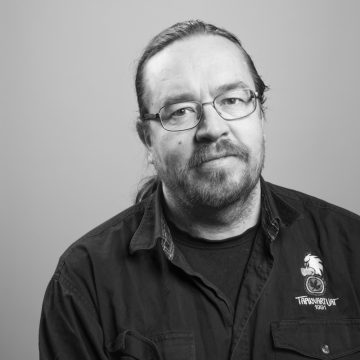
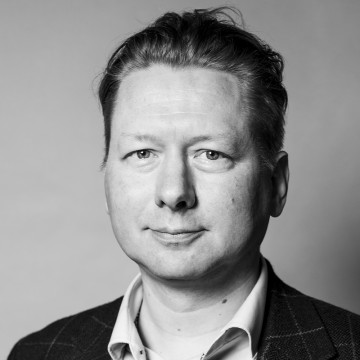
Facilities Manager Janne Hakala and Facilities Supervisor Eemil Hallikas are responsible for an enormous range of duties. The Facilities Department looks after the maintenance of the building and its equipment, ventilation, electrical and domestic water systems, and cleaning. The work requires close collaboration with more than 30 external partners to successfully manage such a broad range of property maintenance tasks. Each morning, the pair check the control room for alarms and fault reports received overnight. Their daily routine also includes inspecting the outdoor areas to ensure that the building has not been vandalised during the night.
They can clock up as many as 20,000 steps a day, as the building covers an impressive 28,000 square metres
They can clock up as many as 20,000 steps a day, as the building covers an impressive 28,000 square metres and encompasses a wide variety of spaces, from stages and rehearsal rooms to offices, dressing rooms, the hair and make-up department, and the set workshop. New maintenance tasks and problems arise constantly.
“It could be anything from a loose toilet roll holder to the fire brigade turning up. We’ve crawled around washing floors with methylated spirits and cleared snow,” Hakala says.
Hakala knows the building like the back of his hand. He has worked here since 1997. These days, he automatically spots maintenance needs as he makes his rounds.
“I’ve been walking these corridors for so many decades that my eyes are constantly scanning my surroundings. My hearing is so finely tuned that from more than ten metres away I can tell whether a door has locked,” Hakala explains.
The theatre’s special requirements pose their own challenges for property maintenance. Ventilation, for example, must work flawlessly on the stages and in the rehearsal rooms, as humidity directly affects the performers’ ability to work.
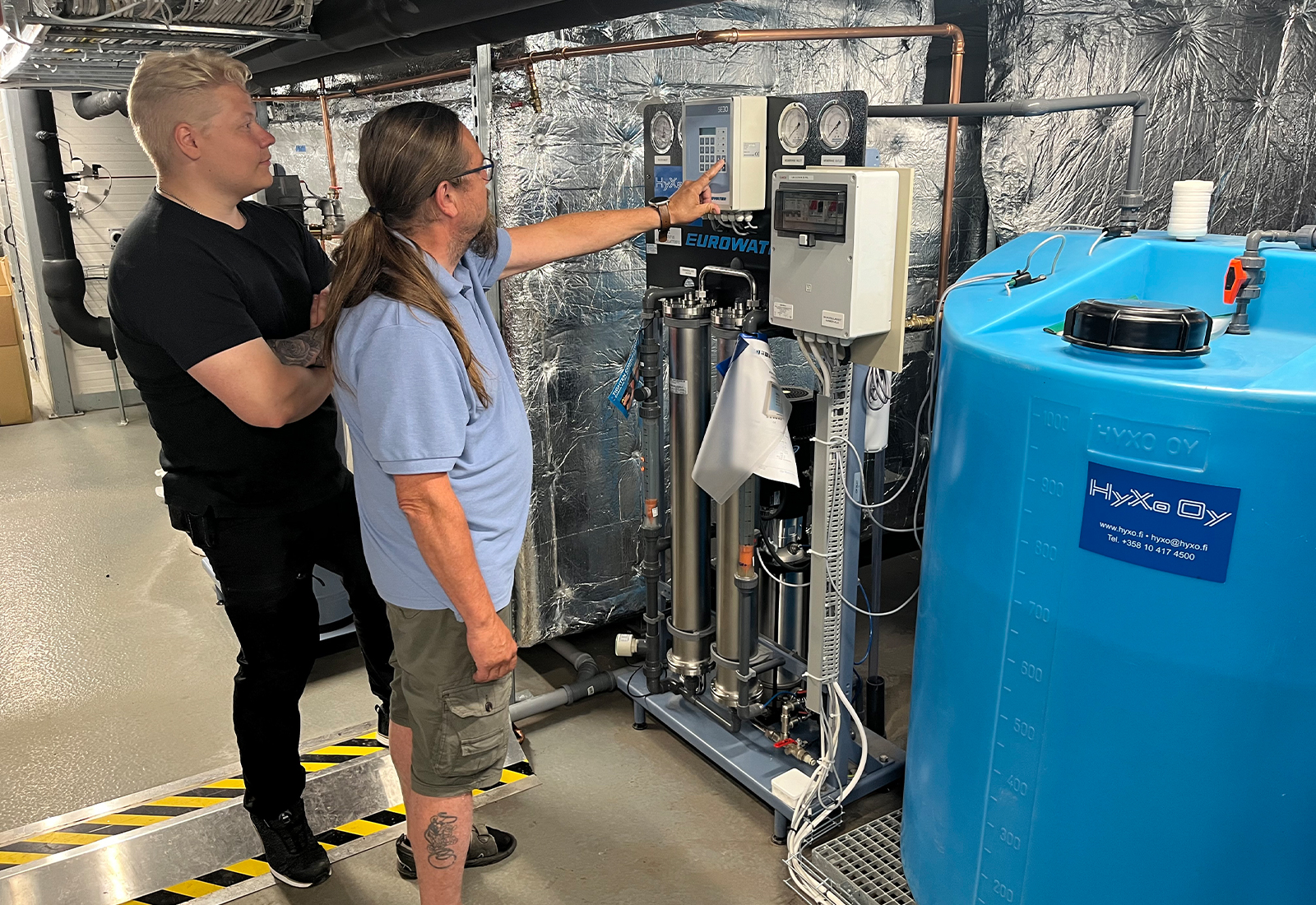
“If the air is too dry, the voice won’t carry. That’s why we humidify it using tap water purified by reverse osmosis, ensuring that no impurities remain in the machinery, ducts or air,” Hakala explains. The pair monitor the system’s automation, and it requires plenty of water, especially during severe frosts.
In addition to ventilation, the Facilities Department is responsible for many other tasks that are essential to performances, including cleaning the stages and ensuring accessibility. “We make sure that the lifts and automatic doors are working. We also arrange maintenance for the fire doors. The fire curtain on the Main Stage, for example, weighs 18,000 kg,” Hakala says.
Leading the way in sustainability
In recent years, property maintenance has become increasingly sustainable. The lighting has been modernised with energy-efficient LED lights, which have also reduced the Facilities Department’s workload, as bulbs no longer need to be replaced constantly.
Solar panels have been installed on the theatre’s roof. In the future, the energy they generate will offset some of the theatre’s own electricity consumption. Plans are also under way to introduce a purified water system, allowing some cleaning tasks to be carried out without harsh chemicals.
Although the work is not always visible to outsiders, it contributes to the comfort and safety of every employee and audience member. The Facilities Department ensures that conditions remain comfortable throughout the building, whether during the summer heat or the bitterest winter frosts. When the work is done well and everything runs smoothly, no one even notices the Facilities Department.