Dramaturgs form the theatre’s programme planning team together with the Theatre Director. Helsinki City Theatre has three dramaturgs. Its artistic design team comprises three set designers, a costume designer, lighting and sound designers, and a music arranger. They work closely with each production’s director, conductor and choreographer. The artistic designers begin their work once a production has been given the green light. For major productions, the design process may begin more than a year before the premiere.
From idea to stage
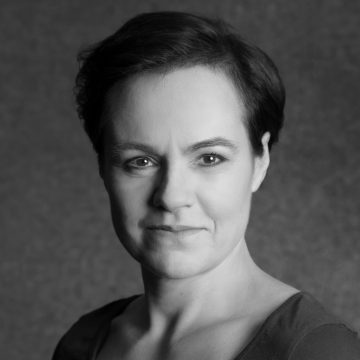
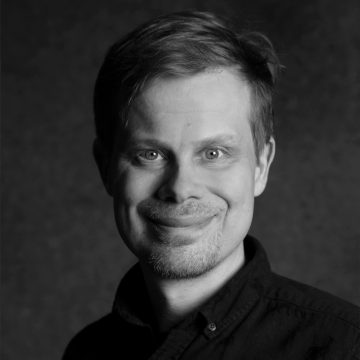
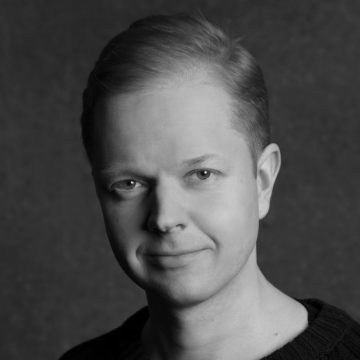
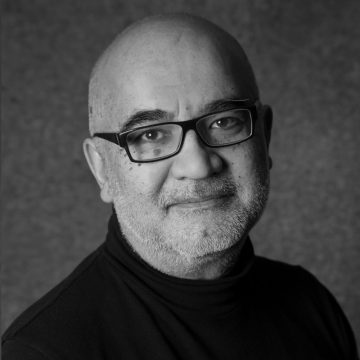
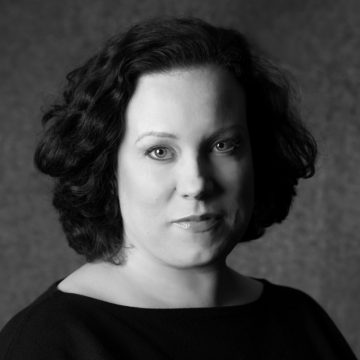
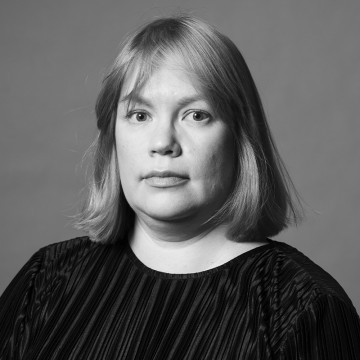
Helsinki City Theatre presents around 15 premieres each year across its five stages. Its programme includes drama, comedy, farce, musicals and children’s productions. The diverse programme is planned by dramaturgs Ari-Pekka Lahti, Sanna Niemeläinen and Henna Piirto together with Theatre Director Kari Arffman. The programme of the theatre’s dance company is planned by its Artistic Director.
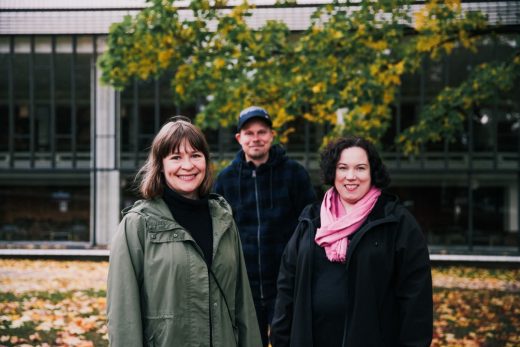
The dramaturgs search for new material by reading plays and novels and discussing ideas, subjects and interesting artists. Writers and directors also pitch ideas or scripts to the theatre. If an idea fits the theatre’s programme, the team begins working with the artists to bring it to the stage.
The dramaturgs also keep an eye on interesting international work and read the latest plays from abroad. Their work includes seeing productions at other theatres in Finland and, whenever possible, abroad.
“The most important requirement for a dramaturg is the ability to recognise a good text when you encounter one. You have to find the gems among all the scripts,” says Lahti.
According to Piirto, one of the best parts of the job is receiving a truly excellent and original play to read: “Great texts never fail to inspire.”
“When planning the programme, it’s absolutely essential that we are genuinely excited about every choice!” Niemeläinen adds. “When the creative team is enthusiastic, it shows in the finished production.”
The programme is planned roughly two years ahead. Some flexibility must nevertheless be left so that the theatre can respond to unexpected changes and topical issues. The aim is to strike a balance between contemporary subjects and timeless classics.
“If a script is good, it has something profound to say. Beneath the surface, it often deals with major themes and eternal questions, even if the story itself focuses on something topical,” Lahti adds.
The programme is planned for the audience. “We try to consider what interests and resonates with all the different people of Helsinki and Finland,” Niemeläinen says.
In addition to planning the programme, all three serve as lead dramaturgs on different productions. During the writing process, the lead dramaturg supports the playwright by reading and commenting on the script at various stages.
During production, the dramaturg helps the director with questions concerning the script and the overall dramaturgy. The dramaturg attends rehearsals and discusses what they have seen with the director.
“During the process, the creative team may become blind to certain details. That is when dramaturgs provide an extra pair of eyes. We know the work, but we also see it from a slightly more detached perspective,” Piirto explains.
“As a dramaturg, you are constantly helping others throughout every stage of the theatre-making process,” Lahti continues. “It’s nice to come to work in the morning. The theatre is like a sandbox for adults where we get to play.”
“And it’s indoors!” Niemeläinen says with a laugh.
‘Inventing’ sets is design in its purest form
It is said that set design is a proposal for how a production might be directed. The final set design emerges through collaboration.
“A set design includes a kind of plan for the production’s overall aesthetic, which goes far beyond its visual appearance,” says set designer Antti Mattila.
“The set generates action on stage,” adds set designer Katariina Kirjavainen. Mattila and Kirjavainen are two of Helsinki City Theatre’s permanent set designers. Vilma Mattila also works as a set designer at the theatre.
“Our styles are very different. It is a great advantage for the City Theatre to have artists who create such distinct stage designs,” Kirjavainen says.
“I am a passionate colourist and particularly interested in children’s theatre. Yet a theatre of this size also gives me the opportunity to realise my artistic visions on a very broad scale.”
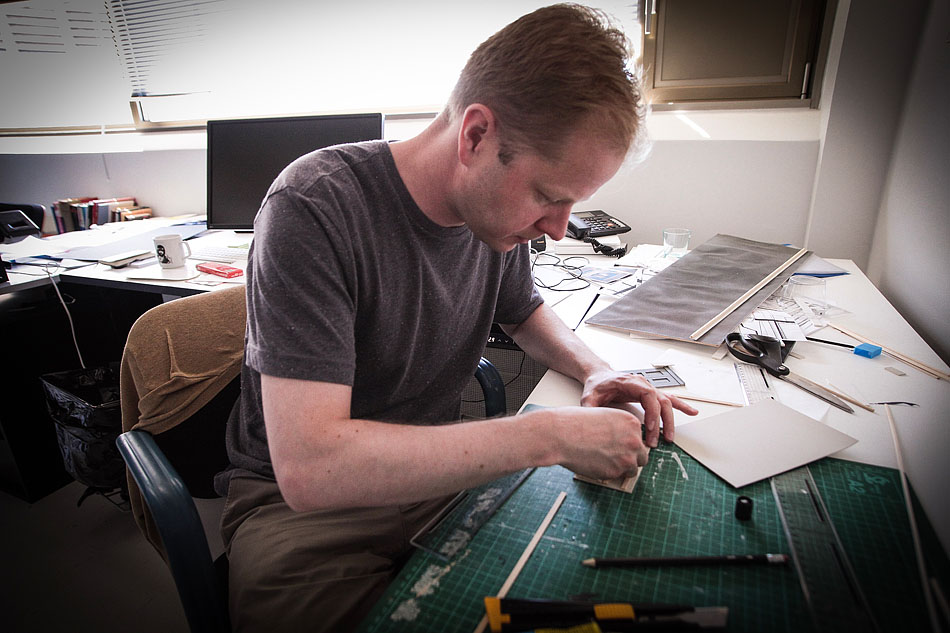
“For my part, I don’t see it so much as a means of self-expression but as problem-solving,” Mattila says. “Although I do create the problem myself. It may be an artistic problem connected to the themes of the text: how can the scenography offer a new perspective that makes it interesting? Or it can be something practical, as in farce: how the hell do you make it work in this space, where do the doors need to go, and how do you fit everything on stage?” he laughs.
Every production begins with a design phase involving the director.
There is an enormous range of possibilities for how a production can be staged.
“The discussion begins with the themes and the aesthetics of the production. There is an enormous range of possibilities for how a production can be staged. A great deal of intuition is involved, which is exciting because it is design in its purest form,” Mattila explains.
The design is then turned into a scale model, followed later by technical drawings for the workshop. The scale model is an important tool for the entire design team, which at this stage includes the director, costume designer, and lighting and sound designers. Practical matters such as sightlines from the auditorium are also examined. Once the theatre has approved the design, it is sent to the workshop for construction.
“Perhaps people don’t always realise that it’s not simply a matter of physically building the set. Someone has also designed and invented it!” Mattila says with a laugh.
Read Antti Mattila’s birthday interview on the HS website
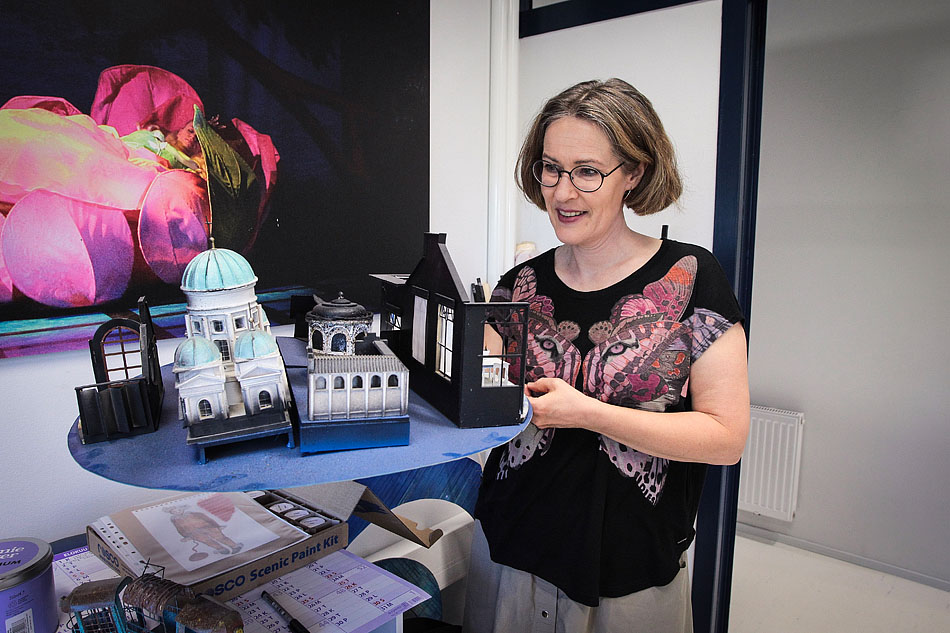
For Kirjavainen, it is important that theatre is an art form rooted in a particular time. A performance takes place before an audience at a specific moment, and the stage design must communicate with that audience.
“The aim is for every production to have some kind of relationship with what is happening in Finland and around the world. My children are currently between 22 and 30 years old, and I try to keep up with their visions of the future. It is always interesting to see how future generations perceive the world.”
Mattila agrees.
“I try to absorb as much of the world around me as possible. I observe reality and look for material. In the end, truth is always stranger than fiction.”
The costume designer visualises the play
At around the same time as the set designer, the costume designer begins working with the director.
“I’m the one tugging at the director’s sleeve, saying: we need a meeting, now! The publicity photos will be taken soon, and I need to know what the character is supposed to look like,” costume designer Elina Kolehmainen says with a laugh.
The process begins with a discussion with the director about what they are creating: what the script is about, what style they will use and which elements they want to highlight. Kolehmainen first picks out the text’s clearly defining features, such as the time, place and whether it is fact or fiction.
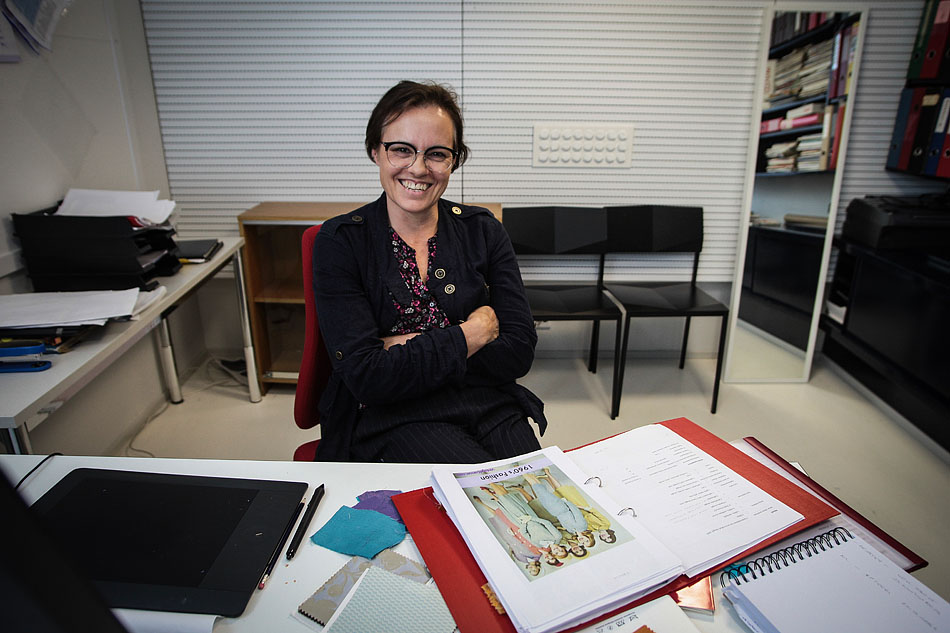
“I tend to look for the constraints, but I’d like to break free of that a little and simply make art!”
Having also worked extensively as an actor, Kolehmainen’s methods include putting herself firmly in the actors’ shoes during the design process. She says she begins inhabiting the role and visualising the play in her mind.
“In costume design, everything always begins with the main character. The others provide the accompaniment. With each of them, I consider how the character appears through the protagonist’s eyes. Is the character provocative? What adjective best describes them, and what is their relationship to the protagonist?”
Particularly in major productions, there is extensive collaboration with the other artistic designers. The final stage picture must form a carefully considered whole.
Ultimately, the costumes are only finished once the lighting is finished.
“Ultimately, the costumes are only finished once the lighting is finished. Only then can we see how each costume looks under different lighting,” Kolehmainen says.
The costumes are also discussed with the actors, which Kolehmainen considers extremely important. After all, the costume is one of their tools, and the actor must be able to trust it.
“Communication skills are important in this job. The more we discuss things, the better the outcome feels, even if it doesn’t exactly match what I originally envisioned.”
When the designs move into production in the costume workshop, Kolehmainen also discusses them with the dressmakers and tailors, particularly when choosing materials.
Work on a single production may take as long as six months. Things can become particularly hectic as the premiere approaches.
“This job is all about tolerating chaos!” Kolehmainen says with a laugh. “It only starts coming together right at the very end.”
When you work with passion and intensity, it is easy to become completely absorbed. That makes it important to take a step back from time to time.
“I’ve been doing this work for 20 years. Sometimes you have to let go—not only give, but also receive.”
She considers collaboration with the other artistic designers extremely important. At its best, the team finds a shared flow and is completely on the same wavelength.
“That’s the most wonderful thing about this work: always having someone to talk things through with! Even though we make compromises, it still feels good when you know that we are all heading towards the same destination.”