Real Estate Department
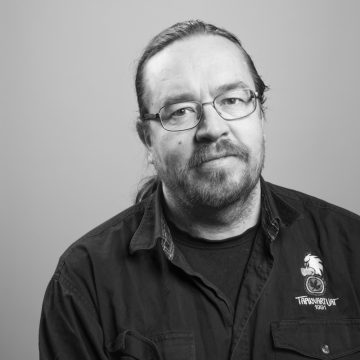
Janne Hakala
Kiinteistövastaava

Eemil Hallikas
Tekninen isännöitsijä

Vesa Halmetoja
IT-asiantuntija
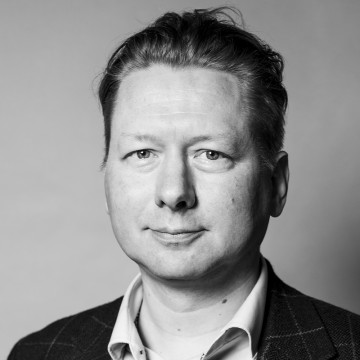
Timi Mäkinen
IT-asiantuntija
Accessibility tools
AI Translation. May contain errors.
The Real Estate Department is responsible for the theatre building, outdoor areas and everything related to them, such as building technology, building technology, electrical engineering, ventilation and lighting. The real estate department employs a property manager, a plant manager, a technical coordinator, an IT specialist and a stage manager.
Janne Hakala, who is in charge of real estate, and Eemil Hallikas, who is responsible for a huge number of tasks. The Real Estate Department takes care of the maintenance of the building and equipment, ventilation, electrical and domestic water systems, and cleaning. The work requires close cooperation with more than 30 external partners in order to cope with the extensive property management. In the morning, in the control room, the duo checks the alarms received during the night and the messages in the fault message system. The daily routine also includes touring the outdoor areas to ensure that the building has not been vandalized during the night.
During the day, up to twenty thousand steps are accumulated, as the property has a sizable 28,000 square meters
During the day, up to twenty thousand steps are accumulated, as the property has a sizable 28,000 square meters and many types of spaces, from stages to rehearsal halls, offices, changing rooms, a make-up salon and a set designer. Various maintenance tasks and problems arise all the time. “They can be anything from the toilet paper holder falling apart to the fire brigade arriving at the scene. We have crawled around washing the floors with rubbing alcohol and cleared the snow,” Hakala says. Hakala knows the house like the back of his hand. He has worked at the company since 1997. When touring the house, maintenance needs are now registered automatically. “I’ve walked these corridors for so many decades that my eye is constantly reading the surroundings and my ear gets stuck in the door so that I can hear more than ten metres away whether it was locked,” Hakala says. The special needs of the theatre pose their own challenges to property management. For example, ventilation must work flawlessly on stages and in rehearsal halls, as air humidity has a direct impact on actors’ ability to work. “In a space that is too dry, sound does not travel, so the air is humidified with tap water purified with a reverse osmosis device so that no impurities remain in the machinery, ducts or air,” Hakala says. The duo monitors the machine’s automation, and especially in very cold weather, the machine must be given plenty of water.
In addition to air conditioning, the Real Estate Department is responsible for many other tasks that are central to performances, such as stage cleaning and accessibility. “We make sure that the lifts and automatic doors work. We also service fire doors. For example, the fire curtain on the big stage weighs 18,000 kg,” Hakala says.
In recent years, property management has been developed in an increasingly responsible direction. The lighting has been modernized by switching to energy-saving LED lights, which has also eased the workload of the real estate department, as there is no need to constantly change the lamps.
Solar panels have been installed on the roof of the theatre, which will replace the theatre’s own electricity consumption in the future. In addition, there are plans to introduce a clean water system in the property, so that part of the cleaning can be carried out without strong chemicals.
Although the work is not always visible to outsiders, it affects the comfort and safety of all employees and spectators. The real estate department makes sure that the conditions are maintained in all premises, both in the summer heat and in freezing temperatures. When the work has been done well and everything is in order, no one needs the real estate side.
Kiinteistövastaava
Tekninen isännöitsijä
IT-asiantuntija
IT-asiantuntija